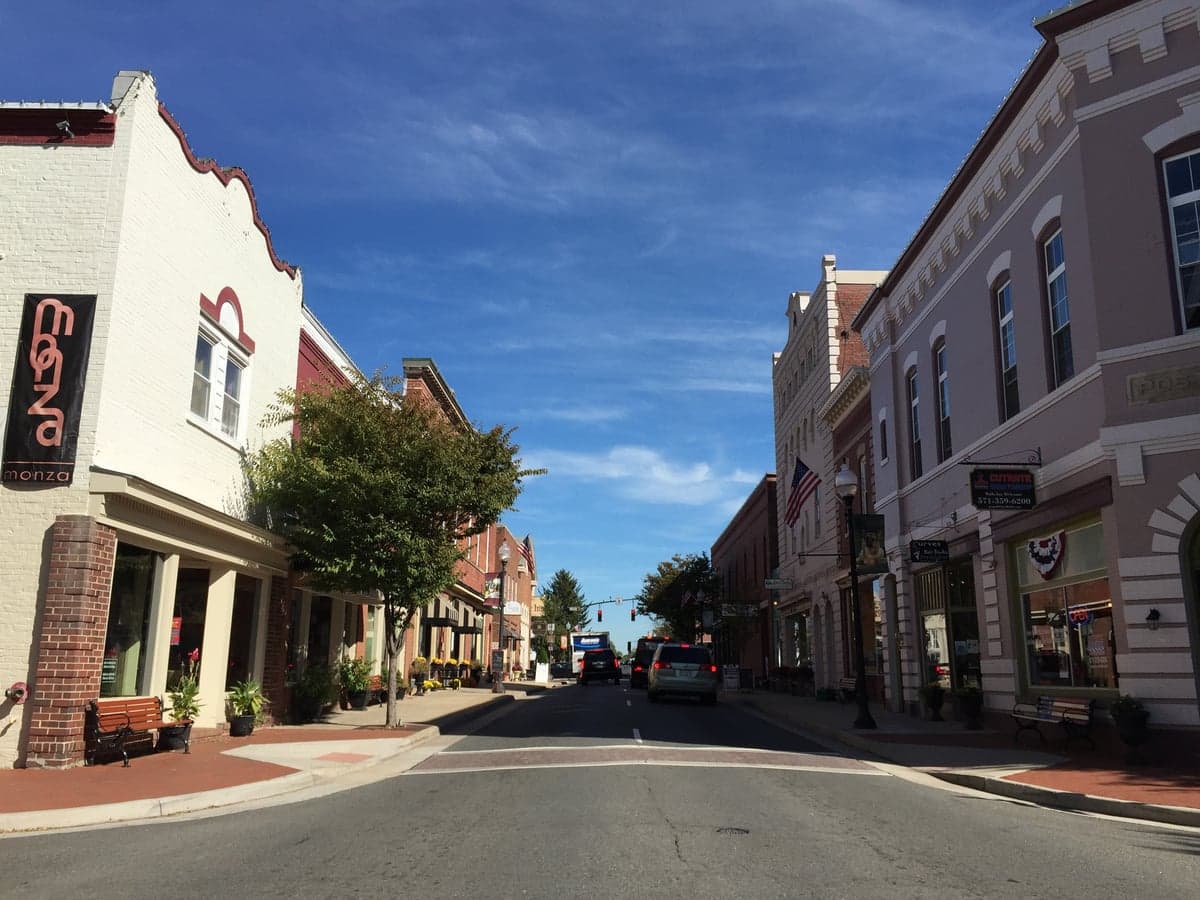
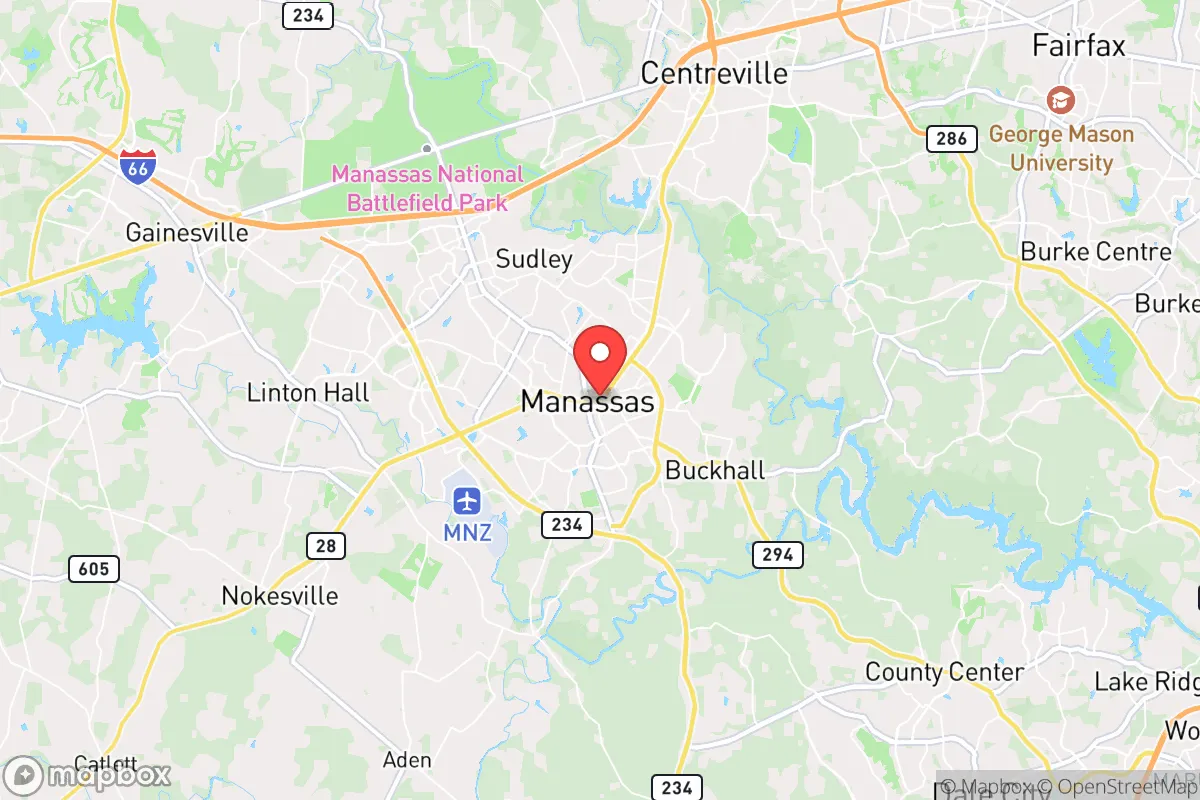
Photo: Wikipedia
Quality of Life in Manassas, VA
A high quality of life with strong walkability, manageable living costs, healthy neighborhood signals, and solid amenity access.
What does Quality of Life tell us?
Quality of Life blends cost of living, nearby amenities, socioeconomic signals, and neighborhood character. City-level scores represent the whole municipality; individual neighborhoods can differ.
What does this tell us?
Quality of Life blends cost of living, nearby amenities, socioeconomic signals, and neighborhood character. City-level scores represent the whole municipality; individual neighborhoods can differ.
Cost of Living
56% above national average
The Real Cost of Living in Manassas, VA for 2026
| Tier | Individual | Family (4) |
|---|---|---|
| Survival | $29k | $55k |
| Comfortable | $84k | $124k |
| Luxury | $167k+ | $259k+ |
| Elite (Top 5%) | $197k+ | $305k+ |
95%
The Area Signal
A metric tracking the socioeconomic signals of the area.


Hobbies
Explore the areaGroceries
1 within 10 miles
Gas
0 within 10 miles
Hospital
3 within 20 miles
Airport
DCA — Ronald Reagan Washington National
Post Office
USPS — Merrifield, VA
Critical Amenities
Quality-of-Life Analysis
Manassas, Virginia, presents a quality of life defined by historic character, suburban comfort, and a cost of living that significantly exceeds the national average, attracting a demographic of established professionals, federal employees, and families who prioritize proximity to Washington, D.C. over lower expenses. The city’s cost of living index stands at 156, meaning it is 56% more expensive than the typical U.S. city, a reality driven largely by housing and transportation costs. Residents are predominantly middle-to-upper income, with a median household income well above the national median, reflecting the area’s role as a bedroom community for D.C.-area jobs and its own growing local economy centered on data centers and retail.
Cost of living and housing affordability compared to nearby areas
Housing in Manassas is the primary driver of its elevated cost of living. The median home value is $434,700, which, while steep compared to the national median of roughly $350,000, is notably more affordable than homes in Arlington or Alexandria, where median values often exceed $700,000. For renters, the median rent of $1,835 is competitive for Northern Virginia, undercutting the $2,200+ averages seen in Falls Church and Reston. However, this affordability comes with a trade-off: the average commute time of 33 minutes is longer than the national average of 26 minutes, as many residents drive or take VRE trains into D.C. or Tysons Corner. Utility costs and grocery prices also run about 10-15% above the national average, but property taxes in Manassas (roughly 1.1% of assessed value) are lower than in neighboring Fairfax County, offering a slight offset for homeowners.
Amenities, schools, and the daily rhythm of life in Manassas
Daily life in Manassas balances small-town walkability in the historic Old Town district with suburban sprawl along the Route 28 corridor. The city’s public schools, part of Manassas City Public Schools, are rated above average, with Osbourn High School and Mayfield Intermediate School receiving solid marks for academic performance and extracurricular offerings. For families, the Manassas Museum and the Manassas National Battlefield Park provide free or low-cost cultural and historical outings, while the Manassas Mall and the Promenade at Manassas handle retail needs. The dining scene is anchored by a mix of Salvadoran, Korean, and American comfort food restaurants, reflecting the city’s diverse population. Commuters rely heavily on the Virginia Railway Express (VRE) Manassas Station, which offers a 55-minute ride to Washington Union Station, a key factor for those working in government or tech. Weekend life often revolves around the Manassas Farmers Market (year-round on Saturdays) and youth sports leagues at the Manassas Park Community Center.
Who thrives here? Manassas is best suited for families and professionals who want a lower-cost entry point to Northern Virginia without sacrificing access to D.C. jobs. It appeals strongly to federal contractors, teachers, and healthcare workers who can absorb the 33-minute commute and the 56% cost-of-living premium in exchange for a detached home with a yard and a historic downtown. Singles and young professionals may find the social scene limited compared to Arlington or D.C., but the city’s strong school system, low violent crime rate relative to the region, and growing data-center employment base make it a pragmatic choice for those prioritizing long-term stability over urban energy.

Crime in Manassas, VA
Generally safer than 66% of comparable U.S. locations.
Violent CrimeViolent Crime Analysis
Property CrimeProperty Crime Analysis
Crime Analysis
Manassas, Virginia, reports a violent crime rate of 304.8 incidents per 100,000 residents and a property crime rate of 1,335.1 per 100,000, placing it above national averages for both categories. While the city benefits from its proximity to Washington, D.C., and a relatively stable local economy, the overall safety picture is one of elevated risk, particularly for property-related offenses. Residents and prospective movers should weigh these statistics carefully, especially given the broader regional context of progressive criminal justice policies that can influence recidivism and enforcement outcomes.
Crime in context
Manassas’s violent crime rate is roughly 15% higher than the national average, while its property crime rate exceeds the national figure by approximately 25%. Compared to the Commonwealth of Virginia as a whole, the city’s rates are notably elevated; Virginia’s statewide violent crime rate hovers around 200 per 100,000, and its property crime rate is near 1,100 per 100,000. This means Manassas experiences about 50% more violent crime than the average Virginia locality. The city’s location within the Washington-Arlington-Alexandria metro area, a region with a mix of urban and suburban jurisdictions, means that crime patterns are influenced by regional dynamics, including the availability of social services and the priorities of local prosecutors. In many parts of Northern Virginia, district attorneys and judges have adopted progressive stances on bail reform and sentencing, which, while intended to reduce incarceration, can result in repeat offenders cycling back onto the streets more quickly, directly impacting public safety in communities like Manassas.
What residents experience
For those living in Manassas, property crime is the most tangible concern. Theft, burglary, and motor vehicle theft are the most common offenses, with residents often reporting package thefts, break-ins, and stolen vehicles. Violent crime, while less frequent, includes aggravated assault and robbery, with incidents concentrated in specific areas such as the downtown corridor and near major transit hubs like the Manassas VRE station. The city’s police department has implemented community policing initiatives and crime prevention programs, but the effectiveness of these efforts is tempered by a broader judicial environment that may prioritize diversion over detention. Progressive policies, such as reduced cash bail and alternative sentencing for property crimes, can embolden offenders, leading to higher rates of recidivism and a perception among residents that the justice system does not adequately protect victims or deter criminal behavior.
Neighborhood-level variation is significant in Manassas. Areas west of Route 28, including the Wellington and Yorkshire subdivisions, generally report lower crime rates, while older neighborhoods near the historic downtown and along the Sudley Road corridor experience higher incident counts. Prospective residents should examine block-level crime maps and consider that progressive judicial policies in Prince William County may reduce the deterrent effect of arrest and prosecution, making neighborhood choice even more critical for personal safety. Overall, Manassas offers a mixed safety profile where proactive property crime prevention and awareness of local justice system trends are essential for any resident or newcomer.
* Values derived from national, state, county, city and local statistics and may differ in a specific area. Last updated: 2026-04-19T08:36:36.000Z
Narrative content on this page is AI-generated and may contain mistakes. Verify any details that matter before acting on them.
ReloMaps may earn a commission from affiliate links at no extra cost to you.

