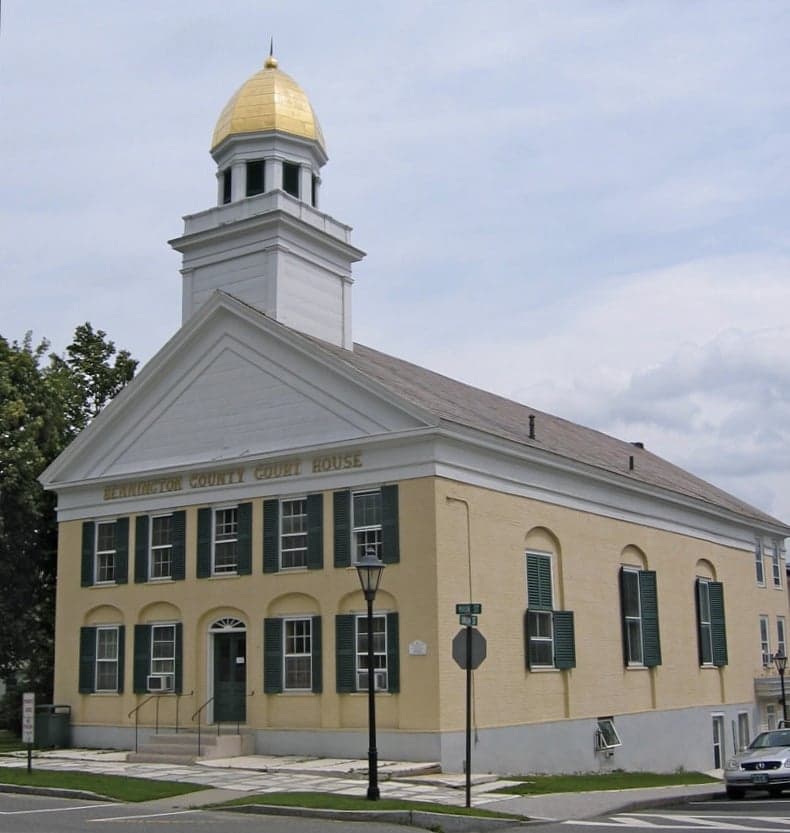
Photo: Wikipedia
Personal Sovereignty in Manchester, VT
Moderate friction. Expect trade-offs in some aspect of personal liberty and independence.
What does Personal Sovereignty tell us?
Personal Sovereignty measures your capacity for self-reliance and independence with minimal government friction. Higher scores mean fewer barriers between you and the way you want to live... but it assumes you have the space you need and good neighbors.
What does this tell us?
Personal Sovereignty measures your capacity for self-reliance and independence with minimal government friction. Higher scores mean fewer barriers between you and the way you want to live... but it assumes you have the space you need and good neighbors.
State Policy
Energy independence: Importer (15% of energy produced in-state)
Personal Liberty
Homesteading

Personal Liberty Analysis
Manchester, Vermont, presents a complex picture for those prioritizing personal sovereignty. While the town itself offers a quiet, rural setting with a strong sense of community, it operates under the full weight of Vermont state law, which has increasingly trended toward centralized control over individual freedoms. For a survivalist or prepper mindset, the key question is whether the local culture of self-reliance can effectively buffer against state-level overreach. The answer is mixed: you’ll find ample space and a neighborly ethos, but you’ll also face some of the most restrictive gun laws in the nation, a high tax burden, and a regulatory environment that can stifle independent living. The autonomy you gain from the land is often offset by the constraints imposed from Montpelier.
Tax burden and regulatory posture: How much of your income and property stays yours
Vermont’s tax posture is a significant drag on personal sovereignty. The state has a progressive income tax with rates ranging from 3.35% to 8.75%, and Manchester residents also pay a local option tax on sales, meals, and rooms, which can add 1% on top of the state’s 6% sales tax. Property taxes are notably high, with effective rates often exceeding 2% of assessed value, driven largely by school funding formulas. For a prepper looking to hold land and resources, this means a substantial portion of your wealth is annually redirected to state programs you may not support. The regulatory environment is similarly dense: Vermont has strict Act 250 land-use laws that can complicate even modest construction or land modification projects. Permitting for a new well, septic system, or outbuilding can be a months-long process. This bureaucratic overhead directly challenges the ideal of self-reliance, as the state maintains a heavy hand in how you use your own property.
Self-defense and gun law specifics: What you can and cannot own in Manchester
This is the most critical area of concern for a sovereignty-minded individual. Vermont, once a bastion of gun rights, has enacted some of the strictest firearm regulations in the country. As of 2024, the state bans magazines capable of holding more than 10 rounds for long guns and 15 rounds for handguns. It also prohibits the sale, transfer, or possession of many semi-automatic firearms defined as “assault weapons,” including popular AR-15 and AK-47 platforms. There is a universal background check requirement for all firearm transfers, including private sales, and a 72-hour waiting period for handgun purchases. While Vermont does not require a permit for concealed carry, the magazine and weapon bans directly limit the tools available for self-defense and preparedness. For a prepper, this means you cannot legally stockpile standard-capacity magazines or own the most common defensive rifle platforms. The state’s “red flag” law also allows for temporary firearm seizure based on a court order without a criminal conviction, a provision that raises serious due process concerns for those wary of government overreach.
Self-reliance and homesteading viability: Lot sizes, zoning, and off-grid feasibility
On the positive side, Manchester’s rural character offers genuine opportunities for self-reliance. Minimum lot sizes in the town’s rural districts are typically 2 to 5 acres, with some areas allowing larger parcels. This provides enough space for a substantial garden, small orchard, or even a few livestock animals like chickens or goats, subject to local zoning. The town’s zoning bylaws do permit accessory dwelling units and home-based businesses, which can support a diversified income stream. Off-grid living, however, faces significant hurdles. Vermont’s building codes and Act 250 review often require connection to grid power or a state-approved alternative energy system with proper permitting. Rainwater collection for potable use is restricted in many cases, and composting toilets must meet state health standards. While you can certainly install solar panels and dig a well, the process is heavily regulated. The feasibility of true off-grid independence is low; you are more likely to achieve a “grid-tied with backup” setup. The soil in the Manchester area is generally rocky and acidic, typical of the Green Mountains, requiring significant amendment for productive gardening. The growing season is short, roughly 120-140 days, which limits what you can grow without a greenhouse.
Personal liberties: Parental rights, medical autonomy, speech, and property
Vermont’s record on personal liberties is a mixed bag. On parental rights, the state has a strong tradition of local control in education, but recent legislation has shifted authority to the state. Vermont mandates comprehensive sex education and has laws that can override parental notification for certain medical decisions, including reproductive health services. This is a red flag for parents who want to maintain authority over their children’s upbringing. Medical autonomy is similarly constrained: Vermont has a vaccine mandate for school attendance, and during public health emergencies, the governor has broad powers to issue orders that can limit personal medical choices. Free speech is protected under the First Amendment, but Vermont’s campaign finance laws and public accommodation laws can create friction for those expressing dissenting views on social issues. Property rights are the most contentious area. Beyond Act 250, Vermont has a strong “public trust” doctrine that can limit your ability to exclude others from certain natural resources on your land, such as waterways. The state also has a current use tax program that encourages forestland conservation, but it comes with permanent deed restrictions that limit development. For a prepper, this means your land is never truly yours to do with as you see fit; the state retains significant control over its use and development.
In the broader context of the Northeast, Manchester offers a relatively high degree of personal space and a community that values self-sufficiency, but it sits within a state government that is actively hostile to many core tenets of individual sovereignty. Compared to a place like New Hampshire, which has no income tax, no sales tax, and far more permissive gun laws, Manchester falls short on nearly every metric of personal freedom. Compared to more restrictive states like New York or Massachusetts, Vermont is slightly better on property rights and local culture, but the gap is narrowing. For a survivalist or prepper, Manchester is a location where you can carve out a degree of self-reliance, but you will be doing so under constant regulatory pressure. The trade-off is a beautiful, low-crime environment with a strong sense of place, but the cost is a significant surrender of autonomy to the state. If your primary goal is maximum personal sovereignty, you would be better served looking to New Hampshire or further west. If you are willing to navigate a dense regulatory landscape for the sake of Vermont’s rural character and community, Manchester can work, but only with a clear-eyed understanding of the constraints.

* Values derived from national, state, county, city and local statistics and may differ in a specific area. Last updated: 2026-04-30T10:46:40.000Z
Narrative content on this page is AI-generated and may contain mistakes. Verify any details that matter before acting on them.
ReloMaps may earn a commission from affiliate links at no extra cost to you.

