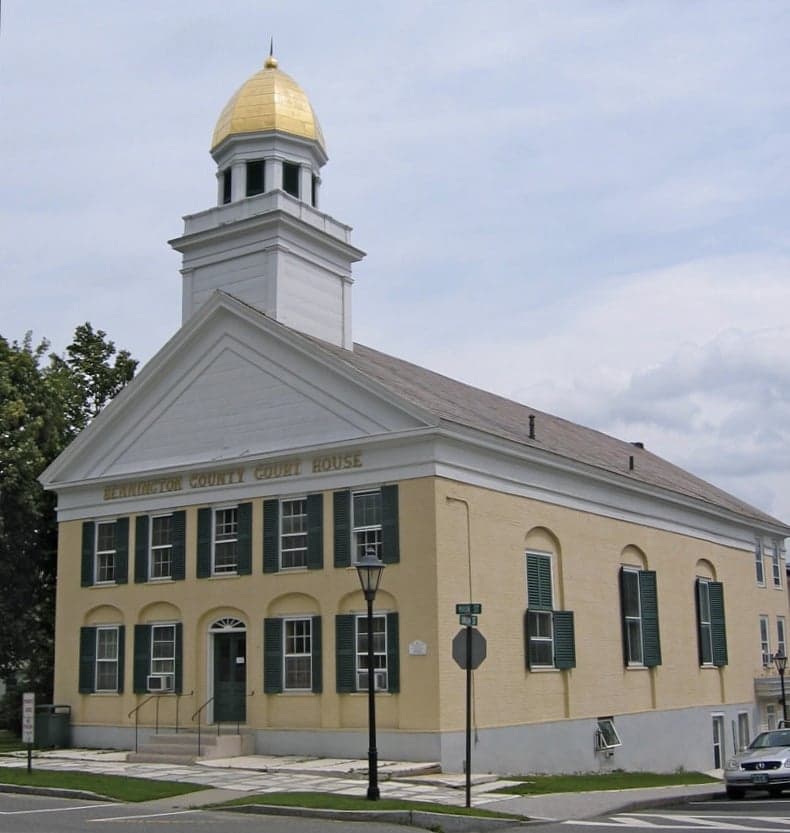
Photo: Wikipedia
Political ClimatePolitical Climate in Manchester, VT
District shown is the primary district for this city’s centroid. Cities may span multiple districts.
Inherited from parent state — no local data available.
Local Political AnalysisPolitical Analysis of Manchester, VT
Look, I’ve lived in Manchester long enough to remember when this town was a lot more balanced politically. Today, the Cook PVI rating of D+17 tells you everything you need to know: this place leans hard left, and it’s been trending that way for a while. The local elections, the school board decisions, the town meeting votes—they all reflect a progressive majority that’s been growing steadily since the early 2010s. If you’re coming from a more conservative area, you’ll notice the difference pretty quickly. It’s not just the bumper stickers; it’s the whole vibe of local governance.
How it compares
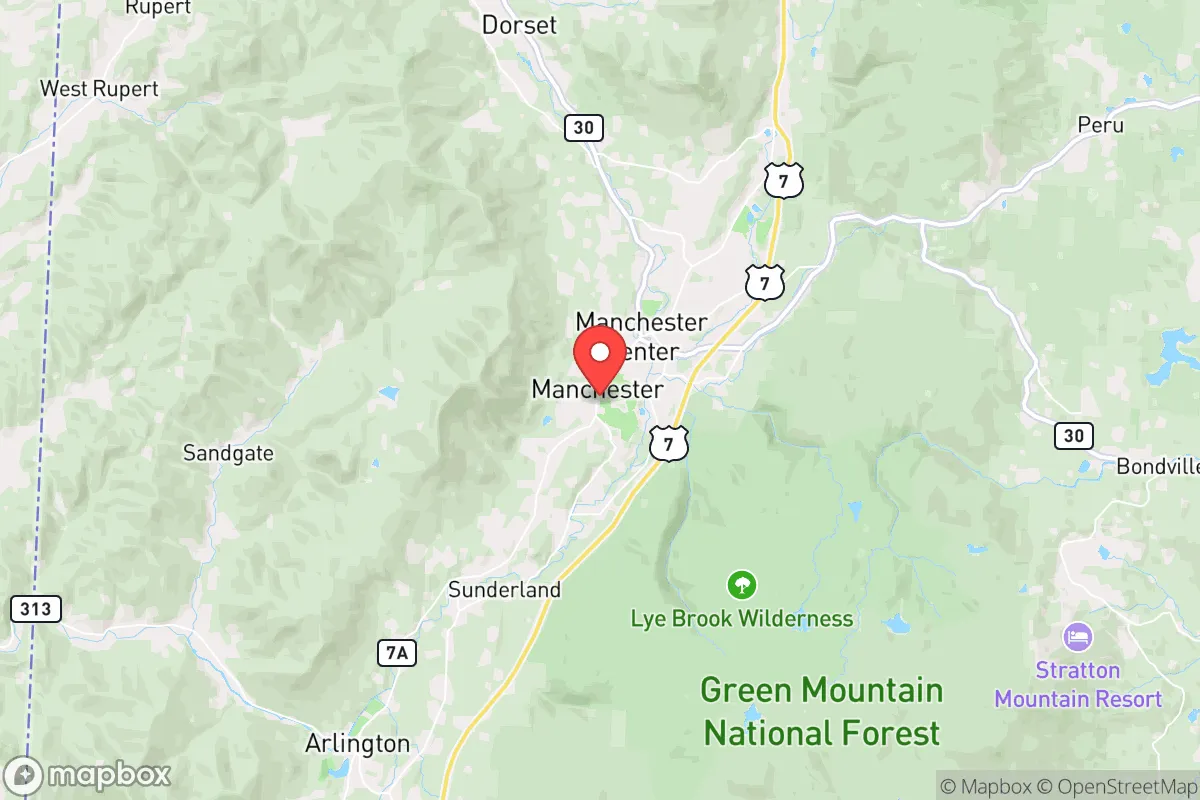
Manchester is an island of deep blue in a county that’s actually more purple than you’d think. Drive 20 minutes north to Rutland, and you’ll find a town that still votes reliably Republican in local races. Head east toward Ludlow, and the political signs look a lot different—more “Don’t Tread on Me,” less “Coexist.” Even Dorset, just a few miles up the road, has a more independent streak. But here in Manchester, the second-home money from New York and Boston has reshaped the electorate. Those seasonal residents tend to bring big-city progressive values with them, and they show up for local votes on things like land use and school funding. The result is a town that votes more like Burlington than like the rest of southern Vermont.
What this means for residents
For a conservative-leaning family or small business owner, the practical effects are real. Property taxes have climbed steadily, driven by school budgets that pass easily in a D+17 environment—even when per-pupil spending is among the highest in the state. You’ll see local ordinances that feel like government overreach: strict short-term rental caps, noise bylaws that get enforced aggressively, and a permitting process for home renovations that can take months. The town has also moved toward mandatory energy-efficiency upgrades for older homes, which sounds good on paper but lands hard on folks who just want to fix a leaky roof without a compliance checklist. The school curriculum has shifted noticeably too, with more emphasis on social-emotional learning and DEI initiatives, and less on traditional academics and local history. If you value personal freedom and minimal government interference, you’ll find yourself on the losing side of most town meeting votes.
On the cultural side, Manchester still has its charms—the old general store, the volunteer fire department, the sense of community at the farmers market. But the political drift has created a quiet divide. Longtime local families and newer progressive transplants don’t always see eye to eye on what the town should be. The local paper’s letters page is a constant tug-of-war between “preserve our rural character” and “we need more affordable housing and bike lanes.” Looking ahead, I don’t see the trend reversing. The second-home market keeps bringing in new voters with deep pockets and blue-state instincts. If you’re thinking of moving here, just know that your voice on local issues will be a minority one, and the political climate will likely keep shifting left for the foreseeable future. It’s still a beautiful place to live—but the politics are something you’ll have to navigate carefully.

State Political ClimatePolitical Climate in Vermont
State Political AnalysisPolitical Environment in the State
Vermont has long been a solidly blue state in presidential elections, but its political landscape is far more nuanced than the statewide results suggest. The state has not voted for a Republican presidential candidate since George H.W. Bush in 1988, and the Democratic lean has deepened over the last 20 years, with margins growing from roughly 10 points in 2000 to over 30 points in 2020 and 2024. However, this progressive dominance is driven almost entirely by the Chittenden County metro area—Burlington, South Burlington, and Winooski—while vast swaths of the state remain culturally conservative, fiscally skeptical, and increasingly frustrated with Montpelier’s one-party rule. For a conservative considering relocation, the picture is mixed: low crime and beautiful landscapes come with high taxes, heavy regulation, and a political culture that can feel suffocating if you value personal autonomy.
Urban vs. rural divide
The political map of Vermont is a textbook case of urban-rural polarization. Chittenden County, home to about 25% of the state’s population, delivers massive Democratic margins—Burlington routinely votes 80-85% Democratic, and the surrounding suburbs like Williston and Essex Junction are only slightly less blue. This metro area drives the statewide Democratic majority. Drive an hour in any direction, and the picture flips. The Northeast Kingdom—counties like Essex, Orleans, and Caledonia—votes reliably Republican, with margins of 15-25 points in recent cycles. Rutland County, once a swing area, has trended right, flipping from a narrow Democratic win in 2016 to a 12-point Republican margin in 2024. The southern tier, including Bennington and Windham counties, is more mixed but leans left, driven by second-home owners and retirees from New York and Massachusetts. The real outlier is the town of Stowe, which is surprisingly moderate-to-conservative for a ski resort, often voting within 5 points of the statewide average. If you’re looking for like-minded neighbors, the Northeast Kingdom, Rutland County, and parts of Addison County (outside Middlebury) are your best bets.
Policy environment
Vermont’s policy environment is aggressively progressive, and the cost shows. The state has the highest effective property tax rate in the nation at roughly 1.8% of home value, and income taxes are steep—a top marginal rate of 8.75% kicks in at just $213,000 for single filers. The regulatory climate is dense: Act 250, the state’s land-use law, can delay or kill development projects for years, and a new “climate superfund” law (Act 2024-123) holds fossil fuel companies liable for climate damages, which critics warn will drive up energy costs. Education policy is dominated by the Vermont Agency of Education, which mandates progressive curricula including comprehensive sex education and DEI initiatives in all public schools. Parental rights are weak—there is no statutory right to opt your child out of specific lessons, and the state’s “gender identity” protections in education (Act 2019-41) allow students to use preferred names and pronouns without parental notification. Healthcare is heavily regulated, with a single-payer-like system through the Green Mountain Care Board that caps hospital budgets and limits private insurance options. Election laws are among the most liberal: universal mail-in voting, same-day registration, and no voter ID requirement. For a conservative, this is a state where the government is deeply involved in your daily life, from your property taxes to your child’s classroom.
Trajectory & freedom
Vermont is moving decisively toward less personal freedom across multiple fronts. On gun rights, the state passed some of the nation’s strictest laws after the 2018 school shooting threat in Fair Haven: Act 94 banned magazines over 10 rounds, raised the purchase age to 21, and mandated universal background checks. A 2024 law (Act 2024-87) added a 72-hour waiting period and a “safe storage” requirement that effectively criminalizes unsecured firearms in homes. On medical autonomy, Vermont was the first state to legalize assisted suicide via the 2013 Patient Choice and Control at End of Life Act, and it has some of the loosest vaccine mandates in the Northeast—but that’s cold comfort when the state’s health department aggressively pushed COVID-19 mandates for healthcare workers and school staff. Parental rights took a hit with Act 2019-41, which allows schools to keep a child’s gender identity confidential from parents. Property rights are under constant pressure from Act 250 and new “smart growth” zoning rules that limit rural development. The tax burden has increased steadily, with property taxes rising an average of 4% annually since 2020. The trajectory is clear: more regulation, higher taxes, and less individual autonomy, especially for gun owners and parents.
Civil unrest & political movements
Vermont is not known for street-level unrest, but there are visible flashpoints. The most organized conservative movement is the Vermont Republican Party’s rural caucus, which has gained traction in the Northeast Kingdom and Rutland County, focusing on school board races and local zoning fights. The “Vermonters for Liberty” group has been active in opposing gun laws and vaccine mandates, holding rallies at the Statehouse in Montpelier. On the left, the Vermont Progressive Party (which holds seats in Burlington and Montpelier) has pushed for rent control and defunding the police, though these efforts have largely stalled. Immigration politics are relatively quiet—Vermont has no sanctuary city policies, but Burlington’s city council has declared itself a “welcoming city,” and the state offers driver’s licenses to undocumented immigrants. Election integrity is a growing concern: after the 2020 election, the Vermont Secretary of State’s office was sued for failing to clean voter rolls, and a 2024 audit found over 1,200 potentially ineligible voters still registered. The most visible flashpoint for a new resident would be the school board meetings in towns like Montpelier and Burlington, where debates over DEI programs and gender policies have become heated. For a conservative, these are signs of a state where the cultural battle is being fought in local institutions, not just in Washington.
Projection
Over the next 5-10 years, Vermont’s political trajectory is likely to accelerate leftward, driven by in-migration from New York and Massachusetts. The state’s population is aging and shrinking—it lost a congressional seat after the 2020 census—but the newcomers are overwhelmingly progressive professionals and remote workers who value the state’s social policies. The rural conservative vote is not growing; it’s aging out. Expect further gun restrictions, possibly including a “red flag” law and a ban on semi-automatic rifles. Property taxes will continue to rise as the state’s education funding system (Act 60/68) redistributes wealth from rural towns to wealthier districts. Parental rights will likely erode further, with potential legislation requiring schools to affirm a child’s gender identity without parental consent. The one wild card is the state’s fiscal crisis: Vermont’s pension system is underfunded by over $5 billion, and the state’s bond rating was downgraded in 2023. If taxes become unbearable, you might see a rural secession movement—there’s already a “Republic of Vermont” group that talks about splitting the state along the Green Mountains. Realistically, a conservative moving in now should expect to be a permanent minority, fighting defensive battles on school boards and town councils.
For a conservative considering Vermont, the bottom line is this: you’re moving to a beautiful state with low crime, clean air, and genuine community, but you’ll pay a heavy price in taxes and personal freedom. If you’re a gun owner, a parent who wants control over your child’s education, or someone who values low taxes and limited government, Vermont will be a constant frustration. The best bet is to settle in the Northeast Kingdom or Rutland County, where you’ll find like-minded neighbors and a slower pace of life, but even there, Montpelier’s reach is long. If you’re willing to fight for your values at the local level and can afford the tax burden, Vermont can still offer a good life. If not, you’d be better off looking at New Hampshire, just across the Connecticut River, where the motto is “Live Free or Die” and they mean it.
* Values derived from national, state, county, city and local statistics and may differ in a specific area. Last updated: 2026-04-30T10:46:40.000Z
Narrative content on this page is AI-generated and may contain mistakes. Verify any details that matter before acting on them.
ReloMaps may earn a commission from affiliate links at no extra cost to you.

