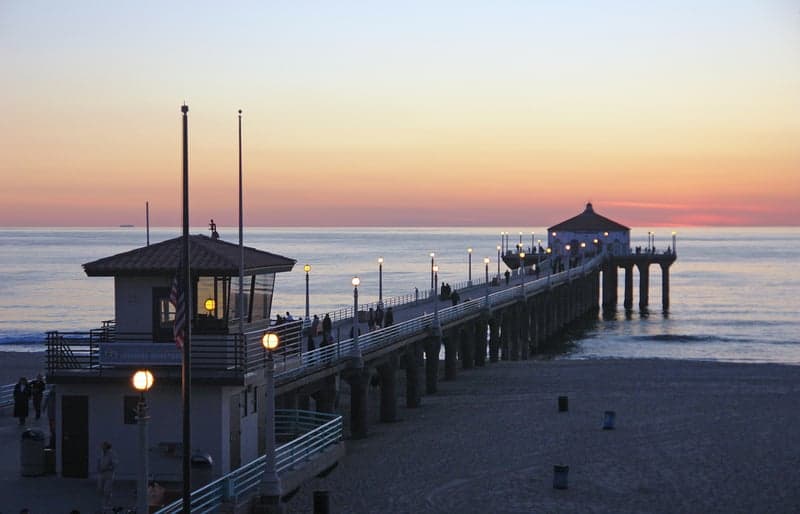
Photo: Wikipedia
Strategic Assessment of Manhattan Beach, CA
High tactical risk. This location is likely close to major population centers, strategic targets, or sits in a high-disaster corridor. A retreat property and careful exit planning is required.
What does the Strategic Assessment tell us?
Our Strategic Assessment grades tactical survivability of an area. Major population centers, military targets, fallout zones, natural disasters, and border exposure all drive risk — lower exposure means a more defensible position in a crisis.
This is heavily inspired by Joel Skousen's Strategic Relocation book. Highly recommended you checkout the book ($)What does this tell us?
Our Strategic Assessment grades tactical survivability of an area. Major population centers, military targets, fallout zones, natural disasters, and border exposure all drive risk — lower exposure means a more defensible position in a crisis.
This is heavily inspired by Joel Skousen's Strategic Relocation book. Highly recommended you checkout the book ($)Strategic Pillars

Key Distances
Regional Safe Places
Below is our recommended "safe zones" in California and the surrounding area based on our strategic heuristics. For most people, it's unrealistic to live in a “safe zone” full-time due to work, family or other personal reasons. They tend to be more rural. However, many of these areas are perfect for second homes and retreat properties that double as a vacation home or even a short-term rental.

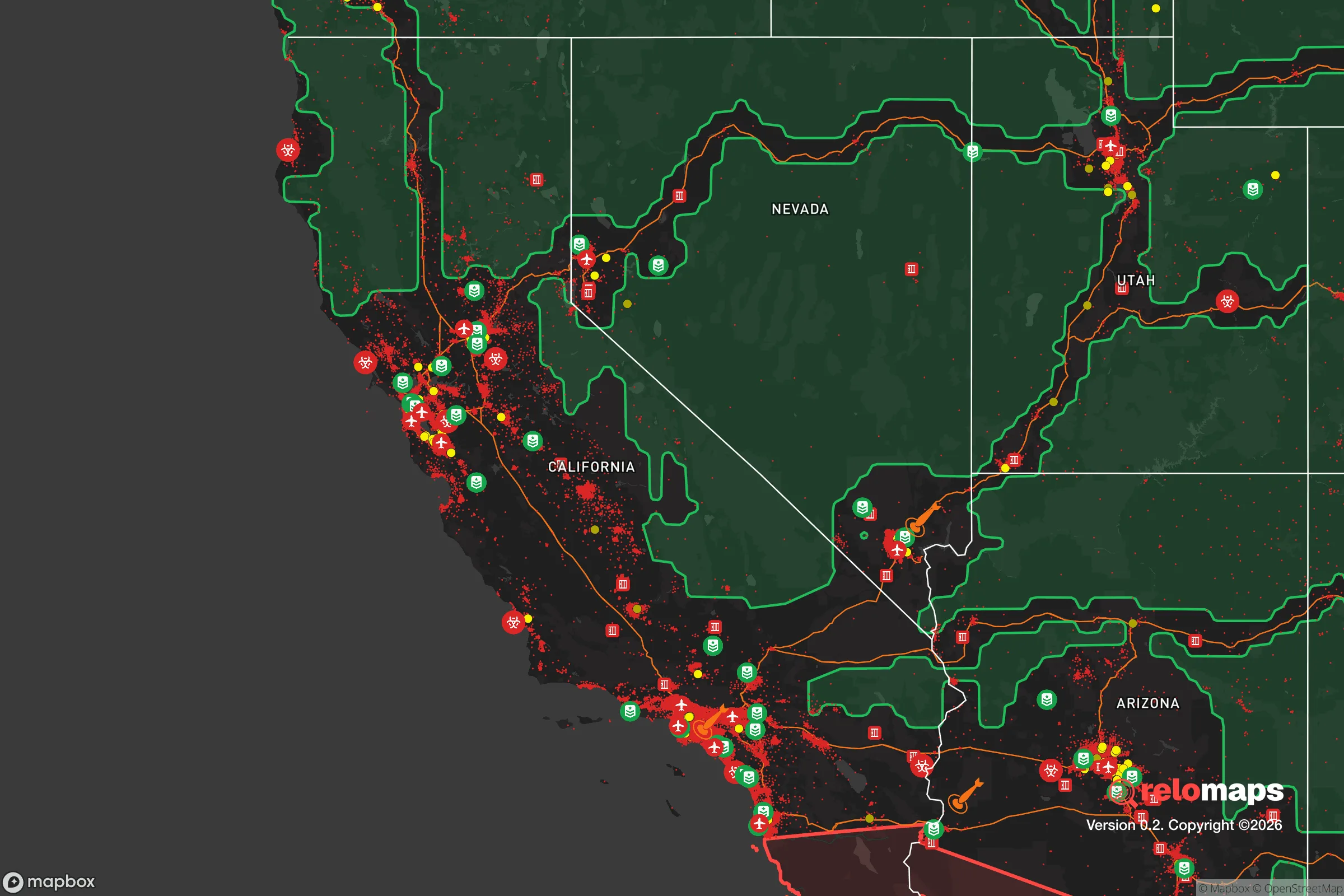


Important Note: For informational purposes only. This does not mean nothing bad ever happens in the green zones. Please use common sense. This is based on public data and modeled with AI. We tried to take a conservative approach but mistakes happen. We update this regularly as new information becomes available.
Solar Generator Recommendations
Backup power matters more here than in safer locations. We've picked three solar generators across budgets and capacity tiers — start with the budget unit if you only need a few essentials, or step up if you want to run a fridge and HVAC for days at a time.

Jackery Portable Power Station Explorer 300
Budget OptionPower on the Go: Weighing only 11 lbs, it's convenient to set up and store with book-sized foldable solar panels

BLUETTI Portable Power Station AC180
Designed for both indoor and outdoor scenarios, AC180 is highly capable as it has a robost capacity and continuous output power.

EF ECOFLOW DELTA Pro Ultra Power Station
Upgraded PickEcoFlow DELTA Pro Ultra is a whole-home energy system designed to grow with your family. Integrated with the Smart Home Panel 2, it scales to meet your evolving energy needs — keeping your home powered, intelligent, and secure through every stage of life.
We earn a commission, at no additional cost to you.
Strategic Assessment Analysis
Manhattan Beach offers a unique blend of coastal resilience and high-value real estate, but for a conservative prepper focused on long-term survival, its proximity to Los Angeles is both a strategic asset and a critical liability. The city’s location on a narrow coastal strip, sandwiched between the Pacific Ocean and the sprawling Los Angeles basin, creates a defensible peninsula-like position that could be advantageous during widespread civil unrest—provided you can secure ingress and egress. However, the same geography makes it a potential chokepoint during a mass evacuation, and its status as a high-profile, wealthy enclave makes it a likely target for looting or power struggles in a collapse scenario.
Geographic position and natural advantages for long-term survival
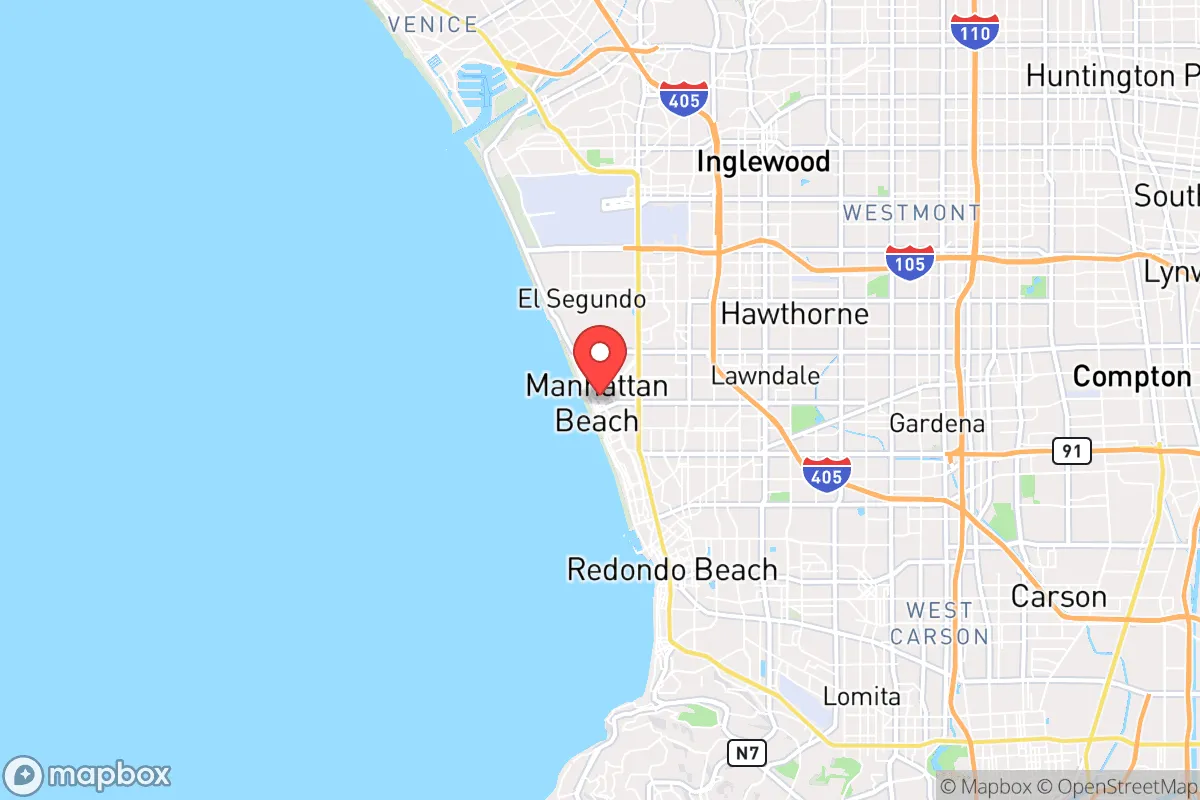
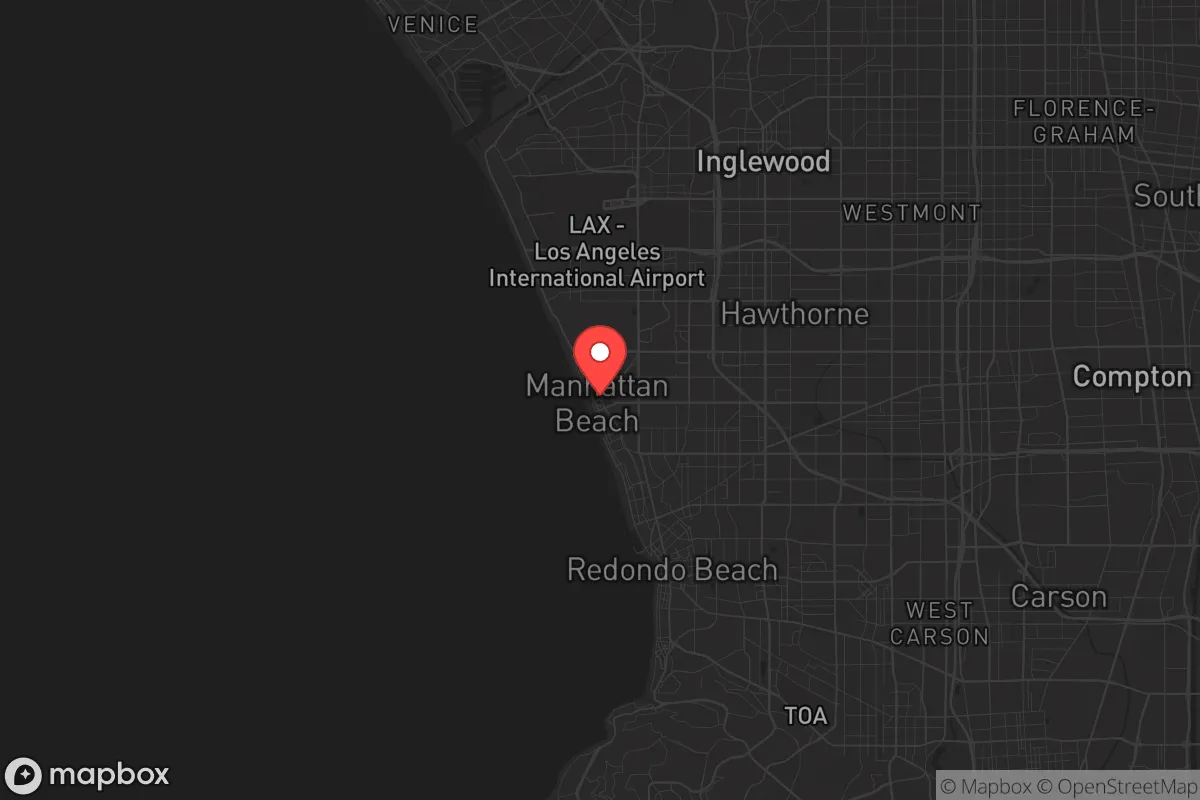
Manhattan Beach sits on a roughly 2-mile stretch of coastline, bordered by Hermosa Beach to the south and El Segundo to the north. The city’s elevation rises sharply from the beach to a bluff line, offering natural vantage points and limited approaches by land. The Pacific Ocean provides a reliable source of water (with desalination or filtration), a food source (fishing), and a potential escape route by boat. The prevailing westerly winds keep air quality relatively good compared to inland areas, which matters during a chemical or biological event. The city’s grid layout, with major arteries like Sepulveda Boulevard and Pacific Coast Highway, offers multiple routes inland, but these are easily congested. The nearby Los Angeles International Airport (LAX), just 3 miles north, is a double-edged sword: it’s a potential evacuation hub but also a prime target for terrorism or military action. The Santa Monica Bay provides a natural buffer against a direct overland assault from the south, but the entire South Bay region is a dense urban corridor with limited rural escape routes.
Risks, exposures, and proximity to high-value fallout targets
The single greatest risk for a Manhattan Beach prepper is its proximity to Los Angeles—a city of 3.8 million people that is a prime target for civil unrest, terrorist attacks, or a major earthquake. The San Andreas Fault runs 30 miles inland, and a major rupture could cut off all road access to the east, leaving the beach cities as an isolated pocket. The Port of Los Angeles and Port of Long Beach, 15 miles south, are critical infrastructure hubs that would be immediate targets in a conflict or cyberattack. LAX, as mentioned, is a high-value target for any adversary. The Chevron El Segundo refinery, just north of the city, is a major industrial hazard—a fire or explosion there could release toxic clouds or disrupt fuel supplies. The city’s water supply comes from the Metropolitan Water District, which relies on aqueducts from the Colorado River and Northern California—both vulnerable to earthquake damage or sabotage. Power comes from the grid via Southern California Edison, which is prone to outages during heat waves or wildfires. The city’s police force is well-funded (Manhattan Beach PD has a strong reputation), but during a regional crisis, they would be overwhelmed by the sheer scale of a Los Angeles evacuation.
Practical resilience for a relocator: food, water, energy, and defensibility
For a single individual or family looking to hunker down, Manhattan Beach presents a mixed bag. Water is the biggest vulnerability: the city has no natural freshwater source beyond rainfall, and the municipal supply is dependent on fragile infrastructure. A well is not feasible due to saltwater intrusion and high water table. Rainwater catchment is possible but limited by the semi-arid climate (average 12 inches per year). Desalination is an option for those with resources, but it’s energy-intensive. Food storage is manageable in a single-family home with a garage or basement, but apartment dwellers face severe space constraints. The ocean provides a reliable protein source—surf fishing for perch, corbina, and halibut is viable year-round, and kelp beds offer a source of iodine and nutrients. Energy independence is difficult due to strict HOA and city codes that limit solar panel placement and battery storage in many neighborhoods. Natural gas is the primary heating fuel, but the pipeline network is vulnerable to earthquake damage. Defensibility is the strongest asset: the city’s layout, with limited entry points from the north and east, makes it possible to establish checkpoints on major roads like Sepulveda and Artesia. The beach itself is a natural barrier, but it also leaves the city exposed to a naval or amphibious threat. The local population is affluent and educated, which means a higher likelihood of organized community defense, but also a higher chance of internal conflict over scarce resources. The Manhattan Beach Unified School District is excellent, which matters for families, but during a prolonged crisis, schools would close, and homeschooling or co-ops would become the norm.
Overall strategic picture for a conservative prepper
Manhattan Beach is a high-risk, high-reward location for a survivalist. Its wealth and coastal position offer short-term comfort and a strong community, but its dependence on fragile infrastructure and proximity to Los Angeles make it a poor choice for a long-term bug-out location. For a single individual or family with the resources to maintain a well-stocked home, a boat for coastal escape, and a secondary property inland (e.g., in the Sierra Nevada or Central Valley), it can serve as a primary residence during stable times. But for those seeking true self-sufficiency and low risk of exposure to mass casualty events, the city’s density, target value, and lack of natural resources are serious drawbacks. The best strategy is to treat Manhattan Beach as a temporary base—use it for its economic opportunities and coastal access, but have a pre-planned evacuation route to a more defensible, rural location within 200 miles. The city’s police and fire departments are excellent, but they cannot protect against a regional collapse. In a worst-case scenario, the beach becomes a refugee camp, not a fortress. For the conservative prepper, Manhattan Beach is a place to live, not a place to survive.

* Values derived from national, state, county, city and local statistics and may differ in a specific area. Last updated: 2026-04-15T23:34:19.000Z
Narrative content on this page is AI-generated and may contain mistakes. Verify any details that matter before acting on them.
ReloMaps may earn a commission from affiliate links at no extra cost to you.

