Photo: Wikipedia
Find The Best Places To Live
in Manhattan Beach
PRO TIP! You can paste a Zillow or Redfin link to get info on that property.
What It's Like Living in Manhattan Beach, CA
Manhattan Beach feels less like a typical beach town and more like a high-performance coastal village where the dress code is athleisure and the unofficial sport is maximizing every minute of daylight. With a median age of 43.4 and a median household income pushing $194,000, this is a place where people have worked hard to afford a life that looks, from the outside, like a permanent vacation — but the reality involves early-morning ocean swims, school drop-offs in electric SUVs, and a collective obsession with volleyball, surfing, and keeping the sand off the patio.
Daily Rhythm: The 28-Minute Commute and the 6 AM Paddle-Out
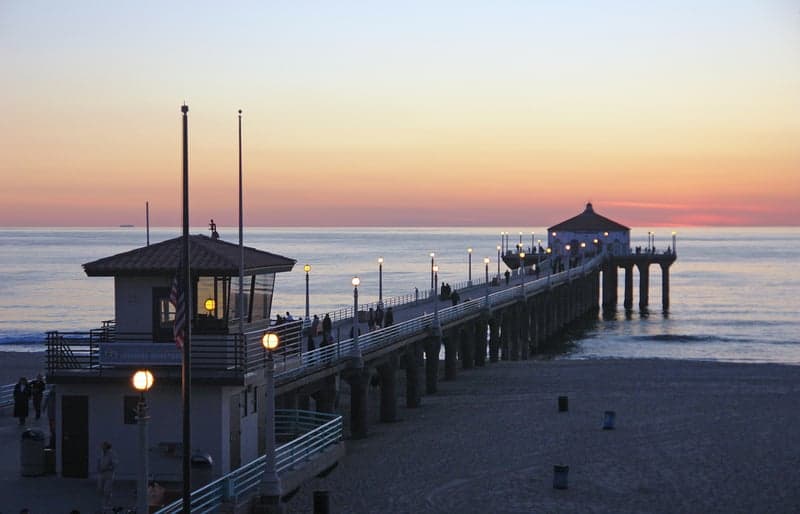
The average commute here clocks in at just under 29 minutes, which for Los Angeles County is practically a luxury. Most residents are professionals in finance, tech, or entertainment who trade a longer drive for the ability to be on the sand by 6:30 AM. The day typically starts with a run along The Strand — the 22-mile paved path that hugs the coast — followed by coffee at Molly’s Cafe or Love & Salt before the school rush. Manhattan Beach Unified is a major community anchor; parents move here specifically for schools like Grand View Elementary and Mira Costa High School, and the school calendar dictates social life as much as the surf report. By late afternoon, the volleyball courts at Manhattan Beach Pier are packed with both pickup games and organized leagues — this is the birthplace of modern beach volleyball, and locals treat the sport with near-religious seriousness.
Sports, Surf, and the Mira Costa Effect
High school sports are a genuine spectator event here. Mira Costa High School consistently fields top-ranked teams in volleyball, water polo, and surfing, and Friday night football games at Wallace R. Nelson Field draw crowds that rival small-college atmospheres. The Manhattan Beach Open — a professional beach volleyball tournament held every summer at the pier — is the town’s biggest annual event, drawing Olympians and thousands of spectators. For surfing, the break at El Porto (technically in neighboring North Manhattan Beach) is the local favorite, with consistent waves that attract both beginners and pros. The community’s identity is deeply tied to the ocean: the Manhattan Beach Surf Club and the South Bay Boardriders Club organize regular competitions and beach cleanups, and it’s not unusual to see a 50-year-old lawyer paddling out next to a 16-year-old grommet at dawn.
What’s There to Do: From Downtown Dining to Quiet Coves
Downtown Manhattan Beach, centered around Manhattan Beach Boulevard and Highland Avenue, is a walkable strip of boutiques, wine bars, and restaurants that feel more Santa Monica than South Bay. Standouts include Fishing with Dynamite for oysters, Petros for Greek, and Bread & Butter for a casual breakfast. For a quieter evening, locals head to The Strand House for ocean-view cocktails or Rock’n Fish for live music. The Manhattan Beach Farmers Market (Tuesdays on 13th Street) is a weekly ritual for produce and prepared foods. Beyond the beach, Polliwog Park offers a pond, playgrounds, and summer concerts, while South Coast Botanic Garden in nearby Palos Verdes is a 20-minute drive for a change of scenery. The Manhattan Beach Hometown Fair in October is a classic small-town affair with carnival rides and pie contests — a reminder that despite the affluence, this is still a place where neighbors know each other.
Pros and Cons of Living Here: The Honest Trade-Offs
- Pro: Unmatched outdoor lifestyle. The Strand, the pier, and the consistent surf mean you can be active year-round without a gym membership. The weather is nearly perfect — average highs in the 70s, with marine layer burning off by noon most days.
- Con: Cost of living is extreme. With a cost-of-living index of 464 (nearly five times the national average) and a median home value over $2 million, this is one of the most expensive ZIP codes in the country. Renting a two-bedroom apartment easily runs $5,000–$7,000 per month.
- Pro: Low crime and strong schools. The violent crime rate of 121.3 per 100,000 is well below the national average, and the school district is a major draw for families who can afford the housing.
- Con: Can feel insular and homogeneous. With 79% of adults holding a college degree and a median income that high, the social scene can be cliquey. New arrivals — especially those without kids or a beach sport — sometimes find it hard to break into established friend groups.
- Pro: Genuine community traditions. The Christmas tree lighting at the pier, the Fourth of July parade, and the annual sandcastle contest at the pier are well-attended and genuinely charming, not just tourist traps.
- Con: Traffic and parking are a daily headache. Downtown parking is notoriously tight, and during summer weekends, the beach lots fill by 9 AM. The 405 freeway is a 10-minute drive but can add 20 minutes to any trip during rush hour.
Manhattan Beach works best for people who value proximity to the ocean above nearly everything else, who have the income to absorb the cost, and who are willing to build a life around outdoor activity and school schedules. It’s not a place for nightlife seekers or those looking for cultural diversity — but for the right person, it’s a place where the daily commute includes a view of the Pacific, and the weekend plan is already made by the tide.

Similar towns to Manhattan Beach
* Values derived from national, state, county, city and local statistics and may differ in a specific area. Last updated: 2026-04-15T23:34:19.000Z
Narrative content on this page is AI-generated and may contain mistakes. Verify any details that matter before acting on them.
ReloMaps may earn a commission from affiliate links at no extra cost to you.

