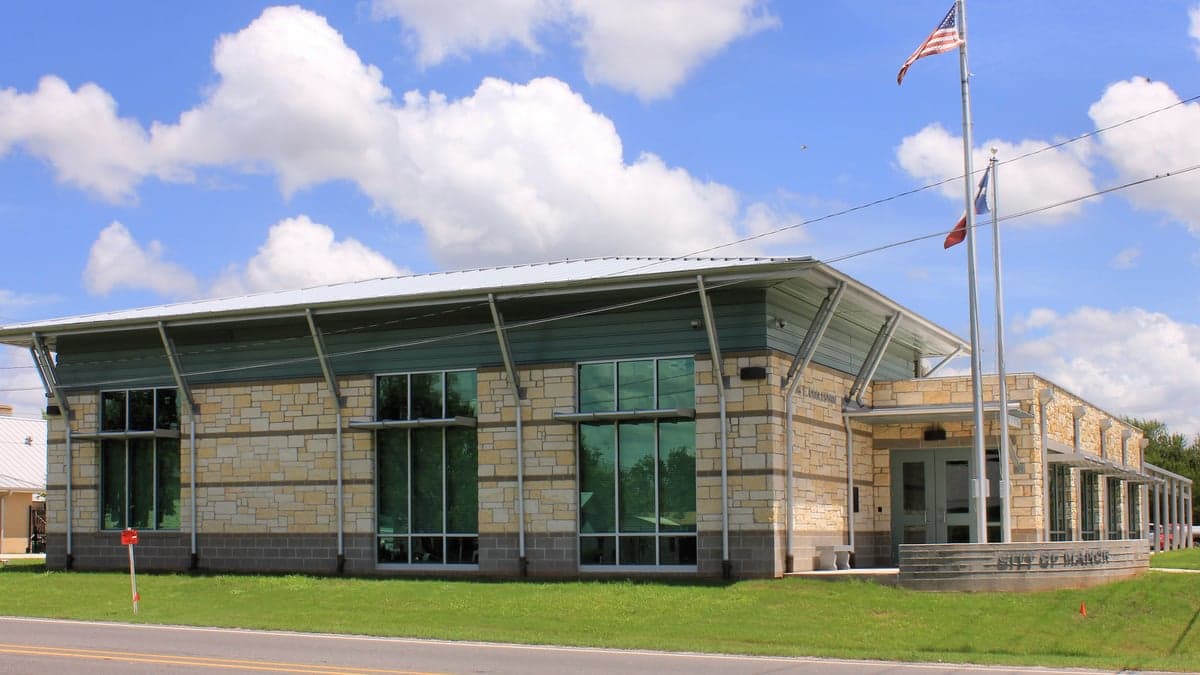
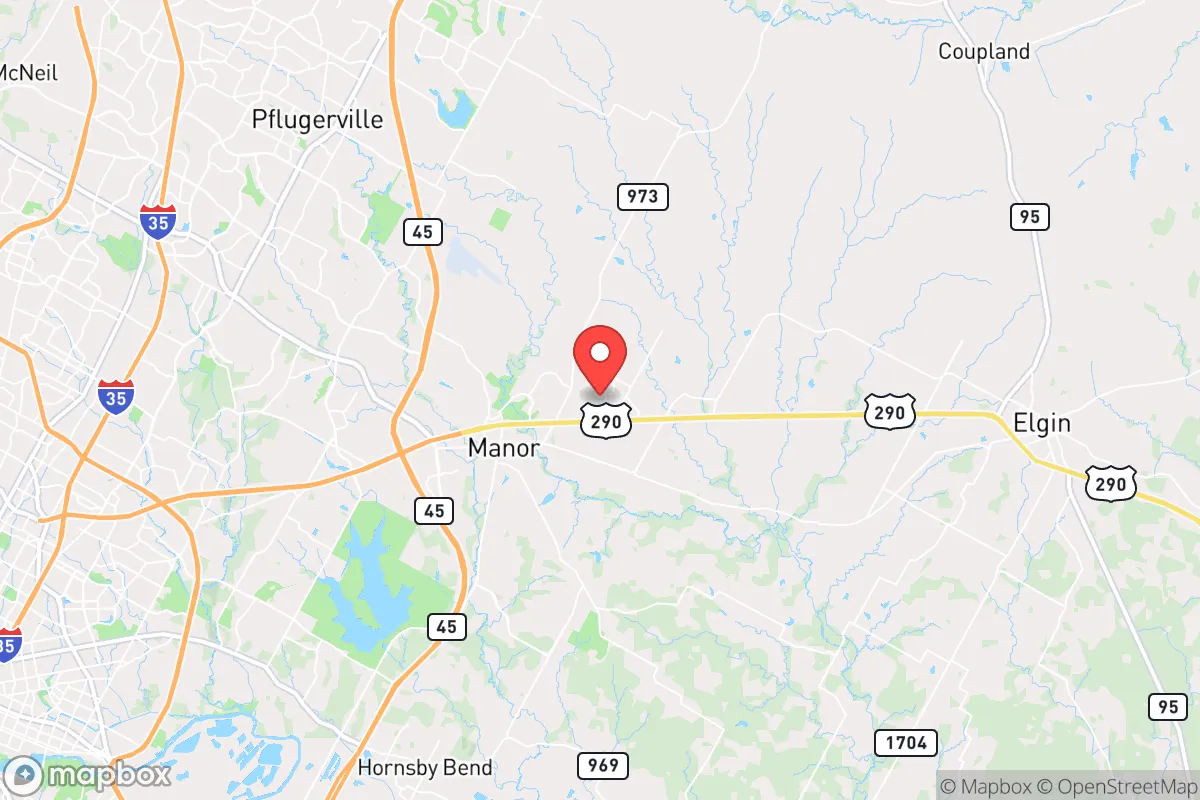
Photo: Wikipedia
Demographics of Manor, TX
Affluence Level in Manor, TX
A middle-class area roughly in line with national averages across income, home values, education, and employment.
People of Manor, TX
The people of Manor, Texas today form a fast-growing, majority-Hispanic suburb of Austin with a significant Black minority and a small but rising Asian and Indian presence. With a population of 16,917, the city is notably diverse: 54.6% Hispanic, 21.6% Black, 14.2% White, 1.8% East/Southeast Asian, and 0.9% Indian (subcontinent). Roughly 13.2% of residents are foreign-born, and 36.4% hold a college degree. Manor’s identity is that of a family-oriented, affordable alternative to Austin, where longtime working-class communities coexist with newcomers drawn by new master-planned subdivisions and tech-adjacent jobs.
How the city was settled and grew
Manor was founded in 1872 as a railroad stop on the Houston and Texas Central Railway, attracting Anglo farmers who established cotton and corn operations. The original settlement clustered around the depot in what is now Old Town Manor, where a few late-19th-century homes and commercial buildings remain. After the Civil War, freed African American families moved into the area, forming a distinct community in the Manor Heights neighborhood, which still holds historic Black churches and a strong sense of heritage. By the early 1900s, Mexican migrant laborers arrived to work the cotton fields, settling along the railroad corridor and in the East Manor district, laying the foundation for today’s Hispanic majority. Through the mid-20th century, Manor remained a small agricultural town, with population growth limited until Austin’s suburban expansion reached it.
Modern era (post-1965)
The 1965 Hart-Cellar Act and subsequent immigration waves reshaped Manor’s demographics. Hispanic families from Mexico and Central America continued to arrive, concentrating in East Manor and the older streets of Old Town Manor, where Spanish is widely spoken and family-owned taquerias anchor daily life. African American in-migration from other parts of Texas and the South reinforced the Black community in Manor Heights and newer subdivisions like ShadowGlen, a large planned development built in the 2000s. The post-2000 tech boom in Austin drew East/Southeast Asian and Indian professionals to Manor’s affordable housing, particularly in Whisper Valley, a master-planned eco-community that opened in the 2010s. Today, Whisper Valley has the highest concentration of Asian and Indian residents, while ShadowGlen and Manor Heights remain predominantly Black and Hispanic. The foreign-born share (13.2%) reflects ongoing immigration, mostly Hispanic but with a growing Asian and Indian component.
The future
Manor’s population is projected to continue rapid growth as Austin’s housing costs push families east. The Hispanic share (54.6%) is likely to remain the majority, sustained by both immigration and higher birth rates, but may plateau as new developments attract more White and Asian buyers. The Black share (21.6%) could decline slightly if newer subdivisions draw a more diverse mix. East/Southeast Asian and Indian communities, though small, are expected to grow as tech employment expands, especially in Whisper Valley and future phases of ShadowGlen. The city is not homogenizing; instead, distinct enclaves are solidifying: Old Town Manor and East Manor remain heavily Hispanic, Manor Heights stays predominantly Black, and Whisper Valley is becoming a multiethnic, higher-income corridor. Over the next 10–20 years, Manor will likely become a more stratified suburb—economically and ethnically—while retaining its family-friendly, small-town feel.
For someone moving in now, Manor offers a diverse, affordable community with clear neighborhood identities. The city is becoming a classic Sun Belt suburb: growing, increasingly educated, and ethnically layered, but with enough historic character to feel distinct from Austin’s sprawl. Understanding which neighborhood aligns with your priorities—whether it’s the established community of Manor Heights, the new-construction appeal of Whisper Valley, or the walkable historic core of Old Town Manor—will shape your experience.

* Values derived from national, state, county, city and local statistics and may differ in a specific area. Last updated: 2026-05-14T18:37:00.000Z
Narrative content on this page is AI-generated and may contain mistakes. Verify any details that matter before acting on them.
ReloMaps may earn a commission from affiliate links at no extra cost to you.

