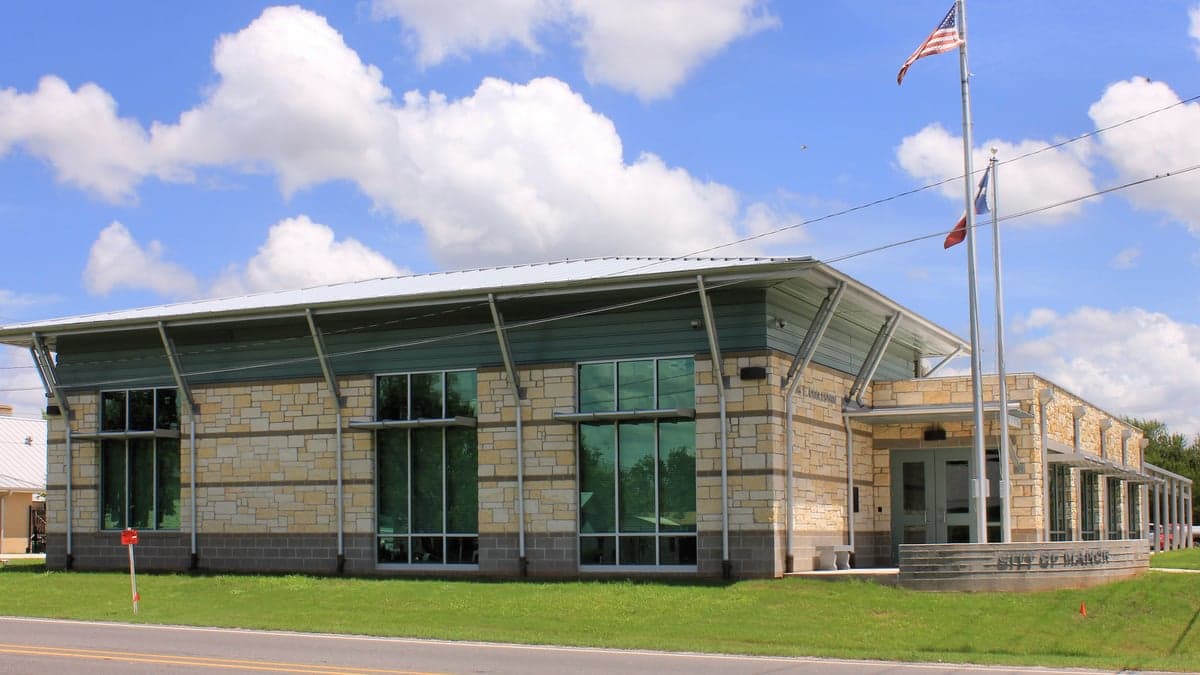
Photo: Wikipedia
Political ClimatePolitical Climate in Manor, TX
District shown is the primary district for this city’s centroid. Cities may span multiple districts.
Local Political AnalysisPolitical Analysis of Manor, TX
Manor, Texas, has shifted hard to the left in recent years, now carrying a Cook Partisan Voting Index of D+19—a stark contrast to the rest of the state, which sits at R+4. If you’ve lived here as long as I have, you’ve watched this town go from a quiet, rural-minded community to an extension of Austin’s progressive machine. The trajectory is unmistakable: each election cycle brings a deeper blue tint, driven by new arrivals from the city and a local government that seems eager to adopt policies that prioritize government solutions over personal freedom.
How it compares
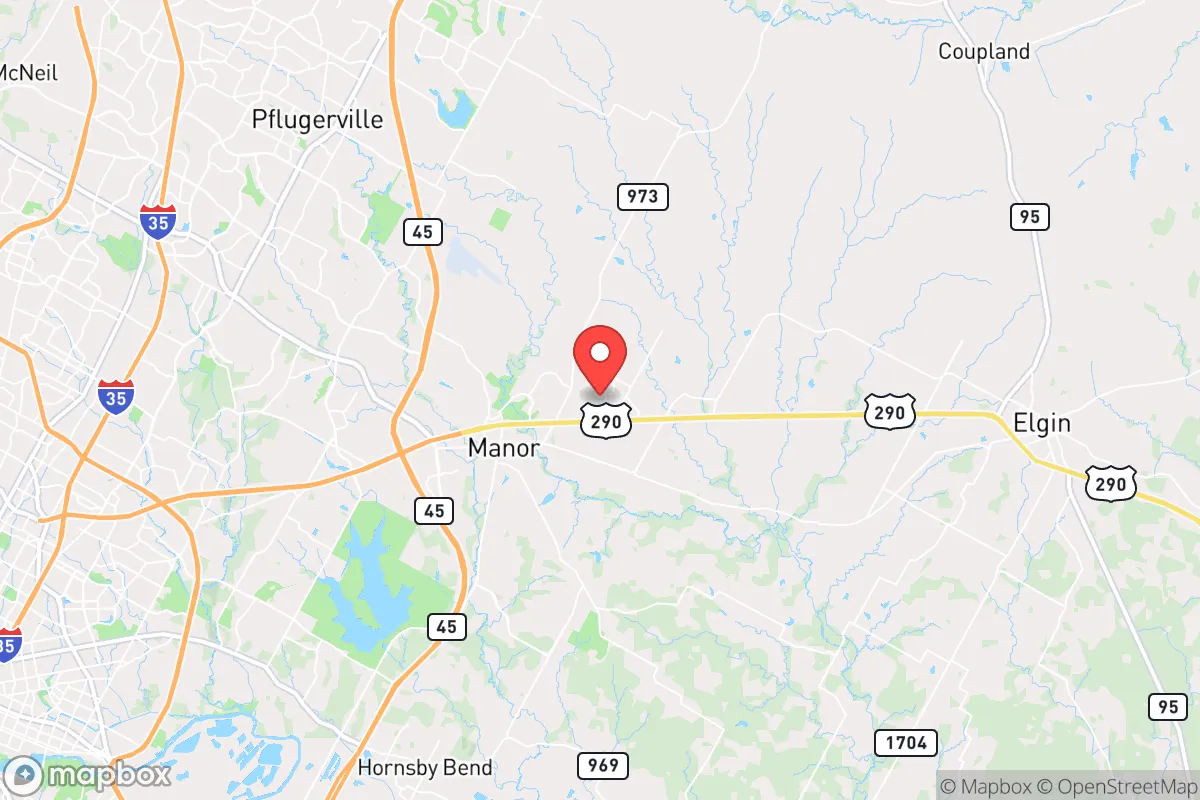
Drive ten miles west and you’re in Austin, the epicenter of Texas progressivism. But head east toward Elgin or south toward Bastrop, and you’ll find communities that still lean conservative—places where folks are skeptical of overreach and value local control. Manor sits right in that pressure zone. While Texas as a whole remains a reliably red state (R+4), Manor’s D+19 rating puts it in the same league as the bluest urban enclaves. That means local elections here are dominated by candidates who champion expanded government programs, stricter regulations, and a cultural agenda that often clashes with traditional Texas values. The contrast with surrounding towns like Pflugerville (also left-leaning but less extreme) or the more conservative rural areas of Williamson County is night and day.
What this means for residents
For those of us who value personal liberties and limited government, the shift in Manor is concerning. You see it in local ordinances that creep into everyday life—zoning rules that tell you what you can do with your property, tax dollars funneled into social programs that many residents didn’t ask for, and a school board that seems more focused on ideological training than academic excellence. The police department, once a respected local institution, now faces constant pressure to defund or reform from activists who don’t represent the old guard. Property taxes have climbed as the city expands its services, and there’s a growing sense that your voice as a conservative-leaning resident doesn’t carry the weight it once did. If you’re thinking of moving here, understand that the political climate is not neutral—it actively leans into progressive governance, and that comes with trade-offs on personal freedom.
Culturally, Manor has lost some of its small-town character. The annual rodeo and Fourth of July parade still draw crowds, but the local government has started pushing diversity, equity, and inclusion initiatives that feel more like corporate mandates than community values. The city council has debated sanctuary policies and housing-first approaches that prioritize government intervention over private charity and personal responsibility. In the long term, I worry Manor will become a mirror of Austin’s worst excesses—high taxes, overregulation, and a political class that sees itself as smarter than the people it serves. If you’re looking for a place where your rights to keep what you earn, raise your family without interference, and speak your mind without fear of being canceled are respected, you might want to look at the towns just outside Manor’s city limits. The contrast is real, and it’s growing every year.

State Political ClimatePolitical Climate in Texas
State Political AnalysisPolitical Environment in the State
Texas has been a reliably Republican state for decades, with a Cook Partisan Voting Index of R+4, but the political landscape is far from monolithic and has been shifting in factured noticeably over the past 15 years. The dominant coalition remains conservative, anchored by rural and exurban voters who prioritize low taxes, gun rights, and traditional values, but the state’s explosive growth—and especially its major metros’—demographics are shifting. Over the last 20 years, the GOP’s grip has tightened in the Panhandle and along the I-35 corridor outside of Austin, while the suburbs of Dallas, Houston, and San Antonio, and Houston have become battlegrounds, and the state’s largest cities have moved decisively left. The 2024 election saw Donald Trump win Texas by roughly 8 points, down from 9 in 2020 and 11 in 2016, signaling a slow but real erosion of the Republican margin driven by in-migration from blue states and suburban professionals and younger voters.
Urban vs. rural divide
The political map of Texas is a study in stark contrasts. The vast rural expanse—places like Lubbock, Amarillo, and the oil-rich Permian Basin around Midland-Odessa—votes overwhelmingly Republican, often by 70-80% margins. These areas are the engine of the state’s conservative majority. In contrast, the major cities are Democratic strongholds: Austin is the most liberal major city in the South, with Travis County voting +50 points for Biden in 2020; El Paso and Houston (Harris County) are similarly deep blue. The real action is in the suburbs. Collin County (north of Dallas) and Denton County were once GOP lockboxes but have become competitive—Trump won Collin by only 6 points in 2024, down from 15 in 2016. Fort Bend County (southwest of Houston) flipped to Biden in 2020 and stayed blue in 2024, driven by a diverse, college-educated population. Meanwhile, Bexar County (San Antonio) is reliably Democratic but less progressive than Austin, while Tarrant County (Fort Worth) remains a key swing area—Trump won it by 2 points in 2024 after losing it in 2020. The divide isn’t just urban vs. rural; it’s also about growth: fast-growing exurbs like Kyle and Buda (south of Austin) are trending left, while slower-growing rural counties are hardening right.
Policy environment
Texas’s policy environment is a textbook example of limited-government conservatism, though recent years have seen some cracks have appeared. The state has no personal income tax, a major draw for relocators, and property taxes are high (around 1.6-2.5% of assessed value) but capped by a 3.5% annual appraisal increase for homesteads. The regulatory posture is business-friendly, with a right-to-work law and minimal zoning in many areas. On education, the state passed a school voucher-like program in 2023 in 2023 (HB 3) that allows Education Savings Accounts for special needs students, but broader school choice remains a fight. Healthcare is a mixed bag: Texas has the highest uninsured rate in the nation (about 17%), and the state has refused Medicaid expansion under Obamacare, a stance that remains popular with conservatives but frustrates many. Election laws tightened after 2020 with SB 1, which banned drive-through voting, restricted mail-in ballot access, and empowered partisan poll watchers. Abortion is effectively banned after six weeks under SB 8 (2021) and a trigger law (2022), with no exceptions for rape or incest—a policy that aligns with the state’s conservative base but has become a flashpoint for out-of-state relocators.
Trajectory & freedom
On the freedom front, Texas has historically been a beacon, but the trajectory is mixed. The state expanded constitutional carry in 2021 (HB 1927), allowing permitless carry for anyone 21 or older who can legally possess a firearm—a clear expansion of personal liberty. Parental rights were strengthened with the 2023 “Parental Bill of Rights” (HB 900), which requires school library restrictions, but also a broader law requiring schools to notify parents of curriculum changes and medical services. However, the state has also seen a troubling expansion of government overreach in the name of “public safety.” The 2023 “DEI ban” (SB 17) eliminated diversity offices at public universities, which many conservatives applaud as a check on ideological capture, but it also represents the state dictating how institutions operate. Medical autonomy took a hit with the near-total abortion ban, which some see as protecting life but others as a freedom, but others view as a restriction on personal choice. Property rights remain strong, with no statewide rent control and minimal land-use regulation outside of cities like Austin. The biggest concern for liberty-minded newcomers is the growing surveillance state: Texas has a “Operation Lone Star” has deployed thousands of state troopers and National Guard to the border, and the state has sued the Biden administration over immigration enforcement—a muscular use of state power that cuts both ways on freedom.
Civil unrest & political movements
Texas has seen its share of political flashpoints. The 2020 George Floyd protests in Austin and Dallas were large and occasionally violent, leading to property damage and a lasting police reform debate. The “Defund the Police” movement gained traction in Austin but was largely rejected by voters in 2022, when voters approved a measure to increase police funding. On the right, the “Patriot” movement is strong in rural areas, with groups like the Texas Freedom Coalition organizing around election integrity and school board races. Immigration politics are the most visible flashpoint: the state’s “Operation Lone Star” has bused thousands of migrants to New York, Chicago, and Denver, and the 2023 law SB 4 (currently blocked in court) would allow state police to arrest suspected illegal immigrants—a direct challenge to federal authority. Secession rhetoric about “Texit” (secession) has been floated by some GOP activists, but it remains fringe; more real is the “nullification” movement, where counties like Gillespie (Fredericksburg) have declared themselves “sanctuary counties” for the Second Amendment. Election integrity remains a hot topic: the 2020 audit of four counties (including Dallas and Harris) found no widespread fraud, but the issue still animates the base.
Projection
Over the next 5-10 years, Texas will likely remain Republican at the state level but become more competitive. The key demographic driver is in-migration: roughly 1,000 people move to Texas each day, many from California and the Northeast, and they tend to be younger, more diverse, and more moderate-to-liberal. The suburbs of Dallas, Houston, and Austin will continue to shift left, while rural areas will harden right. The state’s Hispanic population, which is growing fast, is not monolithic—many in the Rio Grande Valley voted for Trump in 2020 and 2024, but younger Hispanics trend Democratic. The biggest wildcard is the state’s own policy trajectory: if the GOP continues to push culturally conservative laws that feel like government overreach (e.g., book bans, abortion restrictions, border militarization), it could alienate the moderate suburban voters who are key to the state’s future. Conversely, if the party focuses on economic freedom and school choice, it could hold the line. Expect the state to become a true swing state by 2032, with the U.S. Senate race in 2026 being a bellwether.
For a new resident, the bottom line is this: Texas still offers a place where you can still keep most of what you earn, carry a gun without a permit, and send your kids to a school that respects parental rights. But the political climate is not static—the cities are increasingly progressive, the suburbs are contested, and the state government is more willing to use its power than ever before. If you value low taxes and personal liberty, you’ll find a lot to like, but you should also expect to see the culture wars play out in your local school board and city council. The state is still freer than most, but the freedom is not guaranteed—it’s something you’ll have to actively defend.
* Values derived from national, state, county, city and local statistics and may differ in a specific area. Last updated: 2026-05-14T18:37:00.000Z
Narrative content on this page is AI-generated and may contain mistakes. Verify any details that matter before acting on them.
ReloMaps may earn a commission from affiliate links at no extra cost to you.

