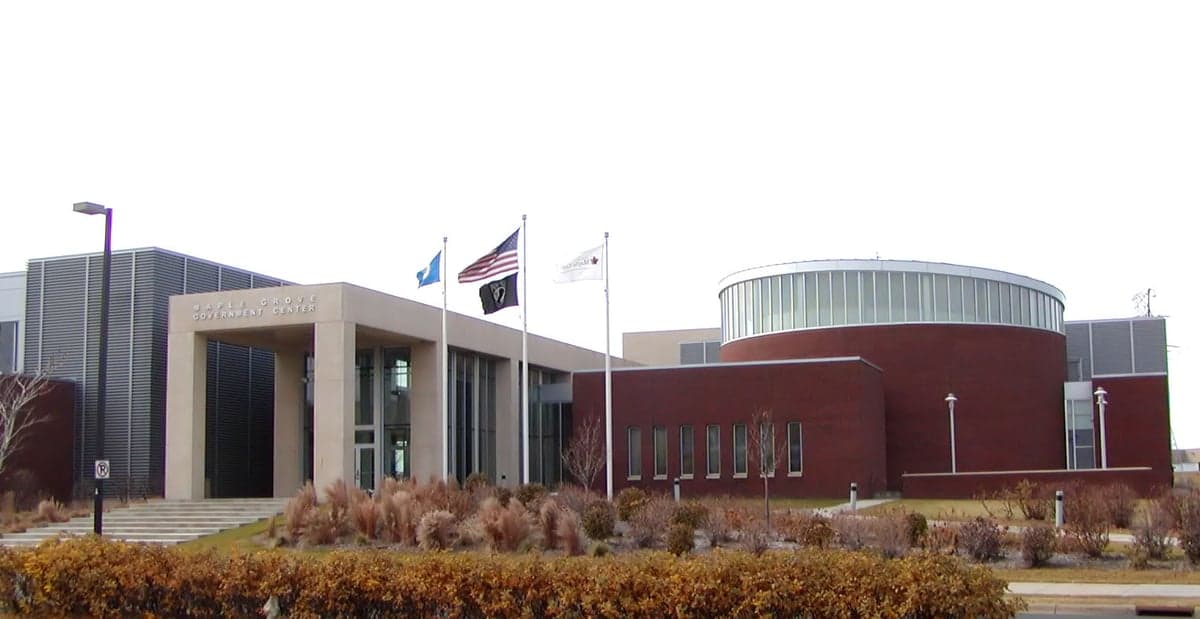
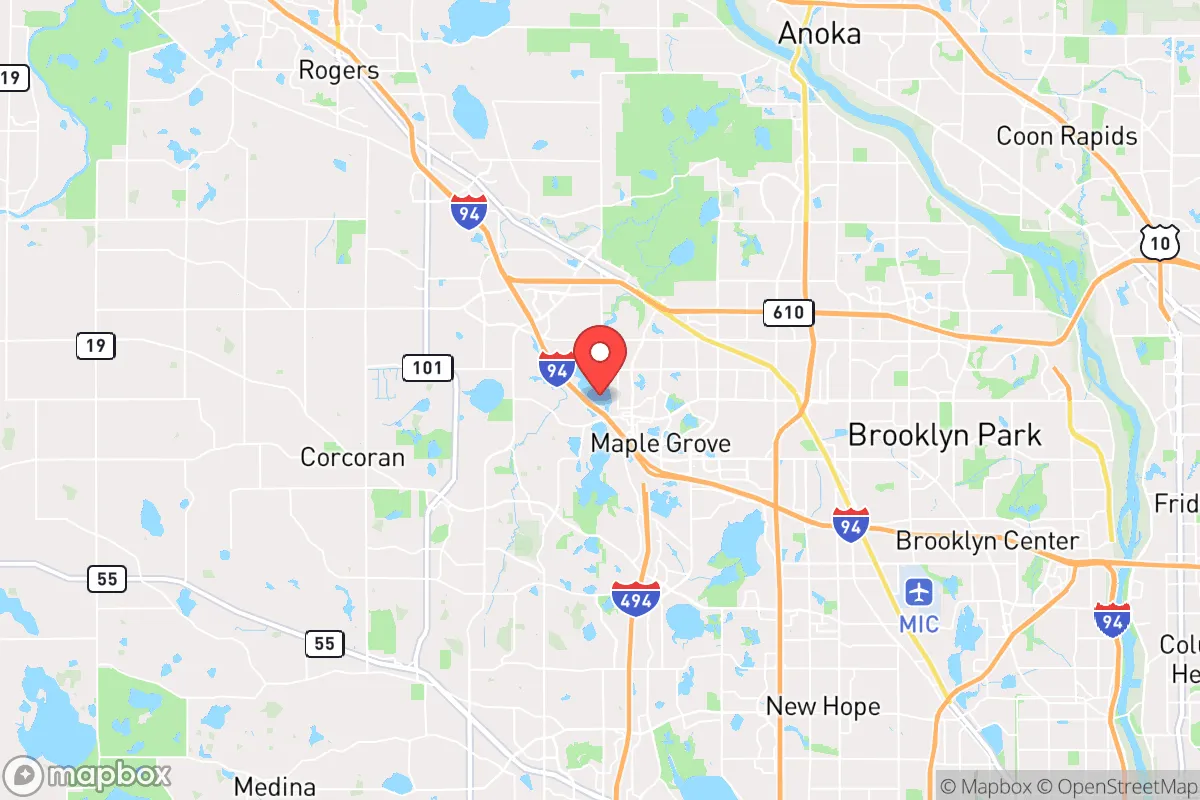
Photo: Wikipedia
Demographics of Maple Grove, MN
Affluence Level in Maple Grove, MN
An upper-middle-class area. Household wealth, education levels, and homeownership run ahead of national benchmarks.
People of Maple Grove, MN
Maple Grove, Minnesota, is home to 70,539 residents, a population that is predominantly white (79.1%) but increasingly diverse, with significant Black (7.0%), Indian subcontinent (3.6%), and East/Southeast Asian (3.3%) communities. The city is characterized by a high educational attainment rate—55.9% of adults hold a college degree—and a low foreign-born share of 4.4%, reflecting a population shaped by domestic migration from the Twin Cities metro and, more recently, professional-class immigrants. Its identity is that of an affluent, family-oriented suburb where newcomers are drawn by top-rated schools, large-lot housing, and proximity to Minneapolis employment centers.
How the city was settled and grew
Maple Grove’s human history begins with the Dakota people, who used the area for hunting and gathering along the Elm Creek watershed. European-American settlement began in the 1850s, when Yankee and German farmers claimed land under the Preemption Act of 1841 and the Homestead Act of 1862. The first wave of settlers—mostly of German, Irish, and Scandinavian stock—established small farms and built the nucleus of what is now the Historic Maple Grove Village district near the intersection of Elm Creek Boulevard and Main Street. By 1900, the population hovered around 1,000, and the community remained a quiet agricultural township through the mid-20th century. The Fish Lake area, with its spring-fed lake, became a modest summer-cottage enclave for Minneapolis families in the 1920s and 1930s, but year-round population growth was minimal until the post-war era.
Modern era (post-1965)
Maple Grove’s transformation from farmland to suburb began in earnest after the 1965 Immigration and Nationality Act, though the city’s growth was driven overwhelmingly by domestic in-migration from Minneapolis and inner-ring suburbs, not foreign immigration. The construction of Interstate 94 and the 1970 opening of the Arbor Lakes shopping district catalyzed a building boom. During the 1970s and 1980s, developers platted large subdivisions such as Rush Creek and Weaver Lake, attracting white, college-educated families seeking newer, larger homes and the then-new Maple Grove Senior High School (opened 197 Wig). The 1990s and 2000s saw the city’s population surge from 38,736 in 1990 to 61,567 in 2010, with the Eagle Lake and Elm Creek neighborhoods absorbing much of this growth. During this period, Maple Grove began to diversify modestly. Black residents, many moving from Minneapolis’s North Side and Brooklyn Center, settled in the Hemlock Lane corridor and the Maple Grove Townhomes area near I-94. East/Southeast Asian families—primarily Hmong and Vietnamese—arrived via secondary migration from St. Paul, clustering in the Rush Creek and Weaver Lake subdivisions. Indian subcontinent professionals, drawn by jobs at Medtronic, Boston Scientific, and other medical-device firms along the I-94 corridor, concentrated in the newer Arbor Lakes and Eagle Lake neighborhoods. Hispanic residents, though a small share at 2.9%, established a presence in the Hemlock Lane area, often working in construction and landscaping. The city’s foreign-born share peaked at around 6% in 2010 and has since declined to 4.4%, as domestic migration has outpaced international arrivals.
The future
Maple Grove’s population is likely to continue growing slowly, reaching an estimated 75,000–78,000 by 2040, driven by infill development and the aging of existing residents. The city is not homogenizing into a single demographic block; rather, it is tribalizing into distinct enclaves. The Arbor Lakes and Eagle Lake areas will remain majority-white and affluent, with growing Indian subcontinent and East/Southeast Asian professional populations. The Hemlock Lane corridor will likely see a modest increase in Black and Hispanic residents, though the city’s high housing costs—median home price above $450,000—will limit significant in-migration of lower-income groups. The Indian subcontinent community, now the largest non-white group, is growing through both immigration and natural increase, and is expected to reach 5–6% of the population by 2040. East/Southeast Asian shares are likely to plateau around 4%, as younger families move to more affordable suburbs like Rogers or Dayton. The white population, while still dominant, will continue its slow decline from 79.1% as the city diversifies at the margins. Maple Grove is becoming a stable, multi-ethnic upper-middle-class suburb, but one where racial and ethnic groups remain geographically and socially distinct rather than fully integrated.
For a conservative-leaning mover—whether a single professional or a parent—Maple Grove offers a safe, well-run, and increasingly diverse community where property values and school quality are high, and where demographic change is gradual enough to feel manageable. The city’s future is one of slow, orderly diversification within a framework of strong civic institutions and conservative fiscal management, making it a low-risk choice for those who prioritize stability and long-term investment over urban energy or rapid change.

* Values derived from national, state, county, city and local statistics and may differ in a specific area. Last updated: 2026-04-24T07:37:21.000Z
Narrative content on this page is AI-generated and may contain mistakes. Verify any details that matter before acting on them.
ReloMaps may earn a commission from affiliate links at no extra cost to you.

