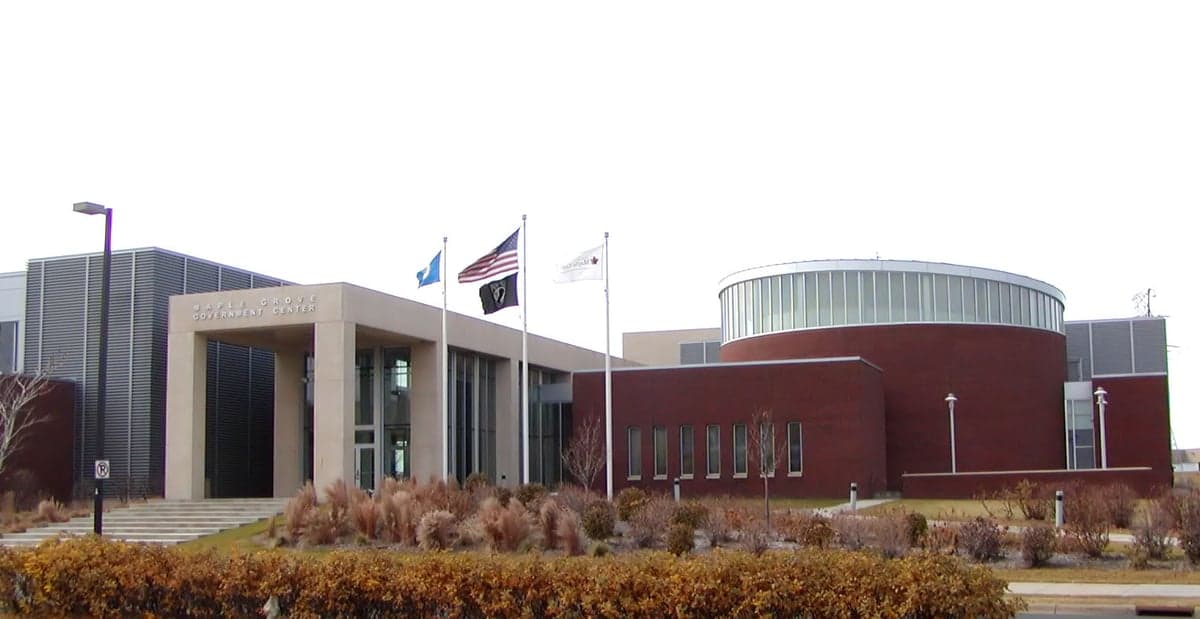
Photo: Wikipedia
Political ClimatePolitical Climate in Maple Grove, MN
District shown is the primary district for this city’s centroid. Cities may span multiple districts.
Local Political AnalysisPolitical Analysis of Maple Grove, MN
Maple Grove has a Cook PVI of D+11, meaning it leans significantly more Democratic than the national average, but that number doesn't tell the whole story if you've lived here a while. This used to be a reliably conservative suburb, a place where folks minded their own business and the local government kept its nose out of your backyard and your wallet. Over the last decade, especially since the 2020 election cycle, you've seen a steady influx of folks from Minneapolis and other blue strongholds, bringing their voting habits with them. The trajectory is clear: Maple Grove is shifting further left, and the local policies are starting to reflect that, which is concerning for anyone who values limited government and personal autonomy.
How it compares
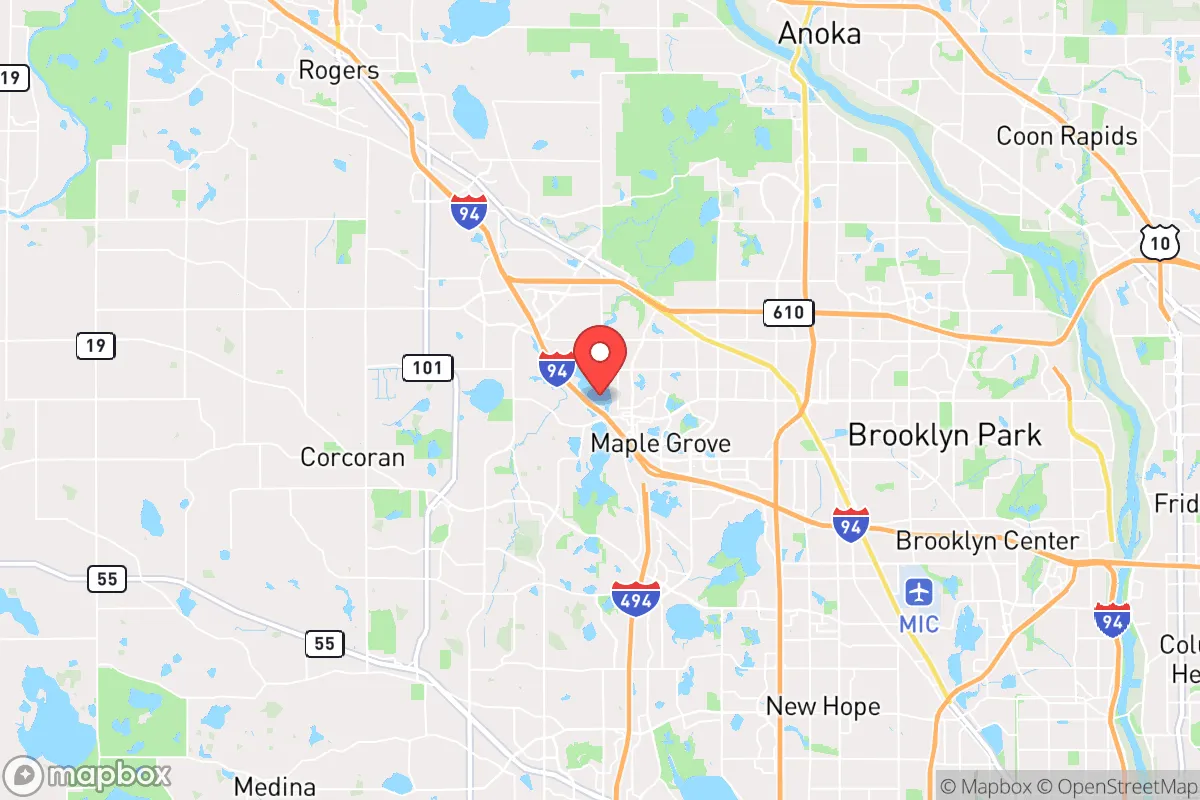
To understand Maple Grove's politics, you have to look at the towns around it. Drive ten minutes west to Corcoran or Medina, and you're in deep-red territory—places where property rights are sacred and the tax levy is a constant fight. Head east toward Brooklyn Park or Minneapolis, and you're in the heart of progressive governance, with higher taxes, more regulations, and a "we know what's best for you" attitude from city hall. Maple Grove sits right in the middle, but it's sliding eastward fast. The city council and school board races are now dominated by candidates backed by the same groups that run Minneapolis, pushing things like equity-based budgeting and stricter land-use rules that chip away at your freedom to do what you want with your own property. It's a far cry from the Maple Grove of the 1990s and early 2000s, when the biggest political fights were about keeping the roads plowed and the parks clean.
What this means for residents
For the average resident, the most immediate impact is on your wallet and your rights. Property taxes have been climbing faster than inflation, partly because the city keeps adding new programs and staff positions tied to progressive priorities—like a diversity, equity, and inclusion office that most folks never asked for. You're also seeing more zoning restrictions that make it harder to run a home-based business or put up a fence without a permit and a public hearing. The school district has adopted curriculum materials that emphasize social justice themes over core academics, which has a lot of parents worried about what their kids are being taught. If you value the freedom to live your life without the government micromanaging your choices—whether that's what you teach your children, how you use your land, or how much of your paycheck goes to the city—these trends are a red flag. The long-term concern is that Maple Grove will become just another high-tax, high-regulation suburb where the only people who can afford to stay are those who agree with the political direction.
One cultural distinction worth noting: Maple Grove still has a strong sense of community among longtime residents, many of whom remember when the town was mostly farmland and small businesses. There's a quiet resistance to the changes, but it's getting harder to push back as new arrivals vote for more government involvement. The local elections in 2024 and 2026 will be critical—if the conservative-leaning residents don't turn out, you can expect the progressive agenda to accelerate. For now, if you're thinking of moving here, just know that the political climate is not what it used to be, and it's not likely to swing back anytime soon without a serious grassroots effort.

State Political ClimatePolitical Climate in Minnesota
State Political AnalysisPolitical Environment in the State
Minnesota has shifted from a classic purple battleground to a solidly blue state over the past 15 years, driven by explosive growth in the Twin Cities metro and a sharp leftward turn in state policy. The Democratic-Farmer-Labor Party (DFL) now holds a trifecta in state government, and in 2024, Kamala Harris carried the state by about 7 points, though Donald Trump flipped several rural counties by wider margins than in 2020. For a conservative considering relocation, the state’s trajectory is concerning: a once-pragmatic, moderate political culture has been replaced by aggressive progressive governance that touches nearly every aspect of daily life.
Urban vs. rural divide
The political map of Minnesota is a tale of two worlds. The Twin Cities metro—Hennepin, Ramsey, and Washington counties—delivers roughly 60% of the state’s vote and is overwhelmingly Democratic. Minneapolis and St. Paul are among the most progressive cities in the Midwest, with policies like rent control, sanctuary city status, and defunded police budgets. Meanwhile, greater Minnesota is deeply red. Counties like Stearns (St. Cloud), Wright, and Sherburne voted for Trump by 20+ points in 2024. The Iron Range, once a DFL stronghold, has flipped hard: St. Louis County (Duluth) is now a swing area, while Itasca and Koochiching counties went for Trump by double digits. The divide is stark: a drive from Minneapolis to Rochester (home of Mayo Clinic) takes you from a city with a socialist city council member to a conservative-leaning medical hub where Trump won by 8 points in 2024.
Policy environment
Minnesota’s policy environment has become a laboratory for progressive governance. In 2023, the DFL passed a $ ~~72 billion two-year budget—a 40% increase from the previous cycle—funded by new taxes on capital gains, corporate income, and a new 1% surcharge on incomes over $1 million. The state now has a top marginal income tax rate of 9.85%, one of the highest in the nation. Property taxes are also high, especially in the metro: a $400,000 home in Edina carries an annual property tax bill around $5,500. On education, Minnesota mandates ethnic studies in public schools and has a universal free school meals program. Healthcare is heavily regulated, with a state-run insurance exchange and a Medicaid expansion that covers about 1.2 million residents. Election laws are among the most liberal: no voter ID requirement, automatic voter registration, and same-day registration. The state also passed a clean energy mandate requiring 100% carbon-free electricity by 2040, which is driving up utility costs in rural areas.
~~Trajectory & freedom
Over the past five years, Minnesota has become less free by nearly any measure. The 2023 legislative session was a firehose of restrictions: a red flag law (Extreme Risk Protection Order) that allows courts to temporarily seize firearms without a criminal conviction, a universal background check law, and a waiting period for handgun purchases. Parental rights took a hit with the Trans Refuge Act, which shields gender-affirming care for minors from out-of-state legal challenges, effectively overriding parental consent laws from other states. Medical autonomy was further eroded by a right-to-repair law for medical devices that sounds good but actually mandates data sharing with third parties. Property rights are under pressure from a new tenant bill of rights that limits rent increases and eviction procedures, which landlords in St. Cloud and Mankato say is driving up costs. On the plus side, Minnesota has no state-level occupational licensing for many trades, and it’s a right-to-work state, though union density remains high at 14%.
Civil unrest & political movements
Minnesota has been a flashpoint for civil unrest since the 2020 George Floyd protests, which caused over $500 million in damage in Minneapolis and St. Paul. The state’s sanctuary policies—Minneapolis and St. Paul both limit cooperation with ICE—have drawn federal scrutiny and created tension in suburbs like Brooklyn Park and Maplewood, where immigrant populations have grown rapidly. On the right, the Minnesota Gun Owners Caucus and Minnesota Freedom Fund are active, but they’ve lost every major legislative battle since 2020. Election integrity remains a hot-button issue: the 2020 election saw a record 3.3 million votes cast, and while no widespread fraud was proven, the state’s no-ID voting system and high mail-in ballot usage continue to fuel distrust among conservatives. In 2024, a ballot initiative to require voter ID failed in the legislature, and a proposed constitutional amendment to do the same never made it to the ballot. The Minnesota State Fair in Falcon Heights has become a yearly battleground for political activism, with dueling booths from the DFL and the state GOP.
Projection
Over the next 5-10 years, Minnesota will likely become more progressive due to demographic trends. The Twin Cities metro is growing at about 1% annually, while rural counties are losing population. The state’s population is aging—median age is 38—and younger voters in the suburbs are trending left. In-migration from blue states like California and Illinois is modest but concentrated in the metro, further shifting the balance. The DFL’s 2023 trifecta is unlikely to be broken soon; the state Senate is up in 2026, but the map favors Democrats. Expect more gun control, higher taxes, and expanded government healthcare. The one wild card is the 2026 gubernatorial election: if a moderate Republican like former state senator Scott Jensen runs again, they could make inroads in the suburbs, but the path to victory is narrow. For conservatives, the best bet is to look at exurban counties like Chisago or Isanti, where growth is strong and politics lean red, but even there, state-level policy will continue to tighten.
For a conservative moving to Minnesota, the bottom line is this: you’ll find like-minded communities in the outer suburbs and rural areas, but you’ll be fighting an uphill battle against a state government that is actively expanding its reach into your wallet, your home, and your family. The state’s natural beauty, strong economy, and excellent schools are real draws, but they come with a price tag—both in taxes and in personal freedom. If you value low taxes, gun rights, and local control, Minnesota is not a safe bet. If you can afford the cost and are willing to engage politically, you’ll find a vibrant conservative movement in places like Rochester, St. Cloud, and Duluth’s western suburbs. Just know that the state’s trajectory is set, and it’s not turning back anytime soon.
* Values derived from national, state, county, city and local statistics and may differ in a specific area. Last updated: 2026-04-24T07:37:21.000Z
Narrative content on this page is AI-generated and may contain mistakes. Verify any details that matter before acting on them.
ReloMaps may earn a commission from affiliate links at no extra cost to you.

