Photo: Wikipedia
Political ClimatePolitical Climate in Maplewood, MN
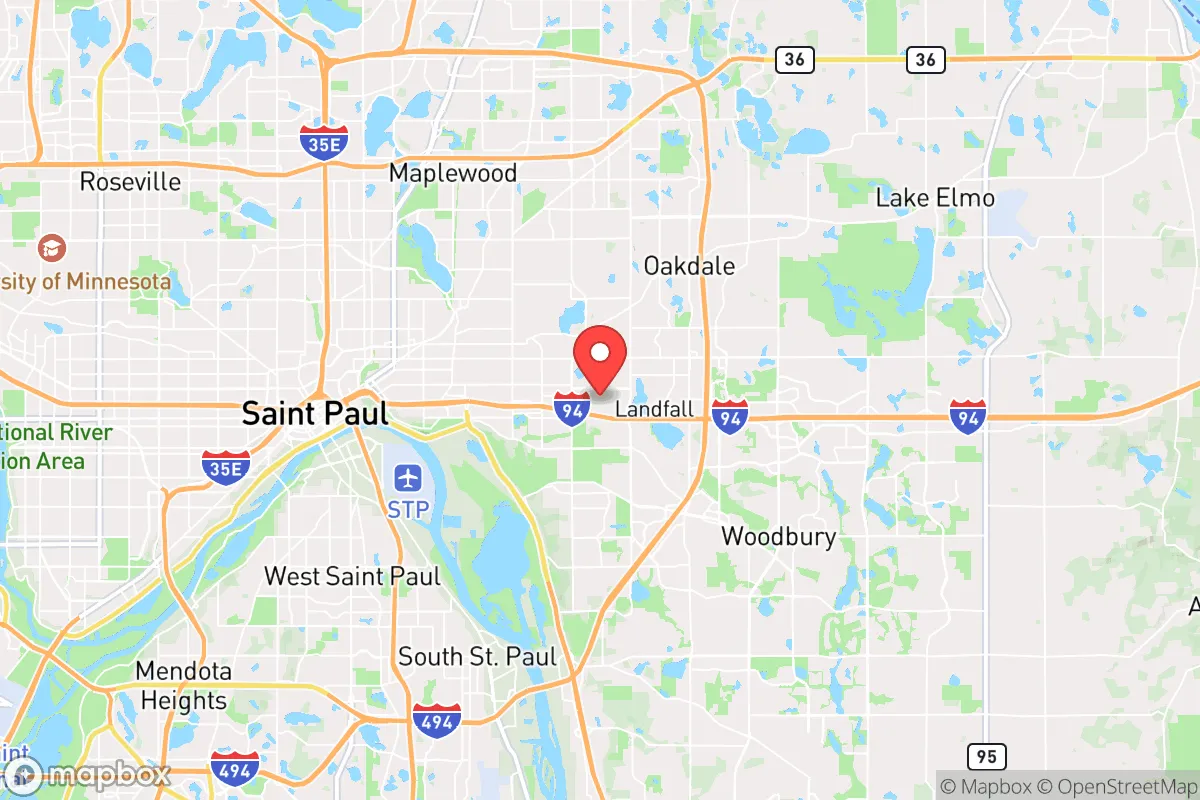
District shown is the primary district for this city’s centroid. Cities may span multiple districts.
Local Political AnalysisPolitical Analysis of Maplewood, MN
Maplewood, Minnesota, leans heavily Democratic, with a Cook PVI of D+18, meaning it votes about 18 points more Democratic than the national average. This isn’t a recent shift—it’s been a reliably blue suburb for decades, but the intensity has ramped up noticeably since the early 2000s. If you’re a conservative, you’ll feel like a minority voice here, especially compared to nearby towns like Woodbury (more moderate) or Stillwater (a bit more balanced). The trajectory is concerning: each election cycle, the local government seems to drift further left, embracing policies that feel less about community and more about control.
How it compares
Maplewood stands out even in Ramsey County, which is already solidly Democratic. Head west to Roseville or north to White Bear Lake, and you’ll find similar political leanings, but Maplewood’s D+18 rating puts it in a class of its own. Contrast that with Washington County to the east, where places like Cottage Grove and Woodbury have a more mixed electorate—still blue, but with a stronger conservative undercurrent. Even St. Paul, just south, has a more vocal progressive movement, but Maplewood’s politics feel quieter, more bureaucratic. The real shocker is how different it is from rural Minnesota, where counties like Wright or Sherburne vote +20 or more Republican. That’s a 40-point swing in just 30 miles.
What this means for residents
For a conservative living here, it means watching your tax dollars fund programs you might not agree with—like expanded public transit that barely gets used, or diversity initiatives that feel more like social engineering than community building. The city council has pushed for stricter rental regulations and zoning changes that limit property rights, all in the name of “equity.” You’ll see more signs for local candidates who champion climate action and police reform, but less talk about fiscal responsibility or individual freedoms. If you value keeping government out of your backyard—literally, with things like lawn care mandates or short-term rental bans—you’ll find yourself on the losing side of most votes. The long-term trend? Expect more of the same, with younger, more progressive residents moving in from Minneapolis, driving up housing costs and pushing for even tighter controls.
Culturally, Maplewood has a distinct feel: it’s a bedroom community with a strong sense of local identity, but that identity is increasingly tied to progressive activism. The city’s annual events, like the Maplewood Days festival, are still family-friendly, but you’ll notice more booths for environmental groups and social justice organizations. Policy-wise, the city has embraced “sanctuary” ordinances and limited cooperation with federal immigration enforcement, which can be a red flag if you prioritize rule of law. The school district, North St. Paul-Maplewood-Oakdale, has also shifted left, with curriculum changes that emphasize social-emotional learning over traditional academics. If you’re a conservative, you’ll need to pick your battles—maybe joining a local Republican club or running for a city council seat—but don’t expect the tide to turn anytime soon. Maplewood is doubling down on its blue identity, and that’s not changing.

State Political ClimatePolitical Climate in Minnesota
State Political AnalysisPolitical Environment in the State
Minnesota has shifted from a classic purple battleground to a reliably blue state over the past 15 years, with Democrats now holding all statewide offices and both legislative chambers. The state voted for Hillary Clinton by 1.5 points in 2016, Joe Biden by 7 points in 2020, and Kamala Harris by roughly 4 points in 2024, but that top-line number hides a deeply fractured electorate. The Twin Cities metro area—specifically Hennepin and Ramsey counties—now drives the Democratic margin, while Greater Minnesota has swung hard right, creating a political geography that feels like two different states under one capitol dome.
Urban vs. rural divide
The political map of Minnesota is a stark study in contrast. The seven-county Twin Cities metro, home to over 55% of the state's population, delivers massive Democratic margins—Hennepin County alone gave Biden over 70% of the vote in 2020. Minneapolis and St. Paul are deep blue strongholds, but even the inner-ring suburbs like Edina, Bloomington, and Roseville have moved leftward over the past decade. Meanwhile, outstate Minnesota has become a Republican fortress. The Iron Range, once a Democratic stronghold for union miners, flipped hard for Trump in 2016 and 2020—St. Louis County outside Duluth voted for Trump by double digits. The agricultural counties along the Iowa border, like Nobles and Jackson, are now reliably red. The most telling shift is in the exurbs: Wright County, just northwest of the metro, voted for Trump by 35 points in 2020, up from 28 points in 2016. The divide isn't just urban vs. rural—it's the metro core vs. everything else, with a few college towns like Northfield and Winona providing isolated blue islands in a sea of red.
Policy environment
Minnesota's policy environment has become aggressively progressive since Democrats took full control in 2023. The state now has a progressive income tax with a top rate of 9.85% on income over $190,000, one of the highest in the nation. Property taxes are high, especially in the metro—a typical home in Edina or Minnetonka carries an effective rate around 1.2% of market value. The regulatory posture is business-friendly in name but burdensome in practice: the state has a $15.57 minimum wage (indexed to inflation), paid family leave starting in 2026, and strict environmental review requirements that can delay construction projects for years. Education policy is a flashpoint: Minnesota spends over $16,000 per student annually, among the highest in the nation, but reading and math proficiency have dropped below 50% since 2019. The state enacted universal free school meals in 2023 and eliminated the test-based graduation requirement. Election laws are among the most liberal in the country—no voter ID requirement, automatic voter registration at DMVs, same-day registration, and no-excuse absentee voting. The 2023 law restoring felon voting rights upon release from prison added roughly 55,000 people to the rolls.
Trajectory & freedom
Minnesota's trajectory over the past three years has been a rapid expansion of government control over personal decisions, which should concern anyone valuing individual liberty. The 2023 legislative session was a firehose of progressive bills: the PRO Act eliminated right-to-work protections and made union organizing easier; the Clean Car Minnesota rule mandates that 100% of new car sales be zero-emission by 2036, effectively banning new gas-powered vehicle sales; and the Minnesota Human Rights Act was expanded to include gender identity and sexual orientation as protected classes in housing, employment, and public accommodations. On gun rights, the state passed universal background checks and a red flag law in 2023, and a permit-to-purchase requirement for long guns is expected in 2025. Parental rights took a hit with the Minnesota Education Equity Act, which mandates that school districts adopt policies protecting LGBTQ+ students, including allowing students to use preferred names and pronouns without parental notification. Medical autonomy is constrained: the state codified abortion rights in 2023 with no gestational limits, and a law requiring insurance coverage for gender transition procedures took effect in 2024. Property rights are under pressure from the Climate Adaptation Plan, which imposes new floodplain and wetland restrictions on rural landowners. The overall direction is clear: more mandates, more taxes, and less room for individual choice.
Civil unrest & political movements
Minnesota has been a national flashpoint for civil unrest since the murder of George Floyd in 2020, which sparked three days of riots in Minneapolis that caused over $500 million in property damage. The Minneapolis City Council attempted to defund the police in 2020, but the effort collapsed after a ballot measure failed in 2021. The Minnesota Freedom Fund and other bail-out organizations remain active, and the state has seen a rise in organized left-wing activism, particularly around housing and environmental justice. On the right, the Minnesota Gun Owners Caucus has become a powerful lobbying force, and the Minnesota Family Council leads the fight on parental rights and school curriculum. Immigration politics are tense: Minnesota is a sanctuary state under the Minnesota Driver's License for All Act (2023), which allows undocumented immigrants to obtain driver's licenses. The St. Paul City Council declared itself a "sanctuary city" in 2023, and Minneapolis followed in 2024. Election integrity remains a hot-button issue: the 2020 election saw a 96% turnout in some precincts, and the state's automatic voter registration system has been criticized for registering non-citizens, though no widespread fraud has been proven. The Minnesota Election Integrity Act (2024) tightened some rules but left the core system intact. A new resident will notice the political tension in everyday life—yard signs, bumper stickers, and local news coverage are heavily polarized.
Projection
Over the next 5-10 years, Minnesota is likely to become more Democratic at the state level, but the rural backlash will intensify. Demographic trends favor the metro: the Twin Cities are growing while Greater Minnesota is shrinking, and the state's growing immigrant population—particularly Somali and Hmong communities in Minneapolis and St. Paul—tends to vote heavily Democratic. The 2024 election showed that Trump gained ground in rural counties but lost ground in the suburbs, suggesting the metro's pull is strengthening. However, the state's high taxes and regulatory burden are driving out-migration: Minnesota lost a net 20,000 residents to other states in 2023, with Florida, Texas, and Arizona being the top destinations. The state's business climate is deteriorating—the Tax Foundation ranks Minnesota 44th for business tax climate. Expect continued legislative battles over school choice, parental rights, and gun laws, but the Democratic trifecta is likely to hold through at least 2026. The wild card is the 2026 gubernatorial election: if a Republican wins, the state could see a partial rollback of the 2023-24 agenda, but a full reversal is unlikely given the metro's dominance.
For a conservative-leaning individual or family considering a move to Minnesota, the bottom line is this: the state offers excellent natural beauty, strong schools in the suburbs, and a robust economy, but you will be living under a government that is actively expanding its control over your healthcare, your children's education, and your property. If you can afford the taxes and are willing to fight for your values at the local level, the exurbs of Wright or Sherburne counties or the rural areas of Stearns or Otter Tail counties offer a more conservative lifestyle. But if you value low taxes, gun rights, and minimal government interference, Minnesota is moving in the wrong direction—and the trend shows no signs of reversing.
* Values derived from national, state, county, city and local statistics and may differ in a specific area. Last updated: 2026-04-19T04:24:20.000Z
Narrative content on this page is AI-generated and may contain mistakes. Verify any details that matter before acting on them.
ReloMaps may earn a commission from affiliate links at no extra cost to you.

