
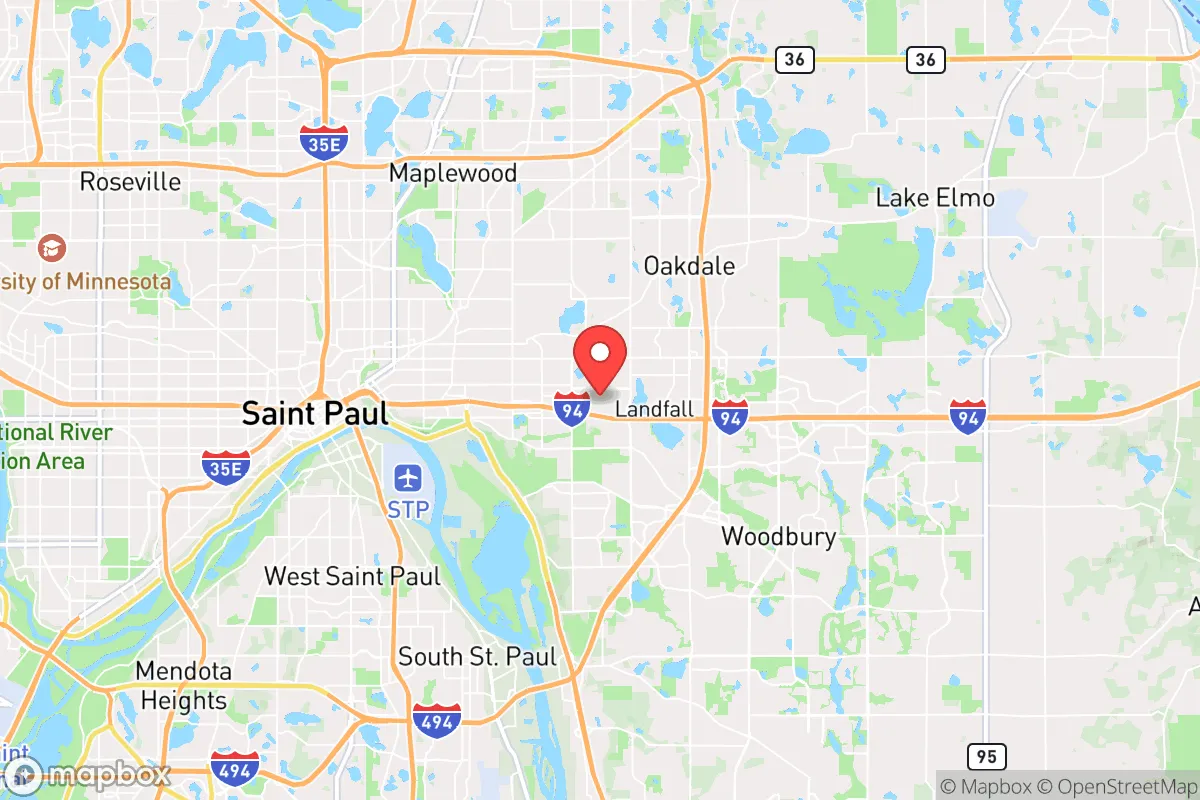
Photo: Wikipedia
Quality of Life in Maplewood, MN
Above-average quality of iife. The area offers a reasonable cost of living, decent mobility, and a mix of neighborhood amenities.
What does Quality of Life tell us?
Quality of Life blends cost of living, nearby amenities, socioeconomic signals, and neighborhood character. City-level scores represent the whole municipality; individual neighborhoods can differ.
What does this tell us?
Quality of Life blends cost of living, nearby amenities, socioeconomic signals, and neighborhood character. City-level scores represent the whole municipality; individual neighborhoods can differ.
Cost of Living
9% above national average
The Real Cost of Living in Maplewood, MN for 2026
| Tier | Individual | Family (4) |
|---|---|---|
| Survival | $21k | $39k |
| Comfortable | $57k | $83k |
| Luxury | $143k+ | $221k+ |
| Elite (Top 5%) | $168k+ | $260k+ |
106%
The Area Signal
A metric tracking the socioeconomic signals of the area.


Hobbies
Explore the areaGroceries
2 within 10 miles
Gas
0 within 10 miles
Hospital
3 within 20 miles
Airport
MSP — Minneapolis-St Paul International Airport (Terminal 1) MN
Post Office
USPS — Minneapolis, MN
Critical Amenities
Quality-of-Life Analysis
Maplewood, Minnesota, is a stable, upper-middle-class inner-ring suburb of Saint Paul where the cost of living runs 9 percent above the national average (index 109), attracting a mix of long-term homeowners, young families, and professionals who work in the Twin Cities metro. The city’s population of roughly 40,000 is notably diverse for the region, with a significant Hmong and Southeast Asian community, and the overall character leans toward quiet residential blocks punctuated by strip malls, big-box retail, and a handful of large employers. Maplewood is not a trendy destination like nearby Stillwater or a high-end enclave like Mendota Heights; it is a practical, family-oriented suburb where affordability relative to Saint Paul proper and western suburbs is a key draw.
Cost of living, housing costs, and how Maplewood compares to Saint Paul and Woodbury
Maplewood’s cost-of-living index of 109 is driven primarily by housing, though it remains cheaper than many neighboring suburbs. The median home value of $291,300 is roughly $30,000 below the metro-wide median and significantly less than Woodbury ($420,000) or Roseville ($340,000), making it one of the more attainable markets in Ramsey County for buyers seeking a single-family home on a standard lot. Renters fare similarly: the median rent of $1,316 is about $200 below the Minneapolis–Saint Paul metro average, though it has risen roughly 15 percent since 2020 as demand for suburban rentals has increased. Property taxes in Maplewood are typical for Ramsey County — roughly 1.1 percent of assessed value — and are slightly higher than in Washington County but lower than in Hennepin County. The average commute of 23 minutes is a full 5 minutes shorter than the metro average, thanks to easy access to Interstate 94, Highway 36, and the 61/694 interchange, which makes downtown Saint Paul a 15-minute drive and downtown Minneapolis a 25-minute drive during off-peak hours.
What daily life is like for families: schools, parks, and local amenities
Daily life in Maplewood revolves around its strong public school system, abundant parkland, and practical retail corridors. The city is served primarily by North St. Paul–Maplewood–Oakdale School District 622, which operates 20 schools and has a graduation rate of about 88 percent, slightly above the state average. Tartan Senior High School and North High School both offer International Baccalaureate programs, and the district runs a well-regarded early childhood education center. For recreation, Maplewood has over 800 acres of parkland, including the 270-acre Maplewood Nature Center with hiking trails and a historic farmstead, plus the sprawling Battle Creek Regional Park that connects to Saint Paul’s trail network. The city’s commercial spine is White Bear Avenue and the area around Maplewood Mall, a mid-tier indoor shopping center that has lost anchor stores but still houses a movie theater, a food court, and a community gathering space. Grocery access is excellent, with Cub Foods, Aldi, and an Hmong-focused market on Arcade Street. The median age of residents is 37, and the rhythm of the week is dominated by school drop-offs, weekend youth sports at the Maplewood Community Center, and errands along the strip — not nightlife or cultural events, which are a 10-minute drive into Saint Paul.
Maplewood is best suited for families and long-term renters who prioritize affordability, short commutes, and solid public schools over urban excitement or prestige addresses. First-time homebuyers priced out of Minneapolis or Saint Paul will find the $291,300 median home value attainable, while empty-nesters and retirees appreciate the quiet streets and proximity to Regions Hospital and HealthPartners clinics. The city’s diversity — roughly 30 percent of residents are people of color — gives it a more inclusive feel than many neighboring suburbs, though the lack of a walkable downtown core means most errands require a car. Anyone seeking a low-drama, middle-market suburb with good schools and a 23-minute commute to either downtown will find Maplewood a practical, understated fit.

Crime in Maplewood, MN
Higher crime rates than 63% of comparable U.S. locations.
Violent CrimeViolent Crime Analysis
Property CrimeProperty Crime Analysis
Crime Analysis
Maplewood, Minnesota, presents a mixed safety profile that warrants careful consideration for potential residents. The city's violent crime rate stands at 379.1 incidents per 100,000 residents, while its property crime rate is 2,566 per 100,000. These figures place Maplewood above national averages, a reality shaped in part by its location within the broader Twin Cities metro area, where progressive judicial and prosecutorial policies have been linked to reduced consequences for offenders and increased risks for law-abiding citizens.
Crime in context
Maplewood's violent crime rate is roughly 8% higher than the national average, while its property crime rate exceeds the national figure by approximately 45%. Compared to Minnesota's statewide averages, the city also reports elevated numbers. These statistics reflect a broader regional trend: the Twin Cities metro area, including Ramsey County where Maplewood sits, has seen rising crime rates in recent years. Critics attribute this partly to the area's progressive criminal justice approach, including district attorneys who prioritize diversion programs and judges who impose lighter sentences. For example, Ramsey County's elected prosecutor has publicly championed reducing incarceration for nonviolent offenses, a policy that, while well-intentioned, has been associated with higher recidivism and more property crimes in suburban communities like Maplewood.
What residents experience
For daily life, the property crime rate is the most tangible concern. Residents report frequent incidents of vehicle break-ins, package thefts, and garage burglaries, particularly in neighborhoods near commercial corridors like White Bear Avenue and Maryland Avenue. Violent crime, while less common, includes aggravated assaults and robberies that often cluster around retail areas and transit stops. The city's police department has responded with targeted patrols and community engagement programs, but the underlying challenge remains: a justice system that, in the view of many observers, prioritizes offender rehabilitation over public safety. This dynamic means that even minor property crimes may not lead to meaningful consequences, emboldening repeat offenders.
Neighborhood-level variation
Safety conditions vary notably across Maplewood's neighborhoods. Areas east of Interstate 35E, particularly around Maplewood Mall and the Battle Creek neighborhood, tend to report higher crime volumes due to denser commercial activity and easier highway access. In contrast, the western residential sections near Gladstone Street and Frost Avenue generally see fewer incidents, though property crime remains a concern everywhere. Prospective residents should examine block-level crime maps and consider that even in quieter pockets, the metro-wide effects of lenient prosecution create a baseline risk that is difficult to escape entirely.
* Values derived from national, state, county, city and local statistics and may differ in a specific area. Last updated: 2026-04-19T04:24:20.000Z
Narrative content on this page is AI-generated and may contain mistakes. Verify any details that matter before acting on them.
ReloMaps may earn a commission from affiliate links at no extra cost to you.

