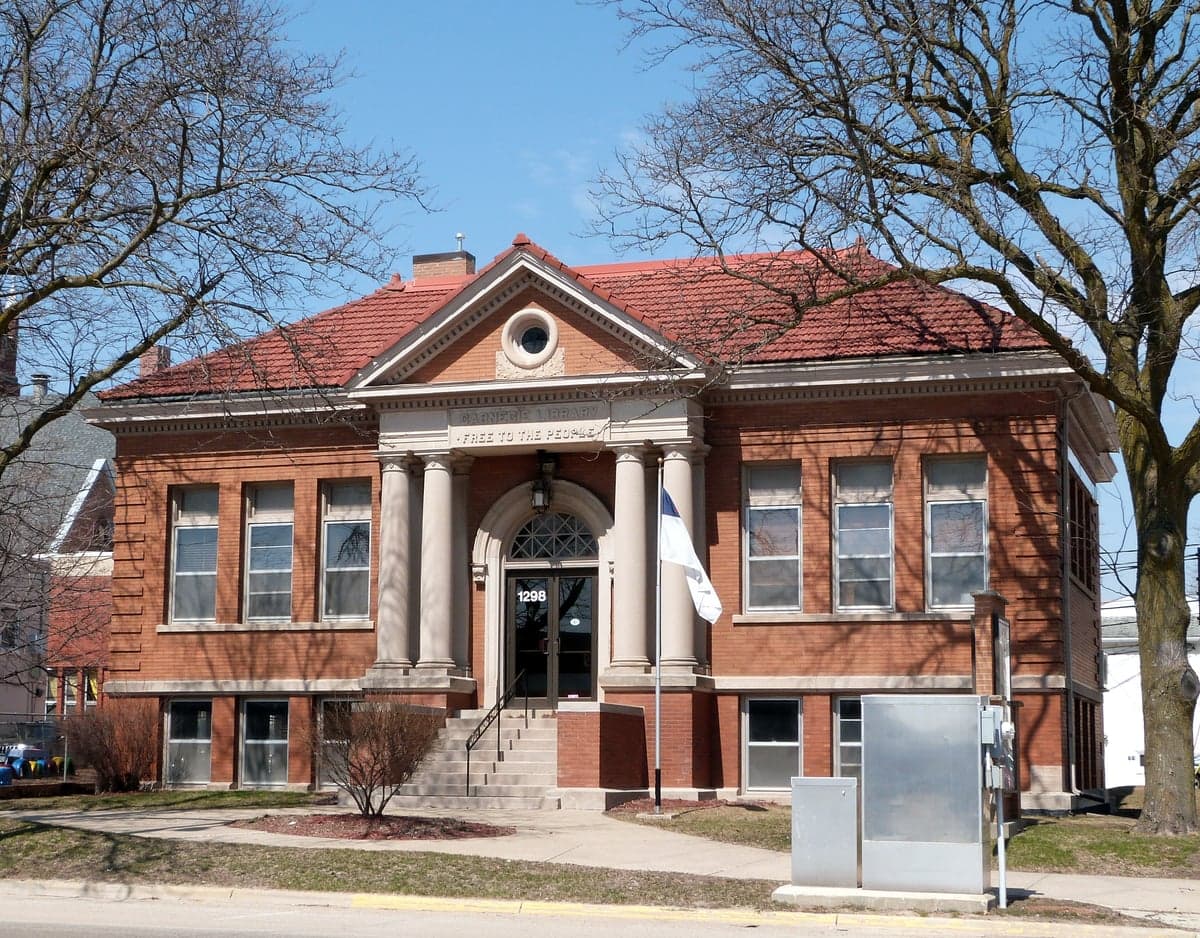
Photo: Wikipedia
Political ClimatePolitical Climate in Marion, IA
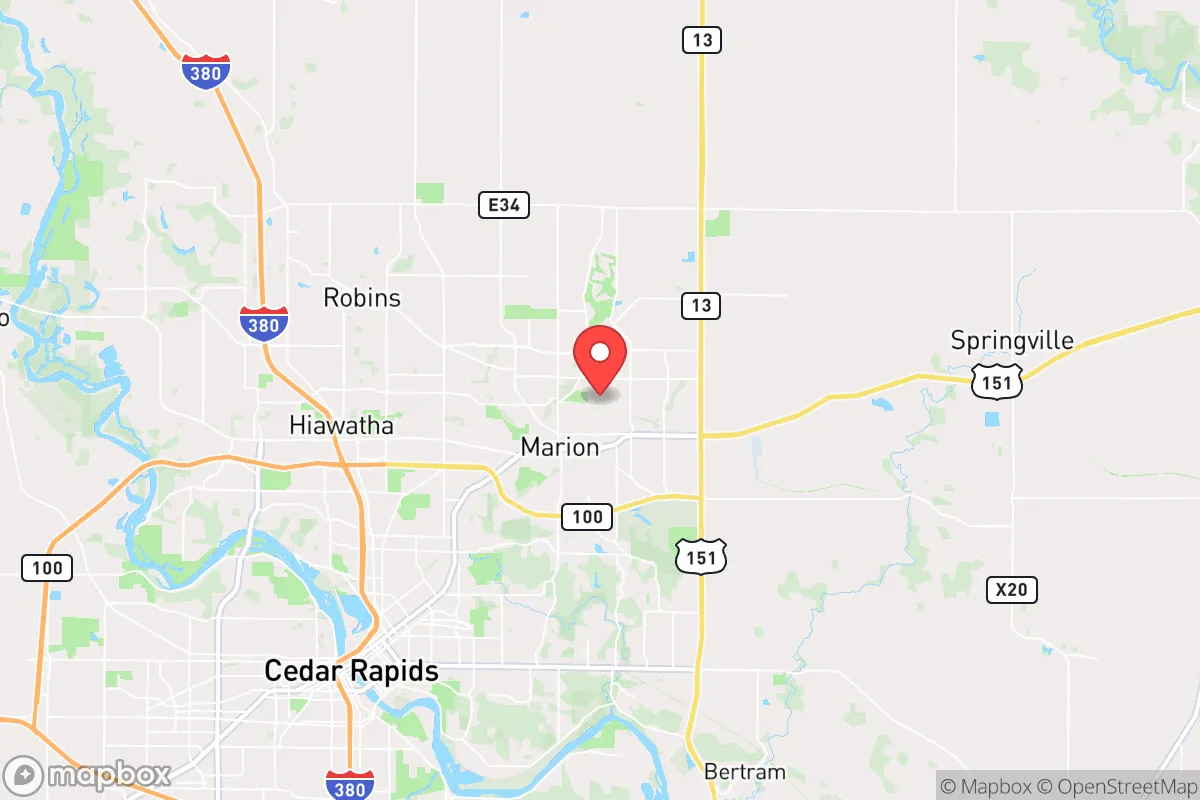
District shown is the primary district for this city’s centroid. Cities may span multiple districts.
Local Political AnalysisPolitical Analysis of Marion, IA
Marion, Iowa, has long been a solidly conservative community, and that hasn't changed much at the core, even as the broader Cedar Rapids metro area has drifted left. The Cook PVI of R+4 tells you the district leans Republican, but that number doesn't capture the full story. Walk into any coffee shop on 7th Avenue or catch a Friday night football game, and you'll feel the old-school, common-sense values that still anchor this town. It's not the kind of place where you see a lot of political lawn signs for the other side, and that's been the case for as long as I can remember.
How it compares
To really understand Marion, you have to look at its neighbors. Drive ten minutes west into Cedar Rapids, and you're in a completely different world—a city that's been trending blue for years, with a city council that's increasingly comfortable with progressive policies and higher taxes. Marion, by contrast, has resisted that pull. It's more like the towns to the north and east, like Hiawatha and Robins, which also lean conservative, but Marion is the biggest anchor of that mindset in Linn County. The contrast is stark: Cedar Rapids votes for countywide bond measures and zoning changes that feel like government overreach, while Marion residents tend to ask, "Why do we need a new rule for that?" It's a place where people still believe the best government is the one that stays out of your business.
What this means for residents
For folks living here, the political climate translates into a pretty straightforward daily life. You're not going to see the city council trying to mandate what kind of lightbulbs you can buy or telling small businesses how to run their operations. Property taxes are a constant concern—everyone grumbles about them—but the local leadership has historically been more focused on keeping the budget lean and avoiding new programs that require endless funding. The school board, for instance, has been a battleground in recent years, but the conservative majority has held the line on things like curriculum transparency and parental rights. You don't get the feeling that your kids are being taught values you don't share at home. That's a big deal for families here.
That said, there's a quiet worry among long-time residents. The county's overall shift—Linn County went for Biden in 2020—means Marion is an island of red in a sea of blue. Every election cycle, you see more progressive money and messaging creeping into local races, and it's getting harder to keep the old guard in place. The city's growth is bringing in new people from places like Chicago and the coasts, and not all of them share the local mindset. If you're looking for a place where your rights to speak freely, keep your guns, and run your life without a government checklist are still respected, Marion is still that place. But you have to pay attention. The next few elections will tell us whether this town stays true to its roots or starts following the path of Cedar Rapids. I'd bet on Marion holding the line, but I wouldn't bet the farm on it.

State Political ClimatePolitical Climate in Iowa
State Political AnalysisPolitical Environment in the State
Iowa has long been a reliably Republican state in presidential elections, voting for the GOP candidate in every cycle since 2016 after a stretch as a key battleground. The state’s overall partisan lean is now solidly red, but the coalition is shifting: the old Democratic strongholds in the eastern industrial cities are shrinking, while the fast-growing western and central suburbs are turning deeper red. Over the last 10-20 years, the state has moved from a purple swing state to a conservative stronghold, driven by rural voters and a wave of new residents from blue states seeking lower taxes and fewer restrictions.
Urban vs. rural divide
The political map of Iowa is a textbook case of the urban-rural split. The Des Moines metro area, including West Des Moines, Ankeny, and Urbandale, has become a Republican stronghold in recent cycles, with these suburbs flipping from purple to deep red after 2020. Meanwhile, the core of Des Moines itself remains a Democratic island, but its influence is diluted by the surrounding counties. The eastern cities—Cedar Rapids, Iowa City, and Davenport—are the remaining Democratic bastions, fueled by the University of Iowa in Iowa City and union-heavy manufacturing in the Quad Cities. But even there, the rural counties around them—like Johnson County (Iowa City) is the only reliably blue county in the east—are overwhelmingly red. The real story is the western half of the state: Sioux City, Council Bluffs, and the rural counties like Plymouth and Sioux vote Republican by margins of 30-40 points. The divide isn’t just about population density—it’s about culture. The urban centers are more diverse and younger, while the rural areas are older, whiter, and deeply skeptical of government overreach.
Policy environment
Iowa’s policy environment is aggressively conservative, especially since the 2022 election gave Republicans a trifecta. The state has a flat income tax of 3.8% (down from 8.98% in 2020), with a plan to drop to 3.5% by 2027. Property taxes are among the lowest in the Midwest, and there’s no inheritance tax. The regulatory posture is business-friendly: Iowa is a right-to-work state, and the 2017 collective bargaining law (SF 447) severely limited public union power. Education policy is a flashpoint: the 2023 school choice law (HF 68) created Education Savings Accounts for all families, allowing state funds to follow kids to private or homeschools. Healthcare is mixed—Medicaid expansion was rejected, but the state has a robust telehealth network. Election laws tightened in 2021 (SF 413), requiring voter ID and reducing early voting days. The state also passed a 2023 law banning gender-affirming care for minors (HF 626) and a 2024 law requiring schools to notify parents of any changes in a student’s gender identity (SF 496). For a conservative, this is a state that’s actively rolling back progressive overreach.
Trajectory & freedom
Iowa is becoming more free in the traditional sense, but the trajectory is uneven. On gun rights, the state passed constitutional carry in 2021 (HF 756), allowing permitless carry for anyone 21 or older. That’s a clear expansion of liberty. Parental rights have been strengthened: the 2024 “Parents’ Bill of Rights” (SF 496) gives parents explicit authority over their children’s education and medical decisions. On medical autonomy, the 2023 ban on gender-affirming care for minors (HF 626) is seen by conservatives as protecting children from irreversible harm, while critics call it government overreach. Property rights are strong—Iowa has no statewide rent control, and the 2022 “takings” law (HF 2550) requires compensation for regulations that reduce property value by 20% or more. Taxation is trending downward, with the flat tax cuts locked in. But there’s a tension: the state’s 2023 law banning local “sanctuary” policies (HF 648) forces cities to cooperate with federal immigration enforcement, which some see as a federal overreach. Overall, the trend is toward more personal freedom in areas like guns, education, and taxes, but with a heavy hand on social issues like transgender care and immigration enforcement.
Civil unrest & political movements
Iowa has seen relatively little civil unrest compared to coastal states, but there are flashpoints. The 2020 Black Lives Matter protests in Des Moines and Iowa City were large but mostly peaceful, with some property damage in downtown Des Moines. The state’s response was swift: the 2021 law (HF 802) increased penalties for rioting and blocking highways. Immigration politics are heated: the 2023 “sanctuary city” ban (HF 648) was a direct response to Iowa City and Johnson County considering non-cooperation policies. There’s a growing “constitutional sheriff” movement in rural counties like Sioux and Plymouth, where sheriffs have publicly refused to enforce certain state gun laws. Election integrity remains a live issue: the 2021 voter ID law (SF 413) was followed by a 2023 audit of the 2020 election that found no widespread fraud, but the issue still animates GOP base voters. The most visible movement is the “Parents’ Rights” coalition, which has been active in school board meetings in Ankeny and Waukee, pushing for curriculum transparency and book bans. For a new resident, you’ll notice the political energy is local—school boards and county commissions are where the fights happen, not street protests.
Projection
Over the next 5-10 years, Iowa will likely become more conservative, but with a twist. The in-migration from blue states—especially Illinois and California—is accelerating, with West Des Moines, Ankeny, and the Iowa City suburbs seeing the most growth. These new residents are often fiscally conservative but socially moderate, which could create a tension within the GOP. The rural population is aging and shrinking, while the Des Moines metro is booming. This means the state’s political center of gravity will shift toward the suburbs, which could moderate some social policies (like marijuana legalization, which is already gaining traction) while keeping the tax and regulatory environment conservative. The 2024 election results showed Dallas County (west of Des Moines) flipping from purple to red by 12 points, a sign that the suburban trend is solidifying. The wildcard is the 2026 governor’s race: if a moderate Republican wins, the state could soften on some issues. But the legislature is likely to remain deeply conservative, meaning the overall direction is toward lower taxes, stronger parental rights, and continued resistance to federal overreach.
For a new resident, the bottom line is this: Iowa is a state where your personal freedoms—to own guns, choose your child’s school, keep more of your paycheck—are expanding, not contracting. The political climate is stable and predictable, with no major civil unrest or dramatic policy swings. The trade-off is that social conservatism is baked into the culture, especially outside the Des Moines metro. If you’re looking for a place where government stays out of your life and your wallet, Iowa is a solid bet. Just know that the local school board meetings might be more heated than the statehouse debates.
* Values derived from national, state, county, city and local statistics and may differ in a specific area. Last updated: 2026-04-30T03:18:36.000Z
Narrative content on this page is AI-generated and may contain mistakes. Verify any details that matter before acting on them.
ReloMaps may earn a commission from affiliate links at no extra cost to you.

