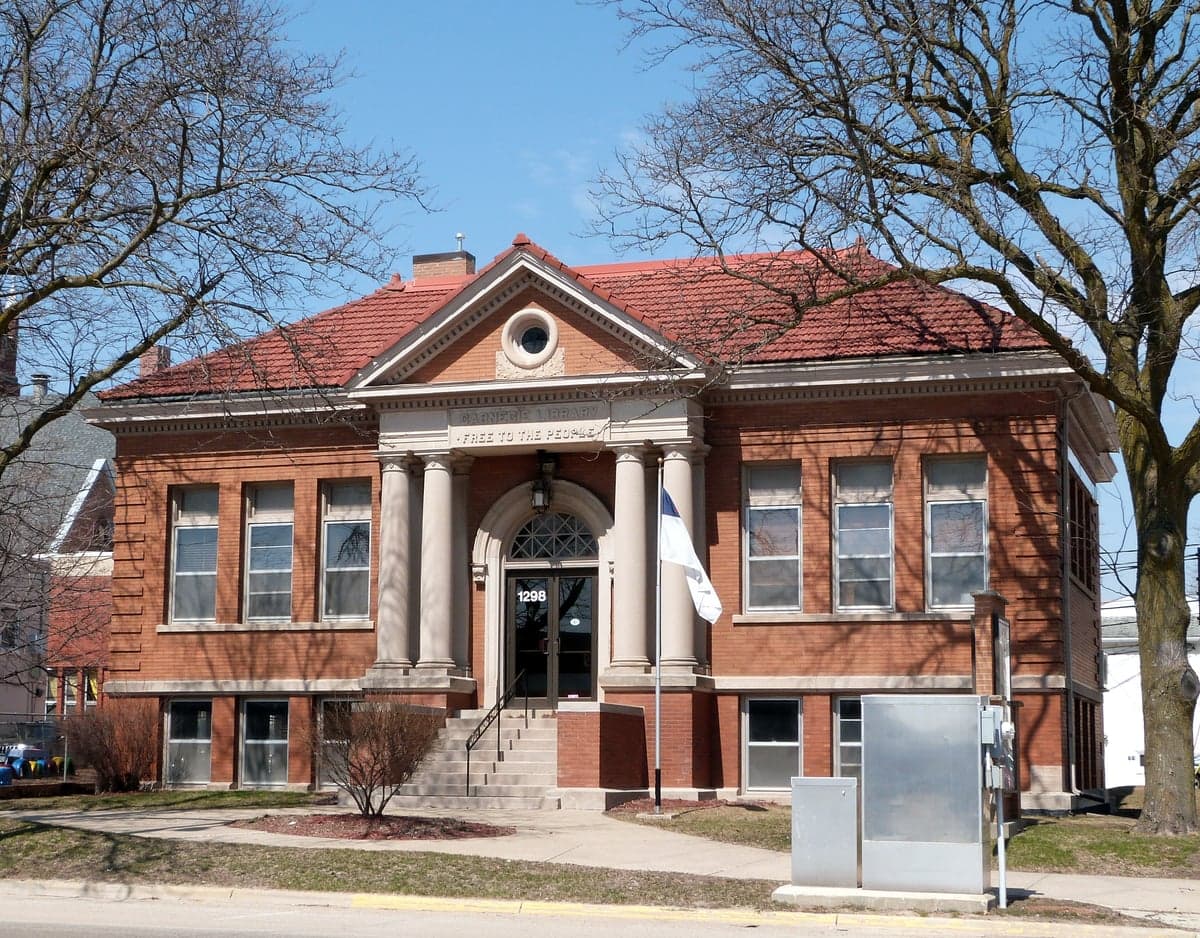
Photo: Wikipedia
Strategic Assessment of Marion, IA
Meaningful friction. Expect exposure to either population pressure, blast zones, or natural disaster risk. Consider buying a retreat property.
What does the Strategic Assessment tell us?
Our Strategic Assessment grades tactical survivability of an area. Major population centers, military targets, fallout zones, natural disasters, and border exposure all drive risk — lower exposure means a more defensible position in a crisis.
This is heavily inspired by Joel Skousen's Strategic Relocation book. Highly recommended you checkout the book ($)What does this tell us?
Our Strategic Assessment grades tactical survivability of an area. Major population centers, military targets, fallout zones, natural disasters, and border exposure all drive risk — lower exposure means a more defensible position in a crisis.
This is heavily inspired by Joel Skousen's Strategic Relocation book. Highly recommended you checkout the book ($)Strategic Pillars

Key Distances
Regional Safe Places
Below is our recommended "safe zones" in Iowa and the surrounding area based on our strategic heuristics. For most people, it's unrealistic to live in a “safe zone” full-time due to work, family or other personal reasons. They tend to be more rural. However, many of these areas are perfect for second homes and retreat properties that double as a vacation home or even a short-term rental.
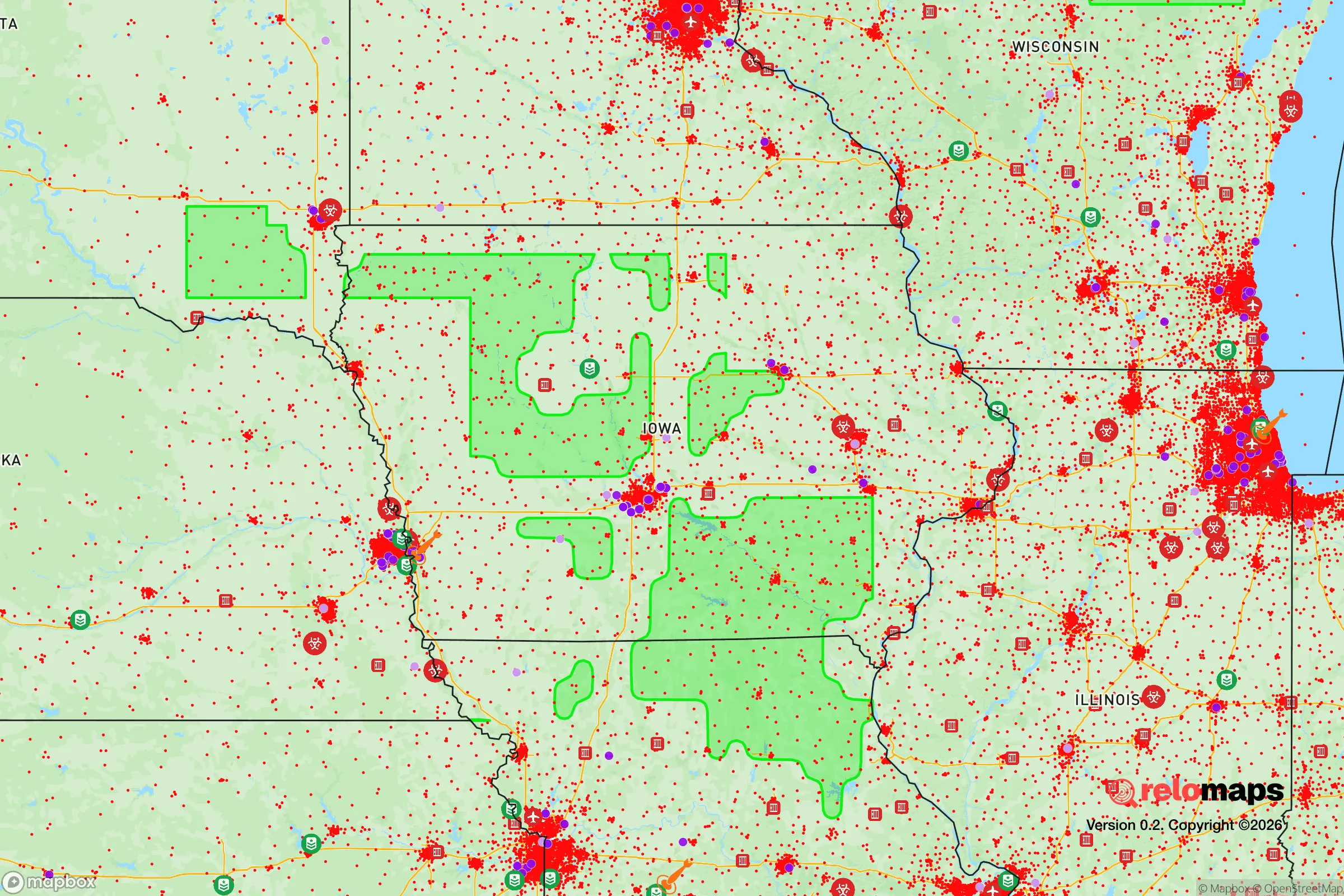
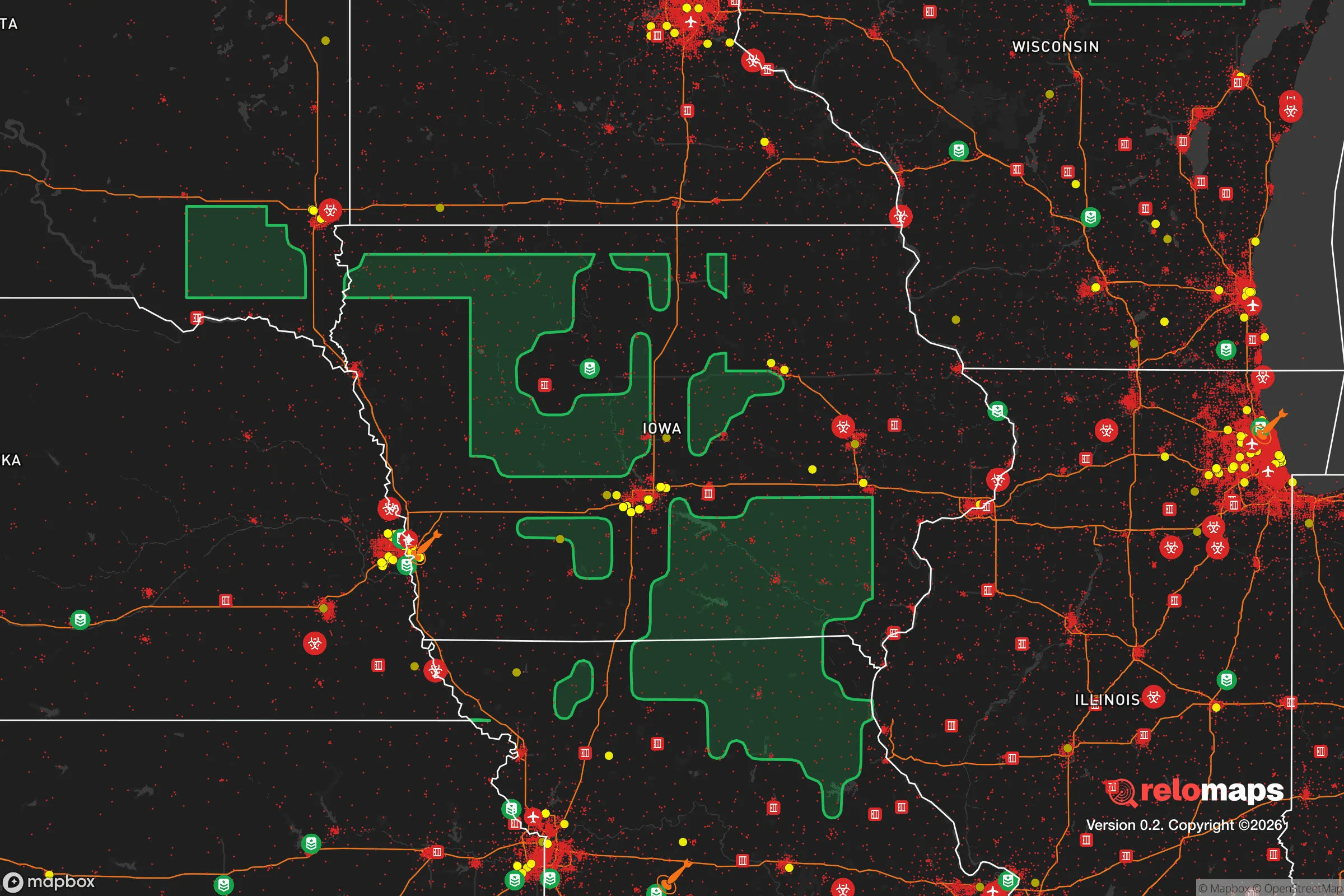


Important Note: For informational purposes only. This does not mean nothing bad ever happens in the green zones. Please use common sense. This is based on public data and modeled with AI. We tried to take a conservative approach but mistakes happen. We update this regularly as new information becomes available.
Solar Generator Recommendations
Backup power matters more here than in safer locations. We've picked three solar generators across budgets and capacity tiers — start with the budget unit if you only need a few essentials, or step up if you want to run a fridge and HVAC for days at a time.

Jackery Portable Power Station Explorer 300
Budget OptionPower on the Go: Weighing only 11 lbs, it's convenient to set up and store with book-sized foldable solar panels

BLUETTI Portable Power Station AC180
Designed for both indoor and outdoor scenarios, AC180 is highly capable as it has a robost capacity and continuous output power.

EF ECOFLOW DELTA Pro Ultra Power Station
Upgraded PickEcoFlow DELTA Pro Ultra is a whole-home energy system designed to grow with your family. Integrated with the Smart Home Panel 2, it scales to meet your evolving energy needs — keeping your home powered, intelligent, and secure through every stage of life.
We earn a commission, at no additional cost to you.
Strategic Assessment Analysis
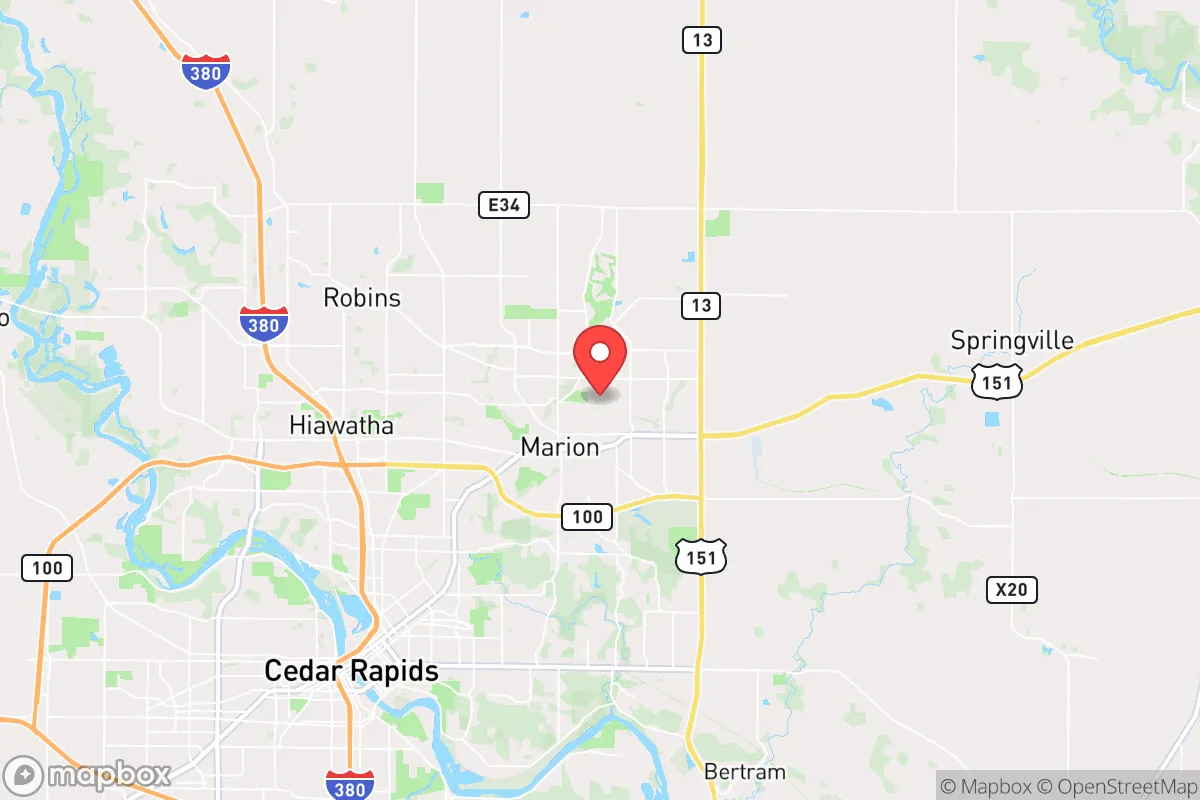
Marion, Iowa, offers a surprisingly strong strategic position for those prioritizing long-term resilience, sitting just northeast of Cedar Rapids but far enough from the major metro corridors to avoid the worst of a collapse scenario. Its location along the Cedar River provides water access, while the surrounding agricultural land and relatively low population density create a buffer zone that many preppers find attractive. For a conservative-minded relocator concerned with civic unrest, supply chain disruptions, or mass casualty events, Marion represents a middle-ground option—close enough to resources but far enough from the primary targets of a national crisis.
Geographic position and natural advantages for long-term survival
Marion’s geography is its first line of defense. The city sits on the edge of the Driftless Area, a region of rolling hills and wooded valleys that escaped the flattening of the last ice age, offering natural cover and defensible terrain. The Cedar River runs through the area, providing a reliable freshwater source that can be supplemented by the many smaller creeks and ponds in Linn County. The surrounding farmland—corn, soybeans, and livestock operations—means that even in a supply chain breakdown, local food production remains viable. Marion’s elevation, at roughly 850 feet, keeps it above the floodplain of the Cedar River, though some low-lying areas near the river do experience periodic flooding. The climate is continental, with cold winters that can be harsh but also serve as a natural deterrent to large-scale migration during a crisis—few unprepared people will head north in January. The city’s position roughly 20 miles from the Cedar Rapids city center means you’re close enough to access hospitals, hardware stores, and fuel supplies in normal times, but far enough that a major event in the metro won’t immediately overwhelm your neighborhood.
Risks, exposures, and proximity to fallout-relevant landmarks
No location is without vulnerabilities, and Marion has several that a strategic relocator must weigh. The most obvious risk is the proximity to Cedar Rapids, a city of roughly 130,000 people that hosts major industrial facilities, including a large grain processing plant and a rail hub. In a scenario involving civil unrest or a mass casualty event, Cedar Rapids could become a source of looting, fire, or refugee flow. Marion sits directly along U.S. Highway 151 and is near Interstate 380, both of which are primary evacuation routes—meaning that in a crisis, your quiet suburb could become a choke point for traffic and desperate people. The Duane Arnold Energy Center, a nuclear power plant about 10 miles northwest of Cedar Rapids, was decommissioned in 2020, but the spent fuel remains on-site in dry cask storage. While the risk of a catastrophic release is low, a targeted attack or sabotage could create a fallout zone that would affect Marion depending on wind direction. Additionally, the nearby Iowa Army Ammunition Plant in Middletown, about 30 miles southwest, stores and processes munitions—a potential target in a conflict scenario. The Cedar River itself poses a flood risk; while Marion’s core is elevated, neighborhoods along the river’s edge have seen water damage in major events like the 2008 floods. For a prepper, these risks are manageable with proper planning—stockpiling supplies, having multiple evacuation routes, and avoiding low-lying properties—but they cannot be ignored.
Practical resilience for a relocator: food, water, energy, and defensibility
For a single individual or family looking to establish a resilient homestead, Marion offers a mixed bag. Food security is strong: the surrounding farmland means you can source bulk grains, meat, and produce directly from local farmers, and the city’s farmers’ market operates from May through October. Community-supported agriculture (CSA) shares are common, and many rural properties within a 10-minute drive of Marion have space for gardens or small livestock. Water access is good but requires preparation: municipal water comes from the Cedar River and groundwater wells, but in a grid-down scenario, you’ll need a backup. Properties with private wells are ideal, and rainwater catchment is feasible given the region’s 35 inches of annual precipitation. Energy resilience is a weak point: Marion is served by Alliant Energy, which relies on a mix of coal, natural gas, and wind. The grid is stable in normal times, but winter storms—like the 2021 Texas freeze or Iowa’s own 2020 derecho—can knock out power for days. Solar panels with battery storage are a wise investment, and many rural homes already have propane tanks for heating and cooking. Defensibility varies by neighborhood: older parts of Marion, like the historic Uptown district, have dense housing with limited sightlines, while newer subdivisions on the outskirts offer larger lots and more space between homes. For a prepper, the ideal property is on the eastern or northern edge of town, where you’re closer to wooded areas and less likely to be caught in a mass evacuation. The local police force is small—about 30 officers—so in a prolonged crisis, you cannot rely on them for protection. The Linn County Sheriff’s Office provides backup, but response times in rural areas can exceed 20 minutes. Community is a double-edged sword: Marion has a strong sense of local identity, with many residents who have lived here for generations. That can mean neighbors who look out for each other, but it can also mean suspicion of newcomers. Building trust before a crisis is essential.
Overall, Marion, Iowa, presents a viable but not ideal strategic relocation option for the conservative prepper. Its strengths—freshwater access, agricultural surroundings, moderate distance from major targets—are real, but its weaknesses—proximity to a mid-sized city, flood risk, and reliance on a fragile grid—require serious mitigation. For someone willing to invest in off-grid infrastructure, build local relationships, and maintain a low profile, Marion offers a solid base of operations. But for those seeking true isolation and minimal exposure to fallout risks, the more remote areas of northeastern Iowa or the Driftless region of Wisconsin would be a better bet. Marion is a compromise: close enough to civilization to be comfortable, far enough to survive the first wave of a collapse. Whether that’s enough depends on your risk tolerance and your plan for the day after.

* Values derived from national, state, county, city and local statistics and may differ in a specific area. Last updated: 2026-04-30T03:18:36.000Z
Narrative content on this page is AI-generated and may contain mistakes. Verify any details that matter before acting on them.
ReloMaps may earn a commission from affiliate links at no extra cost to you.

