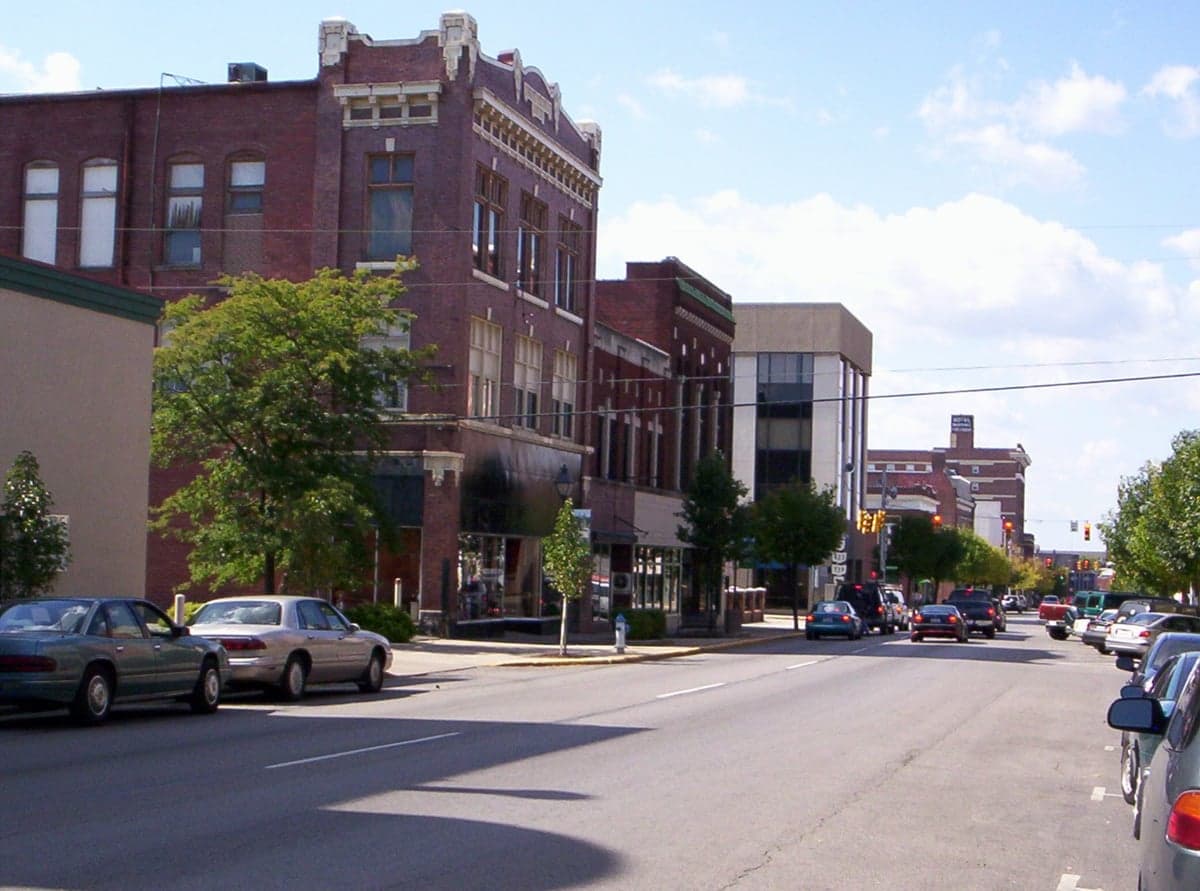
Photo: Wikipedia
Strategic Assessment of Marion, OH
Meaningful friction. Expect exposure to either population pressure, blast zones, or natural disaster risk. Consider buying a retreat property.
What does the Strategic Assessment tell us?
Our Strategic Assessment grades tactical survivability of an area. Major population centers, military targets, fallout zones, natural disasters, and border exposure all drive risk — lower exposure means a more defensible position in a crisis.
This is heavily inspired by Joel Skousen's Strategic Relocation book. Highly recommended you checkout the book ($)What does this tell us?
Our Strategic Assessment grades tactical survivability of an area. Major population centers, military targets, fallout zones, natural disasters, and border exposure all drive risk — lower exposure means a more defensible position in a crisis.
This is heavily inspired by Joel Skousen's Strategic Relocation book. Highly recommended you checkout the book ($)Strategic Pillars

Key Distances
Regional Safe Places
Below is our recommended "safe zones" in Ohio and the surrounding area based on our strategic heuristics. For most people, it's unrealistic to live in a “safe zone” full-time due to work, family or other personal reasons. They tend to be more rural. However, many of these areas are perfect for second homes and retreat properties that double as a vacation home or even a short-term rental.

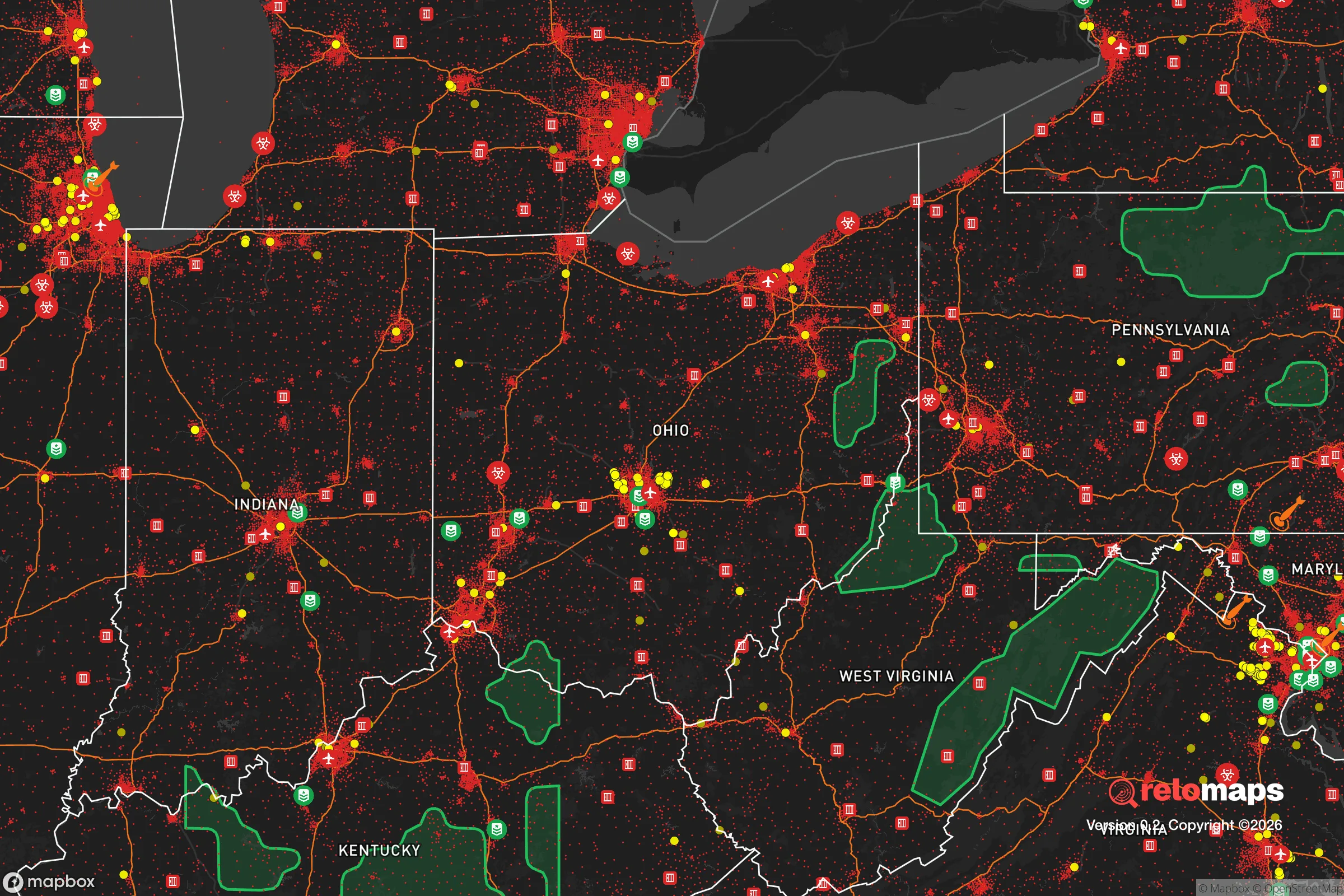


Important Note: For informational purposes only. This does not mean nothing bad ever happens in the green zones. Please use common sense. This is based on public data and modeled with AI. We tried to take a conservative approach but mistakes happen. We update this regularly as new information becomes available.
Solar Generator Recommendations
Backup power matters more here than in safer locations. We've picked three solar generators across budgets and capacity tiers — start with the budget unit if you only need a few essentials, or step up if you want to run a fridge and HVAC for days at a time.

Jackery Portable Power Station Explorer 300
Budget OptionPower on the Go: Weighing only 11 lbs, it's convenient to set up and store with book-sized foldable solar panels

BLUETTI Portable Power Station AC180
Designed for both indoor and outdoor scenarios, AC180 is highly capable as it has a robost capacity and continuous output power.

EF ECOFLOW DELTA Pro Ultra Power Station
Upgraded PickEcoFlow DELTA Pro Ultra is a whole-home energy system designed to grow with your family. Integrated with the Smart Home Panel 2, it scales to meet your evolving energy needs — keeping your home powered, intelligent, and secure through every stage of life.
We earn a commission, at no additional cost to you.
Strategic Assessment Analysis
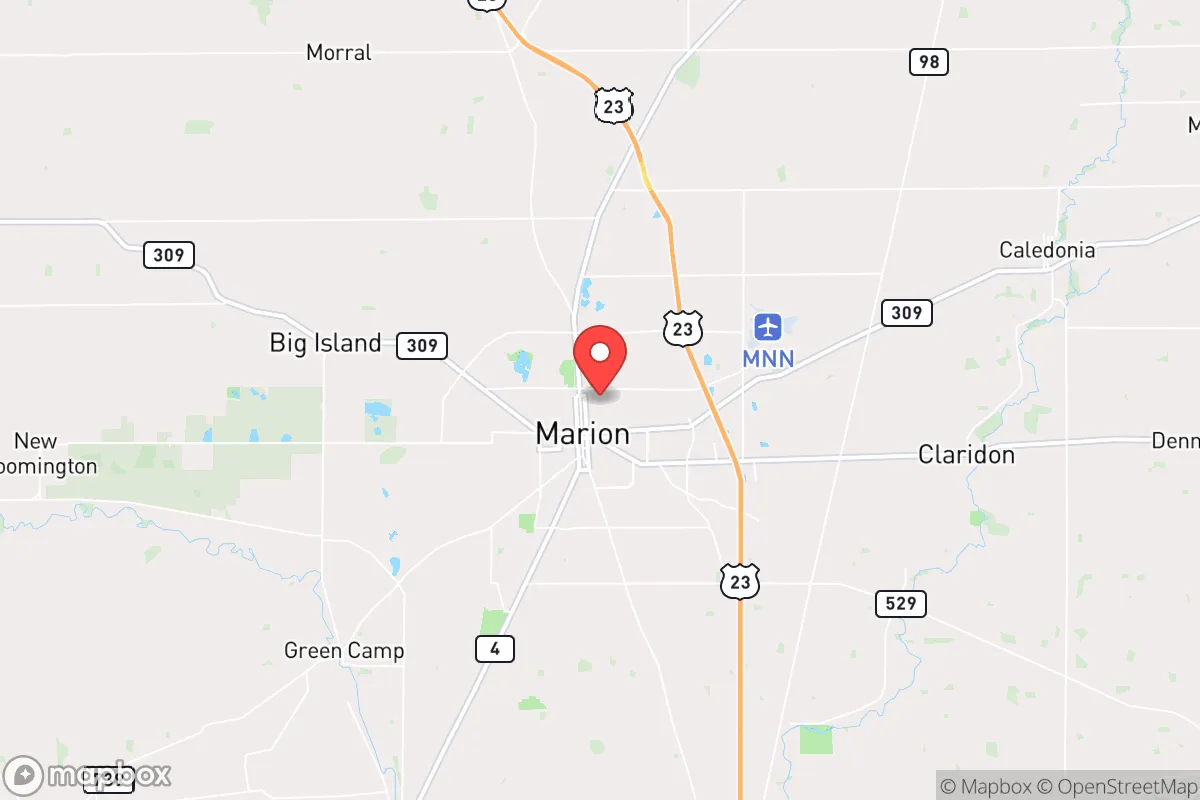
Marion, Ohio, sits in a sweet spot for those serious about resilience: close enough to major infrastructure to be practical, yet far enough from the primary blast zones and population centers that would make a collapse scenario unmanageable. Its location along the Scioto River and at the crossroads of US-23 and US-30 gives it a logistical backbone that’s hard to beat in the Midwest, while its small-city scale—roughly 35,000 people—means you’re not drowning in the anonymity and fragility of a metro area. For a relocator thinking in terms of decades, not just the next election cycle, Marion offers a rare combination of industrial utility, agricultural access, and geographic insulation that deserves a hard look.
Geographic position and natural advantages for long-term stability
Marion’s real strength is its position in the heart of Ohio’s tillable plains, sitting on the western edge of the Appalachian foothills. This isn’t mountain country—you won’t find defensible ridges or natural chokepoints—but what you get is some of the most productive agricultural land in the United States, with deep, fertile soils that can sustain food production without heavy inputs. The Scioto River runs through the city, providing a reliable freshwater source that’s less prone to the contamination risks of industrial waterways like the Cuyahoga or Maumee. The area’s flat to gently rolling terrain makes it easy to establish a homestead, run livestock, or set up solar panels without the shading issues of hillier regions. Winters are cold but manageable, with average snowfall around 25 inches—enough to require preparation but not so extreme that it becomes a survival liability. The lack of major natural disaster threats (no hurricanes, no earthquakes, no wildfires) means your prepping energy goes toward human-caused risks, not geological ones.
Risks, exposures, and proximity to fallout-relevant landmarks
No area is a fortress, and Marion has its share of vulnerabilities. The most obvious is its proximity to Columbus, just 45 miles south. In a major civic unrest or mass casualty event, Columbus—home to over 900,000 people, the state capitol, and a major logistics hub—would be a primary target for disruption, whether from domestic instability or foreign action. That distance is close enough that fallout from a conventional or dirty bomb attack on Columbus could reach Marion within hours, depending on wind patterns. You’re also within 100 miles of the Davis-Besse nuclear power plant (near Toledo) and the Perry plant (near Cleveland), both of which are aging facilities that have faced scrutiny over containment structures. A worst-case release from either would put Marion in a moderate fallout zone, though prevailing winds typically push eastward. On the plus side, Marion itself has no high-value strategic targets: no major military bases, no Fortune 500 headquarters, no major rail yards or refineries. The Whirlpool plant and the Marion Correctional Institution are the largest employers, but neither is a prime target. The area’s low profile is its best defense—you’re not on anyone’s short list for a first strike or a protest march.
Practical resilience for a relocator: food, water, energy, and defensibility
For a single individual or a family looking to hunker down, Marion checks several boxes that matter more than flashy survival gear. Food security is the standout: the surrounding county (Marion County) is among Ohio’s top producers of corn, soybeans, and wheat, and there’s a strong network of local farmers’ markets, U-pick operations, and small-scale livestock farms within a 20-minute drive. You can realistically source a year’s worth of grains and protein from local growers without relying on interstate supply chains. Water is less of a slam dunk—the municipal supply comes from the Scioto River and groundwater wells, but in a prolonged grid-down scenario, you’d need a well or a rainwater catchment system. Many rural properties in the county already have private wells, and the water table is shallow enough (30-60 feet) that hand-pumping is feasible. Energy resilience is middling: the grid is served by AEP Ohio, which has a decent reliability record, but solar potential is moderate (about 4.2 peak sun hours per day), and natural gas is widely available for backup heating. Defensibility is the weak point—the terrain offers no natural barriers, and the city’s layout is a typical Midwestern grid with open fields on the outskirts. A rural property with a good setback from the road and a clear line of sight to approach routes would be far more defensible than anything inside city limits. The Marion County Sheriff’s Office is well-regarded locally, but in a collapse scenario, you’re relying on your own perimeter and community ties, not law enforcement.
The overall strategic picture for Marion is one of calculated trade-offs. You’re not getting the isolation of the Rockies or the self-sufficiency of a remote homestead in the Upper Peninsula. What you are getting is a low-visibility, high-agricultural-capacity location with decent infrastructure and manageable risks. The proximity to Columbus is a double-edged sword—it gives you access to medical centers, supply chains, and job options during normal times, but it’s a liability during unrest. For a conservative-leaning relocator who values community, local governance, and the ability to produce your own food, Marion offers a realistic base of operations. It’s not a bug-out destination; it’s a live-in-place strategy that requires you to build relationships with neighbors, invest in a well and solar backup, and keep a close eye on events in Columbus and Cleveland. If you’re willing to do that work, Marion can hold its own as a resilient anchor in an unstable world.

* Values derived from national, state, county, city and local statistics and may differ in a specific area. Last updated: 2026-04-21T18:52:28.000Z
Narrative content on this page is AI-generated and may contain mistakes. Verify any details that matter before acting on them.
ReloMaps may earn a commission from affiliate links at no extra cost to you.

