Photo: Wikipedia
Quality of Life in Marshalltown, IA
A high quality of life with strong walkability, manageable living costs, healthy neighborhood signals, and solid amenity access.
What does Quality of Life tell us?
Quality of Life blends cost of living, nearby amenities, socioeconomic signals, and neighborhood character. City-level scores represent the whole municipality; individual neighborhoods can differ.
What does this tell us?
Quality of Life blends cost of living, nearby amenities, socioeconomic signals, and neighborhood character. City-level scores represent the whole municipality; individual neighborhoods can differ.
Cost of Living
39% below national average
The Real Cost of Living in Marshalltown, IA for 2026
| Tier | Individual | Family (4) |
|---|---|---|
| Survival | $14k | $26k |
| Comfortable | $23k | $35k |
| Luxury | $95k+ | $147k+ |
| Elite (Top 5%) | $111k+ | $172k+ |
199%
The Area Signal
A metric tracking the socioeconomic signals of the area.
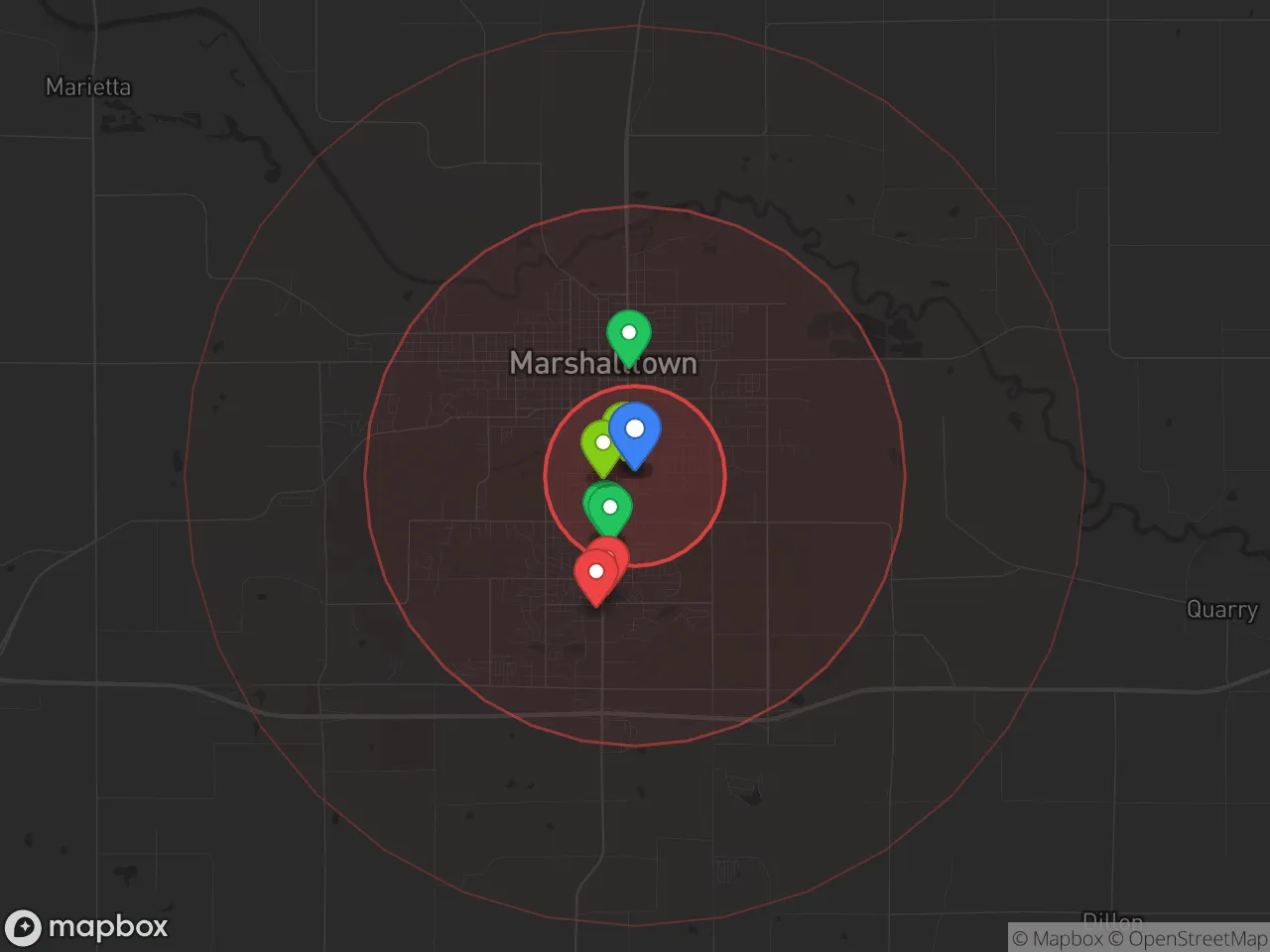
Hobbies
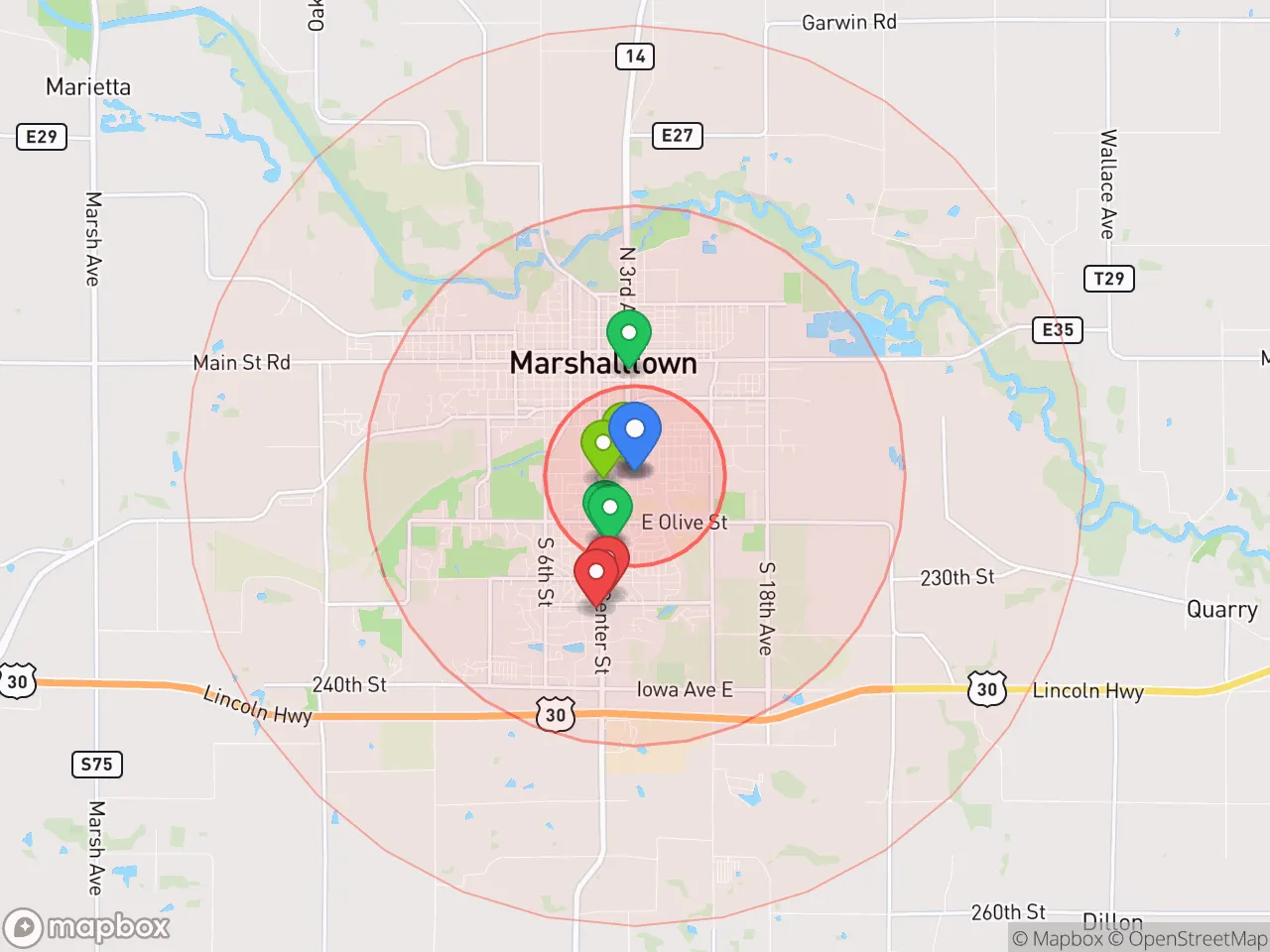
Explore the areaGroceries
3 within 10 miles
Gas
4 within 10 miles
Hospital
1 within 20 miles
Airport
MCI — Kansas City International
Post Office
USPS — Marshalltown, IA
Critical Amenities
Quality-of-Life Analysis
Marshalltown, Iowa, offers a notably affordable quality of life, with a cost of living index of 61—39% below the U.S. average—making it one of the most budget-friendly communities in the state. The population is a mix of long-standing agricultural families, a growing Hispanic and immigrant workforce drawn by meatpacking and manufacturing jobs, and professionals seeking a low-stress, family-oriented environment. While not affluent by national standards, the area’s low housing costs and stable employment base create a comfortable middle-class lifestyle for many residents.
Cost of living, housing, and affordability compared to nearby areas
Housing is the primary driver of Marshalltown’s affordability. The median home value sits at $117,100, roughly half the national median, while the median rent is $864 per month. This makes homeownership accessible even for single-income households and entry-level workers. Compared to nearby cities like Ames (median home value ~$240,000) or Des Moines (~$210,000), Marshalltown offers a significant price advantage—often 40-50% cheaper for comparable square footage. The average commute of just 17.4 minutes further reduces transportation costs, as most residents work within the city or in surrounding agricultural and industrial zones. Utility costs and grocery prices also track below state averages, reinforcing the area’s reputation as a place where a modest salary stretches further.
Local amenities, schools, and what daily life feels like
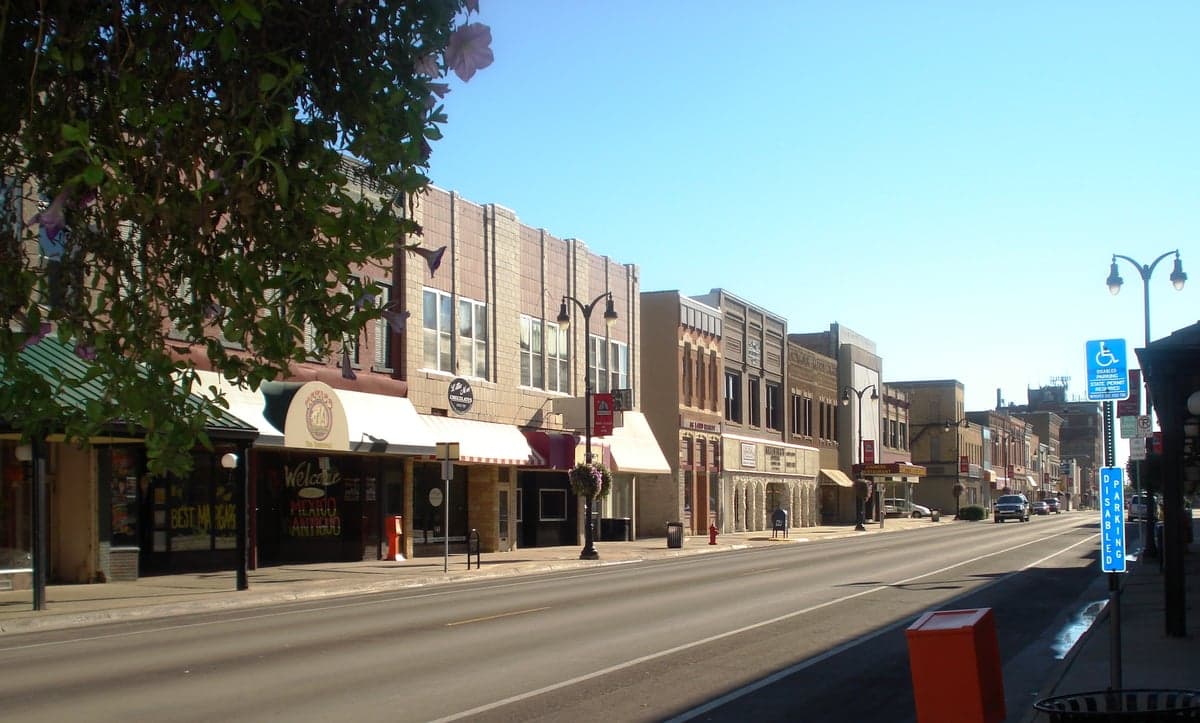
Daily life in Marshalltown centers on a compact, walkable downtown anchored by the historic Orpheum Theater Center and a growing number of locally owned restaurants and shops. The Marshalltown Community School District operates seven elementary schools, two middle schools, and one high school, with an overall student-teacher ratio of about 15:1. For outdoor recreation, the 1,200-acre Grimes Farm and Conservation Center offers hiking trails and fishing ponds, while the Iowa River Greenbelt provides canoeing and birdwatching just minutes from downtown. The city’s largest employers—including JBS USA (pork processing), Emerson Process Management, and Marshalltown Company (manufacturing)—anchor the local economy and keep unemployment consistently below 3%. Cultural amenities include the Fisher Community Center, a public library with strong digital resources, and annual events like the Marshalltown Oktoberfest and the Central Iowa Fair. The pace of life is noticeably slower than in the Des Moines metro, with most errands doable within a 10-minute drive and minimal traffic congestion.
Marshalltown is best suited for families, first-time homebuyers, and retirees on fixed incomes who prioritize low costs and a tight-knit community over urban nightlife or high-end retail. Workers in manufacturing, agriculture, and healthcare will find the most employment opportunities, while remote workers can leverage the low housing costs and reliable broadband (fiber available in most neighborhoods). Those seeking cultural diversity will appreciate the city’s growing Latino population, which has enriched local cuisine and festivals. However, residents should expect limited public transit (only a small dial-a-ride service) and fewer entertainment options than larger Iowa cities. For anyone willing to trade urban amenities for financial breathing room and a slower rhythm, Marshalltown delivers a stable, affordable foundation for daily life.

Crime in Marshalltown, IA
Generally safer than 72% of comparable U.S. locations.
Violent CrimeViolent Crime Analysis
Property CrimeProperty Crime Analysis
Crime Analysis
Marshalltown, Iowa, presents a mixed safety profile that requires careful consideration for potential residents. The city's violent crime rate of 282.5 incidents per 100,000 residents is notably higher than the national average, while its property crime rate of 1,294.5 per 100,000 significantly exceeds both state and national benchmarks. These figures place Marshalltown in a category where crime is a tangible concern, not an abstract statistic, and should be weighed against the city's affordable housing and employment opportunities.
Crime in context
When compared to the rest of Iowa, Marshalltown's crime rates are elevated. The state's violent crime average hovers around 280 per 100,000, meaning Marshalltown is roughly on par for violent offenses but substantially above the Iowa property crime average of approximately 1,100 per 100,000. Nationally, the violent crime rate is about 380 per 100,000, so Marshalltown sits below that figure, but its property crime rate is well above the U.S. average of roughly 1,200 per 100,000. This data indicates that while violent crime is not out of control, residents face a heightened risk of theft, burglary, and vandalism compared to typical American communities.
What residents experience
Daily life in Marshalltown involves navigating a reality where property crime is the most pressing safety issue. Residents commonly report vehicle break-ins, package thefts, and occasional residential burglaries, particularly in areas near the downtown corridor and along the Highway 30 corridor. The city's police department has responded with community policing initiatives and targeted patrols, but the sheer volume of property crime strains resources. Violent incidents, while less frequent, do occur and are often concentrated in specific blocks rather than spread evenly across the city. The presence of progressive judicial philosophies in Iowa's court system—where some district attorneys and judges prioritize rehabilitation over incarceration—can result in shorter sentences for repeat property offenders, contributing to a cycle of crime that frustrates victims and law enforcement alike.
Neighborhood-level variation
Safety in Marshalltown is not uniform. The southwestern neighborhoods, particularly around the Marshalltown High School area and newer subdivisions near 10th Avenue, tend to report lower crime rates. In contrast, the central and northeastern parts of the city, including areas near the downtown square and the industrial zone along 13th Street, see higher concentrations of both property and violent crime. Prospective residents should research specific blocks and consult the Marshalltown Police Department's online crime map before choosing a home. Renting in a well-lit, multi-unit complex with secure entry can mitigate risk, while single-family homes in older, less-trafficked areas may require additional security measures like cameras and alarm systems.
* Values derived from national, state, county, city and local statistics and may differ in a specific area. Last updated: 2026-04-30T01:22:21.000Z
Narrative content on this page is AI-generated and may contain mistakes. Verify any details that matter before acting on them.
ReloMaps may earn a commission from affiliate links at no extra cost to you.

