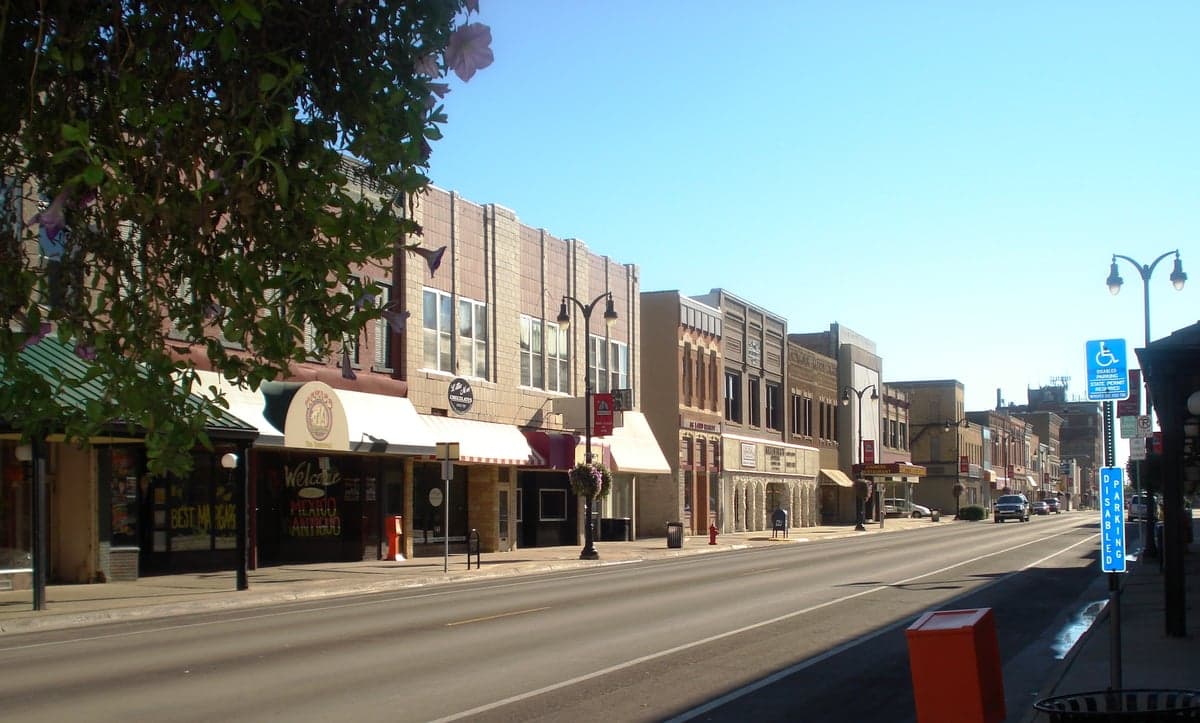
Photo: Wikipedia
Political ClimatePolitical Climate in Marshalltown, IA
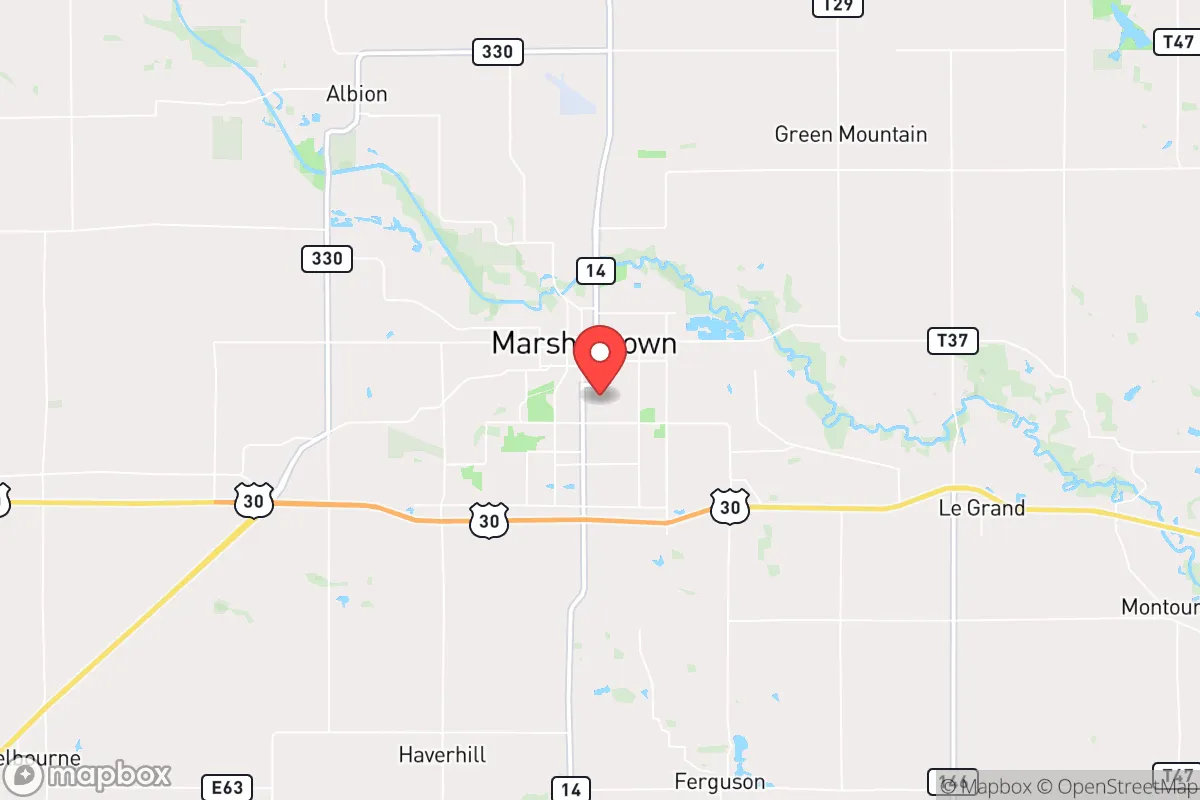
District shown is the primary district for this city’s centroid. Cities may span multiple districts.
Local Political AnalysisPolitical Analysis of Marshalltown, IA
Marshalltown leans solidly Republican, with a Cook PVI of R+15 that puts it well to the right of the national average. This isn’t a new development—this area has been reliably conservative for decades, but the last few election cycles have shown a hardening of that lean. You can see it in the local school board races and county commission seats, where candidates running on traditional values and limited government keep winning, often by wider margins than before. The shift isn’t dramatic, but it’s real: folks here are paying closer attention to what’s happening in Des Moines and Washington, and they’re not shy about pushing back.
How it compares
Drive 30 miles south to Newton or 45 miles east to Iowa City, and you’ll feel the political temperature change fast. Newton is more purple, with a mix of union households and suburban independents that keeps races tight. Iowa City is a different world entirely—deep blue, with a university-driven progressive agenda that would never fly in Marshalltown. Even nearby Grinnell, with its liberal arts college, votes noticeably left of us. That contrast matters because it means Marshalltown’s conservative voice stands out in central Iowa, especially on issues like property rights and school choice. When the state legislature debates things like zoning overrides or parental notification laws, our representatives are usually the ones holding the line against government overreach.
What this means for residents
For the average person living here, the political climate translates into a pretty straightforward daily life. You’re not going to see the kind of top-down mandates that have popped up in bigger cities—no mask mandates that last for months, no heavy-handed business closures, no city council trying to dictate what you can do on your own property. The local government tends to stay out of your way, which is exactly how most folks want it. That said, there’s been a slow creep of progressive ideas filtering in through state-level policy, especially around environmental regulations and agricultural land use. Some of those feel like they’re written by people who’ve never set foot on a farm. The long-term concern is that if those trends continue, you could see more state interference in local decisions, which would be a real shift from the hands-off approach that’s made this area work for so long.
Culturally, Marshalltown still holds onto a few distinctions that set it apart. The annual Marshalltown Community Festival and the county fair are big deals, and they’re still run by volunteers who believe in neighbor helping neighbor, not government programs. The local gun culture is strong and practical—most people own firearms for hunting or protection, and there’s little patience for new restrictions. On the policy side, the city has resisted adopting the kind of diversity, equity, and inclusion frameworks that have become common in larger Iowa towns. That’s not out of hostility, but out of a belief that those initiatives often lead to more bureaucracy and less freedom. If you’re looking for a place where the government respects your privacy and your choices, and where the political conversation still starts with “what’s best for the family,” Marshalltown is a solid bet. Just keep an eye on those state-level trends—they’re the biggest wild card for the future.

State Political ClimatePolitical Climate in Iowa
State Political AnalysisPolitical Environment in the State
Iowa has been a reliably Republican state for most of the past two decades, but it’s not the deep-red lock some outsiders assume. The state voted for Trump by about 8 points in 2020 and 13 points in 2024, but that’s a significant shift from 2012 when it went for Obama by 6 points. The real story is the rural-urban sorting that’s accelerated since 2016: the Des Moines metro and a handful of college towns have moved left, while the rest of the state has hardened into deep red territory. For a conservative looking to relocate, Iowa still offers a solidly center-right policy environment, but the cultural and political fault lines are becoming sharper, especially around the metro areas.
Urban vs. rural divide
The political map of Iowa is a textbook case of the urban-rural split. The Des Moines metro (Polk, Dallas, and Warren counties) is the state’s blue anchor, with Polk County going for Biden by 18 points in 2020 and Harris by a similar margin in 2024. Dallas County, once reliably red, has flipped to purple and is trending blue as suburban sprawl from West Des Moines and Waukee brings in younger, more progressive families. On the other side, rural counties like Osceola, Lyon, and Sioux in the northwest routinely vote 75-80% Republican. The second-tier metros tell a mixed story: Iowa City (Johnson County) is the state’s most liberal area, home to the University of Iowa, while Cedar Rapids (Linn County) is a swing county that’s leaned Democratic in recent cycles. The Quad Cities (Scott County) is a true bellwether—it voted for Trump in 2016 and 2024 but flipped to Biden in 2020. The real conservative strongholds are the small towns and farm communities in the western and northern parts of the state, places like Spencer, Storm Lake, and Mason City, where the culture is still deeply traditional and the politics are reliably red.
Policy environment
Iowa’s policy environment is broadly conservative, but with some notable wrinkles. The state has a flat income tax of 3.8% (down from 8.98% a decade ago), and the corporate tax rate is being phased down to a flat 5.5% by 2027. Property taxes are relatively low, with a statewide average of about 1.5% of assessed value. The regulatory climate is business-friendly, with a right-to-work law on the books and no state-level minimum wage above the federal $7.25. Education policy has been a major battleground: Governor Kim Reynolds signed a school choice bill in 2023 that created Education Savings Accounts (ESAs) for all families, making Iowa one of the most aggressive states in the country for school choice. On healthcare, Iowa expanded Medicaid under the Affordable Care Act in 2014, but the state has since moved to a managed-care model with private insurers. Election laws were tightened in 2021 with a law that reduced early voting days, required voter ID, and banned private funding of elections. For a conservative, the tax and education policies are a clear win, but the Medicaid expansion and the lingering influence of the old farm subsidy programs are reminders that Iowa isn’t a pure libertarian paradise.
Trajectory & freedom
Iowa has been moving in a decidedly more freedom-oriented direction over the past five years, especially on gun rights and parental rights. In 2021, the state passed constitutional carry (permitless carry for handguns), making it the 21st state to do so. In 2023, the legislature passed a "Parents Bill of Rights" that requires schools to notify parents of any medical or mental health services provided to their children, and it banned instruction on gender identity and sexual orientation in K-6 classrooms (SF 496). The state also passed a 6-week abortion ban in 2023 (HF 732), which was upheld by the Iowa Supreme Court in 2024, effectively ending nearly all abortions in the state. On the other hand, there have been some concerning expansions of government power: the state imposed a mask mandate in schools during COVID (later overturned), and there’s been a steady increase in state-level control over local zoning and land use, particularly around renewable energy projects. The property rights picture is mixed—Iowa has strong eminent domain protections for farmers, but the state’s aggressive use of tax increment financing (TIF) districts in cities like Des Moines and Cedar Rapids has been criticized as a form of corporate welfare. Overall, the trajectory is positive for conservatives, but the trend toward centralized state control over local decisions is worth watching.
Civil unrest & political movements
Iowa has seen relatively little civil unrest compared to coastal states, but there have been notable flashpoints. The 2020 Black Lives Matter protests in Des Moines and Iowa City were large but mostly peaceful, though there were isolated incidents of property damage. The state’s immigration politics are relatively quiet—Iowa has no sanctuary cities, and the legislature passed a law in 2024 requiring local law enforcement to cooperate with ICE. The most visible political movements in recent years have been on the right: the "Moms for Liberty" chapter in Ankeny (a Des Moines suburb) has been active in school board races, and the Iowa Firearms Coalition has been a powerful lobbying force. On the left, the "Iowa Citizens for Community Improvement" has been active on environmental and housing issues, particularly in Des Moines. Election integrity has been a hot topic since 2020, with Republican county auditors in places like Pottawattamie and Woodbury counties facing pressure over ballot security. The most visible flashpoint for a new resident would likely be the school board meetings in suburban districts like Waukee and Johnston, where debates over curriculum and library books have become heated. Overall, the political climate is civil but increasingly polarized, with the rural-urban divide showing up in everything from yard signs to local government meetings.
Projection
Over the next 5-10 years, Iowa is likely to become more Republican at the state level but more polarized internally. The in-migration patterns are telling: the Des Moines metro is growing steadily, attracting younger, more diverse populations from Illinois and Minnesota, which will continue to push Polk and Dallas counties leftward. Meanwhile, rural counties are losing population, which will amplify their political weight in the state legislature (thanks to gerrymandering) but reduce their overall influence. The state’s tax cuts and school choice policies are likely to accelerate, making Iowa more attractive to conservative families from blue states. However, the demographic shift in the metro areas could eventually make statewide races more competitive—if the Des Moines metro continues to grow at its current pace, it could flip the state back to purple within a decade. The wild card is the agricultural economy: if commodity prices stay strong, rural Iowa will remain solidly red, but a prolonged downturn could shift some of those voters toward populist candidates on either side. For a conservative moving in now, expect the state to remain a solidly center-right environment for the next 5 years, but with increasing cultural tension between the growing metro areas and the shrinking rural heartland.
For a conservative family or individual looking to relocate, Iowa offers a strong policy foundation: low taxes, school choice, gun rights, and a culture that still values self-reliance and community. The practical takeaway is that you’ll find a welcoming environment in most of the state, but you’ll want to choose your specific location carefully. The rural towns and smaller cities like Pella, Orange City, and Decorah offer a deeply traditional, conservative lifestyle with strong churches and low crime. The Des Moines suburbs like Ankeny and Waukee are more politically mixed but offer excellent schools and job opportunities. Avoid the core of Iowa City and the near-east side of Des Moines if you want to avoid progressive politics. Overall, Iowa is a state that’s still largely free, but the metro areas are changing fast—so if you’re looking for a place where your values are the norm, get in now before the demographic shift reaches your neighborhood.
* Values derived from national, state, county, city and local statistics and may differ in a specific area. Last updated: 2026-04-30T01:22:21.000Z
Narrative content on this page is AI-generated and may contain mistakes. Verify any details that matter before acting on them.
ReloMaps may earn a commission from affiliate links at no extra cost to you.

