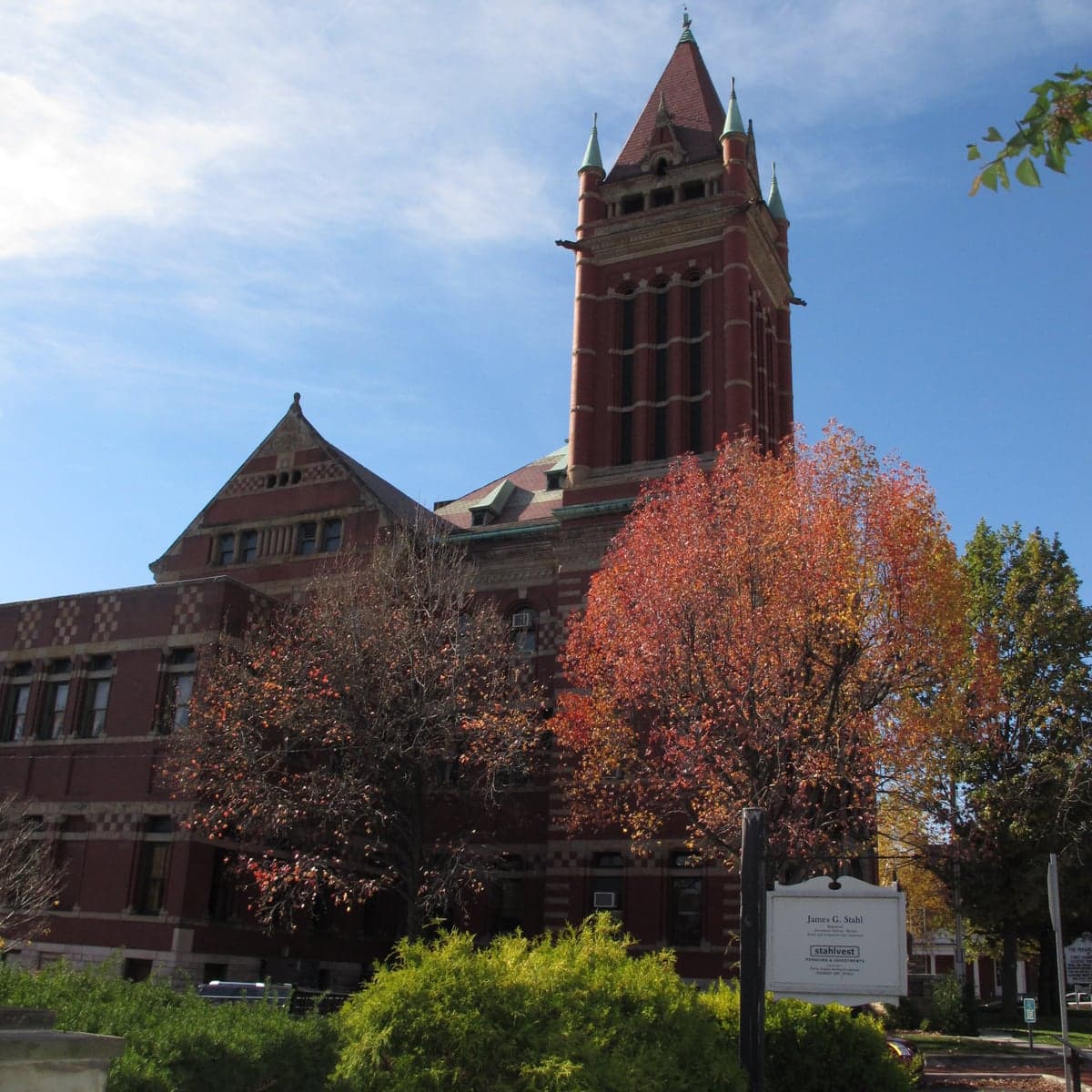
Photo: Wikipedia
Personal Sovereignty in Allegany County
Viable for self-reliance. Generally workable, though some barriers may limit total independence.
What does Personal Sovereignty tell us?
Personal Sovereignty measures your capacity for self-reliance and independence with minimal government friction. Higher scores mean fewer barriers between you and the way you want to live... but it assumes you have the space you need and good neighbors.
What does this tell us?
Personal Sovereignty measures your capacity for self-reliance and independence with minimal government friction. Higher scores mean fewer barriers between you and the way you want to live... but it assumes you have the space you need and good neighbors.
State Policy
Energy independence: Importer (8% of energy produced in-state)
Personal Liberty
Homesteading

Personal Liberty Analysis
Allegany County, Maryland, offers a notably stronger personal sovereignty environment than most of the state, particularly when compared to the heavily regulated Washington, D.C. suburbs or the progressive enclaves of Baltimore and Montgomery County. While Maryland as a whole ranks poorly on tax burden and regulatory freedom, Allegany County’s rural character, lower population density, and local political culture create a more permissive atmosphere for individual autonomy, self-defense, and self-reliance. The county’s small cities—Cumberland, Frostburg, and Westernport—each present distinct trade-offs between convenience and freedom, while unincorporated areas like Oldtown, Flintstone, and Mount Savage offer the most hands-off living.
Tax burden and regulatory posture in Allegany County
Maryland’s state-level tax burden is among the highest in the nation, with a progressive income tax topping 5.75% and a state sales tax of 6%. Allegany County adds a local income tax of 2.85% (the county rate, not a separate city tax), bringing the combined top marginal rate to roughly 8.6%—high by national standards but lower than in Montgomery County (3.2% local) or Baltimore City (3.2%). Property taxes are moderate: the county rate is about $1.04 per $100 of assessed value, with Cumberland adding a small city tax of roughly $0.72, while unincorporated areas like Flintstone or Oldtown pay only the county rate. The regulatory posture is mixed: Maryland’s state-level environmental and land-use rules are strict (e.g., the Chesapeake Bay Critical Area Act restricts development near waterways), but local enforcement in Allegany County is generally lighter than in more populated jurisdictions. Building permits and zoning variances are processed more quickly in rural areas like Mount Savage than in Cumberland’s city limits. The county has no local minimum wage above the state’s $15.00/hour (2026), and occupational licensing requirements are standard for Maryland—meaning trades like electricians and plumbers face state-level hurdles, but the county itself does not add extra layers. For a freedom-oriented reader, the key takeaway is that Allegany County is the least restrictive part of a restrictive state, but it is not a low-tax or deregulated haven like parts of West Virginia or Tennessee.
Self-defense and gun law specifics in Allegany County
Maryland’s gun laws are among the most restrictive in the nation, and Allegany County operates within that framework. The state requires a permit to purchase a handgun (the Handgun Qualification License, or HQL), a seven-day waiting period for long guns, and a background check for all firearm transfers, including private sales. Magazine capacity is limited to 10 rounds, and “assault weapons” as defined by state law are banned for sale. However, Allegany County’s local culture is strongly pro-Second Amendment. The county’s sheriff, Craig Robertson, has publicly stated he will not enforce any “red flag” law he deems unconstitutional, and the county commission passed a Second Amendment Sanctuary resolution in 2020. Concealed carry permits (Wear and Carry Permits) are issued by the Maryland State Police, not the county, but the application process is the same statewide: applicants must complete a 16-hour training course and demonstrate a “good and substantial reason” to carry—though a 2022 Supreme Court ruling (NYSRPA v. Bruen) has loosened this requirement in practice. In Cumberland, gun ownership is common but more discreet due to city ordinances against discharging firearms within city limits. In contrast, in unincorporated areas like Oldtown or Flintstone, target shooting on private property is routine and rarely challenged. For a reader prioritizing self-defense, the reality is that Allegany County offers a culturally gun-friendly environment within a state that imposes significant legal barriers. The practical workaround is to purchase firearms in neighboring West Virginia (where laws are far looser) and then transport them into Maryland, though this requires compliance with federal law and Maryland’s registration requirements for handguns.
Self-reliance and homesteading viability in Allegany County
Allegany County is one of the more viable areas in Maryland for homesteading and off-grid living, though it is not as permissive as rural West Virginia or Pennsylvania. Minimum lot sizes vary by zoning district: in agricultural zones (A-1), the minimum is 2 acres, while in rural residential zones (R-1), it is 1 acre. In unincorporated areas like Mount Savage and Flintstone, 5- to 10-acre parcels are common and affordable, with raw land prices ranging from $3,000 to $8,000 per acre as of 2026. Zoning allows for accessory dwelling units, home-based businesses, and keeping livestock (chickens, goats, horses) on parcels of 2 acres or more, though a permit is required for structures like barns or coops. Off-grid living is legally challenging: Maryland requires connection to the electrical grid for new construction in most areas, though solar panels with battery storage are permitted as a supplement. Rainwater collection is allowed for non-potable uses (irrigation, livestock) but not for drinking without a permit from the county health department. Composting toilets are permitted in areas without sewer access, but must meet state sanitation standards. In Cumberland and Frostburg, city codes are more restrictive—Cumberland requires connection to municipal water and sewer, and prohibits outdoor wood boilers within 300 feet of neighboring homes. Westernport, a smaller town, is slightly more permissive but still enforces building codes. For a serious homesteader, the best bet is to buy land in the far western part of the county, near the West Virginia border (e.g., Oldtown or Pinto), where enforcement is lax and neighbors are accustomed to self-sufficient lifestyles. The county’s agricultural extension office offers workshops on soil testing, livestock management, and food preservation, which is a practical resource for newcomers.
Personal liberties in Allegany County: parental rights, medical autonomy, speech, and property
Parental rights in Allegany County are relatively strong compared to more progressive Maryland jurisdictions. The county school board has resisted state-level mandates on curriculum content, including LGBTQ+ inclusive materials and critical race theory, though it ultimately complies with state law. Parents can opt their children out of specific lessons or activities with a written request, and the county’s school system (Allegany County Public Schools) has a conservative majority on its board as of 2026. Medical autonomy is constrained by Maryland state law: the state mandates vaccination for school attendance (with medical and religious exemptions available), and the county health department enforces these rules. However, alternative medicine practitioners (naturopaths, chiropractors) are licensed and available in Cumberland and Frostburg, and there is no county-level restriction on supplement sales or herbal remedies. Speech is protected under the First Amendment, and Allegany County has no local ordinances restricting public protest or expression beyond standard time, place, and manner rules. Property rights are generally respected, though Maryland’s statewide environmental regulations (e.g., the Chesapeake Bay Critical Area Act) can limit development on parcels within 1,000 feet of a tidal waterway—a minor issue in Allegany County, which has few such areas. The county’s zoning board has a reputation for granting variances for non-conforming uses (e.g., a home-based auto repair shop in a residential zone) if neighbors do not object. In Cumberland, property taxes are higher and code enforcement is more active (e.g., citations for tall grass or unregistered vehicles), while in unincorporated areas like Mount Savage, such enforcement is rare unless a complaint is filed.
Overall, Allegany County offers a moderate-to-strong personal sovereignty environment relative to the rest of Maryland, but it is not a libertarian paradise. The state’s tax burden, gun laws, and environmental regulations impose real constraints, and the county’s local culture—while conservative—still operates within a blue-state legal framework. For a reader who values personal freedom and self-reliance, Allegany County is a pragmatic choice: it provides more autonomy than any other part of Maryland, with affordable land, a gun-friendly sheriff, and a hands-off approach to homesteading in rural areas. However, for those who prioritize maximum sovereignty, neighboring West Virginia (particularly Mineral and Hampshire counties) offers lower taxes, no state income tax, and far fewer gun restrictions, at the cost of weaker public services and infrastructure. Allegany County is best seen as a compromise—a place where a freedom-oriented individual can live with fewer hassles than in the D.C. suburbs, but still within commuting distance of jobs and healthcare in Cumberland or Frostburg.

* Values derived from national, state, county, city and local statistics and may differ in a specific area. Last updated: 2026-09-27T19:00:51.000Z
Narrative content on this page is AI-generated and may contain mistakes. Verify any details that matter before acting on them.
ReloMaps may earn a commission from affiliate links at no extra cost to you.

