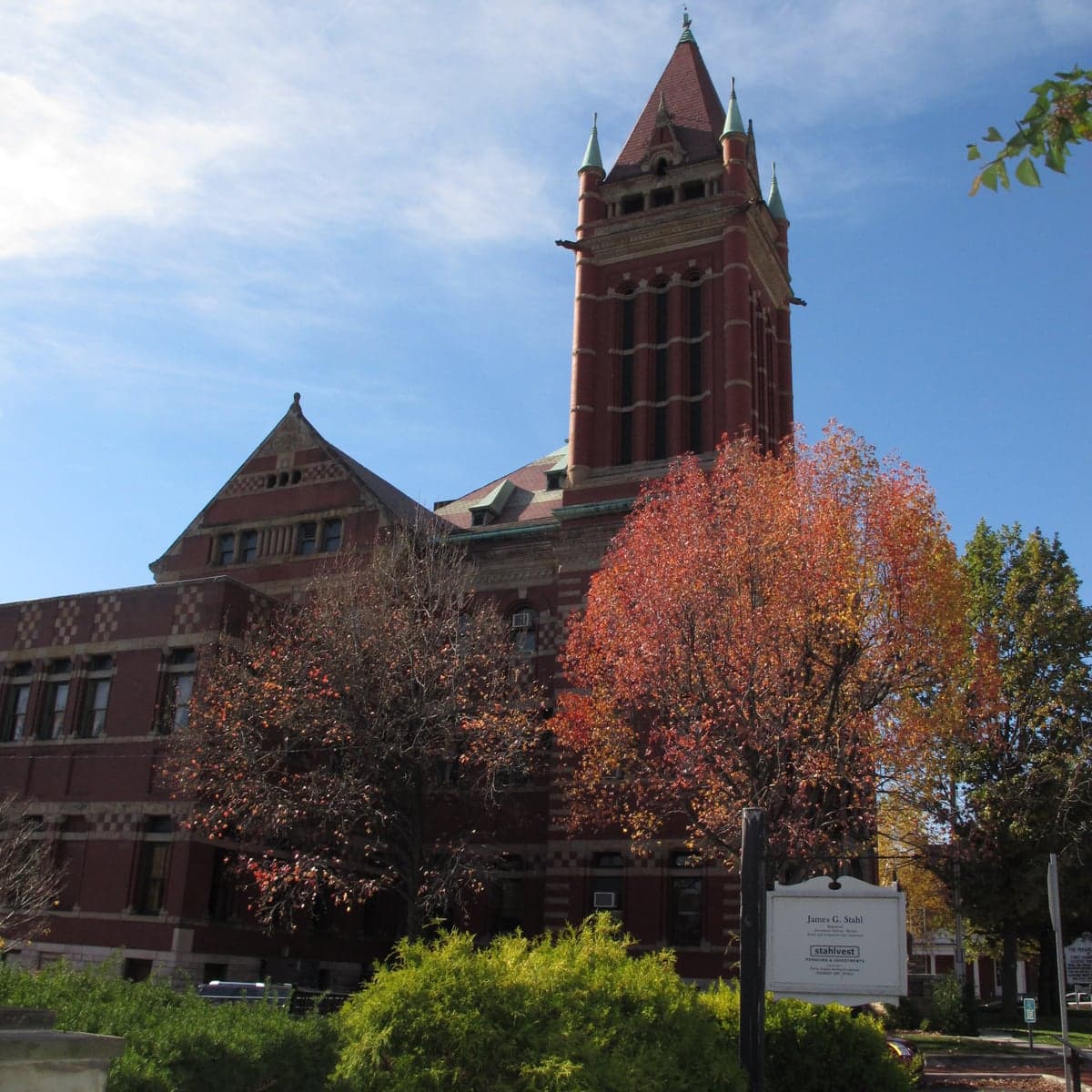
Photo: Wikipedia
Political ClimatePolitical Climate in Allegany County
Showing district-level results — no local-only data available.
Local Political AnalysisPolitical Analysis of Allegany County
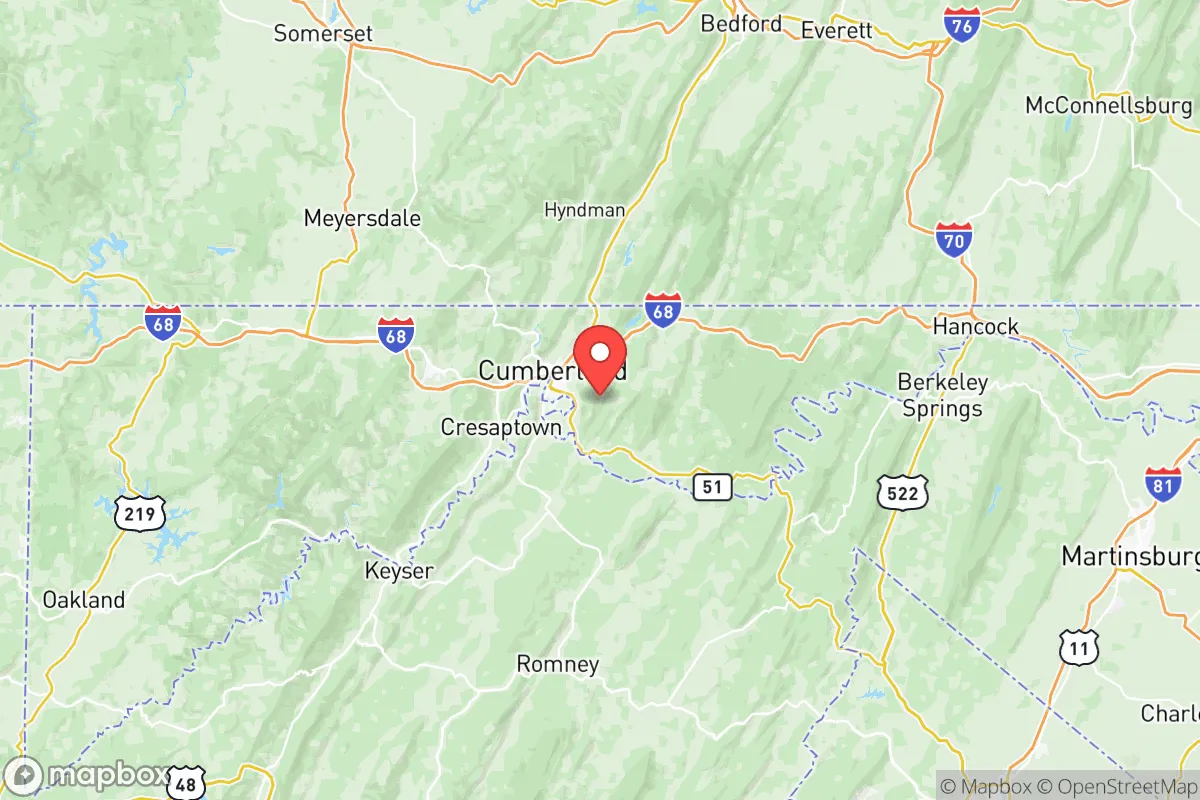
Allegany County, Maryland, is a political outlier in a deep-blue state, leaning Republican in local and national elections despite its D+3 Cook PVI rating. This rating, which is slightly Democratic-leaning, masks a reality where the county has voted for Republican presidential candidates consistently since 2000, often by double-digit margins. The D+3 score is a historical artifact of older voter registration patterns, but the actual voting behavior has shifted rightward, especially in the rural areas outside of the city of Cumberland. In contrast, Maryland as a whole carries a D+17 PVI, reflecting the overwhelming Democratic dominance in the Baltimore-Washington corridor, making Allegany County one of the most conservative regions in the state.
How it compares
The political divide between Allegany County and the rest of Maryland is stark. While the state’s D+17 PVI is driven by massive Democratic margins in Montgomery, Prince George’s, and Baltimore City, Allegany County’s D+3 rating is largely a registration artifact—actual election results show a solid red tilt. For example, in the 2020 presidential election, Donald Trump won Allegany County with 65% of the vote, while Joe Biden took the state with 65%. This 30-point gap is one of the widest in the nation for a county within its own state. Within the county, the city of Cumberland (population ~19,000) is the only significant blue-leaning area, with precincts near Frostburg State University and downtown often voting Democratic. Towns like Frostburg (home to the university) and Lonaconing show more competitive races, while rural communities like Flintstone, Oldtown, and Mount Savage are deeply red. The swing precincts are typically in the LaVale area, where moderate voters in the county’s commercial hub can tip local races.
What this means for residents
For conservative residents, Allegany County feels like a safe haven in a state where their votes are often drowned out. Local offices—county commissioners, sheriff, school board—are reliably Republican, and the area’s culture of gun rights, lower taxes, and traditional values is reflected in policy. For liberal residents, the political reality can be isolating, but they find community in Cumberland and Frostburg, where progressive candidates can win city council seats and the university provides a more diverse social environment. The practical impact is visible in everyday life: gun laws are more permissive than in the rest of Maryland, with fewer restrictions on open carry and concealed carry permits issued more freely. Conversely, state-level policies like the minimum wage increase and environmental regulations are often met with local resistance, creating a tension between Annapolis mandates and local preferences.
Culturally, Allegany County’s political lean is tied to its economic history—once a coal and railroad hub, now a region grappling with population decline and opioid addiction. This has fostered a self-reliant, skeptical attitude toward government intervention, which contrasts sharply with the suburban prosperity of the D.C. suburbs. The county’s motto, “The Mountain Side of Maryland,” reflects a pride in its Appalachian identity, which is both a political and cultural distinction from the rest of the state. For newcomers, understanding this dynamic is key: you’ll find a place where people are friendly but fiercely independent, and where the local newspaper’s letters to the editor are as likely to argue about federal overreach as about potholes. The trajectory suggests Allegany County will remain a red island in a blue state, with its political influence limited to local affairs but its cultural identity a constant reminder of Maryland’s diversity.

State Political ClimatePolitical Climate in Maryland
State Political AnalysisPolitical Environment in the State
Maryland is one of the most reliably Democratic states in the country, with a Cook Partisan Voting Index of D+17, meaning it votes about 17 points more Democratic than the national average in presidential elections. The state hasn't voted for a Republican presidential candidate since George H.W. Bush in 1988, and Democrats hold supermajorities in both chambers of the General Assembly. However, that blue veneer masks a deeply divided state — the Baltimore-Washington corridor is a Democratic stronghold, while the Eastern Shore, Western Maryland, and much of the rural interior vote solidly Republican. Over the past 20 years, the state has shifted leftward as the Washington, D.C. suburbs have grown and diversified, but the rural-urban gap has widened considerably.
Urban vs. rural divide
The political map of Maryland is essentially a tale of two states. The Democratic vote is concentrated in the densely populated Washington, D.C. suburbs — Montgomery County and Prince George's County — plus the city of Baltimore and its inner-ring suburbs like Columbia and Silver Spring. These areas alone deliver roughly 40% of the state's total vote, and they vote 70-80% Democratic. The rest of the state is a patchwork of red and purple. The Eastern Shore counties — Worcester, Wicomico, Queen Anne's — are reliably Republican, as are the western counties like Garrett, Allegany, and Washington. Frederick County, once a conservative stronghold, has been trending purple as D.C. commuters push in, but it still leans right in statewide races. Anne Arundel County (home to Annapolis) is a classic swing county — it voted for Obama twice, then Trump twice, then Biden by a slim margin. The divide isn't just geographic; it's cultural. A voter in Oakland (Garrett County) and a voter in Takoma Park (Montgomery County) live in different political universes.
Policy environment
Maryland's policy environment is unmistakably progressive, especially on fiscal and social issues. The state has a progressive income tax with rates from 2% to 5.75%, and local counties add their own piggyback taxes, pushing top combined rates over 8% in some areas. Property taxes are moderate but vary widely by county — Baltimore City has one of the highest rates in the state, while Garrett County is among the lowest. Sales tax is 6%, with no tax on groceries or prescription drugs. The state has a strict regulatory environment on business, with a high minimum wage ($15.00 as of 2024, indexed to inflation), paid family leave, and aggressive renewable energy mandates. Education policy is dominated by the Blueprint for Maryland's Future, a multi-billion-dollar plan that boosts teacher pay and expands early childhood education, funded largely by new taxes on high earners. Healthcare is heavily regulated, with a state-based insurance exchange and strong Medicaid expansion. Election laws are among the most accessible in the country: no-excuse mail-in voting, same-day registration, and automatic voter registration at the DMV. The state also has a red flag law and requires a permit to purchase a handgun, with a 7-day waiting period.
Recent policy direction
Maryland's recent legislative sessions have pushed the state further left on nearly every front. In 2023, the General Assembly passed the Gun Safety Act, which bans carrying firearms in "sensitive places" like hospitals, public transit, and bars — a direct response to the Supreme Court's Bruen decision. The law is currently tied up in federal court. On education, the state enacted the Blueprint for Maryland's Future in 2021, which dramatically increases school funding but has sparked backlash over rising property taxes in some counties. Parental rights have become a flashpoint: in 2024, the state passed a law requiring school districts to adopt policies on "gender identity" that allow students to use preferred names and pronouns without parental consent, drawing sharp criticism from conservative groups. On privacy and surveillance, Maryland banned facial recognition technology in most government settings in 2022, but also expanded police use of license plate readers. Medical autonomy is broadly protected — the state codified abortion rights in 2022 and expanded access to gender-affirming care for minors. Property rights are constrained by smart growth zoning laws that limit development in rural areas, which frustrates builders but preserves farmland. Voting access has been expanded: the state now has automatic voter registration, same-day registration, and no-excuse mail-in voting, making it one of the easiest states to vote in. For a conservative relocator, the bottom line is that Maryland's policy direction is firmly progressive, with no sign of reversal.
Civil unrest & political movements
Maryland has a history of political activism on both sides. The 2020 George Floyd protests in Baltimore and the D.C. suburbs were large and occasionally violent, with property damage in downtown Baltimore. The state has a strong sanctuary movement: Baltimore City, Montgomery County, and Prince George's County all have "sanctuary" policies limiting cooperation with federal immigration enforcement. In 2023, the state passed the Maryland Values Act, which prohibits state and local law enforcement from asking about immigration status in most circumstances. On the right, the Maryland Republican Party has been energized by the Second Amendment and parental rights movements, but it remains a minority party in state government. There have been periodic secessionist murmurs in Western Maryland and on the Eastern Shore — in 2021, a group in Garrett County proposed joining West Virginia, but it went nowhere. Election integrity has been a persistent issue: after the 2020 election, Republican candidates in several counties alleged irregularities with mail-in ballots, but no widespread fraud was found. The state's ballot access is relatively easy for third parties, but the Green Party and Libertarian Party have never broken through. A new resident would notice the stark contrast between the liberal activism in the D.C. suburbs and the conservative organizing in rural counties, but actual civil unrest is rare outside of Baltimore's periodic protests.
Projection
Over the next 5-10 years, Maryland is likely to become more Democratic, not less. The D.C. suburbs continue to grow — Montgomery County added 50,000 residents between 2010 and 2020, and Frederick County is booming with commuters. These new arrivals tend to be younger, more diverse, and more liberal. Meanwhile, rural counties are losing population — Garrett County shrank by 5% in the last decade. The state's Democratic supermajority in the General Assembly is secure, and the governorship is likely to remain Democratic after Larry Hogan's two terms (2015-2023). However, the suburban swing counties — Anne Arundel, Frederick, and Howard — could become more competitive if Republicans moderate on social issues. The biggest wildcard is the Blueprint for Maryland's Future: if it leads to higher taxes without visible improvement in schools, it could fuel a backlash in the 2026 and 2028 elections. But for now, the trajectory is clear: Maryland will remain a deep-blue state with a progressive policy agenda, and the rural-urban divide will only widen. A conservative moving in now should expect to live in a state where their views are in the minority at the state level, but where local control in their county or town can still offer some buffer.
For a new resident, the practical takeaway is that Maryland offers a highly predictable political environment — you know what you're getting. If you're a conservative, you'll find like-minded communities in the rural counties and on the Eastern Shore, but you'll be voting in a state that consistently elects Democrats. Your property taxes and income taxes will be higher than in Virginia or Pennsylvania, but you'll get well-funded schools and infrastructure. If you're a liberal, you'll find a state that aligns with your values on most issues, from abortion rights to gun control to environmental regulation. Either way, the key is to choose your county carefully — the difference between living in Montgomery County and Garrett County is as stark as the difference between living in two different states. Maryland is a state of political tribes, and your quality of life will depend on finding the right one for you.
* Values derived from national, state, county, city and local statistics and may differ in a specific area. Last updated: 2026-09-27T19:00:51.000Z
Narrative content on this page is AI-generated and may contain mistakes. Verify any details that matter before acting on them.
ReloMaps may earn a commission from affiliate links at no extra cost to you.

