
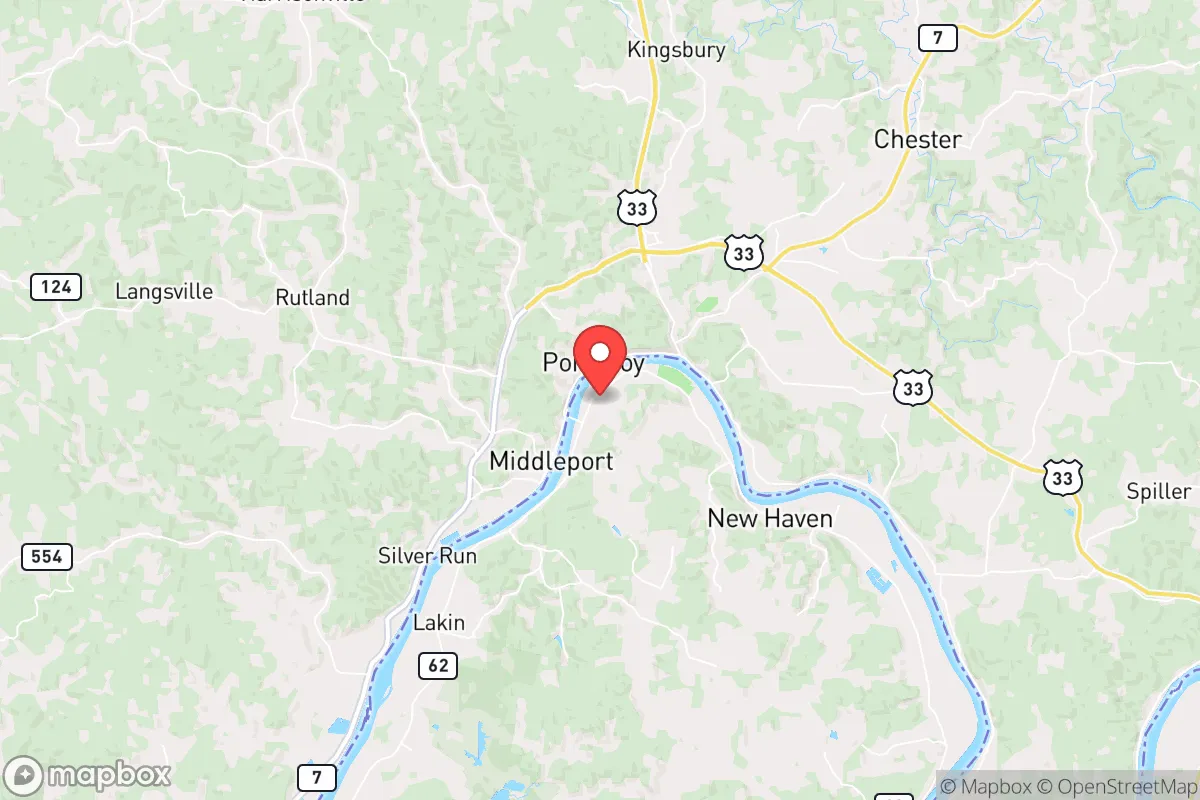
Personal Sovereignty in Mason, WV
Strong independent fundamentals that actively favor personal liberty and low regulation.
What does Personal Sovereignty tell us?
Personal Sovereignty measures your capacity for self-reliance and independence with minimal government friction. Higher scores mean fewer barriers between you and the way you want to live... but it assumes you have the space you need and good neighbors.
What does this tell us?
Personal Sovereignty measures your capacity for self-reliance and independence with minimal government friction. Higher scores mean fewer barriers between you and the way you want to live... but it assumes you have the space you need and good neighbors.
State Policy
Energy independence: Net exporter (200% of energy produced in-state)
Personal Liberty
Homesteading

Personal Liberty Analysis
Mason, West Virginia offers a level of personal sovereignty that is increasingly rare in the United States, making it a serious consideration for those prioritizing autonomy over convenience. Nestled in the Ohio River Valley, this small town operates within a state framework that has historically resisted federal overreach, particularly in the realms of taxation, self-defense, and parental rights. For a survivalist or prepper mindset, Mason represents a strategic outpost where the legal and cultural environment still permits a high degree of self-reliance, though it is not without its own local constraints that require careful navigation.
Tax burden and regulatory posture in Mason and West Virginia
West Virginia’s tax structure is a mixed bag for those seeking maximum financial sovereignty. The state imposes a personal income tax with rates ranging from 2.36% to 4.82%, which is moderate compared to high-tax states like New York or California, but it is not a zero-income-tax haven like Texas or Florida. However, property taxes in Mason County are notably low, with effective rates often below 0.8% of assessed value, a direct result of the state’s constitutional cap on property tax increases. This is a significant advantage for anyone looking to own land outright without the creeping burden of annual tax hikes. On the regulatory front, West Virginia has a reputation for being business-friendly, with a right-to-work law and minimal occupational licensing requirements for many trades. For a prepper, this means fewer bureaucratic hurdles when establishing a workshop, a small farm, or a home-based business. The state also has a relatively low gas tax and no estate tax, which preserves generational wealth transfer. The catch is that local zoning in Mason is minimal but not absent; the town has basic ordinances, but the surrounding county areas are largely unzoned, allowing for greater freedom in land use. The overall regulatory posture is one of benign neglect, which aligns well with a survivalist ethos that values minimal government interference.
Self-defense and gun law specifics in Mason and West Virginia
West Virginia is a constitutional carry state, meaning that as of 2024, any adult who can legally possess a firearm may carry it openly or concealed without a permit. This is a bedrock principle for personal sovereignty, and Mason residents enjoy this right fully. The state also has a strong preemption law, which prohibits local municipalities from enacting their own gun control ordinances, so Mason’s city council cannot impose restrictions stricter than state law. This is critical for preppers who may want to maintain a diverse arsenal for defense, hunting, and long-term storage. West Virginia does not require registration of firearms, and there is no state-level ban on any class of weapon, including AR-15s or standard-capacity magazines. Stand-your-ground laws are in effect, with no duty to retreat in any place where a person is lawfully present. Castle doctrine protections extend to occupied vehicles and workplaces, not just homes. For those concerned about government overreach, the state’s Second Amendment Sanctuary status adds a layer of legal protection against federal firearm restrictions. The practical reality in Mason is that gun ownership is culturally normalized, and law enforcement is generally supportive of armed citizens. The only notable limitation is the federal background check requirement for purchases from licensed dealers, but private sales between individuals remain unregulated under state law.
Self-reliance and homesteading viability in Mason
Mason’s geography and land-use policies make it a viable location for serious homesteading and off-grid living. Lot sizes in the unincorporated areas of Mason County can be as small as one acre, but parcels of 5 to 20 acres are common and affordable, often priced under $3,000 per acre. Zoning is virtually nonexistent outside the town limits, meaning you can build a barn, raise livestock, or install a septic system without extensive permitting. The county does enforce basic health department regulations for well water and septic, but these are generally straightforward and not overly burdensome. Off-grid feasibility is high: the region receives adequate rainfall for rainwater catchment, and solar exposure is sufficient for photovoltaic systems, though tree cover may require clearing. Wood heat is a practical option given the abundance of hardwood forests, and the Ohio River provides a reliable water source for those with proper filtration. The local agricultural extension office offers soil testing and resources for small-scale farming, and the community has a culture of barter and mutual aid that preppers will find familiar. The main limitation is the lack of specialized suppliers for off-grid equipment within a 30-minute drive, but larger towns like Point Pleasant (15 miles north) and Gallipolis, Ohio (across the river) provide basic hardware and building materials. For a survivalist, Mason offers the raw ingredients for self-sufficiency, provided you are willing to invest in infrastructure and accept a slower pace of life.
Personal liberties in Mason: parental rights, medical autonomy, speech, and property
Parental rights are strongly protected in West Virginia, with state law affirming that parents have the fundamental right to direct the upbringing, education, and healthcare of their children. This includes the ability to opt out of public school curricula and to homeschool without excessive state oversight—only a simple notice of intent and annual assessment are required. Medical autonomy is more nuanced: West Virginia has not enacted broad vaccine mandates for adults, but it does require certain immunizations for school attendance, with medical and religious exemptions available. For preppers concerned about medical freedom, the state’s lack of a prescription drug monitoring program that tracks all prescriptions is a minor plus, but telemedicine and compounding pharmacies are accessible in nearby cities. Free speech protections are robust, with no state-level hate speech laws that could chill political or religious expression. Property rights are a standout feature: West Virginia is a “pure” fee simple state, meaning there is no state-level property tax on intangible assets, and eminent domain is rarely used for private development. The state also has a strong adverse possession law, which can be a double-edged sword for absentee landowners, but for those living on their property, it reinforces the principle that use and occupancy solidify ownership. The overall legal climate in Mason respects individual autonomy more than most urban or coastal jurisdictions, though it is not a libertarian utopia—local law enforcement still has broad discretion, and the court system can be slow.
In the broader context of personal sovereignty, Mason, WV, ranks favorably against other rural areas in the Appalachian region. It offers a combination of low property taxes, constitutional carry, minimal zoning, and strong parental rights that is difficult to find in states with more centralized governance. Compared to places like rural Oregon or New York’s North Country, Mason avoids the aggressive environmental regulations and high income taxes that erode self-reliance. It is not as permissive as Idaho or Montana in terms of off-grid legality, but it is more affordable and accessible. For a strategic relocation aimed at preserving autonomy in an uncertain future, Mason provides a solid foundation—a place where the state is not your adversary, but it also won’t do much to help you. The burden of sovereignty falls squarely on the individual, which is exactly how a survivalist or prepper would want it.

* Values derived from national, state, county, city and local statistics and may differ in a specific area. Last updated: 2026-04-23T06:01:21.000Z
Narrative content on this page is AI-generated and may contain mistakes. Verify any details that matter before acting on them.
ReloMaps may earn a commission from affiliate links at no extra cost to you.

