Political ClimatePolitical Climate in Mason, WV
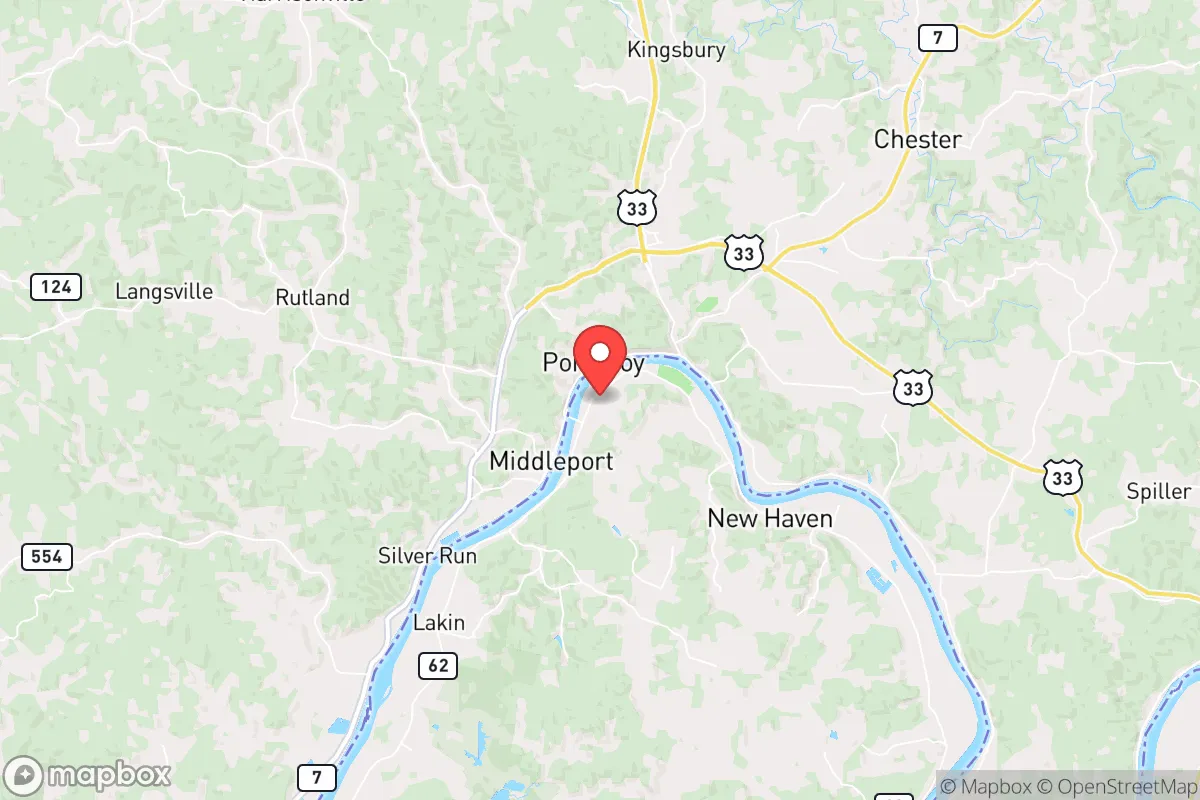
District shown is the primary district for this city’s centroid. Cities may span multiple districts.
Local Political AnalysisPolitical Analysis of Mason, WV
Mason, West Virginia, sits deep in solidly conservative territory, with a Cook Partisan Voting Index of R+22 that makes it one of the most reliably Republican areas in the state. This isn't a recent shift—this area has voted red for generations, and the local culture reflects that stability. You won't find much political hand-wringing here; folks tend to vote their values, and those values lean heavily toward limited government, personal responsibility, and a healthy skepticism of federal overreach. If you're looking for a place where the political winds don't shift with every national news cycle, Mason is about as steady as it gets.
How it compares
Drive 30 minutes north to Point Pleasant, and you'll find a similar conservative bent, though the R+22 rating here is actually a bit stronger than Mason County as a whole. Head east toward Charleston, and the contrast is stark—the state capital leans noticeably more moderate, with pockets of progressive activism that would feel foreign to most Mason residents. Even nearby Gallipolis, Ohio, just across the river, has a slightly more mixed political profile due to its larger industrial base and union history. Mason itself remains a bastion of traditional values, where the Second Amendment isn't debated, it's assumed, and where the idea of government telling you how to run your small business or raise your kids is met with a polite but firm "no thanks."
What this means for residents
For someone moving here, the political climate translates into a few concrete realities. Taxes stay low—West Virginia's income tax has been on a steady downward trend, and local levies are minimal compared to blue states. Gun laws are among the most permissive in the country, with constitutional carry in effect and no state-level red flag law. You won't see mask mandates or business shutdowns from the county courthouse; the local government generally takes a hands-off approach to personal and economic decisions. That said, the trade-off is that public services are lean—don't expect robust public transit, extensive social programs, or a highly funded school system. The philosophy here is that you take care of your own, and most residents prefer it that way.
There's been some chatter in recent years about outside money flowing into the region—renewable energy projects, conservation easements, and the occasional out-of-state activist group trying to push environmental regulations. So far, those efforts have gained little traction. The local economy still revolves around small farms, manufacturing, and the Ohio River barge traffic, and people here are wary of any policy that threatens those livelihoods. If you're concerned about government overreach into personal freedoms—whether it's vaccine mandates, land-use restrictions, or curriculum control in schools—Mason offers a refuge where those battles are largely already won.
Looking ahead, the biggest political shift to watch is the slow demographic change as remote workers and retirees from more liberal states discover the low cost of living. A few new faces have already shown up with different ideas about zoning and "sustainability." So far, the local culture has absorbed them without much friction, but long-time residents keep a watchful eye. Mason's political identity isn't fragile—it's been tested before and held firm. But if you value a community where your personal freedoms aren't up for debate, you'll want to be part of keeping it that way.

State Political ClimatePolitical Climate in West Virginia
State Political AnalysisPolitical Environment in the State
West Virginia is a deeply red state, but it hasn’t always been that way. For decades, it was a reliable Democratic stronghold in presidential elections, but a seismic shift began in the 2000s as the national Democratic Party moved left on coal, guns, and social issues. Today, West Virginia is one of the most Republican states in the nation, with Donald Trump winning by nearly 39 points in 2020 and 42 points in 2024. The state legislature is a supermajority Republican, and both U.S. Senate seats are held by Republicans. The 10-20 year arc is a story of realignment: working-class voters, especially in the coalfields and rural areas, abandoned the Democrats en masse, while the few remaining Democratic strongholds are shrinking fast.
Urban vs. rural divide
The political map of West Virginia is stark. The only real blue dot is the state capital, Charleston, and even that is fading—Kanawha County, which includes Charleston, voted for Trump by about 10 points in 2024, down from a 15-point margin in 2020. The city itself still leans Democratic, but the surrounding suburbs and exurbs are solidly red. Morgantown, home to West Virginia University, is a mixed bag—the student population tilts left, but the rest of Monongalia County is reliably Republican. The real engine of the state’s conservative majority is the rural and small-town vote. Counties like Mingo, Logan, and McDowell in the southern coalfields routinely deliver 70-80% for Republican candidates. The eastern panhandle, including Martinsburg and Berkeley County, has grown rapidly with transplants from Maryland and Virginia, and those newcomers tend to be more conservative than the folks they left behind. The only other notable blue area is Huntington (Cabell County), but even that is trending red—Trump won it by 8 points in 2024 after it was a toss-up in 2020.
Policy environment
West Virginia’s policy environment is aggressively conservative. There is no state income tax on Social Security benefits, and the state has been phasing out its personal income tax—the rate dropped from 6.5% to 3.99% in 2024, with a goal of elimination. Property taxes are among the lowest in the nation, capped by the state constitution. The regulatory climate is business-friendly, especially for energy, manufacturing, and natural resources. On education, the state passed a robust school choice law in 2021, creating the Hope Scholarship program, which gives parents roughly $4,600 per child to use for private school, homeschooling, or other educational expenses. Healthcare is a mixed bag: the state expanded Medicaid under the Affordable Care Act, but there is no state-run insurance exchange, and the legislature has resisted further expansion of government-run healthcare. Election laws are solid—voter ID is required, early voting is available, and there is no same-day registration. The state also passed a law in 2023 banning ranked-choice voting and requiring hand-counted paper ballots for audits. On social issues, West Virginia passed one of the nation’s strictest abortion bans in 2022, with no exceptions for rape or incest, only for medical emergencies. The state also passed a law in 2023 banning gender transition procedures for minors.
Trajectory & freedom
West Virginia is becoming more free in several key areas, but there are warning signs. On gun rights, the state passed constitutional carry in 2016, allowing permitless concealed carry for anyone 21 or older. In 2023, the legislature passed a law prohibiting the enforcement of federal gun laws that violate the Second Amendment—a direct challenge to federal overreach. Parental rights were strengthened with the 2021 Hope Scholarship and a 2023 law requiring schools to notify parents of any changes in a child’s mental, emotional, or physical health. Medical autonomy took a hit with the abortion ban, but the state also passed a law in 2024 protecting doctors who refuse to perform procedures they find morally objectionable. Property rights are strong—there is no state-level property tax on personal vehicles, and the state has a right-to-farm law protecting agricultural operations from nuisance lawsuits. The biggest threat to freedom is the state’s addiction to federal money—West Virginia receives more federal funding per capita than almost any other state, which creates a dependency that could be leveraged for federal control. The 2023 law banning TikTok on state devices was a minor overreach, but overall, the trajectory is toward more personal liberty, especially for families and gun owners.
Civil unrest & political movements
West Virginia is not a hotbed of civil unrest, but there have been notable flashpoints. The 2018 teachers’ strike shut down schools across the state for two weeks, with teachers demanding higher pay and better benefits. That strike was a rare moment of left-leaning activism, but it was focused on bread-and-butter issues, not culture war battles. On the right, the state has seen a rise in Second Amendment sanctuary resolutions—over 40 counties have passed resolutions declaring they will not enforce unconstitutional gun laws. The West Virginia Patriot movement is active, with groups like the West Virginia Citizens Defense League and local chapters of the Oath Keepers. Immigration politics are muted—the state has a very small foreign-born population (about 1.5%), and there are no sanctuary cities. In fact, the legislature passed a law in 2023 requiring local law enforcement to cooperate with federal immigration authorities. Election integrity controversies have been minimal—the state’s paper ballot system and voter ID law have kept things clean. The only real flashpoint a new resident might notice is the tension between the old coal economy and the push for renewable energy—there are occasional protests at wind and solar projects, but they are small and localized.
Projection
Over the next 5-10 years, West Virginia will likely become even more Republican. The Democratic Party is essentially extinct outside of Charleston and a few college towns. In-migration is picking up, especially in the eastern panhandle (Martinsburg, Charles Town) and the Greenbrier Valley, where retirees and remote workers are moving for the low cost of living and natural beauty. These newcomers tend to be conservative, but they are also more moderate on some issues like marijuana legalization (medical marijuana is already legal, but recreational is not). The biggest demographic shift is the aging population—West Virginia has the oldest median age in the nation, and younger people are leaving for jobs elsewhere. This could lead to a stagnation of the tax base and a continued reliance on federal money. The state’s political trajectory will likely stay the same: solidly red, with a focus on school choice, gun rights, and energy independence. The only wild card is the opioid crisis—if the state can’t get a handle on addiction and workforce participation, the economic freedom that attracts new residents could be undermined.
For a conservative moving to West Virginia, the bottom line is this: you’ll find a state that largely leaves you alone, with low taxes, strong gun rights, and a government that respects parental authority. The biggest practical concern is not politics—it’s the economy. Jobs are scarce outside of healthcare, energy, and government, so make sure you have a remote job or a solid plan before you move. The culture is friendly, the scenery is stunning, and the politics are on your side. Just be prepared for a slower pace of life and a state that is still figuring out how to replace the coal economy that built it.
* Values derived from national, state, county, city and local statistics and may differ in a specific area. Last updated: 2026-04-23T06:01:21.000Z
Narrative content on this page is AI-generated and may contain mistakes. Verify any details that matter before acting on them.
ReloMaps may earn a commission from affiliate links at no extra cost to you.

