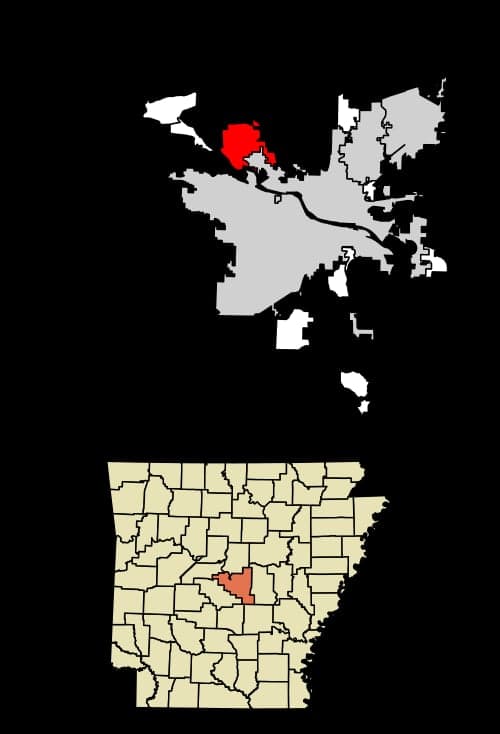
Photo: Wikipedia
Political ClimatePolitical Climate in Maumelle, AR
District shown is the primary district for this city’s centroid. Cities may span multiple districts.
Local Political AnalysisPolitical Analysis of Maumelle, AR
Maumelle has long been a reliably conservative community, and the numbers back that up with a Cook PVI of R+8, meaning the area votes about eight points more Republican than the national average. But if you’ve lived here as long as I have, you’ve seen the political winds shift in subtle ways. While the city itself still leans solidly red, the broader Pulaski County—especially Little Rock just to the south—has been trending bluer over the last decade. That contrast is something you feel more and more at the ballot box and in local conversations.
How it compares
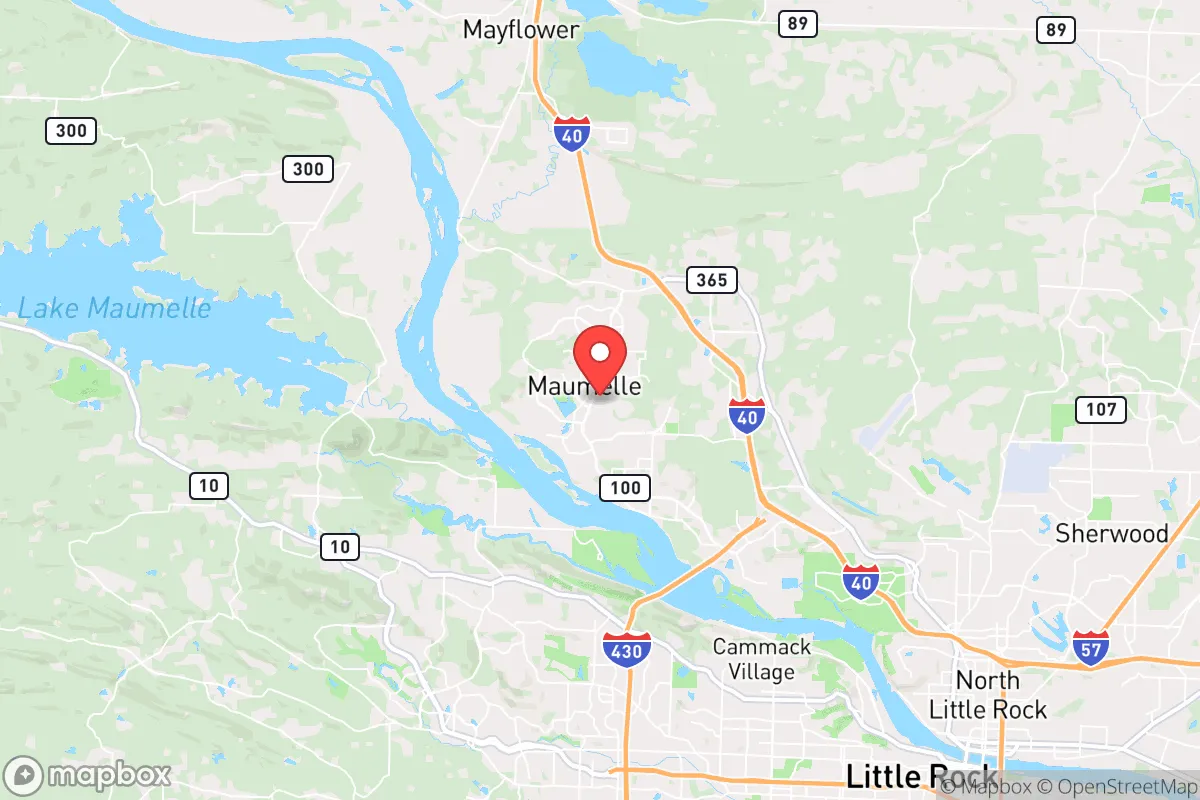
Drive ten minutes south into Little Rock, and you’re in a completely different political world. Little Rock and its immediate suburbs have seen a noticeable push toward progressive policies, from higher property taxes to more aggressive zoning regulations. Maumelle, by contrast, has held the line. We’ve kept our city council focused on fiscal restraint and public safety, not social experiments. Compare us to Conway to the northwest, which is also conservative but has a younger, more transient college population that sometimes nudges local elections left. Maumelle’s demographic is older, more settled, and more likely to vote straight-ticket Republican. The R+8 rating isn’t just a number—it reflects a community that consistently rejects the kind of government overreach you see in bigger cities. When Little Rock started pushing mask mandates and business closures during the pandemic, Maumelle largely stayed out of that mess, letting folks make their own choices.
What this means for residents
For the average family here, the political climate means lower taxes and fewer headaches. You’re not dealing with the constant churn of new ordinances telling you what you can and can’t do with your property. The city council has been pretty hands-off, which is exactly how most of us want it. That said, there’s been a quiet push in recent years from a small but vocal group wanting to bring in more “progressive” ideas—think bike lanes that nobody uses, higher impact fees on new homes, and more public art funded by your tax dollars. So far, those efforts have fizzled, but it’s something to keep an eye on. If you’re worried about government creeping into your personal freedoms—like how you raise your kids, what you do on your own land, or how you run your business—Maumelle is still a safe bet. But don’t get complacent. The same forces that turned Little Rock into a high-tax, high-regulation mess are knocking on our door.
Culturally, Maumelle is a place where people still wave at their neighbors and leave their doors unlocked. The biggest policy fights here are usually about school funding or road maintenance, not identity politics. That’s a breath of fresh air compared to what you see on the news from other parts of the country. But I’ll be straight with you: if the current trend of suburban gentrification and influx from out-of-state transplants continues, we could see a slow erosion of that live-and-let-live attitude. For now, though, Maumelle remains a solid conservative stronghold where personal responsibility still matters more than government mandates. Keep voting, keep showing up to city council meetings, and we’ll keep it that way.

State Political ClimatePolitical Climate in Arkansas
State Political AnalysisPolitical Environment in the State
Arkansas has been a reliably red state for decades, but don’t mistake that for a monolith—it’s a place where the old-school conservative coalition of rural voters, evangelical Christians, and business interests has held firm, even as the national GOP has shifted. Over the last 10-20 years, the state has moved from a purple-ish battleground (it voted for Bill Clinton twice) to a solidly Republican stronghold, with every statewide office now held by the GOP and a supermajority in the legislature. The 2024 presidential race saw Arkansas give Donald Trump a 30-point margin, and the state hasn’t voted for a Democratic presidential candidate since 1996. But beneath that red veneer, there are real tensions—between the fast-growing, more moderate Northwest Arkansas corridor and the deeply conservative rural south and east, and between a libertarian-leaning “leave us alone” ethos and the practical realities of a state that still ranks near the bottom in many quality-of-life metrics.
Urban vs. rural divide
The political map of Arkansas is a classic story of urban islands in a rural sea. The biggest metro, Little Rock (Pulaski County), is the state’s lone blue dot—it went for Biden in 2020 by about 10 points, driven by a mix of Black voters, younger professionals, and university-affiliated residents. But even Little Rock has its red suburbs: Maumelle and Benton (in Saline County) are solidly Republican, with Saline County voting +25 R in 2024. The real engine of conservative growth is Northwest Arkansas—the corridor from Fayetteville to Bentonville. Fayetteville itself is a purple-ish college town (home to the University of Arkansas), but the surrounding counties—Benton and Washington—are booming and deeply red. Benton County, home to Walmart’s headquarters, voted +20 R in 2024, and its growth is pulling the state’s center of gravity northward. Meanwhile, the Delta region in the east (like Pine Bluff and West Memphis) is poor, majority-Black, and reliably Democratic, but its population is shrinking. The rural south and west—places like Texarkana and El Dorado—are as red as they come, with some counties hitting +50 R margins. The divide isn’t just about party; it’s about culture. Northwest Arkansas feels like a transplant-friendly, business-first version of conservatism, while the rest of the state leans more into traditional, church-centered, and often populist politics.
Policy environment
Arkansas’s policy environment is a mixed bag for a conservative. On the plus side, the state has a flat income tax of 4.4% (down from 7% a decade ago), with a goal of hitting 3.9% by 2027. There’s no state property tax, and sales tax is around 6.5% but can hit 11% with local add-ons. The regulatory posture is generally business-friendly, with right-to-work laws and a tort reform system that caps non-economic damages. But the education landscape is contentious: the state passed a school voucher program (the LEARNS Act) in 2023, championed by Governor Sarah Huckabee Sanders, which lets parents use public funds for private or homeschool expenses. That’s a win for school choice, but it’s also sparked fierce resistance from rural districts worried about funding. Healthcare is a sore spot—Arkansas expanded Medicaid under the private option, but the state has one of the highest uninsured rates in the country. Election laws have tightened: voter ID is required, and the legislature passed a law in 2021 restricting absentee ballot drop boxes. Overall, the policy vibe is “low taxes, low services,” which appeals to many conservatives but means infrastructure and public schools often lag.
Trajectory & freedom
On the freedom front, Arkansas has been moving in a decidedly more libertarian direction over the last five years, but with some caveats. Gun rights are strong: permitless carry (constitutional carry) became law in 2021, and the state has a “stand your ground” statute. Parental rights got a boost with the 2023 LEARNS Act, which includes a “Parents’ Bill of Rights” that requires schools to notify parents about curriculum changes and medical services. Medical autonomy took a hit, though—the state passed one of the strictest abortion bans in the country in 2019 (triggered by Roe’s reversal), with no exceptions for rape or incest. That’s a win for pro-life conservatives, but it’s also a government overreach into personal medical decisions that some libertarians find troubling. Property rights are generally respected, but there’s been a push to limit local zoning control in favor of state-level preemption, which cuts both ways. Taxation is trending down, which is good, but the state still has a high combined sales tax burden. The biggest freedom concern is COVID-era overreach: Governor Sanders ended the state of emergency early, but local health departments still have broad quarantine powers that haven’t been fully rolled back. Overall, Arkansas is getting freer in most dimensions, but the abortion ban and lingering emergency powers are red flags for strict libertarians.
Civil unrest & political movements
Arkansas hasn’t seen the kind of large-scale civil unrest you’d find in Portland or Seattle, but there have been flashpoints. The Black Lives Matter protests in Little Rock in 2020 were relatively small and mostly peaceful, though there were some clashes with police. The bigger story is the rise of populist conservative activism: groups like the Arkansas Patriot Coalition have been vocal on election integrity, pushing for hand-count audits and opposing Dominion voting machines. There was a brief controversy in 2022 when the state’s election commission considered decertifying some machines, but it fizzled. Immigration politics are less heated than in border states, but there’s a growing concern about illegal immigration in the Springdale area, which has a large Marshallese and Hispanic population. The state passed a law in 2023 requiring local law enforcement to cooperate with ICE, and there’s talk of a Texas-style busing program. Secession or nullification rhetoric is rare—Arkansas is too pragmatic for that. The most visible political movement is the school choice fight, which has pitted rural conservatives (who fear losing their local schools) against suburban and urban conservatives (who want options). It’s a real fault line that could define the next few election cycles.
Projection
Looking ahead 5-10 years, Arkansas is likely to get redder, but the flavor of that red will change. Northwest Arkansas is growing fast—Benton County’s population is up 20% since 2010—and it’s attracting a mix of corporate transplants from California and Texas, plus younger families looking for lower costs. These newcomers tend to be fiscally conservative but socially moderate, which could push the state toward a more Chamber of Commerce-style Republicanism. Meanwhile, the Delta and rural south are losing population, which will dilute the influence of the more populist, evangelical wing. The LEARNS Act will likely expand, with more voucher funding and maybe even a universal option, which could accelerate the decline of rural public schools. On the freedom front, expect more tax cuts (the goal is to eliminate the income tax entirely by 2030) and maybe a push to repeal the abortion ban’s exceptions—or, conversely, a backlash if the ban proves too restrictive. The wild card is Little Rock: if crime continues to rise (the city had a record 60 homicides in 2023), more families will flee to the suburbs, further shrinking the state’s only blue stronghold. For someone moving in now, expect a state that’s increasingly conservative, increasingly suburban, and increasingly focused on economic growth over social safety nets.
Bottom line for a new resident: If you’re a conservative who values low taxes, gun rights, and school choice, Arkansas is a solid bet—especially in the Northwest corridor. But don’t expect a libertarian paradise: the state still has a heavy hand in medical decisions, local health mandates, and a sales tax that can sting. The culture is friendly and traditional, but the politics are shifting toward a more corporate, growth-oriented conservatism. If you’re moving for freedom, you’ll find plenty of it—just keep an eye on the fine print.
* Values derived from national, state, county, city and local statistics and may differ in a specific area. Last updated: 2026-04-30T04:22:05.000Z
Narrative content on this page is AI-generated and may contain mistakes. Verify any details that matter before acting on them.
ReloMaps may earn a commission from affiliate links at no extra cost to you.

