
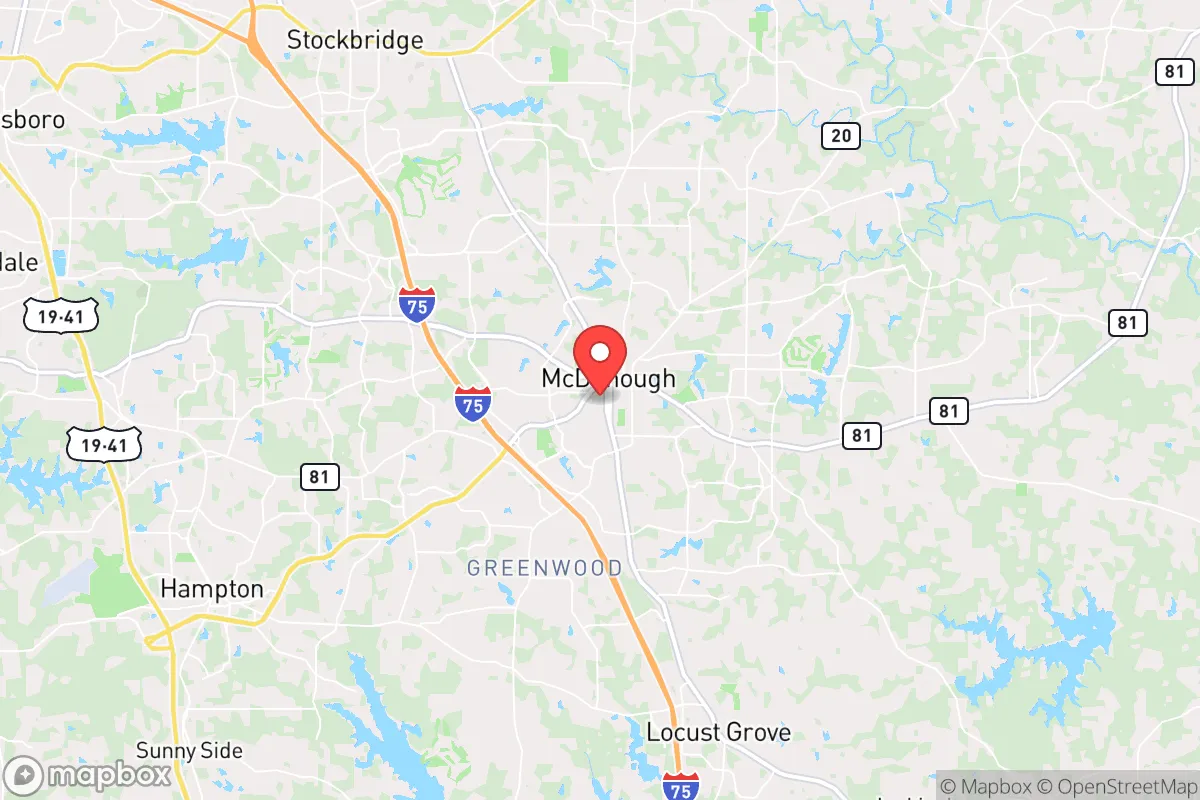
Photo: Wikipedia
Quality of Life in Mcdonough, GA
A high quality of life with strong walkability, manageable living costs, healthy neighborhood signals, and solid amenity access.
What does Quality of Life tell us?
Quality of Life blends cost of living, nearby amenities, socioeconomic signals, and neighborhood character. City-level scores represent the whole municipality; individual neighborhoods can differ.
What does this tell us?
Quality of Life blends cost of living, nearby amenities, socioeconomic signals, and neighborhood character. City-level scores represent the whole municipality; individual neighborhoods can differ.
Cost of Living
22% above national average
The Real Cost of Living in Mcdonough, GA for 2026
| Tier | Individual | Family (4) |
|---|---|---|
| Survival | $25k | $47k |
| Comfortable | $56k | $82k |
| Luxury | $109k+ | $169k+ |
| Elite (Top 5%) | $128k+ | $199k+ |
95%
The Area Signal
A metric tracking the socioeconomic signals of the area.
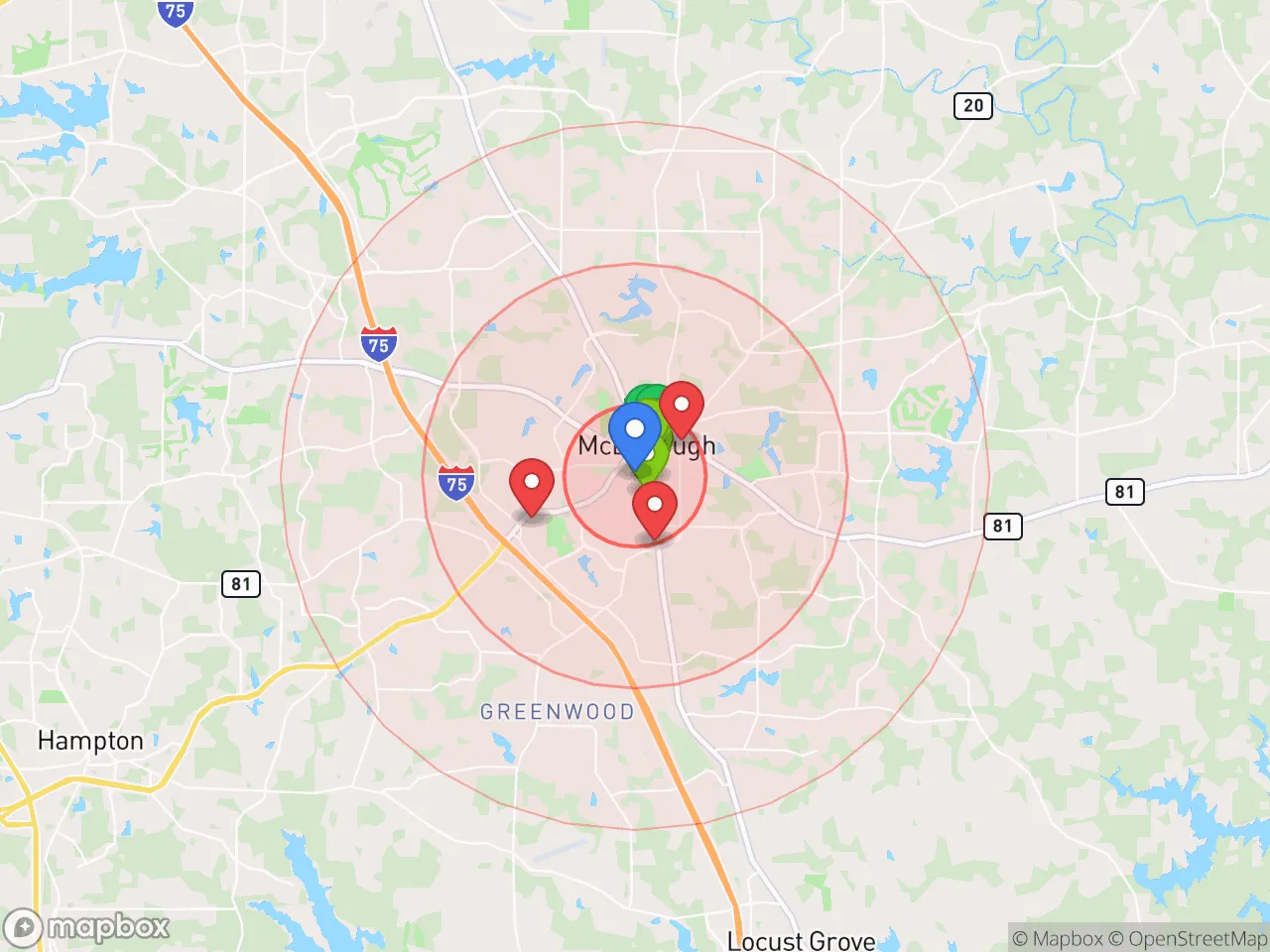
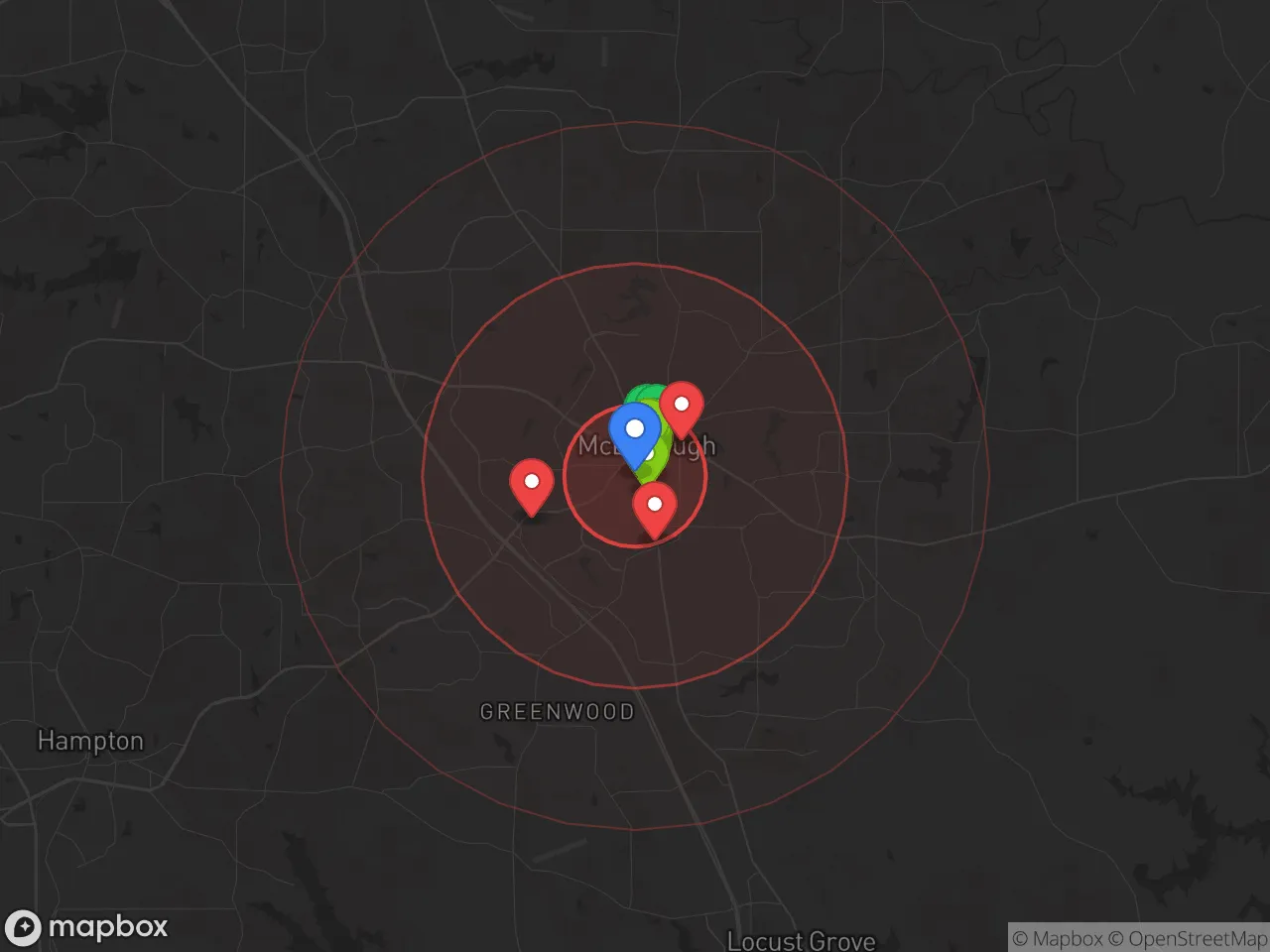
Hobbies
Explore the areaGroceries
8 within 10 miles
Gas
20 within 10 miles
Hospital
12 within 20 miles
Airport
ATL — Hartsfield–Jackson Atlanta International
Post Office
USPS — Mcdonough, GA
Critical Amenities
Quality-of-Life Analysis
Mcdonough, Georgia, presents a quality of life defined by suburban affluence and rapid growth, attracting a demographic mix of young families, established professionals, and long-time residents seeking more space near Atlanta. With a cost of living index of 122—22% above the national average—the city offers a premium lifestyle that balances higher housing costs with strong local amenities and a slower daily pace than its metropolitan neighbor. The median household income in Henry County, where Mcdonough is the seat, hovers around $72,000, supporting a community that values homeownership, good schools, and accessible recreation.
Cost of living, housing affordability, and value compared to Atlanta
Housing is the primary driver of Mcdonough’s elevated cost of living. The median home value of $285,800 is significantly lower than Atlanta’s median of roughly $400,000, but it still outpaces the national median of around $350,000. Renters face a median monthly rent of $1,576, which is about 15% higher than the U.S. average and reflects strong demand in a growing market. For context, comparable suburban cities like Stockbridge or Hampton offer slightly lower home values—around $260,000 and $240,000 respectively—but Mcdonough’s premium is tied to its status as the county seat and its concentration of retail, dining, and civic services. The average commute of 32 minutes is a key trade-off: residents gain more square footage and yard space per dollar than in-town Atlanta, but spend nearly an hour daily traveling to jobs along the I-75 corridor. Utility costs and grocery prices in Mcdonough are roughly in line with national averages, meaning the COL premium is almost entirely housing-driven.
Schools, amenities, and what daily life feels like for families
Daily life in Mcdonough centers on a mix of historic downtown charm and modern suburban convenience. The Henry County School System operates several highly rated schools in the area, including Ola High School and Mcdonough High School, both of which offer Advanced Placement programs and competitive athletics. For younger children, elementary schools like Wesley Lakes Elementary and Oakland Elementary consistently earn above-average test scores. Beyond education, residents enjoy the Heritage Park complex—a 200-acre facility with sports fields, walking trails, and a splash pad—and the Mcdonough Square, a walkable historic district with local restaurants, boutiques, and a weekly farmers market. The city’s proximity to Atlanta Motor Speedway and Indian Creek Golf Club adds recreational variety. Retail anchors like the Mcdonough Marketplace and Henry Town Center provide big-box shopping and dining chains, while the Southside Medical Center and Piedmont Henry Hospital offer accessible healthcare. The rhythm is distinctly suburban: families prioritize school events, weekend sports leagues, and short trips to Atlanta for cultural or professional needs.
Mcdonough is best suited for buyers and renters who value space, strong schools, and a slower suburban pace over the urban energy of Atlanta. Families with school-aged children will find the most direct benefit from the district’s academic offerings and recreational amenities. Commuters who work in the southern Atlanta metro—such as in Hartsfield-Jackson Airport, Clayton County, or the I-75 industrial corridor—will find the 32-minute average commute manageable. Those seeking a walkable urban lifestyle or a lower cost of living should look elsewhere, as Mcdonough’s housing premiums and car-dependent layout are non-negotiable trade-offs for its quality of life.

Crime in Mcdonough, GA
Lower crime rates than 77% of comparable U.S. locations.
Violent CrimeViolent Crime Analysis
Property CrimeProperty Crime Analysis
Crime Analysis
Mcdonough, Georgia, reports a violent crime rate of 109.7 per 100,000 residents and a property crime rate of 753 per 100,000, figures that position the city as safer than many national averages but warrant scrutiny given its location within the broader Atlanta metropolitan area. As a suburb in Henry County, Mcdonough benefits from lower crime density than core urban zones, yet residents must remain aware of regional dynamics, including the influence of progressive prosecutorial policies in nearby jurisdictions that can affect criminal justice outcomes across the metro.
Crime in context
Mcdonough’s violent crime rate of 109.7 per 100,000 is roughly 70% lower than the national average of 380 per 100,000, placing it among the safer small cities in Georgia. Property crime, at 753 per 100,000, sits about 20% below the U.S. median of 1,954 per 100,000. However, these city-level figures mask a critical metro-area reality: Henry County’s district attorney and judges operate within a state legal framework that has seen increasing pressure toward progressive reforms, including bail reform and reduced sentencing for nonviolent offenders. While Mcdonough itself has not adopted such policies, the proximity to Atlanta—where progressive prosecutors have implemented diversion programs and declined to prosecute certain low-level offenses—means that criminals from the broader metro area may face reduced consequences, potentially increasing property crime spillover into suburban communities like Mcdonough.
What residents experience
Daily life in Mcdonough reflects a community where violent incidents are rare but property crime—particularly vehicle break-ins, package theft, and residential burglary—remains a persistent concern. The city’s police department maintains a visible presence, and neighborhood watch programs are active in subdivisions like Avalon and Heron Bay. Still, residents should note that Georgia’s statewide property crime clearance rate hovers around 20%, meaning most thefts go unsolved. The metro area’s progressive judicial trends compound this: offenders arrested in Mcdonough but processed through Henry County courts may face lighter sentences under state-level reforms, reducing deterrence. For families and retirees, this translates to practical precautions—locking vehicles, installing security cameras, and avoiding leaving valuables in plain sight—rather than pervasive fear.
Neighborhood-level variation is significant. Established areas like the historic downtown square and newer developments along Highway 81 report lower incident rates, while corridors near I-75 exits, particularly around Jonesboro Road, see higher property crime volumes due to easier access for transient offenders. Mcdonough’s violent crime is heavily concentrated in a few apartment complexes near the interstate, not in single-family home subdivisions. Prospective residents should consult the city’s crime mapping tool and consider specific street-level data, as the overall low rates can obscure pockets where risk is elevated. The broader metro context—where progressive district attorneys in Fulton and DeKalb counties have reduced incarceration rates—means that Mcdonough’s safety advantage depends partly on maintaining local law enforcement resources and conservative judicial appointments in Henry County.
* Values derived from national, state, county, city and local statistics and may differ in a specific area. Last updated: 2026-05-04T02:45:53.000Z
Narrative content on this page is AI-generated and may contain mistakes. Verify any details that matter before acting on them.
ReloMaps may earn a commission from affiliate links at no extra cost to you.

