
Photo by Raymond Kotewicz on Unsplash
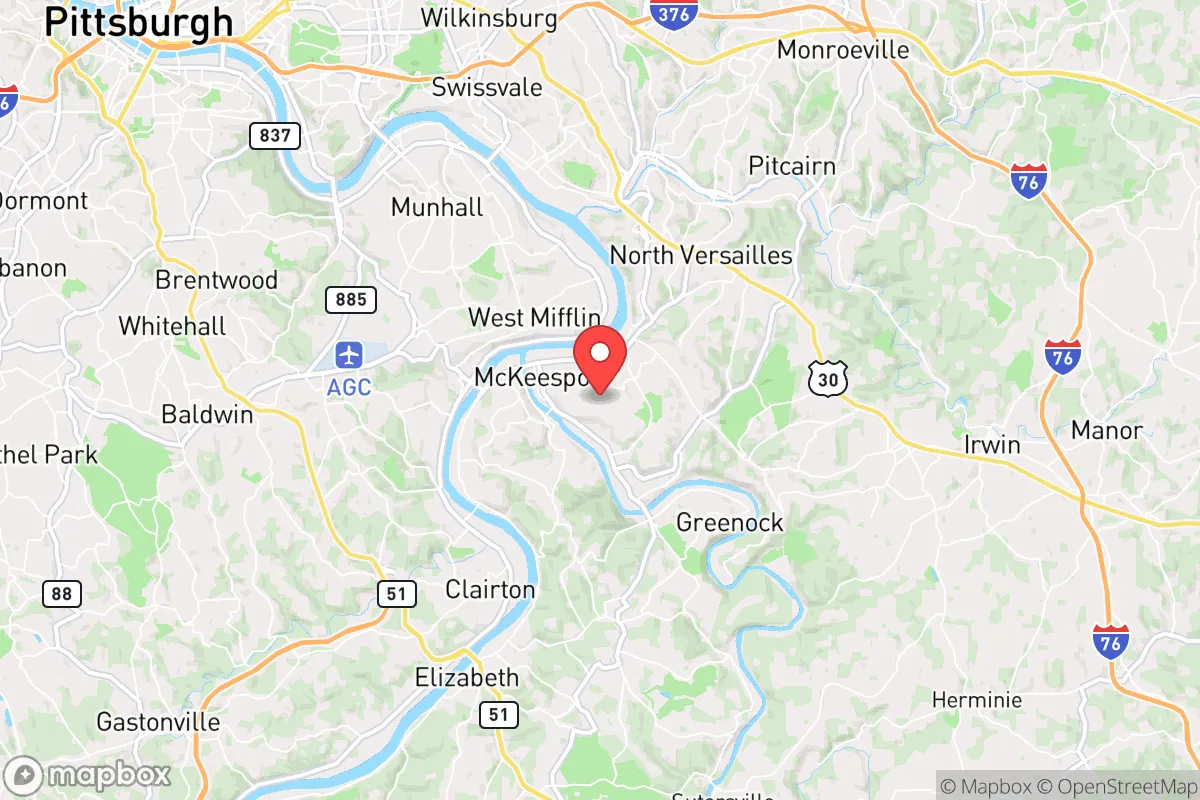
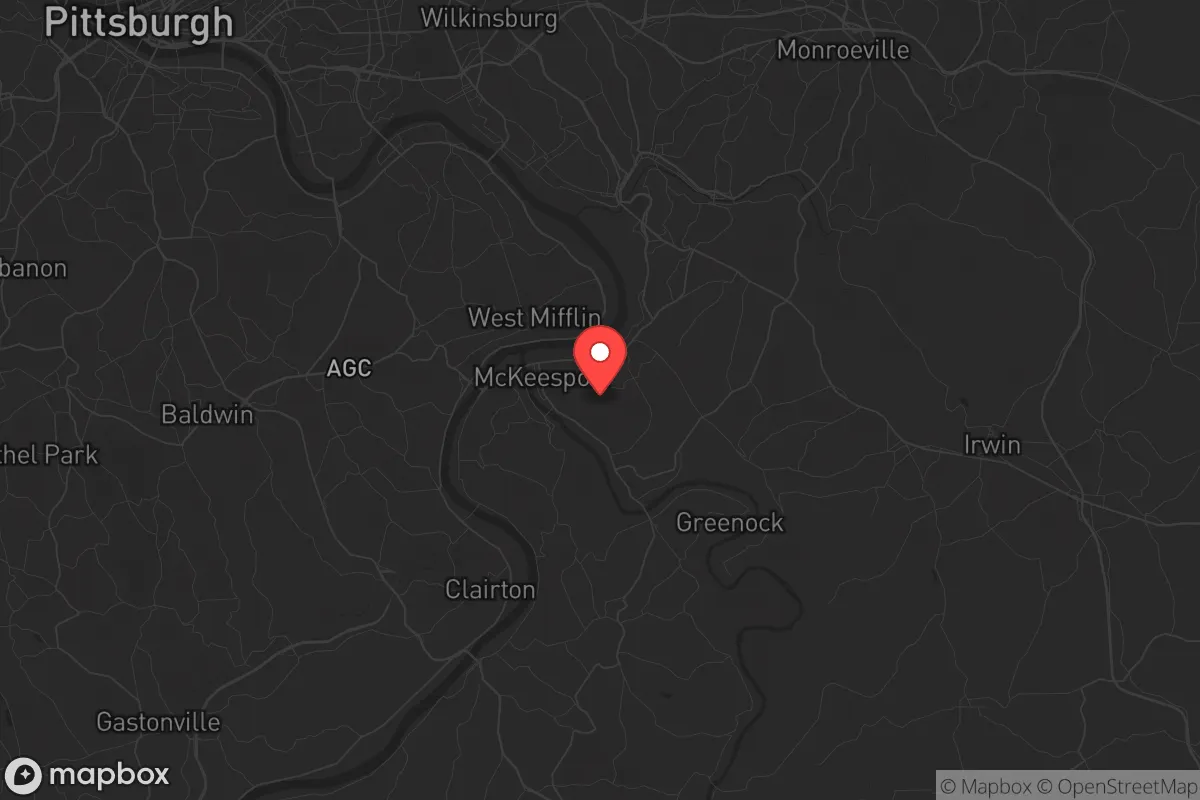
Strategic Assessment of Mckeesport, PA
Meaningful friction. Expect exposure to either population pressure, blast zones, or natural disaster risk. Consider buying a retreat property.
What does the Strategic Assessment tell us?
Our Strategic Assessment grades tactical survivability of an area. Major population centers, military targets, fallout zones, natural disasters, and border exposure all drive risk — lower exposure means a more defensible position in a crisis.
This is heavily inspired by Joel Skousen's Strategic Relocation book. Highly recommended you checkout the book ($)What does this tell us?
Our Strategic Assessment grades tactical survivability of an area. Major population centers, military targets, fallout zones, natural disasters, and border exposure all drive risk — lower exposure means a more defensible position in a crisis.
This is heavily inspired by Joel Skousen's Strategic Relocation book. Highly recommended you checkout the book ($)Strategic Pillars

Key Distances
Regional Safe Places
Below is our recommended "safe zones" in Pennsylvania and the surrounding area based on our strategic heuristics. For most people, it's unrealistic to live in a “safe zone” full-time due to work, family or other personal reasons. They tend to be more rural. However, many of these areas are perfect for second homes and retreat properties that double as a vacation home or even a short-term rental.
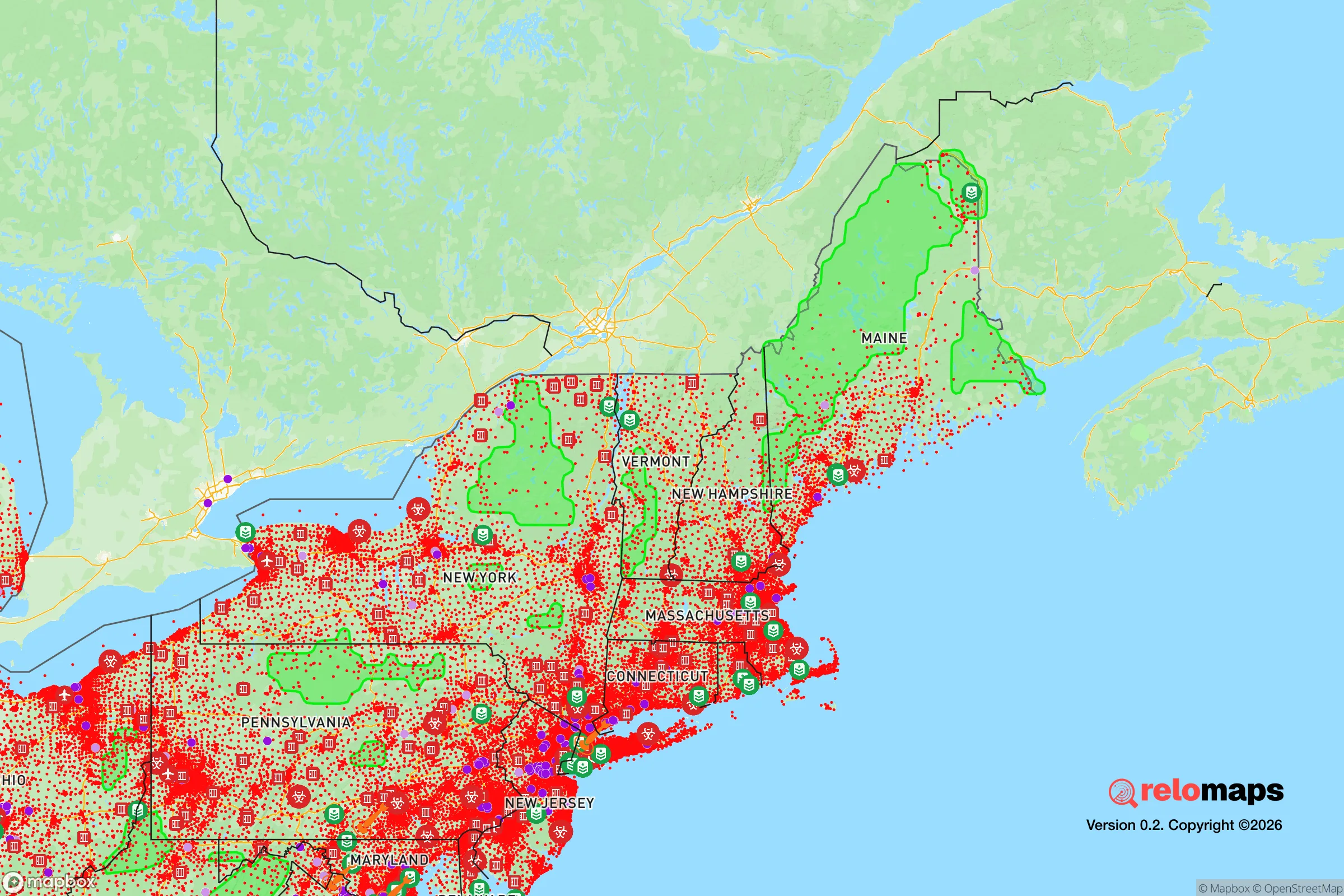
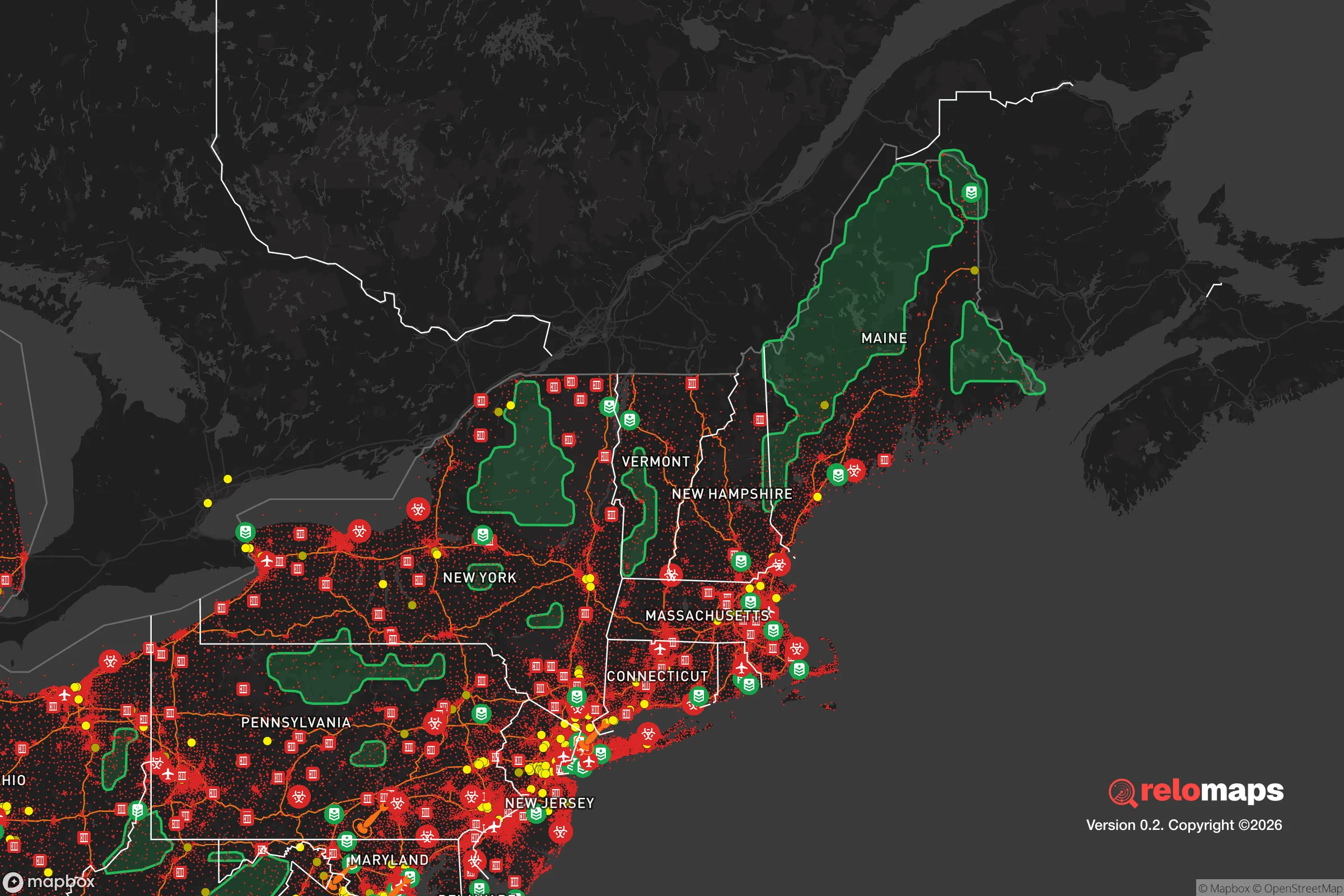


Important Note: For informational purposes only. This does not mean nothing bad ever happens in the green zones. Please use common sense. This is based on public data and modeled with AI. We tried to take a conservative approach but mistakes happen. We update this regularly as new information becomes available.
Solar Generator Recommendations
Backup power matters more here than in safer locations. We've picked three solar generators across budgets and capacity tiers — start with the budget unit if you only need a few essentials, or step up if you want to run a fridge and HVAC for days at a time.

Jackery Portable Power Station Explorer 300
Budget OptionPower on the Go: Weighing only 11 lbs, it's convenient to set up and store with book-sized foldable solar panels

BLUETTI Portable Power Station AC180
Designed for both indoor and outdoor scenarios, AC180 is highly capable as it has a robost capacity and continuous output power.

EF ECOFLOW DELTA Pro Ultra Power Station
Upgraded PickEcoFlow DELTA Pro Ultra is a whole-home energy system designed to grow with your family. Integrated with the Smart Home Panel 2, it scales to meet your evolving energy needs — keeping your home powered, intelligent, and secure through every stage of life.
We earn a commission, at no additional cost to you.
Strategic Assessment Analysis
McKeesport, Pennsylvania, sits in a precarious strategic position that demands a hard-nosed assessment from anyone serious about resilience. Located at the confluence of the Monongahela and Youghiogheny Rivers, roughly 14 miles southeast of Pittsburgh, this former steel town offers a mix of advantages and glaring vulnerabilities for a relocator with a prepper mindset. The area’s industrial past has left behind a depopulated landscape—population has dropped from over 50,000 in the 1950s to roughly 17,000 today—which means lower density and more available land, but also decaying infrastructure and a hollowed-out tax base. For someone looking to hunker down with a conservative, self-reliant ethos, McKeesport’s proximity to Pittsburgh is a double-edged sword: you get access to regional resources, but you’re also within the blast radius of a major metropolitan target. The key is whether you can leverage the area’s natural defenses—rivers, hills, and remnant industrial hardiness—without being swallowed by the chaos that would follow a major event.
Geographic position and natural defensive advantages
McKeesport’s geography is its strongest card. The city is wedged between the Monongahela River to the west and the Youghiogheny River to the south, creating a natural moat that complicates any approach by road or foot. The surrounding terrain is rugged Allegheny Plateau—steep hills, narrow valleys, and dense woodlands that break up sightlines and funnel movement. This is not flat, open country where you’d be exposed; it’s a landscape that rewards locals who know the backroads and creek beds. The rivers themselves offer a potential water supply and a barrier against casual intrusion, though they also create choke points at bridges—something to note if you’re planning an evacuation route or a defensive perimeter. The area sits within the Pittsburgh metropolitan statistical area, but the city’s own decline means you’re not in a dense urban core. Instead, you’re in a patchwork of older homes, vacant lots, and regenerating forest, which provides cover and space for gardening or livestock if you’re willing to put in the work. The elevation—roughly 750 feet above sea level—keeps you above the worst flood risks, though the riverbanks themselves are prone to flooding after heavy rains. For a relocator, the natural advantages here are real but require active management: you need to secure a property on high ground, away from the floodplain, and with multiple egress routes that don’t rely on the few bridges.
Risks, exposures, and proximity to fallout-relevant landmarks
The downsides are significant and cannot be ignored. McKeesport’s location 14 miles from downtown Pittsburgh puts it within the fallout zone of any nuclear or radiological event targeting the city—think industrial targets like the Edgar Thomson Steel Works in Braddock or the Pittsburgh International Airport, both of which are plausible high-value targets in a conflict scenario. The prevailing winds in western Pennsylvania blow from the west-southwest, meaning fallout from a Pittsburgh strike would likely drift east-northeast, directly over McKeesport. That’s a hard reality. Beyond nukes, the area is crisscrossed by major rail lines and highways—Interstate 376 runs just north of the city, and the Norfolk Southern rail corridor carries hazardous materials through the region. A derailment or chemical spill is a real risk, and the rivers mean any contamination spreads downstream quickly. The city itself has a high crime rate—violent crime per capita is roughly double the national average, driven by poverty and drug trade—which means you’re dealing with immediate threats from desperate people, not just hypothetical disasters. The local government is cash-strapped, with a budget that relies heavily on state aid, so don’t expect rapid emergency response or infrastructure maintenance after a crisis. For a conservative relocator, the proximity to Pittsburgh is a liability: the city’s political leanings (Allegheny County went +20 for Biden in 2020) mean you’re in a blue enclave that could become a focal point for unrest during a national breakdown. The Port of Pittsburgh, a major inland port, is another target for disruption. In short, McKeesport is close enough to the bullseye to be dangerous but far enough to offer a fighting chance—if you’re prepared to bug in or bug out fast.
Practical resilience for a relocator: food, water, energy, and defensibility
For someone serious about self-sufficiency, McKeesport offers a mixed bag. Water is abundant from the rivers, but you cannot rely on municipal treatment after a grid-down event—you’ll need a filtration system, a well, or a rainwater catchment setup. The soil in the area is acidic and heavily impacted by decades of industrial pollution—heavy metals like lead and arsenic are present in some lots from the steel mill era—so you’ll want to test your land before planting a garden. Raised beds with imported soil are a safer bet. The climate is temperate, with a growing season of about 160 days, enough for staples like potatoes, beans, and squash, but not for year-round production without a greenhouse. Energy-wise, the region has ample tree cover for firewood, and the hills offer potential for small-scale hydro if you have a creek with decent flow. Solar is viable but limited by the area’s frequent cloud cover—Pittsburgh averages only 160 sunny days per year, so you’ll need battery storage and a backup generator. Natural gas is plentiful in the region (Marcellus Shale), but tapping it requires drilling rights you likely won’t have on a small lot. Defensibility is where McKeesport’s layout hurts you: the city’s street grid is a mix of narrow alleys and main roads, with many abandoned buildings providing cover for intruders. A rural property on the outskirts—say, in the hills toward Elizabeth Township or Versailles—would be far more defensible than a house in the city proper. You’ll want a property with a clear line of sight, a well, and a septic system that doesn’t rely on municipal lines. The local population is aging and shrinking, which means fewer eyes on the street but also less competition for resources. The key is to buy land outside the city limits but within a 10-minute drive for supply runs, and to harden your home against both weather and human threats.
The overall strategic picture for McKeesport is one of calculated risk. It’s not a survivalist paradise—the industrial legacy, crime, and proximity to a major city are real liabilities. But for a relocator with a conservative, prepper mindset who values affordability (median home price around $60,000) and natural barriers, it offers a foothold in a region that’s off the beaten path of most disaster scenarios. The rivers and hills give you a defensive edge, but only if you’re willing to invest in water purification, soil remediation, and a property that’s not in the floodplain. The biggest threat isn’t nature—it’s the human factor: the drug trade, the political instability of a blue city nearby, and the potential for civil unrest that could spill over from Pittsburgh. If you’re looking for a place to ride out a crisis with a small, trusted group, McKeesport can work, but you need to be realistic about its weaknesses. The smart play is to treat it as a base camp, not a fortress—a place to stockpile supplies and maintain a low profile, with a bug-out location further into the Appalachian backcountry as your ultimate fallback. In a world where the state of the country feels increasingly fragile, McKeesport is a gritty, undervalued option that demands you bring your own grit in return.

* Values derived from national, state, county, city and local statistics and may differ in a specific area. Last updated: 2026-05-04T02:23:50.000Z
Narrative content on this page is AI-generated and may contain mistakes. Verify any details that matter before acting on them.
ReloMaps may earn a commission from affiliate links at no extra cost to you.

