
Photo by Raymond Kotewicz on Unsplash
Political ClimatePolitical Climate in Mckeesport, PA
District shown is the primary district for this city’s centroid. Cities may span multiple districts.
Local Political AnalysisPolitical Analysis of Mckeesport, PA
McKeesport has long been a Democratic stronghold, with a Cook PVI of D+10 that reflects generations of union loyalty and working-class roots. But if you’ve lived here as long as I have, you know that label doesn’t tell the whole story anymore. The city’s political lean is shifting—slowly, but noticeably—as more folks grow tired of the same old promises from Harrisburg and Washington. While McKeesport still votes blue in most elections, the margin has been shrinking, and you can feel a growing skepticism toward progressive policies that seem out of touch with the everyday realities of life along the Monongahela River.
How it compares
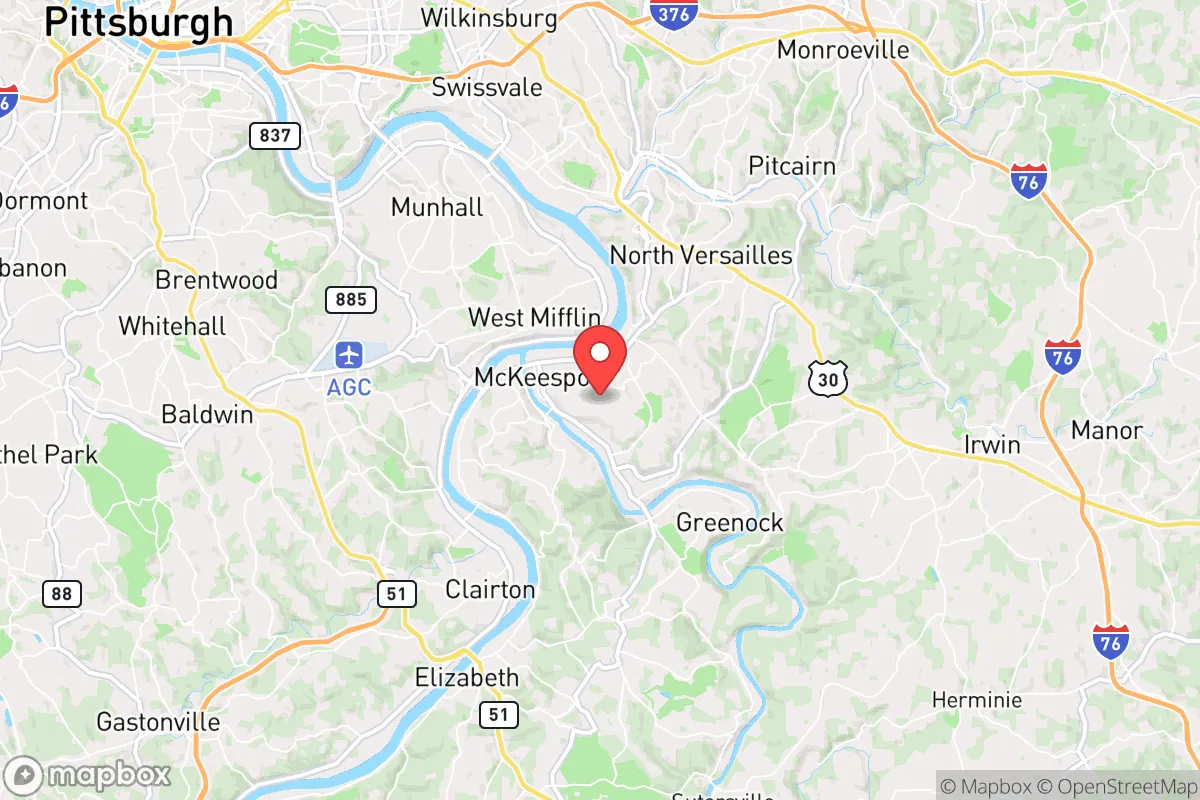
Drive ten miles west to Pittsburgh’s East End neighborhoods like Squirrel Hill or Shadyside, and you’ll find a very different political world—solidly progressive, with a heavy focus on social justice initiatives and green energy mandates that sound nice on paper but often hit working families hardest in the wallet. Head south to Elizabeth Township or forward to Westmoreland County, and you’re in deep red territory where property taxes are lower and the Second Amendment isn’t up for debate. McKeesport sits right in the middle, politically speaking. We’re not as conservative as the surrounding townships, but we’re also not as far-left as Pittsburgh proper. That middle ground is getting harder to hold, though, as state-level policies on everything from energy regulation to school curriculum creep further into local life.
What this means for residents
For those of us who value personal freedom and want government to stay out of our business, the trend is concerning. The city council has been leaning into progressive priorities—things like equity initiatives and climate action plans—that sound good in a press release but don’t do much to fix the potholes or bring jobs back to the riverfront. Property taxes have crept up as the city tries to fund programs that many residents never asked for. And while McKeesport isn’t as aggressive as Pittsburgh on things like rental registration fees or business licensing hurdles, the direction is clear: more oversight, more mandates, less room for individual choice. If you’re a small business owner or a homeowner who just wants to be left alone, you’re starting to feel the squeeze.
On the flip side, the conservative shift in surrounding areas means there’s a growing network of like-minded folks just a short drive away. Many longtime residents are voting with their feet, moving to North Huntingdon or White Oak where the tax burden is lighter and the school boards are more focused on academics than activism. McKeesport itself still has a strong sense of community—neighbors look out for each other, and the old steel town grit hasn’t completely faded—but the political winds are blowing in a direction that feels increasingly disconnected from the people who actually live here.
Looking ahead, the next five to ten years will be telling. If the city continues down the progressive path, expect more families to leave and the tax base to shrink further. But if the growing conservative undercurrent gains traction—especially among younger residents who are tired of being told how to live—McKeesport could become a bellwether for blue-collar towns across Pennsylvania that are rethinking their political loyalties. For now, it’s a place where you can still have a beer with your neighbor regardless of who they voted for, but that’s getting harder to find. Keep an eye on the school board races and the city council elections—that’s where the real fight for McKeesport’s future is happening.

State Political ClimatePolitical Climate in Pennsylvania
State Political AnalysisPolitical Environment in the State
Pennsylvania is a true battleground state, and if you’re looking at it from a conservative perspective, you need to understand that it’s a state of two very different realities. Over the past 20 years, the state has shifted from a reliably blue-leaning swing state to a pure toss-up, but the underlying trend is concerning: the Philadelphia and Pittsburgh metros are growing more progressive and populous, while the vast rural and exurban areas that vote red are shrinking in influence. The 2020 and 2024 elections were decided by razor-thin margins—Biden won by just 1.2% in 2020, and Trump flipped it back in 2024 by roughly 1.7%—but the long-term demographic math favors the left, which is why many conservatives are now looking at the state with a wary eye.
Urban vs. rural divide
The political map of Pennsylvania is a textbook case of the urban-rural split. The entire eastern edge, from Philadelphia out to its collar counties like Bucks, Montgomery, and Delaware, is deep blue and getting bluer. Philadelphia itself delivered over 600,000 votes for Biden in 2020, essentially canceling out the entire Republican vote from the state’s 40+ rural counties. On the western end, Pittsburgh and Allegheny County are similarly dominant, with the city’s progressive machine driving a 20-point margin for Democrats. In between, the vast middle of the state—places like Centre County (State College) and Erie County—are purple but trending left due to university and lake-effect migration. The true red strongholds are the rural north-central and southwestern regions: Tioga, Bradford, Potter, and Bedford counties routinely vote 70-80% Republican. But here’s the kicker: those counties have tiny populations. The real battleground is the suburban ring around Philadelphia—Bucks County flipped from red to blue in the 2010s and is now a key swing area. If you’re a conservative moving in, you’ll find your people in the small towns and farm country, but you’ll be fighting an uphill battle against the urban vote.
Policy environment
Pennsylvania’s policy environment is a mixed bag that leans moderately left on most issues, with a few bright spots for conservatives. The state has a flat income tax of 3.07%, which is relatively low and hasn’t been raised in decades—a rare win. Property taxes, however, are among the highest in the nation, averaging over 1.5% of home value, and there’s no statewide homestead exemption that actually keeps up with inflation. The sales tax is 6% (higher in Philadelphia at 8%), and it doesn’t apply to most groceries or clothing, which is decent. On education, the state has a massive funding disparity: wealthy suburban districts like Lower Merion spend over $30,000 per student, while rural districts like Williamsport struggle at under $15,000. The state’s school choice program is limited—there’s a small tax credit scholarship program (EITC) but no universal voucher system, and the teachers’ union is powerful. Healthcare is heavily regulated, with a state-run insurance exchange and Medicaid expansion under the ACA. Election laws are a sore point: no voter ID requirement beyond signing an affidavit, universal mail-in voting was expanded in 2019 (Act 77), and the state Supreme Court has repeatedly ruled against Republican challenges to ballot procedures. For a conservative, the policy environment feels like a slow drift toward government control, with few brakes.
Trajectory & freedom
On the freedom front, Pennsylvania is moving in the wrong direction. The most visible flashpoint is gun rights: the state has a preemption law that prevents local municipalities from passing their own gun ordinances, but Philadelphia and Pittsburgh have repeatedly tried to circumvent it with “safe storage” and “ghost gun” bans. In 2022, the state legislature passed a constitutional amendment to require a two-thirds supermajority for any new gun restrictions, but it hasn’t been ratified yet. Meanwhile, the governor’s office under Josh Shapiro has pushed for universal background checks and a “red flag” law, which have stalled in the Republican-controlled House. Parental rights took a hit in 2021 when the state Department of Education issued guidance allowing transgender students to use bathrooms and locker rooms matching their gender identity without parental notification—a policy that remains in effect. Medical freedom is a mixed bag: the state never enacted a COVID-19 vaccine mandate for the general public, but it did mandate vaccines for healthcare workers and state employees, and the governor’s emergency powers were curtailed by a 2021 constitutional amendment. Property rights are under pressure from the growing use of “eminent domain for economic development” in cities like Allentown and Bethlehem, where redevelopment authorities have seized blighted properties for private projects. The overall trajectory is one of incremental government expansion, with the state Supreme Court and executive branch often overriding legislative efforts to protect individual liberties.
Civil unrest & political movements
Pennsylvania has seen its share of political turbulence. The 2020 election aftermath was particularly intense: the state was ground zero for election integrity debates, with the Trump campaign filing dozens of lawsuits over mail-in ballot procedures, and the state Supreme Court’s 4-3 Democratic majority extending the ballot receipt deadline by three days. This led to massive protests in Harrisburg and Philadelphia, with both sides clashing. The “Stop the Steal” movement was strong in rural counties, while Philadelphia saw large Black Lives Matter protests in 2020 that turned violent, with looting and arson in Center City. More recently, the pro-Palestinian protests at the University of Pennsylvania in 2024 drew national attention, with the administration’s handling of campus speech becoming a flashpoint for conservative critics. Immigration politics are relatively quiet compared to border states, but Philadelphia is a self-declared “sanctuary city,” and the state’s “Clean Slate” law automatically seals certain criminal records, which some conservatives argue encourages illegal immigration. There’s also a growing secessionist sentiment in the northern tier: groups in Bradford County and Tioga County have floated the idea of joining a proposed “State of Jefferson” or merging with upstate New York, though it’s mostly symbolic. The overall atmosphere is one of deep polarization, with urban and rural residents living in completely different political worlds.
Projection
Looking ahead 5-10 years, the math is not favorable for conservatives. The Philadelphia suburbs are continuing to diversify and liberalize, with Bucks County flipping to the Democrats in presidential elections and Montgomery County becoming a solid blue stronghold. The Pittsburgh metro is also growing, driven by tech and healthcare jobs, and its suburbs are trending left. Meanwhile, the rural counties are aging and losing population—the 2020 census showed that 40 of Pennsylvania’s 67 counties lost residents. The state’s electoral votes are likely to remain a toss-up, but the trend line points toward a slow blue shift, especially if the Democratic Party continues to dominate the Philadelphia media market. The state legislature is gerrymandered to favor Republicans in the House, but the state Supreme Court has shown a willingness to redraw maps, and a 2024 ruling could shift the balance. For a conservative moving in now, expect to see more progressive policies on education (expanded sex ed, DEI mandates in schools), higher taxes on the wealthy (a proposed 4% surcharge on incomes over $1 million), and continued erosion of Second Amendment protections. The best bet for conservatives is to settle in the rural or exurban counties like York, Lancaster, or Butler, where local governments are still friendly and the culture is more traditional.
Bottom line: Pennsylvania is a beautiful state with a lot to offer—low income tax, great outdoor recreation, and a rich history—but if you value limited government, parental rights, and gun freedoms, you need to be strategic about where you land. The state as a whole is drifting left, and the urban centers will continue to dominate state policy. If you’re a single conservative or a parent looking for a community that shares your values, stick to the counties that voted for Trump by 20 points or more, and keep an eye on the state legislature and Supreme Court races—they’re your last line of defense. Otherwise, you’ll find yourself fighting the same battles you left behind in blue states, just with better hunting and cheaper gas.
* Values derived from national, state, county, city and local statistics and may differ in a specific area. Last updated: 2026-05-04T02:23:50.000Z
Narrative content on this page is AI-generated and may contain mistakes. Verify any details that matter before acting on them.
ReloMaps may earn a commission from affiliate links at no extra cost to you.

