Photo: Wikipedia
Demographics of McKinney, TX
Affluence Level in McKinney, TX
An upper-middle-class area. Household wealth, education levels, and homeownership run ahead of national benchmarks.
People of McKinney, TX
McKinney, Texas, is home to 202,314 residents, a population that has transformed from a small agricultural county seat into a fast-growing, majority-minority suburb of Dallas. The city is characterized by a strong sense of place anchored in its historic downtown, a high rate of college-educated adults (52.6%), and a notably diverse demographic profile where no single racial or ethnic group holds an outright majority. The people of McKinney today are a blend of long-standing Texas families, domestic migrants from across the United States, and a growing number of immigrants, creating a community that balances suburban stability with rapid change.
How the city was settled and grew
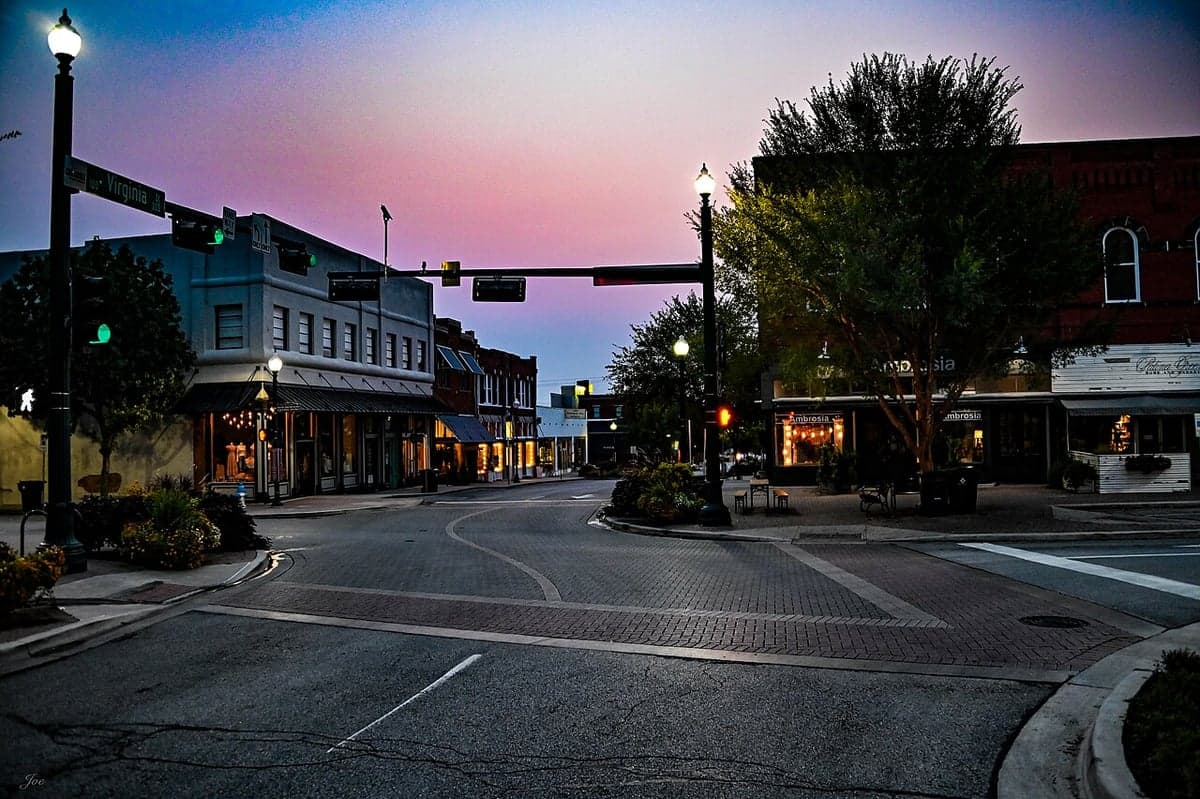
McKinney was founded in 1848 as the seat of Collin County, drawing its earliest settlers from the Upper South and Midwest via land grants and the promise of fertile Blackland Prairie soil. These early Anglo-American families established cotton and grain farms, and the town grew slowly as a trading center. The arrival of the Houston and Texas Central Railway in 1872 spurred the first real population wave, bringing merchants, craftsmen, and a small number of German and Czech immigrants who settled near the rail corridor. The historic Downtown McKinney district, with its brick storefronts and Victorian homes, was built by these early settlers and remains the city's cultural heart. For nearly a century, McKinney remained a predominantly white, Protestant farming community, with a small Black population concentrated in the East McKinney neighborhood, a historically segregated area that developed around the city's Black churches and schools. The population hovered around 15,000 through the 1960s, insulated from major growth by its distance from Dallas.
Modern era (post-1965)
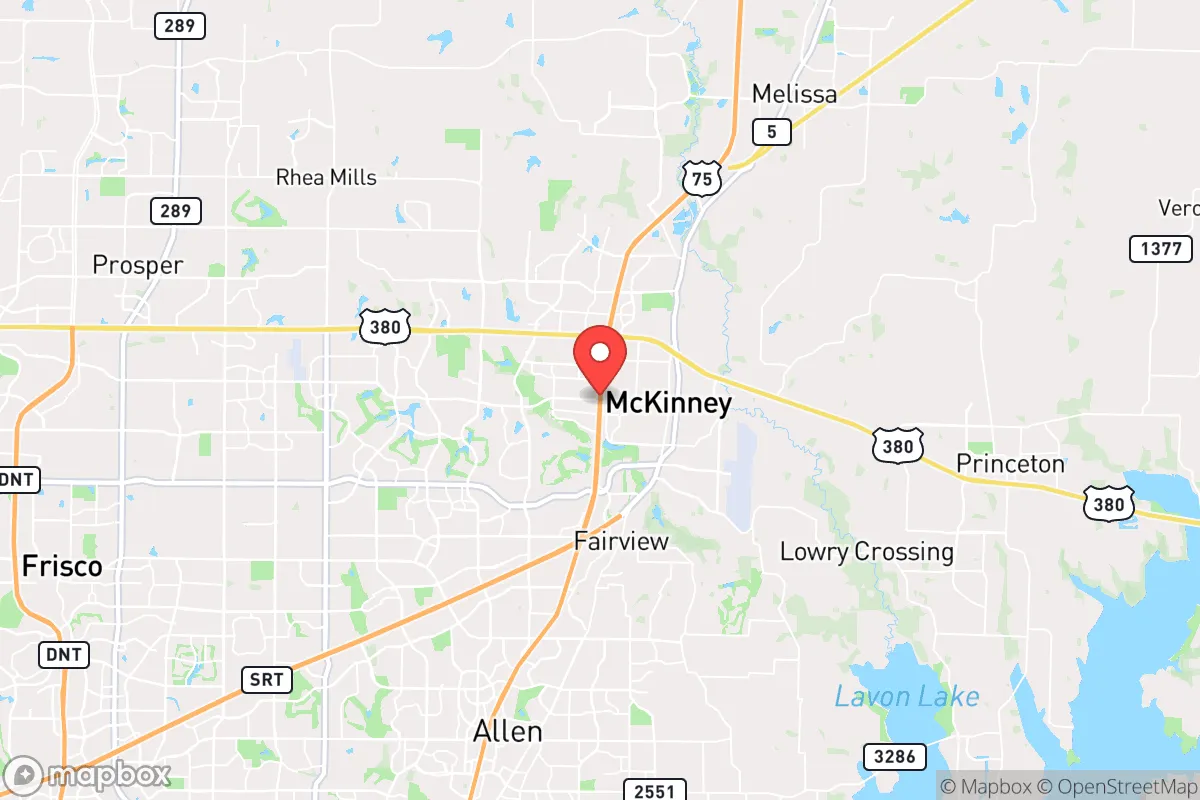
The post-1965 era brought dramatic change, driven first by the Immigration and Nationality Act and later by the suburbanization of the Dallas-Fort Worth metroplex. The opening of U.S. Highway 75 in the 1970s and the construction of the Sam Rayburn Tollway in the 2000s turned McKinney into a commuter suburb, triggering a wave of domestic in-migration from other parts of Texas and the Midwest. These new residents, predominantly white and middle-class, filled master-planned communities like Stonebridge Ranch and Craig Ranch, which offered large homes, golf courses, and top-rated schools. The 1990s and 2000s saw the first significant influx of Hispanic families, many drawn by construction and service jobs, settling in the West McKinney area near the tollway. The 2010s brought a surge of East/Southeast Asian and Indian professionals, attracted by the city's tech-adjacent economy and excellent schools. Indian families, now 7.6% of the population, concentrated in newer subdivisions like Trinity Falls and Lakeside at Craig Ranch, while East/Southeast Asian communities (5.3%) settled in similar master-planned areas. The Black population, 12.1% of the city, grew through both domestic migration from other Texas cities and a smaller number of African immigrants, with many settling in the East McKinney area and newer developments near U.S. 75. The Hispanic population, now 17.0%, has become more geographically dispersed but remains concentrated in the western and southern parts of the city.
The future
McKinney's population is heading toward greater diversity and continued growth, though the pace is slowing as land becomes scarcer. The city is not homogenizing into a single melting pot but rather tribalizing into distinct enclaves defined by income, ethnicity, and housing type. The white population, now 53.4%, is declining as a share, while the Indian and Hispanic populations are growing fastest. The foreign-born share, 9.2%, is likely to rise as new immigrants, particularly from India and Central America, continue to be drawn by the city's job market and schools. The next 10-20 years will likely see the white share fall below 50%, making McKinney a majority-minority suburb in fact as well as in trend. The city's high college attainment rate (52.6%) will likely persist or increase as educated professionals continue to dominate in-migration, though affordability pressures may push some lower-income families, particularly Hispanic households, to outlying towns like Melissa or Anna. The key demographic tension will be between the established, largely white and affluent neighborhoods of Stonebridge Ranch and the newer, more diverse areas like Trinity Falls and Craig Ranch, with the historic East McKinney neighborhood remaining a distinct, lower-income community.
For someone moving to McKinney now, the city offers a stable, family-oriented environment with strong schools and a growing economy, but it is not a static community. The population is becoming more diverse, more educated, and more suburban, with distinct neighborhoods reflecting different waves of settlement. The city's character is shifting from a traditional Texas town to a modern, multi-ethnic suburb, and new residents should expect a community that values both its historic roots and its increasingly cosmopolitan future.

* Values derived from national, state, county, city and local statistics and may differ in a specific area. Last updated: 2026-04-15T18:40:15.000Z
Narrative content on this page is AI-generated and may contain mistakes. Verify any details that matter before acting on them.
ReloMaps may earn a commission from affiliate links at no extra cost to you.

