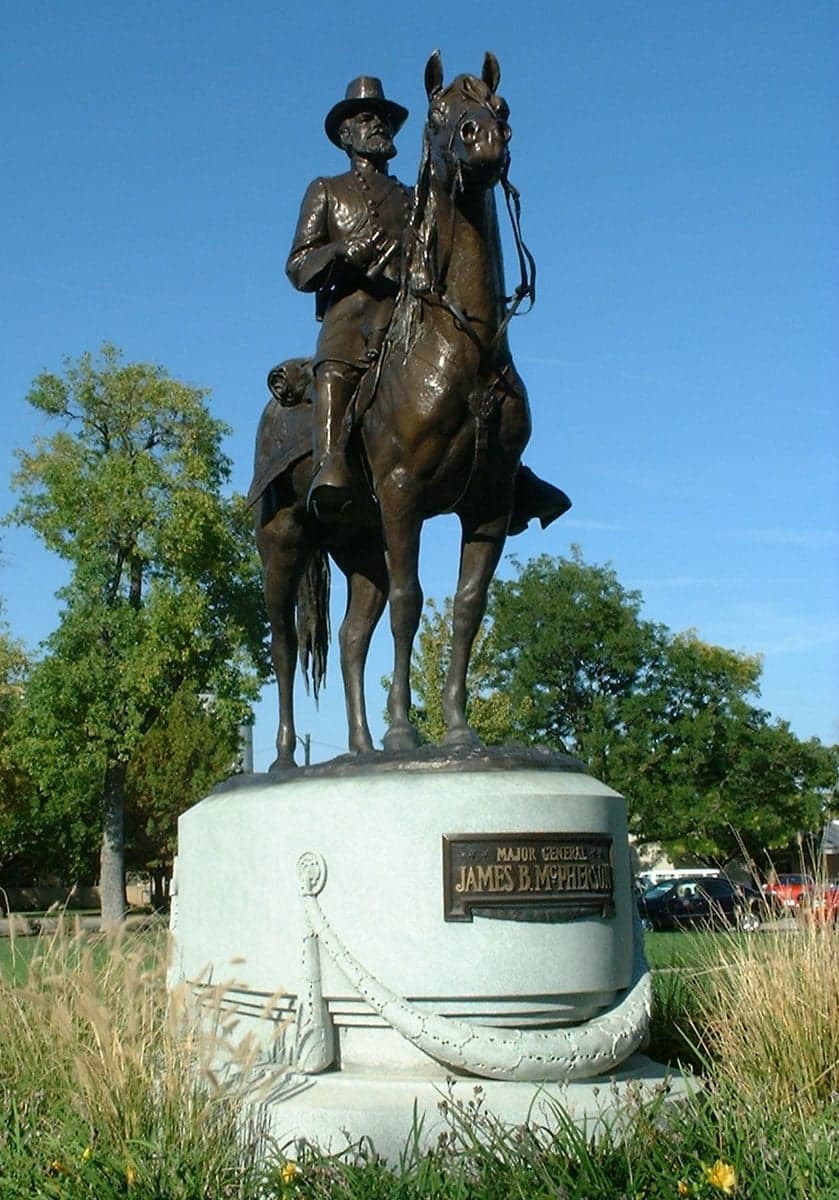
Photo: Wikipedia
Strategic Assessment of Mcpherson, KS
Workable tactical position. Some exposure to population density or targets, but generally defensible in a crisis.
What does the Strategic Assessment tell us?
Our Strategic Assessment grades tactical survivability of an area. Major population centers, military targets, fallout zones, natural disasters, and border exposure all drive risk — lower exposure means a more defensible position in a crisis.
This is heavily inspired by Joel Skousen's Strategic Relocation book. Highly recommended you checkout the book ($)What does this tell us?
Our Strategic Assessment grades tactical survivability of an area. Major population centers, military targets, fallout zones, natural disasters, and border exposure all drive risk — lower exposure means a more defensible position in a crisis.
This is heavily inspired by Joel Skousen's Strategic Relocation book. Highly recommended you checkout the book ($)Strategic Pillars

Key Distances
Regional Safe Places
Below is our recommended "safe zones" in Kansas and the surrounding area based on our strategic heuristics. For most people, it's unrealistic to live in a “safe zone” full-time due to work, family or other personal reasons. They tend to be more rural. However, many of these areas are perfect for second homes and retreat properties that double as a vacation home or even a short-term rental.
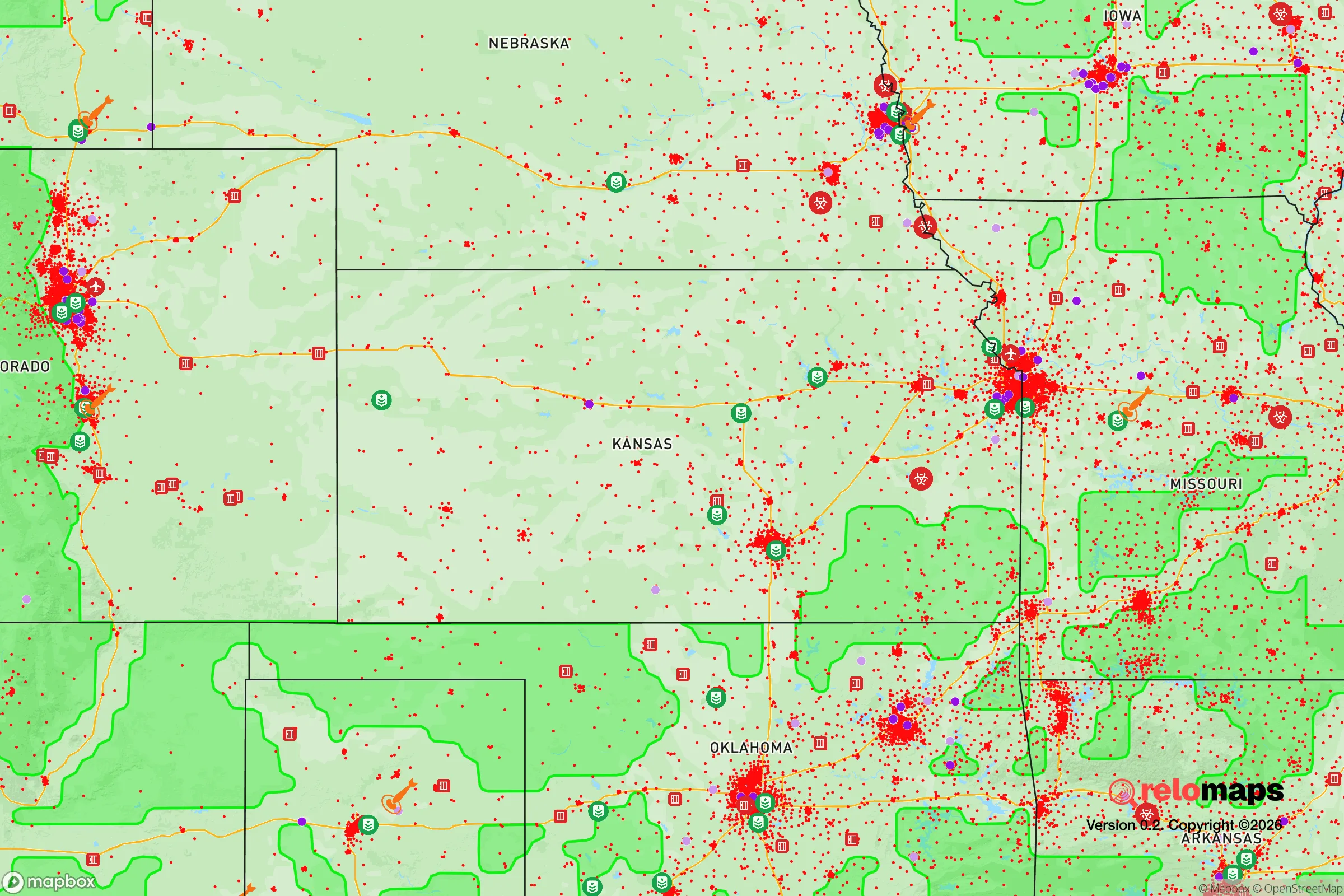
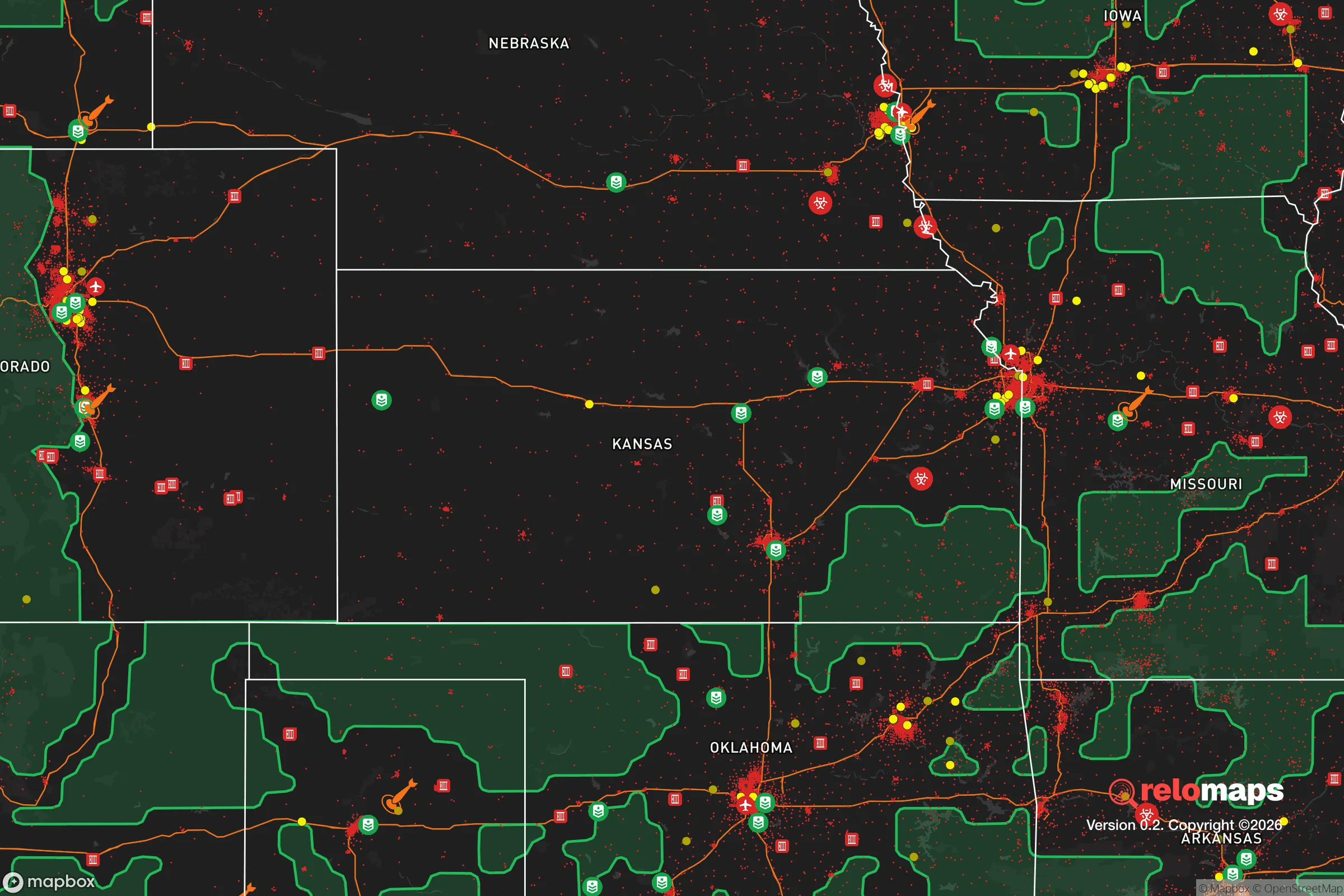


Important Note: For informational purposes only. This does not mean nothing bad ever happens in the green zones. Please use common sense. This is based on public data and modeled with AI. We tried to take a conservative approach but mistakes happen. We update this regularly as new information becomes available.
Solar Generator Recommendations
Backup power matters more here than in safer locations. We've picked three solar generators across budgets and capacity tiers — start with the budget unit if you only need a few essentials, or step up if you want to run a fridge and HVAC for days at a time.

Jackery Portable Power Station Explorer 300
Budget OptionPower on the Go: Weighing only 11 lbs, it's convenient to set up and store with book-sized foldable solar panels

BLUETTI Portable Power Station AC180
Designed for both indoor and outdoor scenarios, AC180 is highly capable as it has a robost capacity and continuous output power.

EF ECOFLOW DELTA Pro Ultra Power Station
Upgraded PickEcoFlow DELTA Pro Ultra is a whole-home energy system designed to grow with your family. Integrated with the Smart Home Panel 2, it scales to meet your evolving energy needs — keeping your home powered, intelligent, and secure through every stage of life.
We earn a commission, at no additional cost to you.
Strategic Assessment Analysis
McPherson, Kansas, sits in a sweet spot that few places in the central United States can claim: it’s far enough from major population centers to avoid the immediate blast radius of a major event, yet close enough to the I-135 corridor to maintain supply lines and mobility. This town of roughly 13,000 people anchors a county of about 29,000, and its economy is built on something that matters in any scenario—energy and food production. The local oil refineries, grain elevators, and manufacturing base mean McPherson isn’t just a bedroom community; it’s a functional node with real industrial capacity. For someone thinking about long-term strategic relocation, that combination of isolation and utility is rare.
Geographic position and natural advantages for long-term security
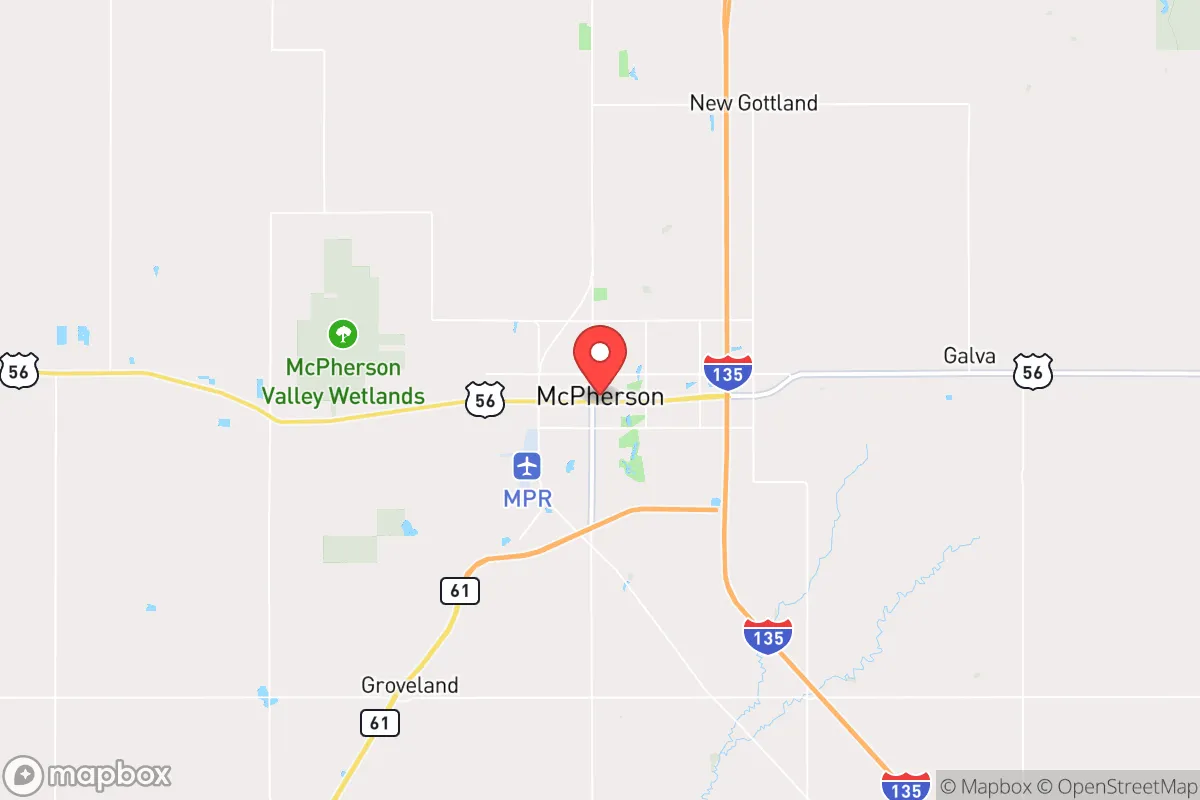
McPherson’s location in central Kansas places it roughly 50 miles north of Wichita and about 140 miles west of Kansas City—close enough to tap into regional infrastructure, but far enough that a major metropolitan crisis won’t wash over the town in the first wave. The surrounding landscape is flat, open agricultural land, which offers excellent lines of sight and makes approach detection straightforward. There are no dense forests or mountain passes to conceal movement, which is a double-edged sword: it limits your own concealment but also eliminates surprise approaches. The area sits in the Smoky Hills region, with the Smoky Hill River and several smaller creeks providing surface water sources that are reliable in most years. Groundwater access through the High Plains Aquifer system is good, though well depths vary. The climate is continental, with hot summers and cold winters, but the lack of significant elevation change means weather events are predictable and rarely catastrophic. Tornado risk is real—McPherson County averages about 12 tornadoes per decade—but the flat terrain also means warning times are longer than in hilly country. For a prepper, the key takeaway is that this is a place where you can see trouble coming, both literally and figuratively.
Risks, exposures, and proximity to fallout-relevant landmarks
The biggest strategic risk in McPherson is its own industrial base. The town hosts a major oil refinery (the CHS McPherson Refinery, one of the largest in the region) and a large grain processing facility. In a normal year, these are economic assets. In a scenario involving civil unrest or supply chain collapse, they become targets—either for looting, sabotage, or simply as points of failure that could trigger secondary disasters like fires or chemical releases. The refinery sits on the north side of town, and prevailing winds from the south mean a worst-case release would push contaminants away from the main residential areas, but that’s cold comfort if you’re downwind. The nearby Interstate 135 corridor is a double-edged asset: it provides rapid evacuation routes north to Salina or south to Wichita, but it also channels traffic and potential threats. In a mass evacuation event, I-135 would become a choke point. The closest military installation is McConnell Air Force Base in Wichita, about 50 miles south. While that’s far enough to avoid direct blast effects from a conventional attack, it’s close enough that any disruption at the base—whether from terrorism, cyberattack, or civil unrest—would ripple north. There are no nuclear power plants within 100 miles, and the nearest major rail hub is in Hutchinson, about 20 miles west. Overall, McPherson’s risk profile is moderate: it’s not a primary target, but it’s not a zero-risk hideaway either. The key is that the risks are industrial and logistical, not strategic—meaning they’re manageable with good situational awareness and a solid bug-out plan.
Practical resilience for a relocator: food, water, energy, and defensibility
McPherson’s practical resilience is where the town really shines for a prepper mindset. The local water supply comes from the city’s well field drawing from the Equus Beds aquifer, which is one of the most reliable groundwater sources in Kansas. For a private well owner, depths of 100 to 200 feet are typical, and yields are good enough for household use and small-scale irrigation. The agricultural base means fresh food is abundant: the county is a major producer of wheat, corn, and soybeans, and there are local farmers’ markets and direct-to-consumer meat operations. The CHS grain elevator complex means bulk grain storage is available locally, which could be a barter asset in a prolonged disruption. Energy is a mixed picture. The refinery provides fuel, but that’s a double-edged dependency—if the refinery goes down, local fuel supplies could tighten fast. Natural gas is piped in, and electric service comes from the regional grid, which is stable but not hardened against EMP or cyberattack. Solar potential is good—Kansas averages about 4.5 peak sun hours per day—so a modest off-grid solar setup with battery storage is feasible. Defensibility is the weakest point. McPherson is a classic small town with a grid street layout, meaning there are multiple approaches from every direction. There are no natural barriers like rivers or hills to funnel traffic. The town’s police force is small (about 20 officers), and the county sheriff’s office covers a large area. In a crisis, you’d be relying on community mutual aid rather than formal law enforcement. That said, the town has a strong agricultural community culture, which tends to be self-reliant and armed. The local gun culture is robust, with multiple gun shops and a shooting range. For a relocator, the play here is to integrate into the community early, build relationships, and establish a defensible property on the outskirts rather than in the dense downtown core. A rural acreage with a well, solar panels, and a garden is the ideal setup.
Overall, McPherson presents a solid strategic option for someone looking to relocate away from coastal chaos and urban fragility. It’s not a survivalist fantasy—there are real risks from its industrial base and its location on a major highway corridor—but it offers a realistic balance of isolation, resources, and community resilience. The town’s conservative, hardworking character aligns well with a prepper mindset, and the local economy provides legitimate employment that doesn’t depend on government or tech sectors. If you’re serious about long-term preparedness, McPherson deserves a hard look. Just don’t expect to disappear into the woods—this is Kansas, and everyone can see your house from the road. The real security here comes from being part of a functional community, not from hiding from one.

* Values derived from national, state, county, city and local statistics and may differ in a specific area. Last updated: 2026-05-01T01:26:28.000Z
Narrative content on this page is AI-generated and may contain mistakes. Verify any details that matter before acting on them.
ReloMaps may earn a commission from affiliate links at no extra cost to you.

