Photo: Wikipedia
Political ClimatePolitical Climate in Mcpherson, KS
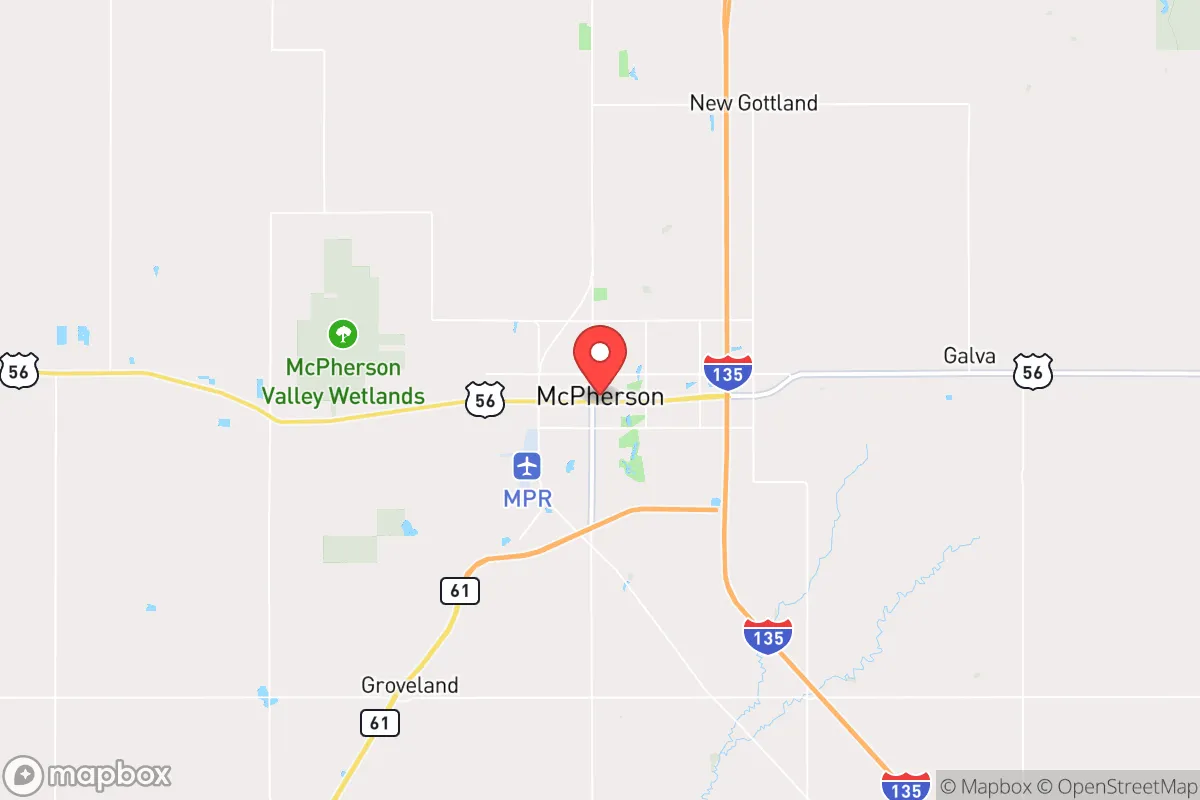
District shown is the primary district for this city’s centroid. Cities may span multiple districts.
Local Political AnalysisPolitical Analysis of Mcpherson, KS
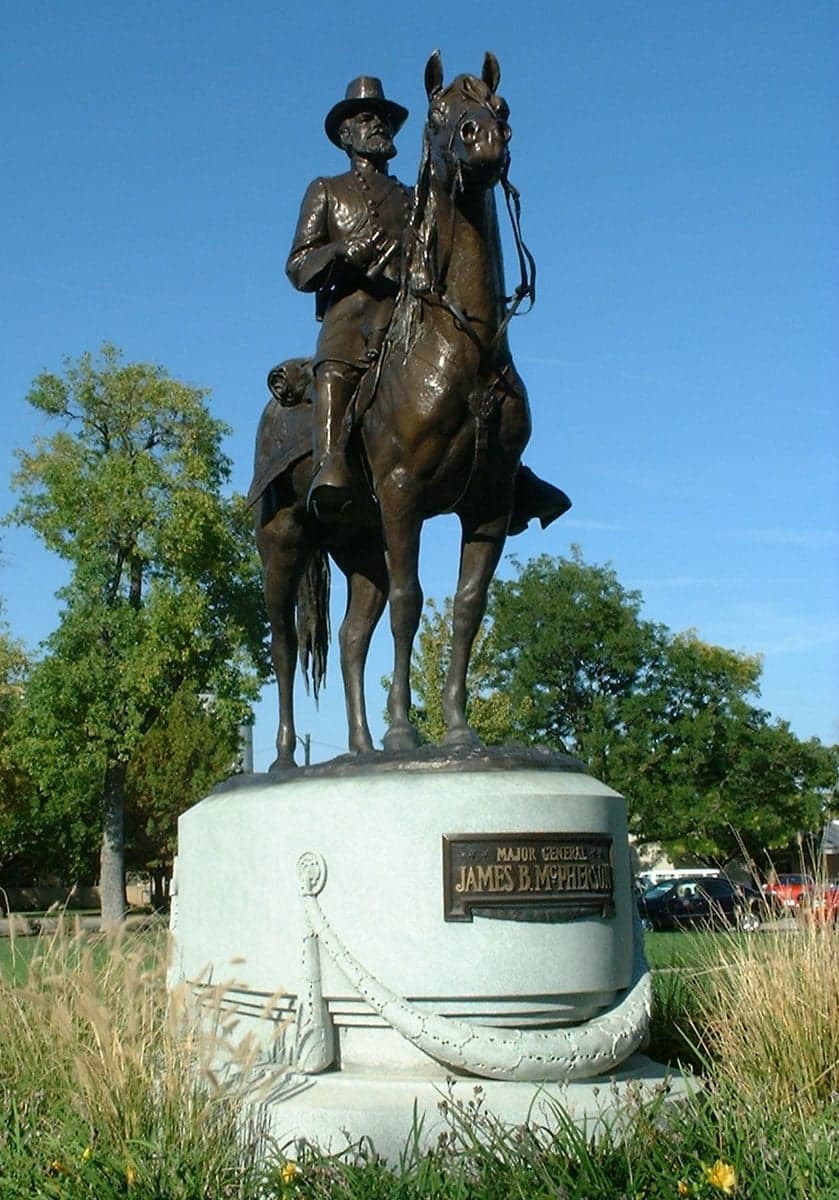
McPherson, Kansas, is about as solidly conservative as they come, and it’s been that way for as long as anyone can remember. The Cook PVI of R+16 isn’t just a number—it reflects a community where folks genuinely believe in limited government, personal responsibility, and keeping Washington out of their backyard. You won’t find much hand-wringing over progressive policies here; the local sentiment leans heavily toward the idea that the best government is the one that stays small and stays out of the way. That said, there’s a quiet unease among long-time residents about creeping national trends—things like federal overreach into local schools or mandates that feel like they’re testing the limits of personal freedom. The trajectory is still red, but people are paying closer attention than ever.
How it compares
Drive 30 minutes east to Salina, and you’ll notice a different vibe—still conservative overall, but with a bit more of a purple tint, especially around the college crowd at Kansas Wesleyan University. Head west to Lindsborg, and you’re in a charming little Swedish-heritage town that leans conservative but has a more artsy, independent streak. McPherson, though, is the anchor of the region’s right-leaning politics. It’s not just the voting patterns; it’s the culture. In McPherson, the local gun club is packed on weekends, the churches are full on Sundays, and the idea of a mask mandate or a vaccine passport would get laughed out of a city council meeting. Compared to nearby Hutchinson, which has a more industrial base and a slightly more mixed political scene, McPherson feels like a fortress of traditional values. The contrast is sharpest when you look at state-level politics: McPherson County consistently sends representatives to Topeka who prioritize tax cuts and local control, while some surrounding counties have started to flirt with more moderate or even progressive candidates in recent cycles.
What this means for residents
For the people who live here, the political climate means a lot of day-to-day freedoms that are getting harder to find in other parts of the country. You can run a small business without drowning in red tape, send your kids to a school that still teaches civics and American history without a heavy ideological slant, and go about your life without feeling like the government is watching your every move. Property taxes are reasonable, zoning laws are minimal, and the local sheriff’s office isn’t interested in enforcing federal overreach. That said, there’s a growing concern among residents that the national push for progressive policies—like DEI mandates in schools or environmental regulations that hurt local agriculture—could start seeping into McPherson if folks aren’t vigilant. The community is tight-knit, and people look out for each other, but there’s a sense that the fight to keep McPherson free from government overreach is ongoing. It’s not alarmist; it’s just the reality of living in a country where the political winds are shifting.
One thing that sets McPherson apart is its stubborn refusal to bow to cultural trends that don’t fit. You won’t find a drag queen story hour at the public library, and the city council isn’t debating whether to rename streets or tear down statues. The local paper, the McPherson Sentinel, still runs editorials that champion Second Amendment rights and fiscal conservatism. There’s a quiet pride in being a place where the American flag flies high and the Pledge of Allegiance is still recited at school board meetings. If you’re looking for a community that values personal liberty over government control, McPherson is a breath of fresh air. Just don’t expect it to stay that way without people staying engaged—because the moment you stop paying attention is the moment someone tries to change what makes this town work.

State Political ClimatePolitical Climate in Kansas
State Political AnalysisPolitical Environment in the State
Kansas has long been a reliably Republican state, but it’s more complicated than the red-on-the-map stereotype suggests. The state’s political center of gravity has shifted rightward over the past decade, driven by a growing rural and exurban backlash against progressive overreach from the coasts and even from within its own cities. However, the 2022 gubernatorial race, where Democrat Laura Kelly won re-election, shows the GOP doesn’t have a lock on the top office, and the state’s trajectory is a tug-of-war between a conservative legislature and a more moderate executive branch. For a conservative looking to relocate, the key question isn’t whether Kansas is red—it’s whether the red is deep enough to protect your freedoms from the creeping influence of Johnson County and the state’s own urban corridors.
Urban vs. rural divide
The political map of Kansas is a textbook case of the urban-rural split. The eastern third of the state, anchored by the Kansas City metro area, is the primary blue-leaning region. Johnson County, particularly its affluent suburbs like Overland Park and Shawnee, has become a Democratic stronghold, flipping from reliably red to purple-to-blue over the last two cycles. In 2020, Johnson County voted for Joe Biden by about 8 points, a dramatic shift from 2012 when it went for Mitt Romney by 12. This is driven by an influx of professionals from out of state and a growing population of younger, college-educated voters. Meanwhile, Wyandotte County (Kansas City, KS) is a deep blue urban core. The rest of the state—the vast majority of its landmass—is deeply red. Sedgwick County (Wichita) is a bellwether; it voted for Trump in 2020 but by a much narrower margin than the rural counties. The real conservative firepower comes from the western and central counties. Finney County (Garden City) and Seward County (Liberal) are reliably red, but their growing Hispanic populations are slowly shifting the needle. The rural counties like Sherman County (Goodland) and Thomas County (Colby) routinely vote 80%+ Republican. The divide isn’t just about party—it’s about worldview. Rural Kansans see the state’s urban centers as increasingly disconnected from the values of self-reliance, limited government, and traditional morality that built the state.
Policy environment
Kansas’s policy environment is a mixed bag for conservatives, but the legislature has been a reliable check on the governor’s more moderate impulses. The state’s tax structure is a major selling point: there is no state income tax on Social Security benefits, and the flat income tax rate was cut to 5.5% in 2024, with a path toward elimination. Property taxes are a local issue, but the state has capped annual increases for homeowners. The regulatory posture is generally business-friendly, with a right-to-work law and a relatively low corporate income tax rate of 4%. On education, the legislature passed a robust school choice program in 2023, allowing state funds to follow students to private or homeschool settings—a major win for parental rights. However, the state’s education funding formula remains a point of contention, with the Kansas Supreme Court often forcing the legislature to spend more on public schools. Healthcare policy is a flashpoint: the state has not expanded Medicaid under the Affordable Care Act, a position the conservative legislature has held firm on despite Governor Kelly’s repeated pushes. Election laws are solid: Kansas requires a photo ID to vote and has a secure, paper-based voting system. The state also passed a law in 2021 banning the use of private funds for election administration, a direct response to the Zuckerberg-funded 2020 election operations in other states.
Trajectory & freedom
On the freedom front, Kansas has been moving in the right direction, but the fight is constant. The biggest win for personal liberty in recent years was the passage of the Second Amendment Protection Act in 2021, which prohibits state and local law enforcement from enforcing federal gun laws that infringe on the right to keep and bear arms. This is a direct challenge to federal overreach and a model for other states. On parental rights, the 2023 school choice law was a landmark, but the battle over curriculum transparency continues. The legislature has also passed a law requiring schools to post all instructional materials online for parental review. Medical autonomy saw a setback with the 2022 abortion referendum, where Kansans voted to protect abortion rights in the state constitution—a stinging defeat for the pro-life movement. However, the legislature has since passed restrictions on late-term abortions and parental notification requirements. Property rights are generally strong, with no state-level rent control and a relatively low eminent domain risk. The biggest threat to freedom is the state’s growing reliance on federal funding, which gives Washington leverage over Kansas policy. The trajectory is positive, but it requires constant vigilance to prevent the urban counties from importing the same progressive policies that are ruining states like California and Illinois.
Civil unrest & political movements
Kansas has not seen the kind of widespread civil unrest seen in larger states, but there have been notable flashpoints. The 2022 abortion referendum sparked intense, well-funded campaigns from both sides, with pro-choice groups outspending pro-life groups by a wide margin. The result was a shock to the conservative movement, but it also galvanized grassroots pro-life activism. On the right, the Kansas Republican Assembly and local Moms for Liberty chapters have been active in school board races, particularly in Johnson County, where they’ve fought against critical race theory and LGBTQ+ curriculum. Immigration politics are relatively quiet, but the state has no sanctuary city policies, and local law enforcement in places like Garden City and Dodge City cooperate with federal immigration authorities. Election integrity controversies have been minimal, thanks to the state’s already strong laws, but there was a minor dust-up in 2022 over the handling of mail-in ballot drop boxes in Douglas County (Lawrence). The most visible political movement is the growing “Free State” sentiment in rural areas, where residents feel increasingly alienated from the urban-dominated state government. There’s no serious secession talk, but the rhetoric of “Kansas First” is common in conservative circles.
Projection
Over the next 5-10 years, Kansas is likely to become more polarized, but the conservative majority in the legislature should hold. The key demographic trend is the continued growth of Johnson County, which is attracting out-of-state transplants from blue states. This will make the state’s urban corridor more Democratic, but it will also trigger a counter-reaction in the rural and exurban areas. The state’s in-migration is primarily from other Midwestern states, not from the coasts, which helps maintain a conservative tilt. The biggest wildcard is the 2026 gubernatorial race, where a strong conservative candidate could flip the governor’s office and unlock a more aggressive agenda on tax cuts, school choice expansion, and further gun rights. The state’s fiscal health is solid, with a healthy budget surplus, which gives the legislature room to cut taxes further. However, the Kansas Supreme Court remains a problem, as it has a history of striking down conservative legislation on education funding and abortion. A conservative moving to Kansas now should expect a state that is broadly friendly to their values, but with a persistent urban-liberal minority that will fight every step of the way. The rural and small-town areas will remain deeply red, while the suburbs will be the main battleground.
For a conservative family or individual, Kansas offers a strong foundation: low taxes, solid gun rights, school choice, and a legislature that generally respects personal liberty. The trade-off is that you’ll be living in a state where the urban centers are increasingly hostile to your values, and you’ll need to be politically engaged to keep it that way. If you’re looking for a place where your vote actually counts and where the fight for freedom is still winnable, Kansas is a solid bet. Just don’t expect it to be a conservative utopia—it’s a battleground, but one where the good guys are still winning more often than not.
* Values derived from national, state, county, city and local statistics and may differ in a specific area. Last updated: 2026-05-01T01:26:28.000Z
Narrative content on this page is AI-generated and may contain mistakes. Verify any details that matter before acting on them.
ReloMaps may earn a commission from affiliate links at no extra cost to you.

