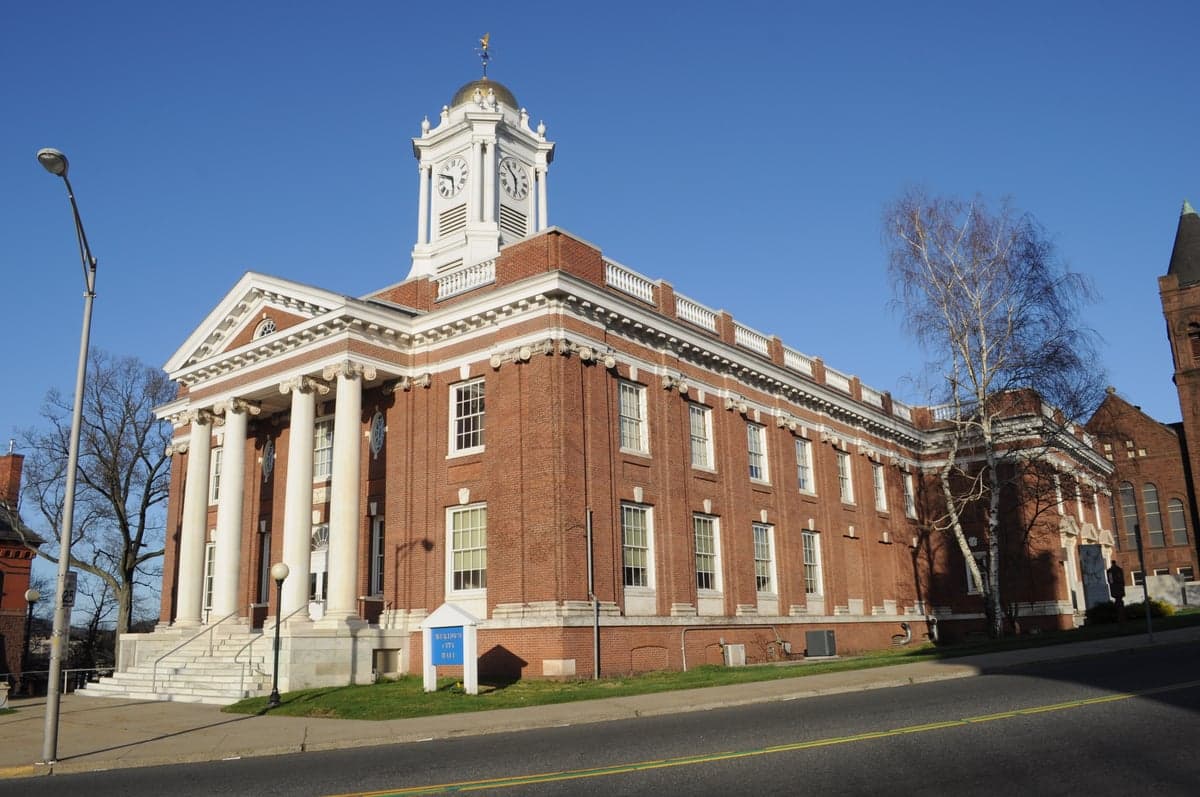
Photo: Wikipedia
Political ClimatePolitical Climate in Meriden, CT
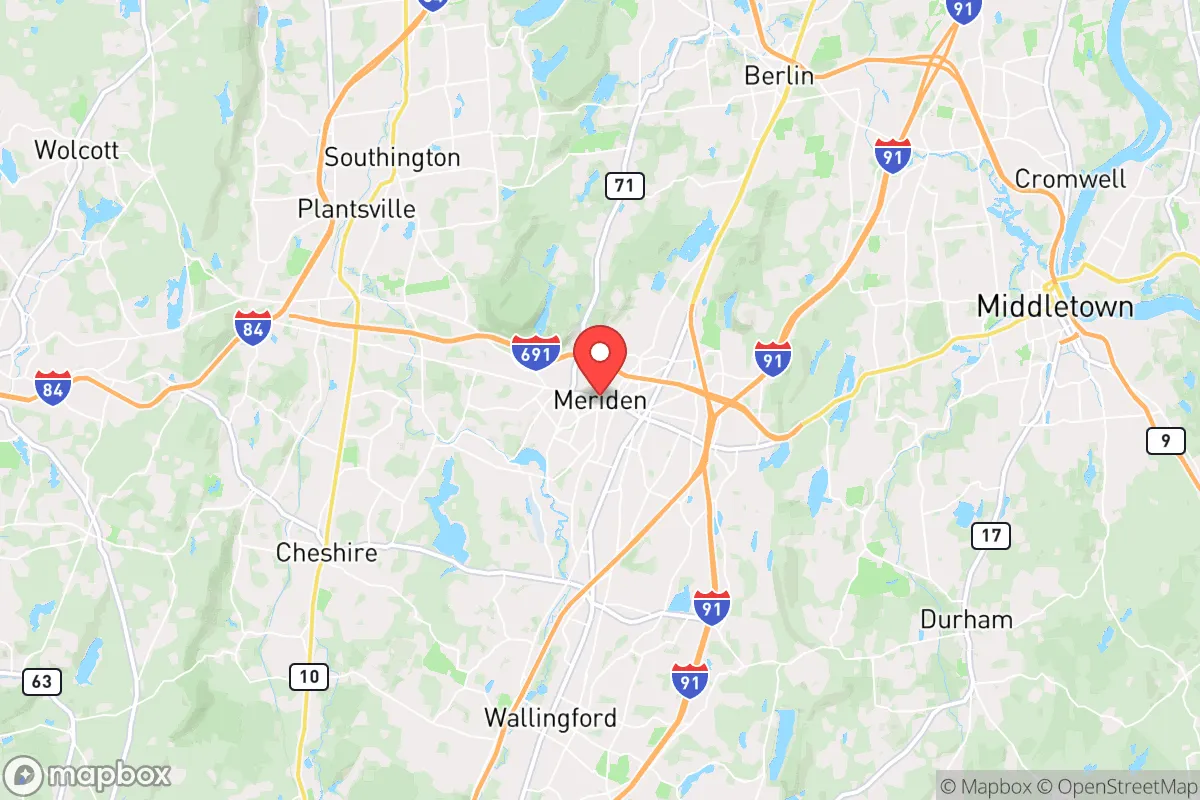
District shown is the primary district for this city’s centroid. Cities may span multiple districts.
Local Political AnalysisPolitical Analysis of Meriden, CT
Meriden, Connecticut, sits in a political landscape that has shifted noticeably leftward over the past decade, and if you’ve lived here as long as I have, you’ve felt it in the air. The city’s Cook Partisan Voting Index (PVI) of D+3 tells you it leans Democratic, but that number doesn’t capture how much the local culture has changed—especially since the early 2020s. While Meriden was once a reliably blue-collar, moderate Democratic town where folks voted for the person, not the party, the last few election cycles have seen a steady march toward progressive policies that many of us find concerning. The 2024 presidential race here went about 58% for the Democratic candidate, a jump from the 55% in 2020, and local school board and city council races have increasingly been won by candidates pushing for things like defunding police oversight and expanding government-run social programs. It’s not the Meriden I grew up in, where neighbors kept to themselves and the city focused on fixing potholes, not redefining gender ideology in elementary schools.
How it compares
Drive ten minutes west to Southington, and you’ll feel like you’ve crossed into a different country. Southington voted about 52% Republican in 2024, and its town council has pushed back hard on state mandates for electric vehicle quotas and mask requirements in schools. Head east to Wallingford, and you get a similar story—a more independent, fiscally conservative vibe where the local government still pushes back against Hartford’s overreach. Even Middletown, just south of us, has a more mixed political scene, with a strong libertarian streak among its small business owners. Meriden, by contrast, has become a reliable stronghold for the state’s progressive agenda. The city council recently passed a resolution supporting “sanctuary city” policies, which means local police are hamstrung from cooperating with federal immigration enforcement—a move that many of us see as putting ideology ahead of public safety. The contrast with our neighbors is stark, and it’s driving a quiet exodus of families who want less government in their lives.
What this means for residents
For those of us who value personal freedom and limited government, the daily reality in Meriden is getting harder to ignore. Property taxes have climbed about 12% since 2020, partly because the city keeps adding new social service programs and DEI initiatives that don’t seem to improve the roads or the schools. The school board recently adopted a curriculum that includes critical race theory concepts in middle school social studies, and parents who objected were dismissed as “bigots” at public meetings. If you run a small business, you’re dealing with a new paid sick leave mandate that the state pushed through, and the city’s zoning board has made it nearly impossible to open a new gun shop or even a church in certain commercial districts. The police department, once a point of pride, has seen its budget frozen while the city funds a new “equity office” with a six-figure salary. For residents who just want to be left alone, the message is clear: your values are not welcome here.
One cultural distinction that stands out is Meriden’s annual Daffodil Festival, which used to be a simple, family-friendly event. In recent years, it’s been taken over by activist booths pushing everything from defunding the police to mandatory diversity training for city employees. The city also passed a “hate speech” ordinance in 2023 that critics say could be used to silence political dissent, especially on issues like immigration or gender policy. Looking ahead, the trend is troubling: with Hartford’s Democratic supermajority pushing statewide rent control and energy mandates, Meriden is likely to become even more of a progressive laboratory. If you’re considering moving here, I’d suggest looking at Southington or Wallingford instead—places where your vote still means something, and the government still remembers it works for you, not the other way around.

State Political ClimatePolitical Climate in Connecticut
State Political AnalysisPolitical Environment in the State
Connecticut has shifted from a classic swing state to a reliably blue stronghold over the past two decades, with Democrats now holding every statewide office and supermajorities in both legislative chambers. The state voted for Hillary Clinton by 14 points in 2016 and Joe Biden by 20 points in 2020, a dramatic leftward lurch from 2000 when George W. Bush lost it by just 6 points. However, this top-line blue veneer masks a deep geographic and cultural divide—Fairfield County’s wealthy commuter towns and the urban cores of Hartford, New Haven, and Bridgeport drive the Democratic margin, while the eastern half of the state and the Litchfield Hills remain stubbornly red or purple.
Urban vs. rural divide
The political map of Connecticut is essentially a tale of two states. The southwestern corner—Fairfield County, home to hedge fund managers and New York City commuters in towns like Greenwich, Darien, and Westport—votes overwhelmingly Democratic, often by 30-40 point margins. These are the “wine cave” liberals who fund the state party. The urban cores of Hartford, New Haven, and Bridgeport are deep blue strongholds, with precincts routinely hitting 80-90% Democratic. In contrast, the eastern half of the state—Windham County, Tolland County, and the Quiet Corner—votes Republican by solid margins. Towns like Killingly, Plainfield, and Thompson are culturally conservative, pro-gun, and deeply skeptical of Hartford’s one-party rule. The Litchfield Hills in the northwest, including Litchfield, Kent, and Cornwall, are a mixed bag: wealthy second-home owners lean left, but the year-round rural population votes red. The 2020 election saw New London County flip back to Biden after voting for Trump in 2016, but the margins in eastern Connecticut remain razor-thin—Trump won Windham County by 8 points in 2020, a sign that the rural resistance is holding.
Policy environment
Connecticut’s policy environment is a cautionary tale for anyone fleeing high-tax states. The state has a progressive income tax with rates up to 6.99%, one of the highest property tax burdens in the nation (average effective rate around 2.1%), and a sales tax of 6.35% that applies to most goods. The 2015 state budget crisis led to a 10-year income tax surcharge on the wealthy that was made permanent in 2017, and in 2023 the legislature passed a “millionaire’s tax” that adds a 2% surcharge on income over $1 million. Education policy is dominated by the teachers’ union, which has successfully blocked meaningful school choice—Connecticut has no voucher program and only a handful of charter schools, mostly in Hartford and New Haven. Healthcare is heavily regulated, with the state running its own exchange (Access Health CT) and expanding Medicaid under Obamacare. Election laws are among the most liberal in the nation: no-excuse absentee voting was made permanent in 2023, early voting began in 2024, and same-day voter registration is available. The state also has a “safe harbor” law that prohibits local law enforcement from cooperating with federal immigration authorities in most cases, effectively making Connecticut a sanctuary state.
Trajectory & freedom
On the freedom front, Connecticut is moving in the wrong direction for conservatives. The 2023 “Responsible and Equitable Regulation of Firearms” Act banned the sale of 50+ semiautomatic firearms, imposed a 10-round magazine limit, and required a state-issued permit to purchase any firearm—one of the strictest gun laws in the country. The 2021 police accountability bill (HB 6004) eliminated qualified immunity for officers, restricted no-knock warrants, and mandated body cameras, leading to a wave of early retirements and a 20% drop in police applications. Parental rights took a hit with the 2022 “Safe Schools” law, which requires schools to adopt policies that affirm a student’s “gender identity or expression” without parental notification if the student requests confidentiality. Medical autonomy is constrained by the state’s strict certificate-of-need laws, which limit the expansion of healthcare facilities and keep costs high. Property rights are under pressure from the 2023 “Fair Share” housing law, which forces towns to zone for multi-family housing near transit stations, overriding local control. The only bright spot for liberty-minded residents is the state’s 2021 recreational marijuana legalization, which at least ended prohibition, though the market is heavily taxed and regulated.
Civil unrest & political movements
Connecticut has seen its share of political flashpoints. The 2020 Black Lives Matter protests in Hartford, New Haven, and Bridgeport were large but mostly peaceful, though there were isolated incidents of property damage in downtown New Haven. The 2022 “Parents’ Rights” movement gained traction in eastern Connecticut, with school board meetings in Killingly, Woodstock, and East Lyme drawing hundreds of protesters over critical race theory and LGBTQ curriculum. The 2023 “Second Amendment sanctuary” movement saw 30+ towns pass resolutions vowing not to enforce the new gun laws, though these are symbolic—state police still enforce the law. Immigration politics are tense: the state’s sanctuary policy has led to a steady flow of migrants from New York City, with Hartford and New Haven opening emergency shelters in 2023-2024. Election integrity remains a sore point—the 2020 election saw widespread use of drop boxes and no-excuse absentee ballots, and the 2023 early voting law has only deepened distrust among conservatives. The “CT for Trump” movement remains active, with regular rallies in Bristol and Southington, but it’s a minority voice in a state where Democrats hold a 2-1 registration advantage.
Projection
Over the next 5-10 years, Connecticut is likely to become even more blue. The state is losing population—down about 100,000 residents since 2010—and the people leaving are disproportionately conservative-leaning families and retirees moving to Florida, Texas, or the Carolinas. The people moving in are younger, more diverse, and more liberal, drawn to the urban cores and the commuter towns of Fairfield County. The 2024 election will likely see Biden win by a similar margin to 2020, and the state legislature will remain under Democratic supermajority control. The 2025 redistricting will likely solidify Democratic control of the congressional delegation, which is currently 5-0 Democratic. The only wild card is the state’s fiscal crisis—Connecticut has the second-highest debt per capita in the nation, and a potential bond market crisis could force austerity that might break the Democratic coalition. But for now, the trajectory is clear: more taxes, more regulation, and less local control.
For a conservative considering a move to Connecticut, the bottom line is this: you will be a political minority, and your values will be under constant assault from Hartford. The state’s tax burden will eat into your income and property equity, and your children will be exposed to progressive curriculum in public schools. If you value low taxes, gun rights, school choice, and local control, Connecticut is not your state. However, if you have a high-income job in finance or tech that requires proximity to New York City, and you can afford to live in a red-leaning town like Litchfield, Woodstock, or Killingly, you can carve out a decent life—just be prepared to fight for your freedoms every election cycle.
* Values derived from national, state, county, city and local statistics and may differ in a specific area. Last updated: 2026-04-19T06:54:05.000Z
Narrative content on this page is AI-generated and may contain mistakes. Verify any details that matter before acting on them.
ReloMaps may earn a commission from affiliate links at no extra cost to you.

