Photo: Wikipedia
Demographics of Merritt Island, FL
Affluence Level in Merritt Island, FL
An upper-middle-class area. Household wealth, education levels, and homeownership run ahead of national benchmarks.
People of Merritt Island, FL
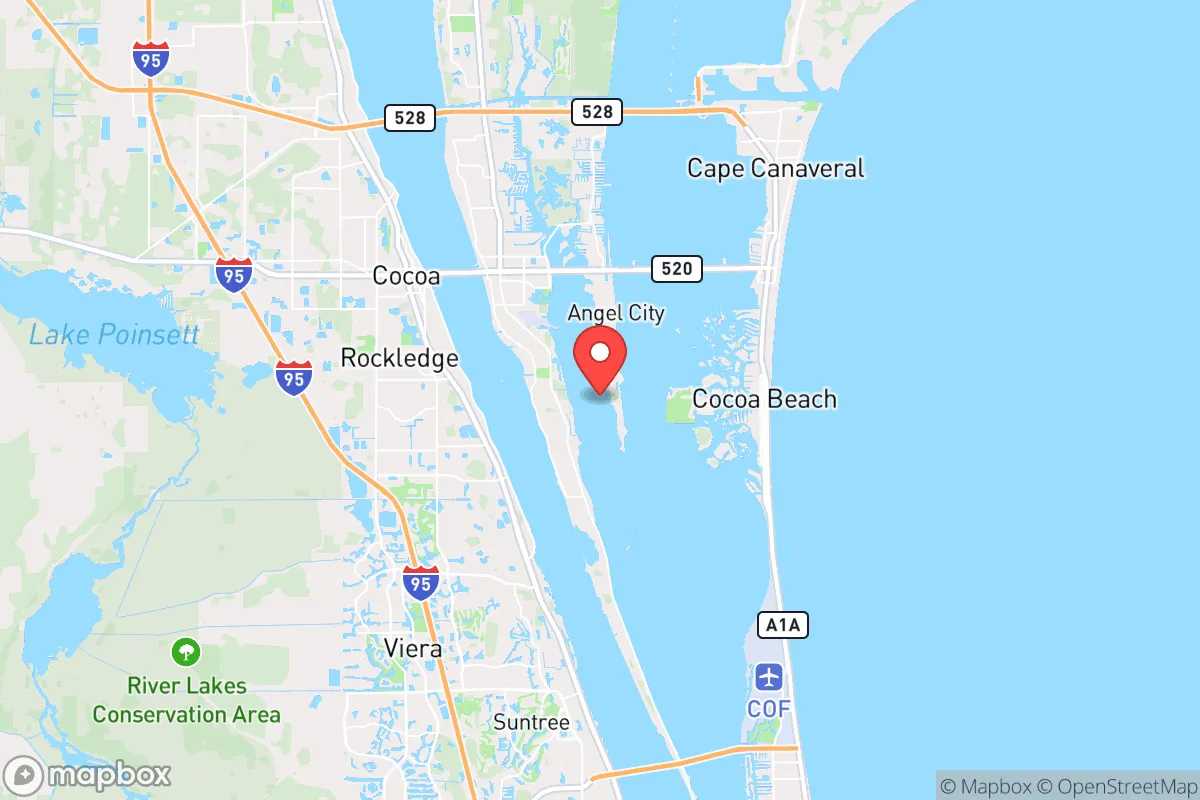
Today, Merritt Island, Florida is home to approximately 34,718 residents, forming a predominantly white (83.0%) and highly educated (41.8% college degree) community with a distinctly low foreign-born population of just 1.8%. The island’s character is shaped by its deep ties to the space industry, a strong sense of suburban stability, and a demographic profile that is notably less diverse than nearby Cocoa Beach or Melbourne. Residents identify strongly with the island’s unique geography—bounded by the Indian River and Banana River—and its reputation as a safe, family-oriented enclave where many aerospace engineers and support staff have put down roots for generations.
How the city was settled and grew
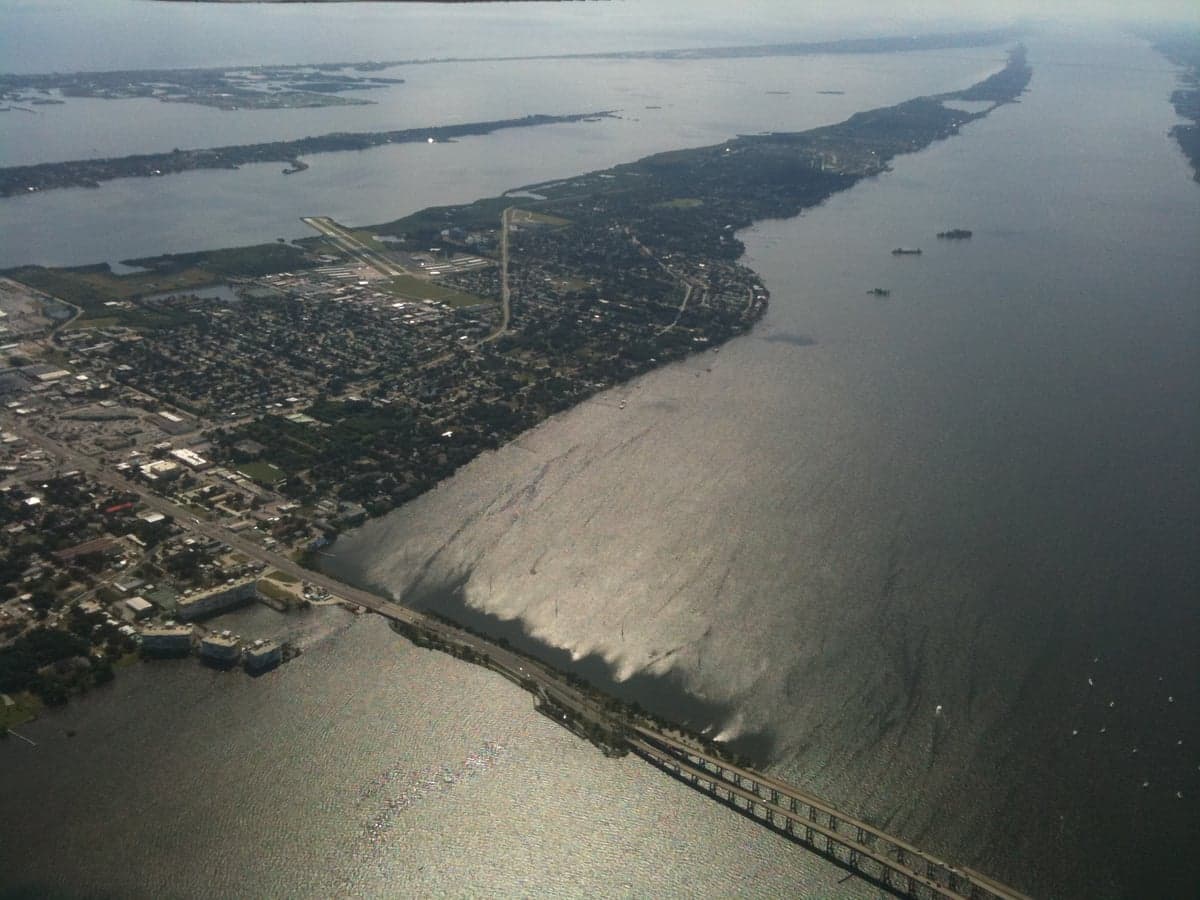
Merritt Island’s human history is almost entirely a 20th-century story. Before 1900, the island was sparsely inhabited by a few homesteaders and citrus growers, with no significant town center. The first real wave of settlement came in the 1910s and 1920s, when the Merritt Island Drainage District was formed to reclaim marshland for agriculture. Small farming communities emerged, particularly around Courtenay (the historic northern settlement) and Wilson (a central crossroads). These early residents were primarily white farmers of Southern origin, growing citrus and vegetables. The construction of the Merritt Island Causeway in 1927 connected the island to Cocoa and began its slow transformation from an agricultural backwater to a commuter suburb. The population remained under 5,000 through the 1940s, concentrated in the scattered rural settlements of Banana River Village and South Merritt Island.
Modern era (post-1965)
The single most transformative event for Merritt Island was the establishment of the John F. Kennedy Space Center at nearby Cape Canaveral in the early 1960s. The Apollo program triggered a massive domestic in-migration of engineers, technicians, and administrative staff, overwhelmingly white and college-educated, who settled in newly built subdivisions across the island. The neighborhoods of Lamplighter Village and Hacienda Isles were developed in the 1960s and 1970s specifically to house these space-industry families, with ranch-style homes on large lots. The post-1965 Hart-Cellar Act had minimal impact on Merritt Island; the foreign-born population remains at just 1.8%, far below the national average. The small Asian (East/Southeast Asian) community of 2.6% is largely composed of engineers and scientists recruited directly by NASA and its contractors, concentrated in the Audubon and Carriage Gate neighborhoods. The Hispanic population (7.2%) is mostly of Cuban and Puerto Rican descent, many arriving in the 1980s and 1990s as part of broader Florida migration patterns, and is dispersed rather than clustered in a single enclave. The Black population (2.2%) and Indian-subcontinent population (0.5%) are very small and integrated into the general suburban fabric, with no distinct ethnic neighborhoods.
The future
Merritt Island’s population is aging and slowly homogenizing. The median age has risen as the original space-industry families age in place, and younger adults often leave for larger job markets. The foreign-born share (1.8%) is among the lowest in Brevard County and shows no sign of significant increase, as the island lacks the rental housing stock and entry-level jobs that attract new immigrant populations. The East/Southeast Asian and Indian communities are plateauing, with most growth coming from natural increase rather than new immigration. The Hispanic share (7.2%) is growing slowly, primarily through births rather than migration. Over the next 10–20 years, Merritt Island is likely to become slightly older, slightly more Hispanic, and remain overwhelmingly white and native-born. The island is not tribalizing into distinct enclaves; rather, it is becoming a more uniform, stable, and insular community where the dominant identity remains that of a space-industry suburb.
For someone moving in now, Merritt Island offers a highly educated, low-crime, and politically moderate-to-conservative environment where neighbors are likely to have deep local roots and a shared connection to the space program. The trade-off is limited demographic diversity and a population that is not rapidly renewing itself, which may appeal to families seeking stability but less so to those looking for a dynamic, multicultural community.

* Values derived from national, state, county, city and local statistics and may differ in a specific area. Last updated: 2026-05-14T01:44:15.000Z
Narrative content on this page is AI-generated and may contain mistakes. Verify any details that matter before acting on them.
ReloMaps may earn a commission from affiliate links at no extra cost to you.

