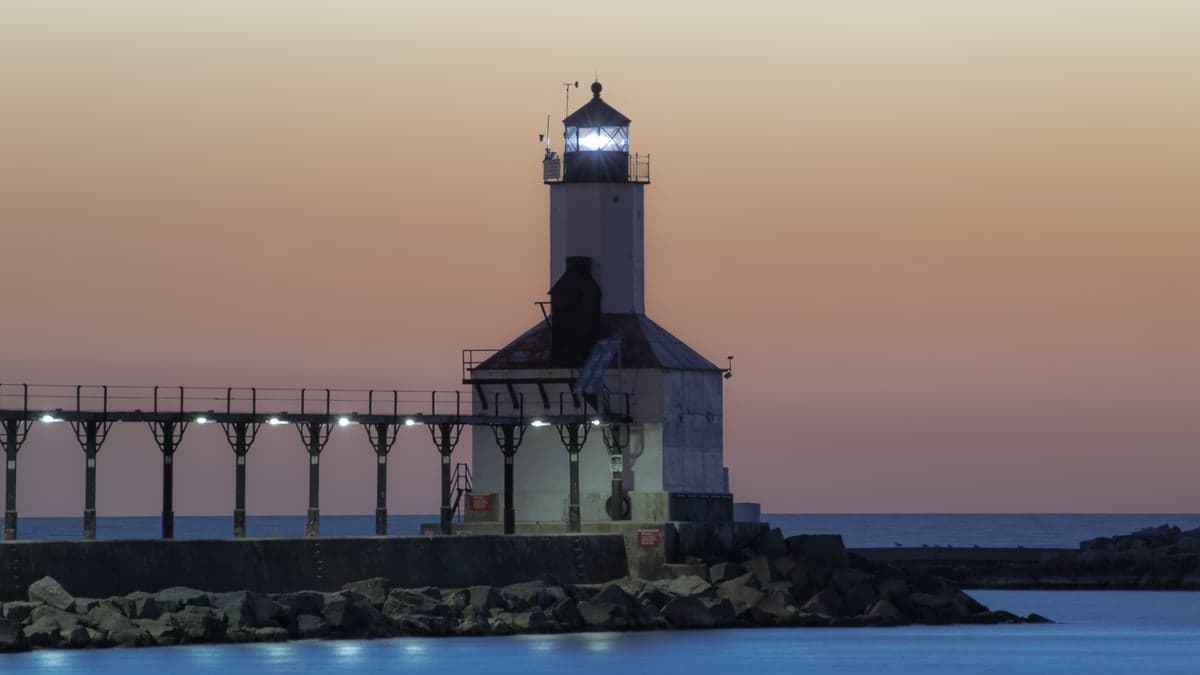
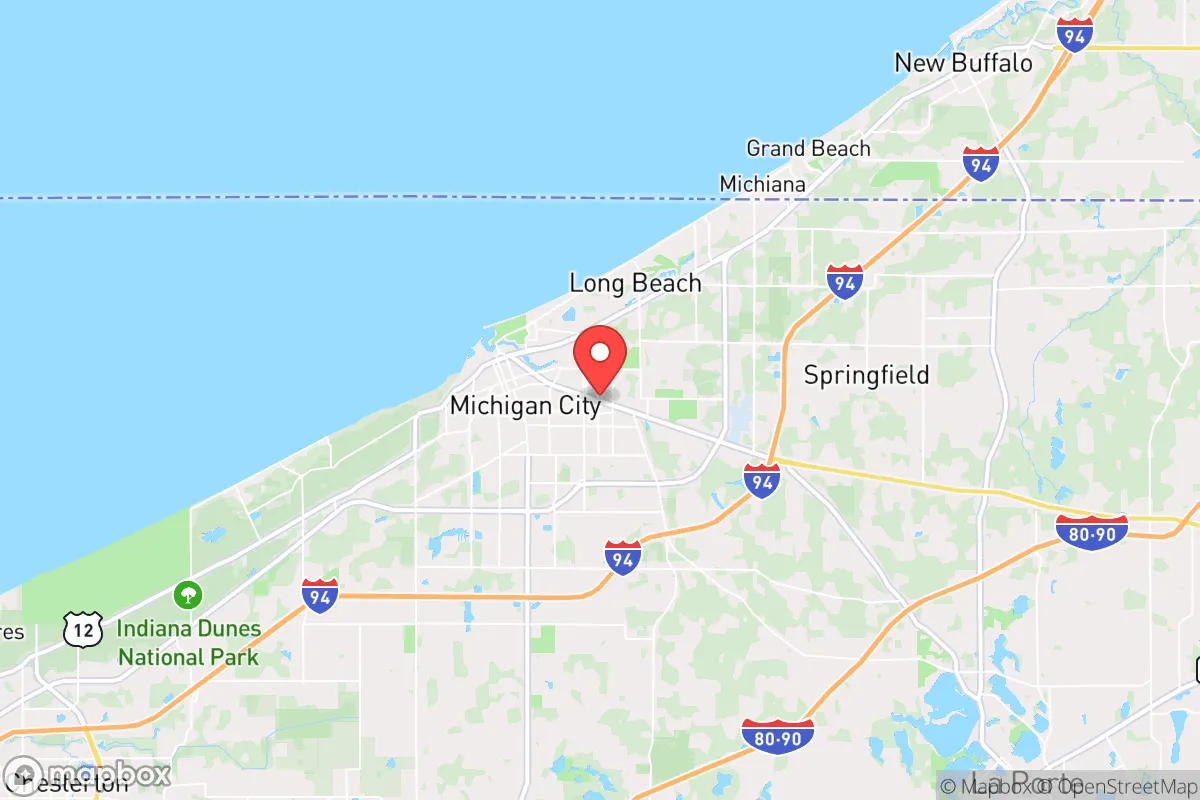
Photo: Wikipedia
Demographics of Michigan City, IN
Affluence Level in Michigan City, IN
A below-average socioeconomic profile. Incomes, home values, and educational attainment trail the U.S., with higher poverty and unemployment.
People of Michigan City, IN
The people of Michigan City, Indiana, today number 31,894, forming a community that is notably more diverse than the surrounding region but also more economically strained. The city’s character is shaped by a majority-white population (60.3%) alongside a substantial Black community (24.6%) and a growing Hispanic population (9.8%), with a very low foreign-born share of just 1.0%. Distinctive identity markers include a strong blue-collar heritage tied to the now-diminished industrial base, a pronounced east-west socioeconomic divide, and a population that is less educated (18.8% college graduates) than state averages, creating a place where old manufacturing roots meet new challenges of economic transition.
How the city was settled and grew
Michigan City’s population history begins with its 1830s founding as a planned port and railroad terminus on Lake Michigan. The original white settlers were largely Yankees from New England and upstate New York, drawn by land speculation and the promise of shipping timber and grain. The completion of the Michigan Central Railroad in the 1850s and later the Pullman car works in the 1880s triggered the first major wave of European immigrants. Irish and German laborers built the early infrastructure and settled in the near-west side neighborhoods around what is now the Uptown district, while Polish and Slovak immigrants arrived for steel and factory jobs, clustering in the Long Beach area’s working-class streets and the Pines Village section. The Pullman Company’s presence also drew the first significant Black population during the Great Migration (1910–1940), who were largely confined to the East Side neighborhood near the factories, a pattern of segregation that would persist for decades. By 1950, the city had grown to roughly 28,000, a mix of European-ethnic whites and a small but established Black minority.
Modern era (post-1965)
The post-1965 period brought profound demographic change, driven by the collapse of heavy industry and the broader forces of suburbanization and white flight. The 1968 Fair Housing Act formally opened neighborhoods, but de facto segregation remained strong. The Black population, which had been concentrated on the East Side, expanded into the central city neighborhoods like the Franklin Street corridor and parts of the West Side as older white families departed for the newer subdivisions of Coolspring Township and Trail Creek outside city limits. Hispanic migration, primarily of Mexican origin, began in the 1980s and 1990s, drawn by low-skilled work in the remaining factories and service sector; they settled in the Uptown area and along the Wabash Street corridor, creating a small but visible enclave. The Asian population (East/Southeast Asian) remains tiny at 0.5%, with no distinct neighborhood concentration, while the Indian-subcontinent population (0.3%) is even smaller and largely professional. The city’s white share dropped from over 80% in 1970 to 60.3% today, while the Black share rose steadily. The foreign-born share, however, has remained stagnant at 1.0%, indicating that Michigan City has not been a major immigrant destination in the modern era.
The future
The population trajectory points toward continued slow decline and gradual diversification, but not rapid change. The city lost roughly 2,000 residents between 2010 and 2020, and the 2024 estimate of 31,894 suggests the decline is leveling off. The white population is aging and shrinking, while the Hispanic share (9.8%) is the fastest-growing segment, driven by natural increase and some domestic migration from Chicago. The Black population appears stable, with younger families remaining in the East Side and central neighborhoods but some middle-class Black households moving to the Long Beach area and Coolspring Township suburbs. The city is not tribalizing into distinct new enclaves; rather, it is slowly homogenizing as the older ethnic white neighborhoods fade and the Hispanic population spreads across the west and central areas. The very low foreign-born share means no major new immigrant wave is likely. Over the next 10–20 years, expect the Hispanic share to approach 15–18%, the white share to drop below 55%, and the Black share to remain near 25%, with the city becoming a more uniformly lower-income, less educated, and more Hispanic community.
For someone moving in now, Michigan City is becoming a predominantly native-born, working-class city with a growing Hispanic minority and a stable Black population. The east-west divide remains real—the lakefront and western suburbs are whiter and wealthier, while the east and central city are more diverse and economically stressed. The city offers affordable housing and lake access, but the demographic trends point toward continued economic struggle rather than revitalization, making it a place best suited for those who value low cost of living over upward mobility or ethnic diversity.

* Values derived from national, state, county, city and local statistics and may differ in a specific area. Last updated: 2026-04-22T08:59:38.000Z
Narrative content on this page is AI-generated and may contain mistakes. Verify any details that matter before acting on them.
ReloMaps may earn a commission from affiliate links at no extra cost to you.

