
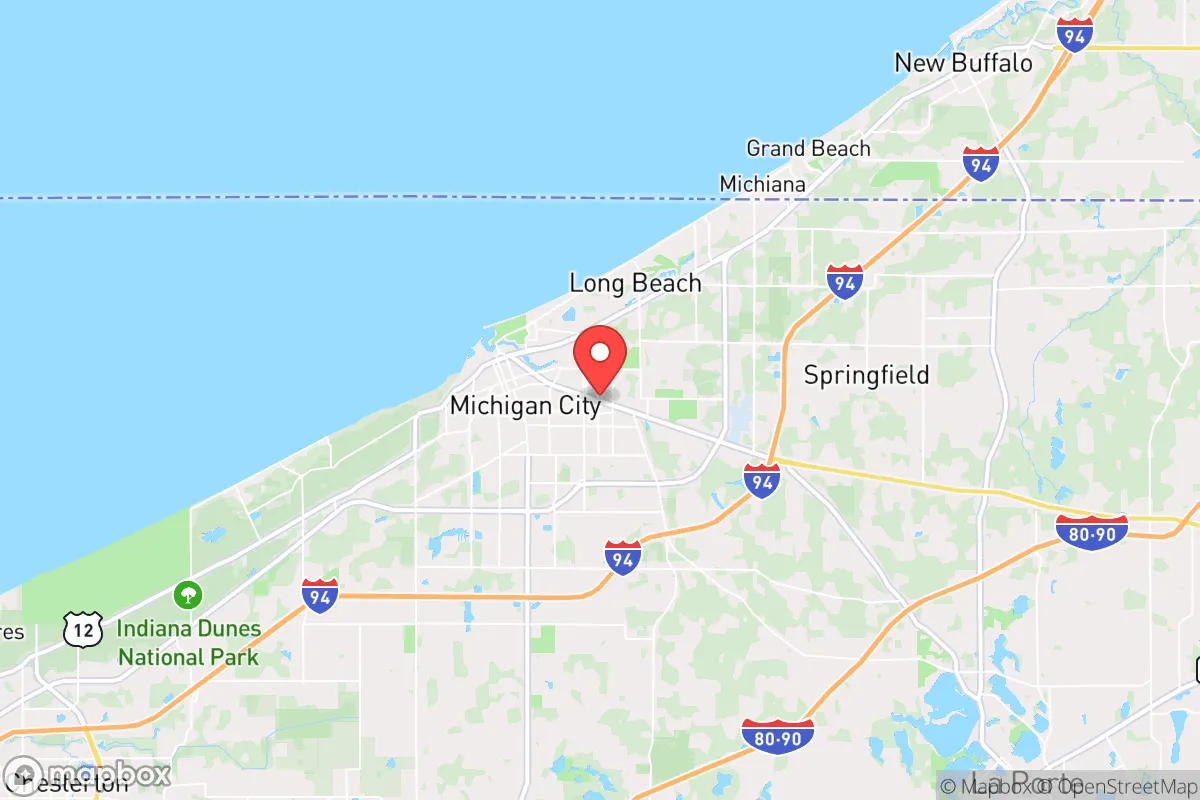
Photo: Wikipedia
Quality of Life in Michigan City, IN
Above-average quality of iife. The area offers a reasonable cost of living, decent mobility, and a mix of neighborhood amenities.
What does Quality of Life tell us?
Quality of Life blends cost of living, nearby amenities, socioeconomic signals, and neighborhood character. City-level scores represent the whole municipality; individual neighborhoods can differ.
What does this tell us?
Quality of Life blends cost of living, nearby amenities, socioeconomic signals, and neighborhood character. City-level scores represent the whole municipality; individual neighborhoods can differ.
Cost of Living
34% below national average
The Real Cost of Living in Michigan City, IN for 2026
| Tier | Individual | Family (4) |
|---|---|---|
| Survival | $15k | $27k |
| Comfortable | $25k | $37k |
| Luxury | $94k+ | $146k+ |
| Elite (Top 5%) | $111k+ | $172k+ |
144%
The Area Signal
A metric tracking the socioeconomic signals of the area.
Hobbies
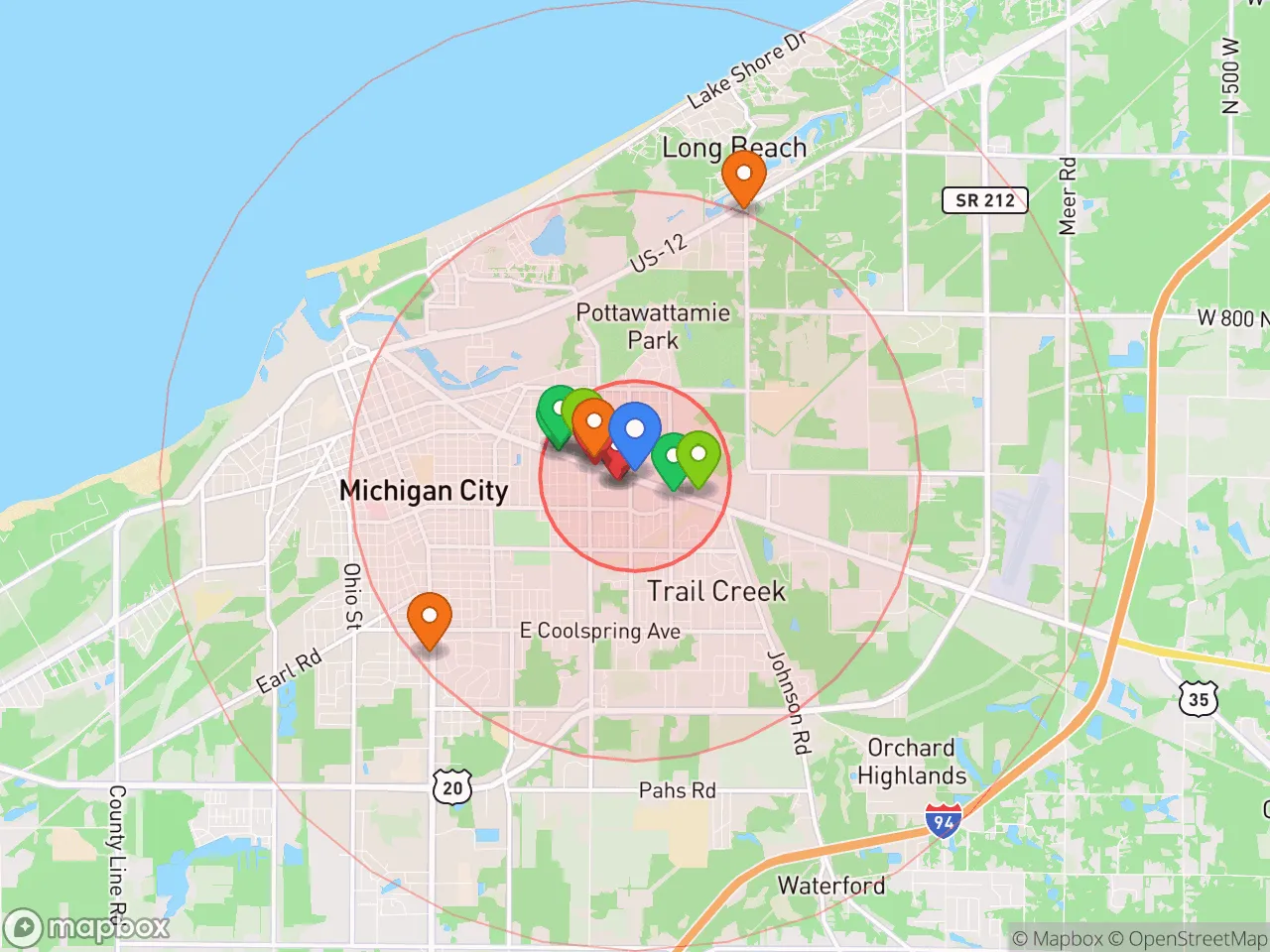
Explore the areaGroceries
4 within 10 miles
Gas
20 within 10 miles
Hospital
9 within 20 miles
Airport
MDW — Midway International
Post Office
USPS — Michigan City, IN
Critical Amenities
Quality-of-Life Analysis
Michigan City, Indiana, presents a notably affordable quality of life that attracts a mix of working-class families, retirees on fixed incomes, and remote workers seeking lower costs near Lake Michigan. With a cost-of-living index of 66 (34% below the U.S. average), the city offers a financial cushion that is increasingly rare in the broader Chicago metro region, drawing residents who prioritize economic breathing room over urban amenities. The population skews slightly older and more blue-collar than the national average, with a median age of 39.5 and a significant share of manufacturing and logistics employment.
How housing costs and affordability compare to nearby areas
Michigan City’s housing market is a primary driver of its low cost of living. The median home value sits at $129,000, roughly one-third of the median in neighboring LaPorte County suburbs and less than a quarter of the median in Chicago’s southern suburbs. Median rent is $915, which undercuts comparable Lake Michigan shoreline towns like New Buffalo, MI (where median rent exceeds $1,400) and even inland cities like Valparaiso, IN (median rent around $1,100). The average commute of 22 minutes is shorter than the national average of 27 minutes, a practical advantage for workers employed at local manufacturers like ArcelorMittal or at the nearby Indiana Dunes National Park. However, property taxes in LaPorte County average 1.2% of assessed value, slightly higher than in neighboring Porter County, which can offset some of the home-price savings for buyers.
What daily life is like for families: schools, amenities, and local rhythm
Daily life in Michigan City centers on a mix of modest retail corridors, public lakefront access, and a school system that serves roughly 3,200 students. The Michigan City Area Schools district includes three elementary schools, one middle school, and Michigan City High School, which offers an International Baccalaureate program but has faced chronic underfunding—per-pupil spending is about $11,500, below the state average of $12,800. For recreation, residents rely on Washington Park Beach and the 3-mile Lake Michigan shoreline, as well as the Michigan City Zoo, a small but well-regarded facility with free admission on select days. The downtown area along Franklin Street has seen modest revitalization, with a handful of independent coffee shops, a brewpub, and the Uptown Arts District hosting monthly gallery walks. Grocery access is adequate, with a major chain (Jewel-Osco) and a local co-op, but residents often drive 20 minutes to Portage or Chesterton for big-box retail and medical specialists. The city’s rhythm is slower than the Chicago exurbs—most businesses close by 9 p.m., and weekend evenings are quiet outside of a few lakefront bars.
Michigan City is best suited for those who prioritize low housing costs and proximity to Lake Michigan over high-end shopping, top-tier schools, or a vibrant nightlife. Retirees and remote workers with flexible schedules will appreciate the affordability and the 45-minute train ride to Chicago’s Millennium Station via the South Shore Line. Families should weigh the school district’s limitations against the financial savings, while outdoor enthusiasts will find the dunes and lakefront a daily asset. The city’s economic challenges—a poverty rate near 18% and a shrinking population—mean that newcomers should expect a community that is resilient but not affluent, where quality of life is defined by what you can afford, not by what the city provides.

Crime in Michigan City, IN
Generally safer than 73% of comparable U.S. locations.
Violent CrimeViolent Crime Analysis
Property CrimeProperty Crime Analysis
Crime Analysis
Michigan City, Indiana, presents a mixed safety profile that requires careful consideration for potential residents. While the city's violent crime rate of 197.9 per 100,000 residents is notably lower than the national average, its property crime rate of 1,311.9 per 100,000 is significantly higher, creating a situation where residents face elevated risks of theft, burglary, and vandalism. This disparity means that while violent confrontations are less common than in many comparable communities, the day-to-day threat to personal property is a real concern that shapes the local experience.
Crime in context
Michigan City's violent crime rate of 197.9 per 100,000 is roughly 43% lower than the national average of 380 per 100,000, placing it in a relatively safer bracket for serious offenses like homicide, rape, robbery, and aggravated assault. However, the property crime rate of 1,311.9 per 100,000 is approximately 25% higher than the national average of 1,042 per 100,000. This pattern is common in small cities near large metro areas like Chicago, where transient populations and economic pressures can drive theft-related offenses. The city's proximity to a major urban center, combined with the progressive judicial policies common in the broader region, may contribute to a revolving-door justice system that fails to deter repeat property offenders. Residents should be aware that while the chance of a violent encounter is low, the likelihood of experiencing a property crime is elevated and warrants proactive security measures.
What residents experience
For those living in Michigan City, the most tangible safety concern is property crime. Car break-ins, package thefts, and home burglaries are the most frequently reported incidents, particularly in areas near the lakefront and commercial corridors. The city's police department has implemented community policing initiatives and increased patrols in high-crime zones, but the sheer volume of property offenses strains resources. The presence of progressive district attorneys in the surrounding judicial district, who often prioritize diversion programs and reduced sentencing for non-violent offenders, means that many property criminals face minimal consequences and quickly return to the streets. This cycle directly impacts residents' sense of security and can lead to frustration with the justice system's perceived leniency. Violent crime, while less common, is not absent—incidents tend to be concentrated in specific areas and often involve individuals known to one another, rather than random attacks on the general public.
Neighborhood-level variation is significant in Michigan City. The areas around the historic Uptown district and the lakefront tend to have lower crime rates due to higher property values and stronger community watch programs. In contrast, neighborhoods near the downtown core and along the Franklin Street corridor experience higher rates of both property and violent crime. The city's west side, particularly around the industrial zones, also sees elevated crime levels. Prospective residents should research specific blocks and talk to local police about recent incident maps, as the difference between a safe street and a high-risk one can be just a few blocks. Overall, Michigan City requires a cautious approach—while not a high-violence area, its property crime problem and the regional justice system's progressive tilt create an environment where vigilance is essential.
* Values derived from national, state, county, city and local statistics and may differ in a specific area. Last updated: 2026-04-22T08:59:38.000Z
Narrative content on this page is AI-generated and may contain mistakes. Verify any details that matter before acting on them.
ReloMaps may earn a commission from affiliate links at no extra cost to you.

