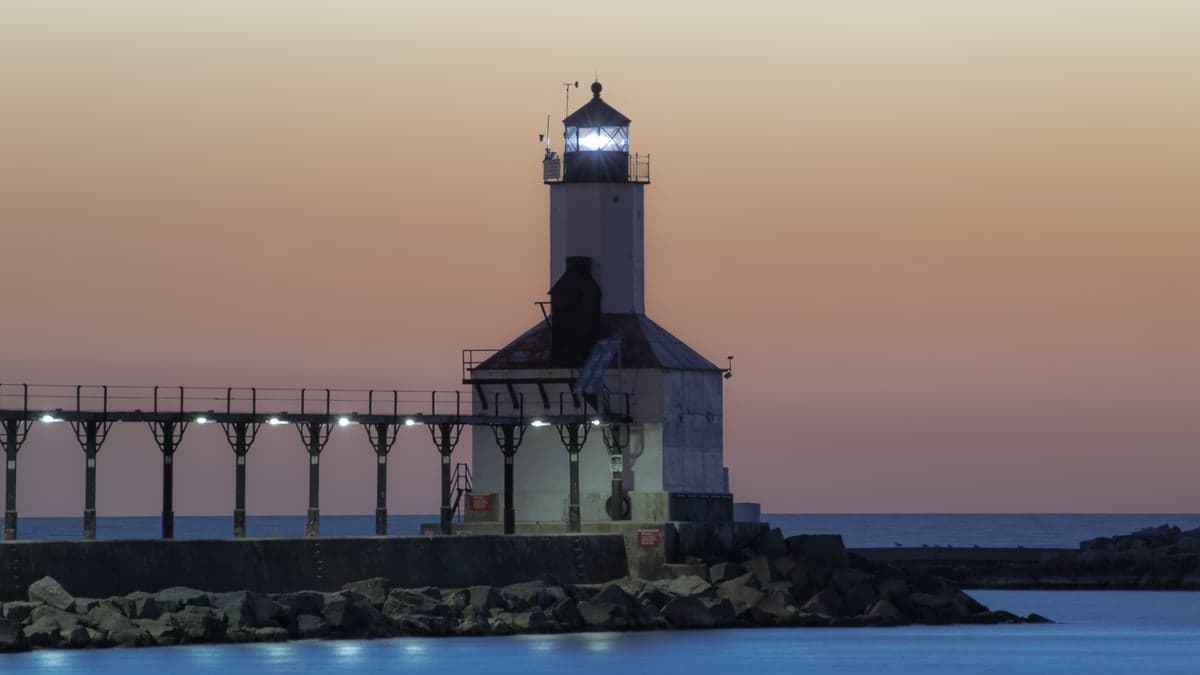
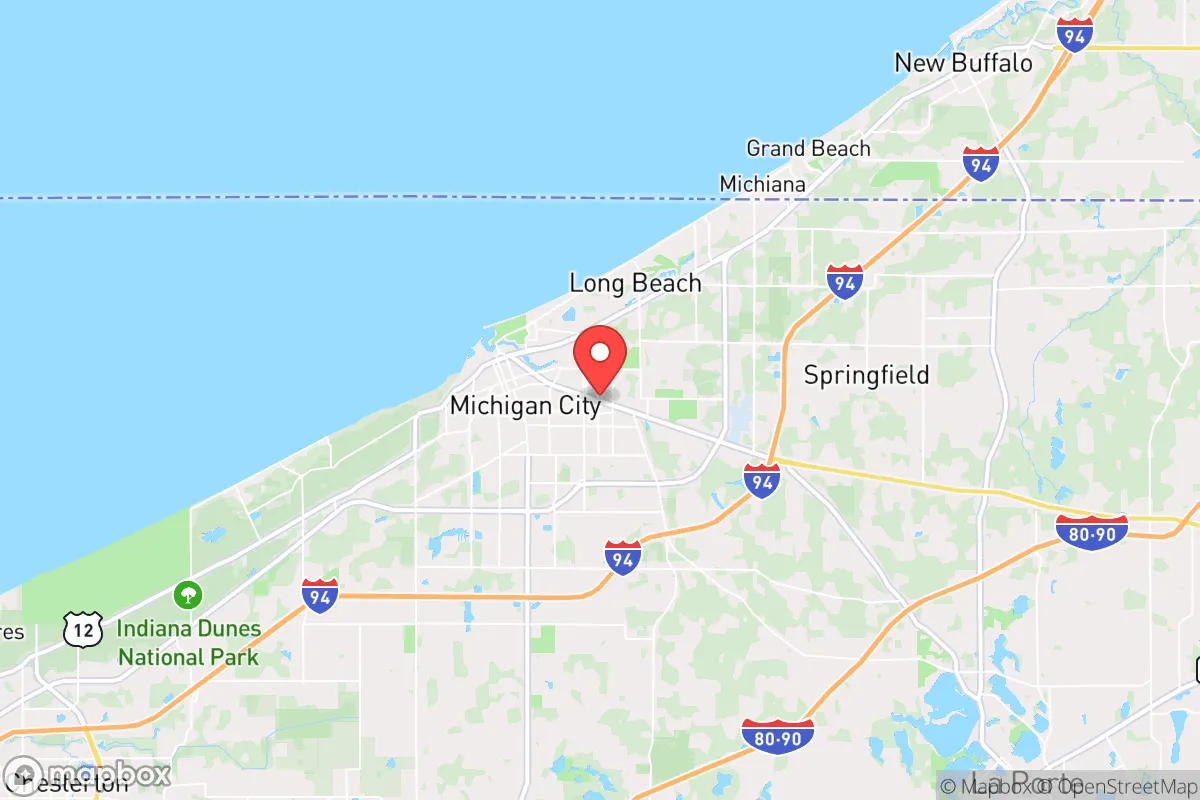
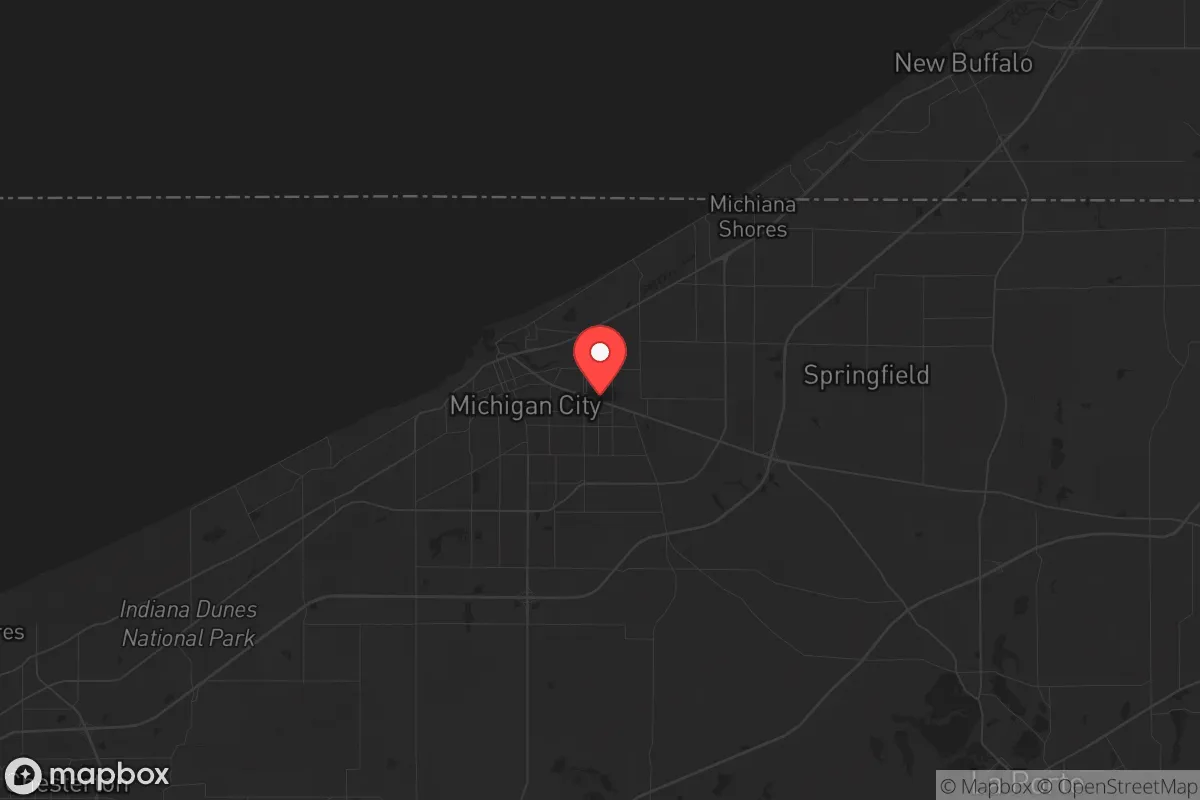
Photo: Wikipedia
Strategic Assessment of Michigan City, IN
Meaningful friction. Expect exposure to either population pressure, blast zones, or natural disaster risk. Consider buying a retreat property.
What does the Strategic Assessment tell us?
Our Strategic Assessment grades tactical survivability of an area. Major population centers, military targets, fallout zones, natural disasters, and border exposure all drive risk — lower exposure means a more defensible position in a crisis.
This is heavily inspired by Joel Skousen's Strategic Relocation book. Highly recommended you checkout the book ($)What does this tell us?
Our Strategic Assessment grades tactical survivability of an area. Major population centers, military targets, fallout zones, natural disasters, and border exposure all drive risk — lower exposure means a more defensible position in a crisis.
This is heavily inspired by Joel Skousen's Strategic Relocation book. Highly recommended you checkout the book ($)Strategic Pillars

Key Distances
Regional Safe Places
Below is our recommended "safe zones" in Indiana and the surrounding area based on our strategic heuristics. For most people, it's unrealistic to live in a “safe zone” full-time due to work, family or other personal reasons. They tend to be more rural. However, many of these areas are perfect for second homes and retreat properties that double as a vacation home or even a short-term rental.

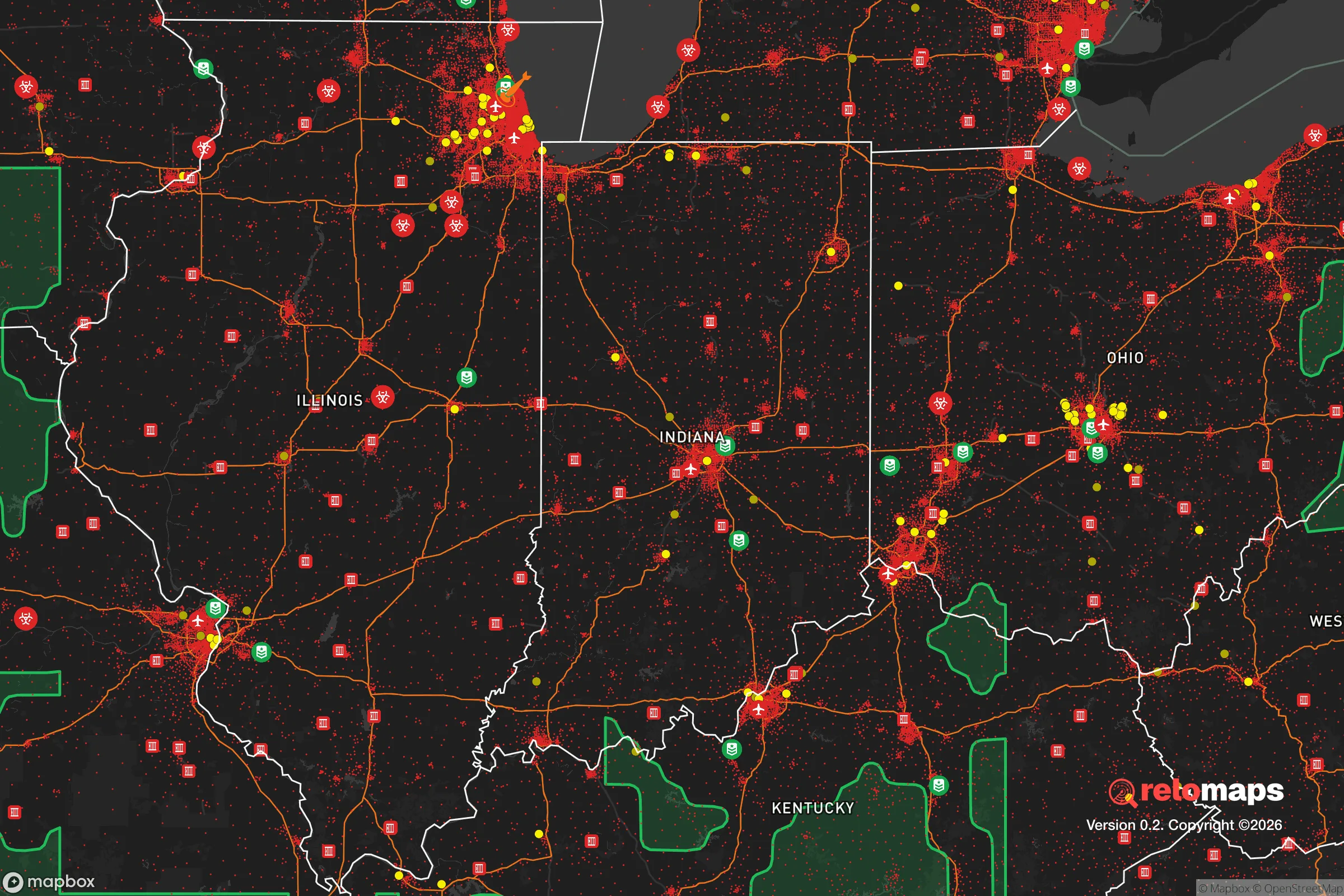


Important Note: For informational purposes only. This does not mean nothing bad ever happens in the green zones. Please use common sense. This is based on public data and modeled with AI. We tried to take a conservative approach but mistakes happen. We update this regularly as new information becomes available.
Solar Generator Recommendations
Backup power matters more here than in safer locations. We've picked three solar generators across budgets and capacity tiers — start with the budget unit if you only need a few essentials, or step up if you want to run a fridge and HVAC for days at a time.

Jackery Portable Power Station Explorer 300
Budget OptionPower on the Go: Weighing only 11 lbs, it's convenient to set up and store with book-sized foldable solar panels

BLUETTI Portable Power Station AC180
Designed for both indoor and outdoor scenarios, AC180 is highly capable as it has a robost capacity and continuous output power.

EF ECOFLOW DELTA Pro Ultra Power Station
Upgraded PickEcoFlow DELTA Pro Ultra is a whole-home energy system designed to grow with your family. Integrated with the Smart Home Panel 2, it scales to meet your evolving energy needs — keeping your home powered, intelligent, and secure through every stage of life.
We earn a commission, at no additional cost to you.
Strategic Assessment Analysis
Michigan City, Indiana, sits in a precarious but potentially advantageous position for those thinking seriously about long-term resilience. Its location on the southern tip of Lake Michigan offers a massive freshwater resource, but its proximity to Chicago—just 50 miles northeast—introduces significant strategic liabilities. For a relocator with a prepper mindset, this area demands a clear-eyed assessment of trade-offs: the lake and surrounding rural land provide genuine survival advantages, but the city’s exposure to fallout from a major metropolitan collapse, industrial targets, and potential civil unrest cannot be ignored. The key is understanding whether you can leverage the natural assets while insulating yourself from the risks that come with being in the shadow of a major urban center.
Geographic position and natural advantages for long-term survival
Michigan City’s primary strategic asset is its direct access to Lake Michigan, one of the largest freshwater bodies on the planet. In a scenario where municipal water systems fail or become contaminated, the lake offers a virtually inexhaustible supply—provided you have the means to filter and treat it. The city itself sits at the mouth of Trail Creek, which feeds into the lake, offering additional secondary water sources. The surrounding area, particularly to the south and east, transitions quickly into rural farmland and forested land in LaPorte County. This mix of lake access and agricultural hinterland means that, with proper planning, a relocator could secure both water and food sources within a short distance. The region’s climate supports a growing season of roughly 150–170 days, suitable for staple crops like corn, beans, and squash, as well as cold-hardy greens and root vegetables. The Indiana Dunes National Park, just west of the city, provides a buffer of undeveloped land that could serve as a natural barrier or foraging zone, though it also attracts recreational traffic in normal times. For a survivalist, the ability to retreat south into less populated areas of LaPorte or Starke counties—where population density drops below 50 people per square mile—is a genuine advantage. The Lake Michigan shoreline also offers a potential evacuation route by water, though small craft would be vulnerable to the lake’s notoriously sudden storms.
Risks, exposures, and proximity to fallout-relevant landmarks
The most glaring risk for Michigan City is its proximity to Chicago. In the event of a major civil unrest event, mass casualty incident, or even a limited nuclear exchange, Chicago is a high-priority target. The city’s location on the Lake Michigan shoreline means fallout patterns from a detonation in the Chicago metro area could drift directly over Michigan City depending on wind direction. The prevailing westerlies in the region make this a non-trivial concern. Additionally, Michigan City itself hosts infrastructure that could become a secondary target or point of failure: the Michigan City Generating Station, a coal-fired power plant on the lakefront, and the nearby NIPSCO natural gas facilities. While not nuclear, these industrial sites could become hazards if damaged or abandoned. The city also sits within 20 miles of the Palisades Nuclear Plant in Covert, Michigan, which, while currently decommissioned, still contains spent fuel on site—a potential contamination risk in a crisis. For a relocator, the I-94 and I-90 corridors that connect Michigan City to Chicago are double-edged swords: they provide supply routes in normal times, but in a collapse scenario, they would become chokepoints for refugees fleeing the city. The city’s population of roughly 31,000 could swell rapidly if Chicago empties, straining local resources. The presence of the Indiana State Prison in the city adds another layer of risk—a potential source of instability if order breaks down. For those prioritizing low exposure to fallout and human-caused disasters, Michigan City’s position is marginal at best; you would need to plan for a secondary retreat deeper into rural Indiana or Michigan.
Practical resilience for a relocator: food, water, energy, and defensibility
On the practical side, Michigan City offers a mixed picture for a prepper household. Water is the strongest asset: Lake Michigan provides an essentially unlimited supply, but you must assume municipal treatment will fail. A robust filtration system—such as a Berkey or a sand filter setup—and a supply of chemical treatment tablets are non-negotiable. The lake water is cold and clean by Great Lakes standards, but it contains biological contaminants from runoff and recreational use. For food, the local soil is fertile, and there are active farmers’ markets and u-pick farms within a 20-minute drive, but relying on them in a crisis is foolish. You need to establish your own garden or secure a relationship with a local farmer before any event. The area has a strong hunting tradition—deer, turkey, and waterfowl are abundant in the surrounding state forests and private woodlands—but hunting pressure would spike immediately after a collapse. Energy is a vulnerability: the grid is aging and prone to outages from lake-effect snowstorms and summer thunderstorms. Solar is viable, but the region averages only 160–180 sunny days per year, so you’ll need battery storage and a backup generator. Natural gas is widely available in the city, but rural properties may rely on propane, which requires delivery. Defensibility is the weakest point. Michigan City’s layout is typical of a small industrial city: a dense downtown, older neighborhoods with narrow streets, and a few suburban subdivisions. There are no natural defensive features like hills or rivers that create chokepoints. The best option for a relocator is to buy land south of the city, in the unincorporated areas of LaPorte County, where you can establish a homestead with a clear line of sight and limited road access. Properties along the Kankakee River or near the Jasper-Pulaski Fish and Wildlife Area offer better isolation. In the city itself, a well-fortified home with reinforced doors, window bars, and a safe room is a minimum if you plan to stay put during a crisis.
The overall strategic picture for Michigan City is one of conditional viability. It works as a base of operations only if you are willing to treat it as a forward position rather than a final retreat. The lake and farmland give you the raw materials for long-term survival, but the proximity to Chicago and the presence of industrial and prison infrastructure create a risk profile that demands constant vigilance and a secondary plan. For a conservative-leaning relocator who values self-reliance and community, the area’s small-town character and access to outdoor resources are appealing, but you must be prepared to bug out to more remote areas if the situation deteriorates. The smartest approach is to secure a property south of the city, stockpile supplies for at least six months, and build relationships with like-minded neighbors in the rural parts of the county. Michigan City itself is not a fortress, but it can be a stepping stone to one—if you treat it with the seriousness it demands.

* Values derived from national, state, county, city and local statistics and may differ in a specific area. Last updated: 2026-04-22T08:59:38.000Z
Narrative content on this page is AI-generated and may contain mistakes. Verify any details that matter before acting on them.
ReloMaps may earn a commission from affiliate links at no extra cost to you.

