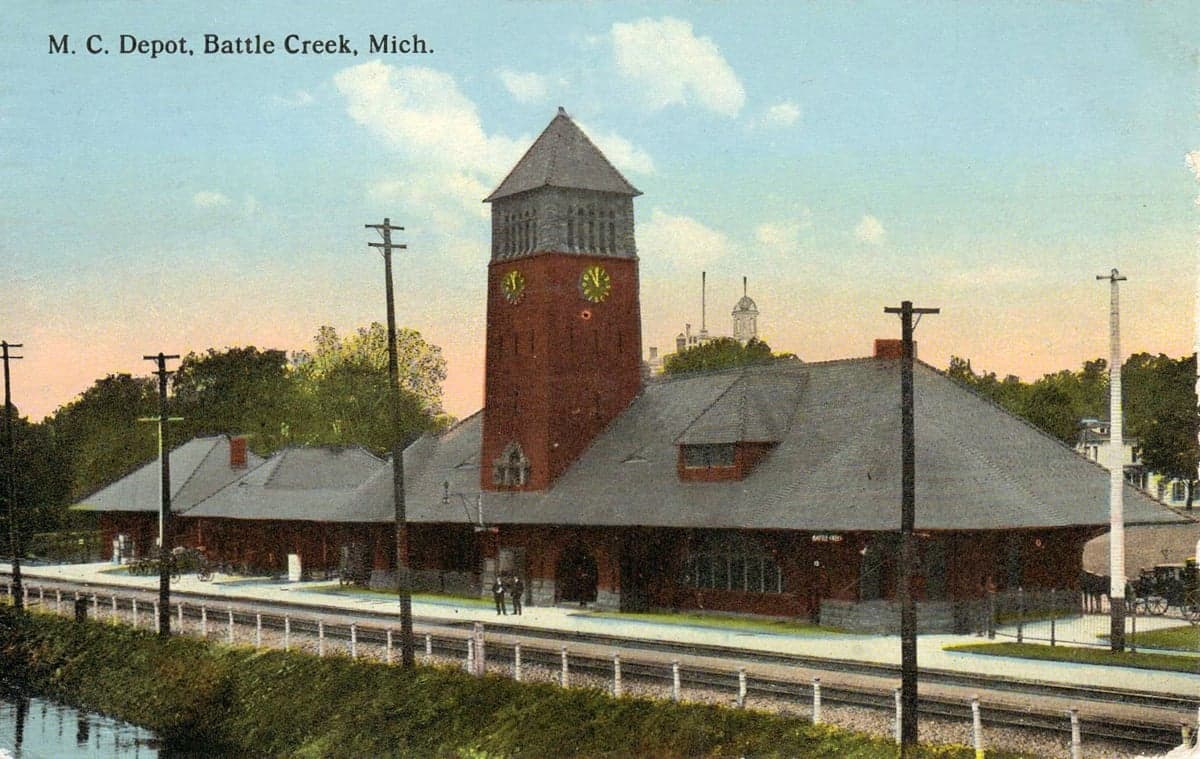
Photo: Wikipedia
Quality of Life in Calhoun County
A livable area that tracks near national norms for affordability, walkability, and neighborhood health.
What does Quality of Life tell us?
Quality of Life measures an area by evaluating factors like cost of living, nearby amenities, country club access, airport proximity, socioeconomic signals and neighborhood character. For large states, this is a general average — quality of life can vary dramatically between metro areas, suburbs, and rural communities within the same state.
What does this tell us?
Quality of Life measures an area by evaluating factors like cost of living, nearby amenities, country club access, airport proximity, socioeconomic signals and neighborhood character. For large states, this is a general average — quality of life can vary dramatically between metro areas, suburbs, and rural communities within the same state.
Cost of Living
30% below national average
140%
The Real Cost of Living in Calhoun County for 2026
| Tier | Individual | Family (4) |
|---|---|---|
| Survival | $15k | $28k |
| Comfortable | $29k | $43k |
| Luxury | $107k+ | $166k+ |
| Elite (Top 5%) | $126k+ | $196k+ |
Quality-of-Life Analysis
Calhoun County spans a broad quality-of-life spectrum, anchored by the industrial and health-care hub of Battle Creek and the historic county seat of Marshall, then tapering into farm-country villages like Homer and rural unincorporated pockets such as Pennfield and Convis townships. The county’s cost of living index of 70 — 30 percent below the national average — attracts a mix of blue-collar commuters working at Battle Creek’s Kellogg plants, professionals commuting the short 20.6-minute average drive to Kalamazoo or Lansing, and retirees seeking cheap acreage in the county’s southern townships. The character changes markedly from the Kalamazoo River corridor through the open grain fields of the south, giving each micro-region its own draw.
Largest town(s) & population centers
Battle Creek (population roughly 50,000) is the county’s urban core, centered on the Kellogg Company’s global headquarters, the W.K. Kellogg Foundation, and a large Veterans Affairs medical center. Daily life here revolves around industrial shift work, manufacturing at companies such as Post Consumer Brands and Denso, and service jobs tied to the I-94/Business I-94 corridor. Downtown sees renewed investment in the Heritage Tower redevelopment and the Cereal City entertainment district, but the north and south ends still carry a Rust Belt feel with aging strip retail and modest bungalow neighborhoods. Marshall (population about 7,000), 12 miles east, anchors the opposite end of the population spectrum: a well-preserved historic town centered on the Michigan Avenue commercial district, the Honolulu House museum, and a busy Amtrak station. Marshall’s daily life tilts toward professional-services employment, education at Marshall Public Schools, and a walkable downtown that draws weekend visitors from the Battle Creek metro.
Smaller towns & rural pockets
Albion (population roughly 8,000) sits on the county’s eastern edge and is transitioning from a legacy of Albion College and automotive-parts manufacturing toward a post-industrial service economy, with a revitalized downtown corridor along Superior Street. Athens (population under 1,000), due south, is a quiet farming crossroads with a small grocery and a grain elevator that serves the surrounding soybean and corn operations. Homer (population about 1,600) retains a functional village center with a hardware store, a library, and a village park, while Tekonsha (population roughly 650) and Burlington (under 300) are bedroom hamlets for commuters willing to live amid open fields. Unincorporated Pennfield Township, north of Battle Creek, offers residential subdivisions on well-watered acreages near the Kellogg Biological Station, and Convis Township in the far south remains largely tillable farmland with scattered farmsteads and no commercial core.
Cost & lifestyle range
The countywide median home value of $151,500 and median rent of $937 vary noticeably by location. Battle Creek’s near-east side and the downtown core carry values above the county median, with homes near the VA hospital and Lakeview School District often breaking $200,000; on the west side, near-disinvestment pockets see values below $100,000. Marshall’s historic district commands premiums around $180,000–$220,000 for Victorian-era homes, while the newer subdivisions on the town’s west edge run closer to the county median. On the low-cost end, Albion’s housing stock — much of it aging worker cottages — sells for a median well under the county figure, often below $120,000, and small villages like Athens and Tekonsha offer stick-built homes on half-acre lots for $80,000–$110,000. The average commute of 20.6 minutes means a family can live on cheap rural acreage in Convis Township and still reach a Battle Creek job in under 25 minutes, a trade-off that makes the county’s southern third particularly accessible for wage-earners seeking land without long drive times.
Thriving in Calhoun County typically suits those who value a low-cost base and a short commute over dense urban amenities or high-wage professional markets. Manufacturing tradespeople, health-care workers at Bronson Battle Creek and the VA, remote workers drawn by $937 median rent and a 70 cost-of-living index, and early retirees cashing out of high-cost metros all find workable niches. The county’s spectrum — from Battle Creek’s industrial core and Marshall’s historic walkability to Albion’s reinvention and the silent farm towns of the south — gives each of those groups a distinctly different daily texture for roughly the same bottom-line cost.

Crime in Calhoun County
Crime rates similar to the national median for U.S. locations.
Violent CrimeViolent Crime Analysis
Property CrimeProperty Crime Analysis
Crime Analysis
Calhoun County, Michigan, presents a mixed safety picture: its violent crime rate of 413 incidents per 100,000 residents sits above the national average of 380, while property crime at 1,246.5 per 100,000 closely tracks the U.S. median. The county’s overall risk is heavily shaped by conditions in Battle Creek—the largest city and judicial hub—where progressive prosecution policies and a revolving-door approach to repeat offenders have driven recidivism. Meanwhile, smaller communities such as Marshall, Albion, and Springfield offer markedly different safety experiences, with crime concentrated in specific corridors rather than evenly spread.
Crime in context
Calhoun County’s violent crime rate of 413 per 100,000 exceeds the Michigan state average of approximately 430 per 100,000 by a narrow margin but is about 9% above the national rate. Property crime at 1,246.5 per 100,000 is nearly identical to the U.S. figure of 1,250. The county’s numbers are dragged upward almost entirely by Battle Creek, which accounts for roughly 55% of the county’s population but a disproportionately higher share of violent offenses. By contrast, Marshall—the county seat—reports violent crime rates closer to 200 per 100,000, benefiting from a more conservative local judiciary and stronger community policing. Albion and Springfield also see elevated property crime, particularly theft from vehicles and burglaries, but their violent crime counts remain well below the county mean. The disparity is significant: a resident of Battle Creek faces roughly double the risk of being a victim of violent crime compared to someone living in Marshall.
What residents experience
Residents’ daily safety concerns vary by jurisdiction. In Battle Creek’s downtown and near the former Kellogg’s headquarters, property crime is a constant annoyance—car break-ins, package thefts, and shoplifting are the most common complaints. Violent incidents are concentrated in a few high-poverty neighborhoods around the city’s north side and along the Michigan Avenue corridor. The Calhoun County Prosecutor’s Office, under current leadership, has faced criticism for routinely offering plea deals that reduce felony charges to misdemeanors, a pattern that critics say emboldens repeat offenders. In contrast, Marshall’s court system, presided over by a more traditional judge, maintains stricter sentencing guidelines, leading to lower recidivism. Residents of Marshall and rural townships like Pennfield and Bedford report feeling safe walking at night, while Battle Creek locals often avoid certain blocks after dark. The county sheriff’s office conducts targeted patrols on the I-94 corridor between Battle Creek and Albion, where drug trafficking fuels much of the region’s violent crime.
Neighborhood-level variation
For anyone relocating to Calhoun County, neighborhood selection is critical. The safest enclaves are in the Marshall Historic District and the outskirts of Springfield along Capital Avenue NE, where property crime rates dip below 800 per 100,000 and violent incidents are rare. Battle Creek’s safest pockets include the Urbandale neighborhood and the area around Leila Arboretum, where rates are roughly 60% lower than the city average. Conversely, the Post Addition and Washington Heights neighborhoods in Battle Creek see violent crime rates approaching 700 per 100,000, driven largely by domestic assaults and street-level robberies. In Albion, blocks adjacent to the former Albion College campus have improved markedly since 2020, but the west side near the Kalamazoo River still reports property crime levels above 1,500 per 100,000. Prospective residents should prioritize communities with local law enforcement autonomy rather than reliance on county-wide progressive prosecution policies, as the difference in actual safety outcomes is stark and measurable.
* Values derived from national, state, county, city and local statistics and may differ in a specific area. Last updated: 2026-05-22T13:12:24.000Z
Narrative content on this page is AI-generated and may contain mistakes. Verify any details that matter before acting on them.
ReloMaps may earn a commission from affiliate links at no extra cost to you.

