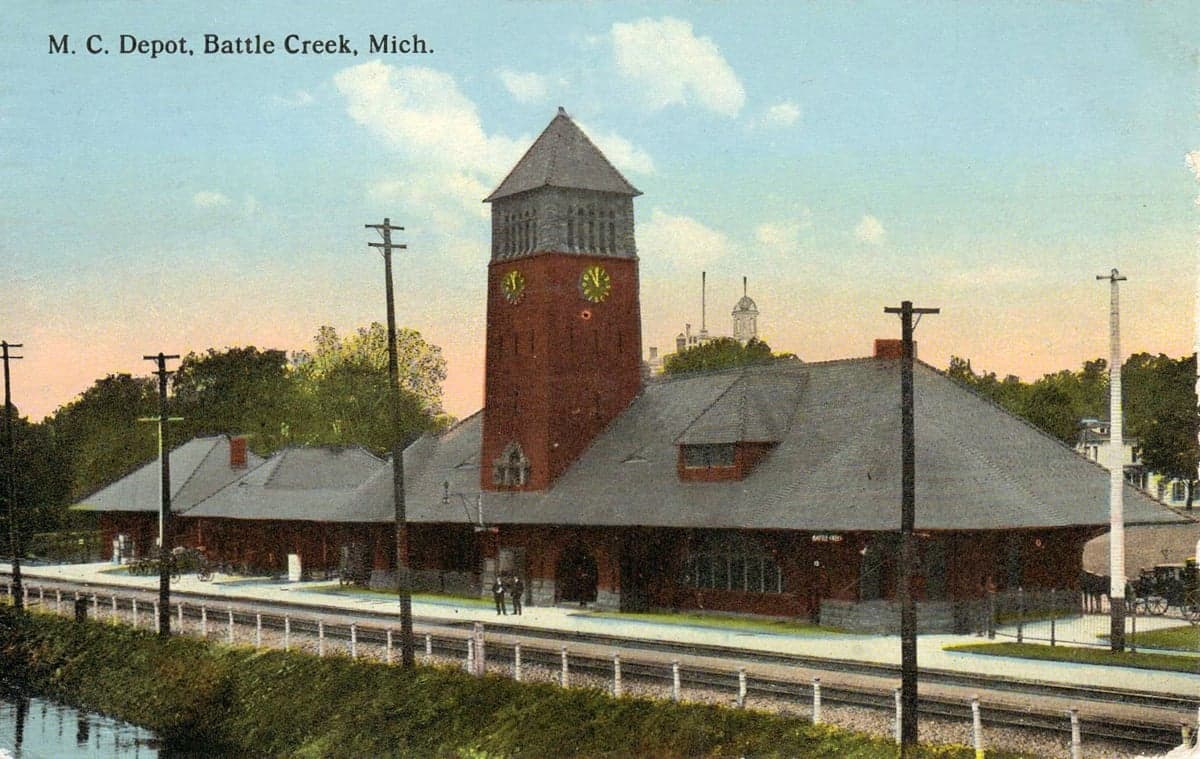
Photo: Wikipedia
Political ClimatePolitical Climate in Calhoun County
Showing district-level results — no local-only data available.
Local Political AnalysisPolitical Analysis of Calhoun County
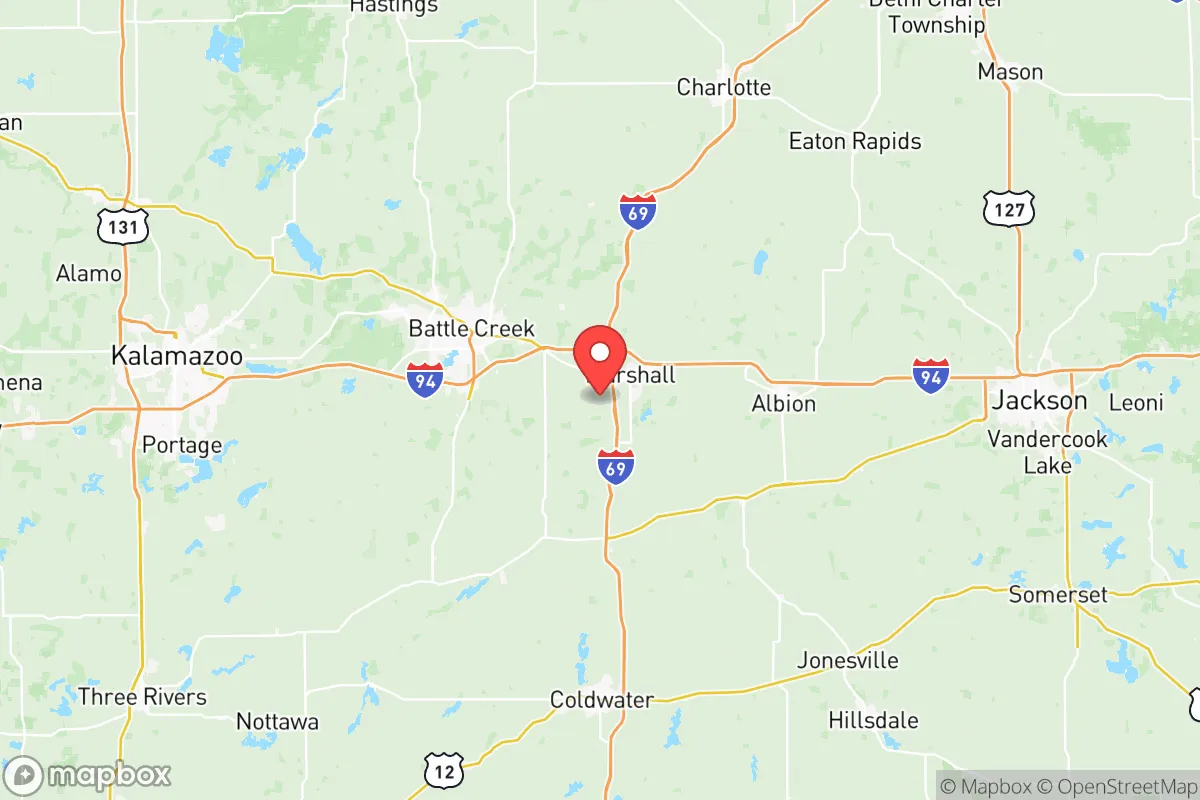
Calhoun County has been a reliably conservative stronghold for decades, and that hasn't changed much. The Cook PVI sits at R+13, meaning the county votes about 13 points more Republican than the national average, while the rest of Michigan is essentially a toss-up at EVEN. That gap tells you a lot about the cultural and political divide between this area and the rest of the state. If you're looking for a place where traditional values still hold weight and government overreach is met with skepticism, you're in the right spot.
How it compares
Michigan as a whole has been trending leftward, especially in the southeast and around Grand Rapids, but Calhoun County has held steady. The rural townships—like Emmett Township, Convis Township, and Lee Township—are deep red, often voting 70% or more Republican in recent elections. Even in the county seat, Marshall, which has a more moderate feel thanks to its historic downtown and state offices, the vote still leans conservative. The only real blue pockets are in Battle Creek, specifically around the downtown core and near the Kellogg Company headquarters, where union influence and a more diverse population push the vote left. But even there, the city's outskirts and the surrounding townships like Pennfield and Bedford are reliably red. The swing precincts are mostly in the Springfield area, where working-class voters sometimes split tickets, but overall, the county hasn't flipped in a presidential race since 2008.
What this means for residents
For folks who value personal freedoms—whether that's the right to keep and bear arms, lower taxes, or less interference from Lansing—Calhoun County is a breath of fresh air. The county commission has consistently pushed back against state mandates, especially during the pandemic, and local school boards have been vocal about parental rights. You won't see the kind of progressive overreach here that you get in Ann Arbor or Detroit. Property taxes are reasonable, and there's a strong sense of local control. The downside? If you're hoping for rapid change or a more progressive agenda, you'll be frustrated. The county's conservative majority means that initiatives like renewable energy mandates or sanctuary city policies are non-starters. But for most residents, that's a feature, not a bug.
Culturally, Calhoun County feels more like northern Indiana than southern Michigan. You'll see plenty of church parking lots full on Sunday mornings, and the local gun shows are well-attended. The biggest policy distinction is probably in how the county handles land use and zoning—there's a strong preference for private property rights over government planning. If you're moving from a blue state, expect a slower pace and a lot more neighborly trust. The long-term trajectory? As long as the rural townships keep their population, the county will stay red. The concern is if Battle Creek continues to grow and pull the county toward the state's average, but for now, Calhoun County remains a solid conservative anchor in a swing state.

State Political ClimatePolitical Climate in Michigan
State Political AnalysisPolitical Environment in the State
Michigan is a true battleground state, with a Cook PVI of EVEN, meaning it sits exactly at the national average. Over the past 20 years, the state has swung from reliably blue to a toss-up, driven by a collapse of union Democrat strongholds in the industrial southeast and a simultaneous surge of conservative energy in the western and northern Lower Peninsula. The 2024 election saw Donald Trump flip the state back to red after Joe Biden’s narrow 2020 win, but the margin was razor-thin — less than 1.5 points — reflecting a deeply polarized electorate that no single coalition can take for granted.
Urban vs. rural divide
The political map of Michigan is a textbook case of the urban-rural chasm. Wayne County (Detroit) and Washtenaw County (Ann Arbor) are the Democratic anchors, producing massive vote margins that Republicans must overcome elsewhere. Detroit alone delivers around 250,000 Democratic votes per cycle, while Ann Arbor’s university-driven liberalism adds another 80,000. In contrast, the western side of the state — Kent County (Grand Rapids), Ottawa County (Holland), and the entire Upper Peninsula — has shifted hard right. Grand Rapids, once a moderate Republican stronghold, is now a conservative powerhouse; Ottawa County is one of the fastest-growing and most reliably red counties in the Midwest. The real story, however, is the suburban ring around Detroit. Macomb County, home to working-class voters in places like Warren and Sterling Heights, flipped from Obama to Trump and stayed there in 2024. Oakland County, once a GOP bastion, has become a suburban swing zone — affluent, educated, and increasingly split. The rural Thumb region and the northern Lower Peninsula (Traverse City, Petoskey) are deeply red, but Traverse City itself is a blue island, reflecting the same urban-rural fracture seen nationwide.
Policy environment
Michigan’s policy landscape has lurched leftward since Democrats took full control of state government in 2023. The income tax rate was cut from 4.25% to 4.05% in 2023, but that was a one-time trigger from a surplus — not a structural reform. Meanwhile, the repeal of Right-to-Work in March 2024 was a massive blow to individual freedom, forcing private-sector workers to pay union dues or fees as a condition of employment. This was paired with the restoration of prevailing wage laws, driving up construction costs. On education, the state expanded the Michigan Achievement Scholarship for in-state college tuition, but also enacted a controversial “culturally responsive” curriculum mandate that critics say injects progressive ideology into K-12 classrooms. Healthcare saw the expansion of Medicaid abortion coverage and a new law requiring insurers to cover contraception without copays. Election laws were loosened: no-reason absentee voting, nine days of early in-person voting, and automatic voter registration were all codified via a 2022 ballot initiative (Prop 2). For a conservative, the trend is clear: the state is becoming more interventionist, more union-dominated, and less friendly to individual choice in education and employment.
Trajectory & freedom
Michigan is moving in a decidedly less free direction. The repeal of Right-to-Work is the single biggest contraction of personal liberty in recent memory, stripping workers of the freedom to choose whether to fund a union. On gun rights, the state passed universal background checks and safe storage laws in 2023, and a red-flag law (extreme risk protection order) was enacted in 2024 — all without a “shall issue” reciprocity provision. Parental rights took a hit with the expansion of the Elliott-Larsen Civil Rights Act to include sexual orientation and gender identity, which critics argue can be used to override parental decisions about school curriculum and medical consent. Medical autonomy was further eroded by the repeal of the 1931 abortion ban via Prop 3 in 2022, enshrining abortion access up to viability — and beyond for health reasons — in the state constitution. Property rights saw a mixed bag: the state did not expand eminent domain, but zoning preemption bills that would have limited local control over short-term rentals and housing density died in committee. The overall trajectory is one of expanding government power over the individual, particularly in labor, education, and healthcare.
Civil unrest & political movements
Michigan has been a flashpoint for political activism on both sides. The 2020 Gretchen Whitmer kidnapping plot and the armed protests at the state capitol over COVID-19 lockdowns remain defining images of the state’s political volatility. On the left, the “Uncommitted” movement in the 2024 Democratic primary — a protest vote against Biden’s Israel policy — drew over 100,000 votes in Michigan, signaling deep dissatisfaction among Arab-American and progressive voters in Dearborn and Hamtramck. On the right, the “Moms for Liberty” chapter in Ottawa County has been active in school board races, while the Michigan Conservative Coalition has organized around election integrity, pushing for hand-count audits and opposing the new early voting system. Immigration politics are less visible than in border states, but Dearborn’s large Arab-American population and the influx of refugees into Grand Rapids have created localized tensions over sanctuary policies — though Michigan has no statewide sanctuary law. Election integrity remains a live issue: the 2020 audit of Antrim County (which initially showed a software error flipping votes) fueled ongoing distrust, and the 2024 election saw over 200,000 absentee ballots challenged by GOP observers. A new resident in a blue suburb like Ferndale will see a very different political culture than someone in a red exurb like Fenton — the state is genuinely two nations.
Projection
Over the next 5-10 years, Michigan is likely to remain a toss-up, but the demographic trends favor the right. Domestic migration is net positive from blue states like Illinois and California, with many newcomers settling in the conservative-leaning western side (Grand Rapids, Holland, Traverse City) and the exurban ring of Detroit (Oakland County’s northern townships). The Hispanic population is growing fastest in the Grand Rapids area, and while that group leans Democratic nationally, Michigan’s Hispanic voters are more conservative than the national average — especially among small-business owners. The aging of the Baby Boomer generation will continue to boost Republican turnout in rural areas, while the youth vote in Ann Arbor and Detroit remains unreliable. The wild card is the 2026 gubernatorial election: if Democrats hold the governor’s mansion, they will likely push for a state-level version of the Green New Deal and further gun control, which could galvanize conservative turnout in 2028. If a Republican wins, the state could see a rollback of the 2023-2024 progressive agenda, including a potential return to Right-to-Work. Realistically, expect continued gridlock and narrow margins, with the state flipping between parties every 2-4 years.
For a conservative moving to Michigan, the bottom line is this: you will find strong communities in the western and northern parts of the state, but you will also face a state government that is actively expanding its reach into your wallet, your workplace, and your family’s education. The urban-rural divide means your daily experience depends heavily on which county you choose — Ottawa County feels like a different country from Wayne County. If you value low taxes, school choice, and gun rights, stick to the western side or the rural Thumb. If you’re looking for a place where your vote actually matters, Michigan is one of the few states where a single ballot can still swing a presidential election. Just be prepared for the fight — it’s not going to get easier anytime soon.
* Values derived from national, state, county, city and local statistics and may differ in a specific area. Last updated: 2026-05-22T13:12:24.000Z
Narrative content on this page is AI-generated and may contain mistakes. Verify any details that matter before acting on them.
ReloMaps may earn a commission from affiliate links at no extra cost to you.

