Photo: Wikipedia
Personal Sovereignty in Monroe County
Strong independent fundamentals that actively favor personal liberty and low regulation.
What does Personal Sovereignty tell us?
Personal Sovereignty measures your capacity for self-reliance and independence with minimal government friction. Higher scores mean fewer barriers between you and the way you want to live... but it assumes you have the space you need and good neighbors.
What does this tell us?
Personal Sovereignty measures your capacity for self-reliance and independence with minimal government friction. Higher scores mean fewer barriers between you and the way you want to live... but it assumes you have the space you need and good neighbors.
State Policy
Energy independence: Importer (20% of energy produced in-state)
Personal Liberty
Homesteading

Personal Liberty Analysis
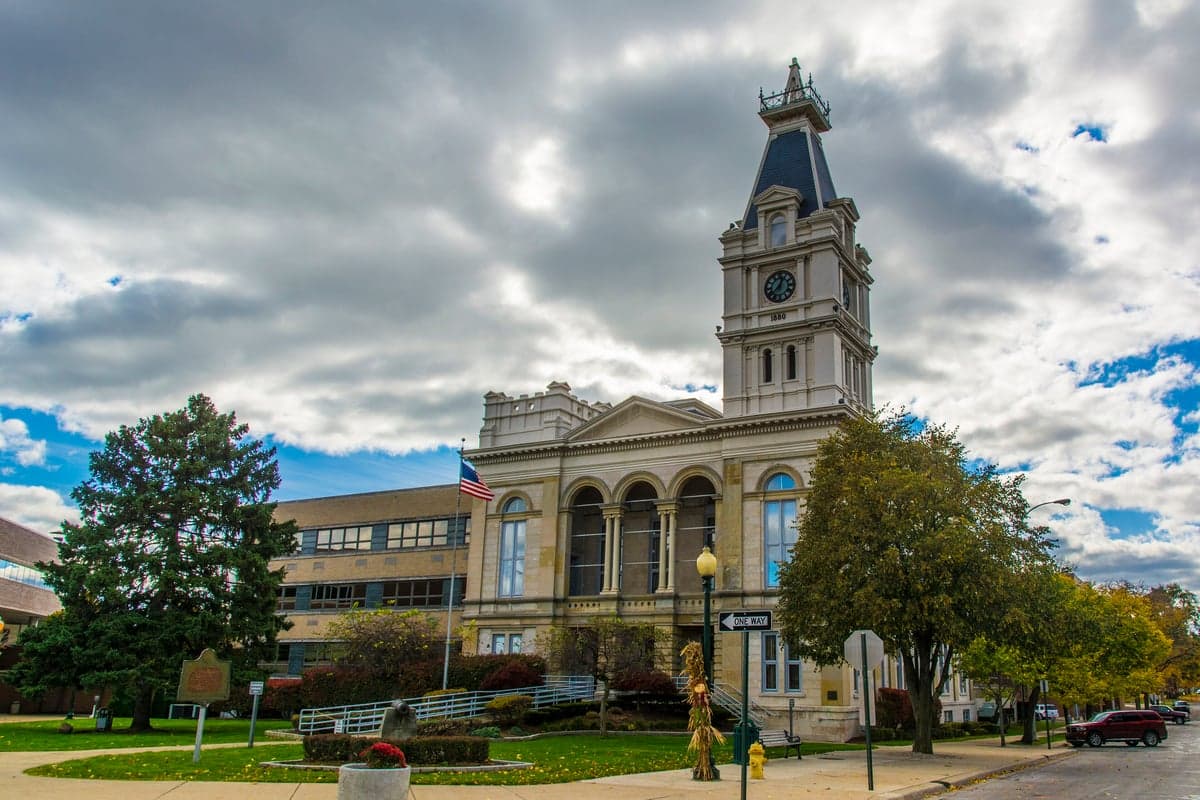
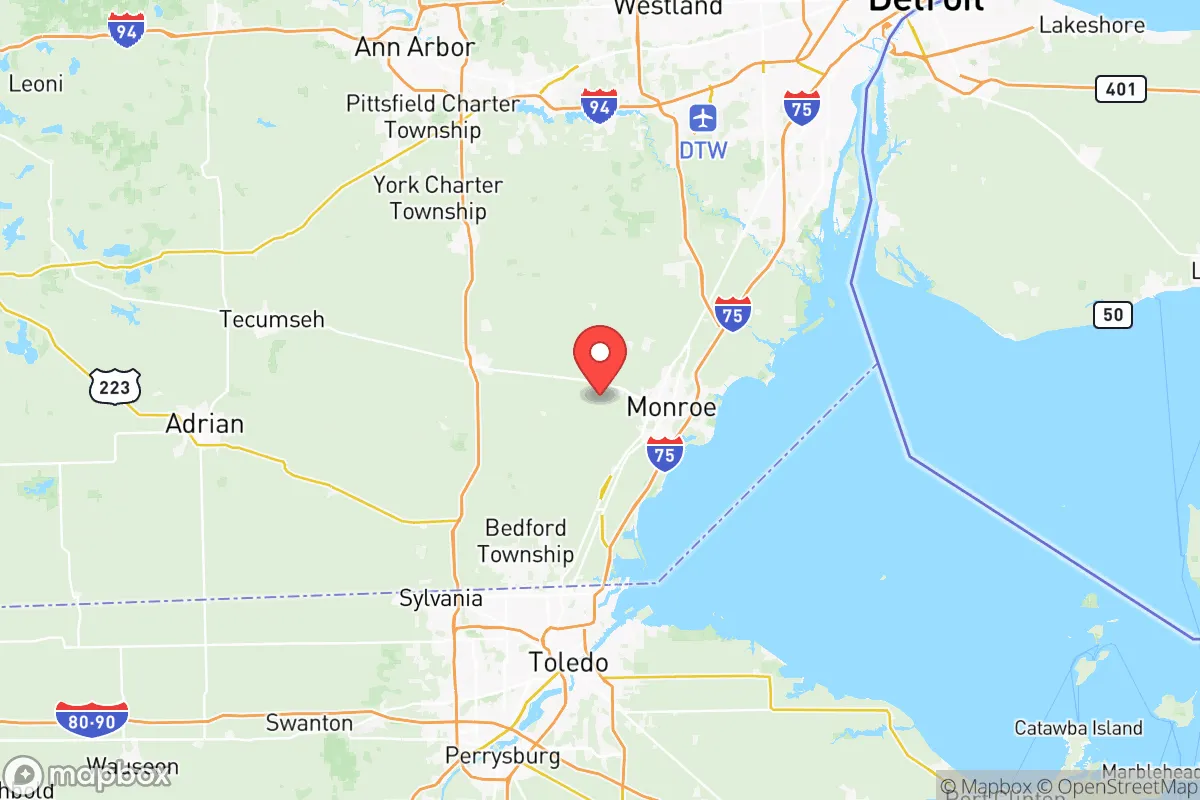
Monroe County, Michigan, offers a notably high degree of personal sovereignty for individuals and families who prioritize autonomy, self-reliance, and limited government interference. Located at the southeastern corner of the state along Lake Erie, the county blends a rural, agricultural character with suburban communities, creating a regulatory environment that is generally lighter than neighboring Wayne County or the Metro Detroit core. For those seeking to live with fewer restrictions on property use, self-defense, and personal lifestyle choices, Monroe County presents a compelling balance of accessibility and freedom, though the degree of autonomy varies significantly between its more developed townships and its unincorporated rural areas.
Tax burden and regulatory posture in Monroe County
Michigan’s state-level tax structure is moderate, but Monroe County benefits from a relatively low local tax burden compared to urban counterparts. The state’s flat income tax rate of 4.25% and a 6% sales tax are standard, but property taxes are the primary local concern. Monroe County’s average effective property tax rate hovers around 1.5% of assessed home value, which is slightly below the Michigan average of 1.6%. Townships like Bedford Township and Frenchtown Township have their own millage rates for services, but these are generally lower than those in nearby cities like Monroe city proper, which has a 1% city income tax on residents. The county’s regulatory posture is business-friendly, with no county-level zoning overlay for most agricultural and residential uses outside of incorporated cities. The Monroe County Planning Commission focuses on large-scale developments, leaving individual property decisions—like building a shed, keeping livestock, or operating a home business—largely to township-level ordinances. This decentralized approach means that Erie Township and Berlin Township have far fewer permitting requirements than the city of Monroe, where building codes and zoning are more strictly enforced. For a family or individual seeking to minimize tax and regulatory friction, choosing a rural township over an incorporated city is a clear strategic advantage.
Self-defense and gun law specifics in Monroe County
Michigan is a shall-issue state for concealed pistol licenses (CPL), and Monroe County reflects this permissive stance. The Monroe County Clerk’s office processes CPL applications efficiently, with typical turnaround times of 30-45 days. The county is home to several gun ranges and sporting goods stores, including the popular Monroe Gun & Archery Center, indicating a strong local firearms culture. Open carry is legal without a permit for anyone 18 or older who can legally possess a firearm, and concealed carry requires a CPL. Importantly, Michigan’s preemption law prevents local municipalities from enacting their own gun ordinances that are stricter than state law, meaning that Monroe city cannot ban firearms in parks or impose waiting periods beyond state requirements. This uniformity is a key advantage for residents who move between townships like La Salle Township and the city of Monroe—they face the same legal framework everywhere. Stand-your-ground laws apply in Michigan, allowing the use of deadly force without a duty to retreat in any place where a person has a legal right to be. For self-defense-minded individuals, Monroe County offers a consistent, legally protected environment for both home defense and personal carry, with no local restrictions that would complicate daily life.
Self-reliance and homesteading viability in Monroe County
Homesteading and off-grid living are viable in Monroe County, but feasibility depends heavily on location. Unincorporated townships like Summerfield Township and Whiteford Township have minimal zoning restrictions, allowing for large lot sizes—often 2 to 10 acres—where residents can keep chickens, goats, and even small livestock without special permits. The county’s agricultural zoning in these areas permits accessory structures like barns, greenhouses, and workshops with only a basic building permit for structures over 200 square feet. Off-grid feasibility is moderate: while Michigan’s building code requires connection to a septic system (no composting toilets without a variance), rainwater collection is legal for non-potable uses, and solar panels are permitted without special county-level restrictions. However, townships like Bedford Township and Frenchtown Township have more stringent setback requirements and may require electrical grid connection for new homes. The city of Monroe itself is not homestead-friendly, with lot sizes as small as 0.1 acres and strict prohibitions on livestock. For those serious about self-reliance, the rural townships of Dundee and Erie offer the best combination of affordable land (prices around $5,000–$10,000 per acre), loose zoning, and proximity to farm supply stores in Monroe city. The county’s soil quality is excellent for gardening, and the growing season (roughly April to October) supports substantial food production.
Personal liberties in Monroe County: parental rights, medical autonomy, speech, and property
Monroe County’s culture and legal environment strongly support parental rights in education and healthcare. The county is home to several charter schools and homeschooling networks, with the Monroe County Homeschool Group providing co-ops and legal support. Michigan law allows parents to opt their children out of sex education and certain health screenings without penalty, and the county’s school districts—including Monroe Public Schools and Bedford Public Schools—generally respect these rights. Medical autonomy is less protected at the local level, as Michigan’s vaccine mandates for school attendance apply statewide, but Monroe County has no additional local mandates. The county’s political climate is moderately conservative, with a majority of township boards and county commissioners holding pro-liberty stances on issues like property rights and land use. Free speech is robustly protected, with no local ordinances restricting political signage or public assembly beyond state traffic safety rules. Property rights are a strong point: the county’s lack of a countywide zoning ordinance means that individual property owners in unincorporated areas have wide latitude to use their land as they see fit, whether for a home-based business, a shooting range, or a private garden. The Monroe County Right to Farm ordinance further protects agricultural activities from nuisance lawsuits, a significant advantage for homesteaders. For families and individuals who value these liberties, Monroe County’s decentralized governance structure provides a buffer against overreach that is rare in more urbanized parts of Michigan.
Overall, Monroe County ranks as one of the more sovereignty-friendly areas in southeastern Michigan, particularly for those who choose its rural townships over its incorporated cities. The combination of low property taxes, uniform gun laws, minimal zoning in unincorporated areas, and strong protections for parental rights and property use creates an environment where personal autonomy is the default, not the exception. While it does not match the extreme libertarian ethos of some Upper Peninsula counties or parts of northern Michigan, Monroe County offers a practical, accessible option for families and individuals who want to live independently without sacrificing proximity to jobs, healthcare, and amenities in Toledo or Detroit. For those prioritizing personal freedom, the strategic choice is clear: target townships like Summerfield, Whiteford, or Erie, and avoid the city of Monroe itself.

* Values derived from national, state, county, city and local statistics and may differ in a specific area. Last updated: 2026-10-09T23:27:43.000Z
Narrative content on this page is AI-generated and may contain mistakes. Verify any details that matter before acting on them.
ReloMaps may earn a commission from affiliate links at no extra cost to you.

