Photo: Wikipedia
Strategic Assessment of Middletown, DE
Multiple tactical vulnerabilities. Population density, target proximity, or disaster risk are likely compounding. A retreat property and exit planning is required.
What does the Strategic Assessment tell us?
Our Strategic Assessment grades tactical survivability of an area. Major population centers, military targets, fallout zones, natural disasters, and border exposure all drive risk — lower exposure means a more defensible position in a crisis.
This is heavily inspired by Joel Skousen's Strategic Relocation book. Highly recommended you checkout the book ($)What does this tell us?
Our Strategic Assessment grades tactical survivability of an area. Major population centers, military targets, fallout zones, natural disasters, and border exposure all drive risk — lower exposure means a more defensible position in a crisis.
This is heavily inspired by Joel Skousen's Strategic Relocation book. Highly recommended you checkout the book ($)Strategic Pillars

Key Distances
Regional Safe Places
Below is our recommended "safe zones" in Delaware and the surrounding area based on our strategic heuristics. For most people, it's unrealistic to live in a “safe zone” full-time due to work, family or other personal reasons. They tend to be more rural. However, many of these areas are perfect for second homes and retreat properties that double as a vacation home or even a short-term rental.
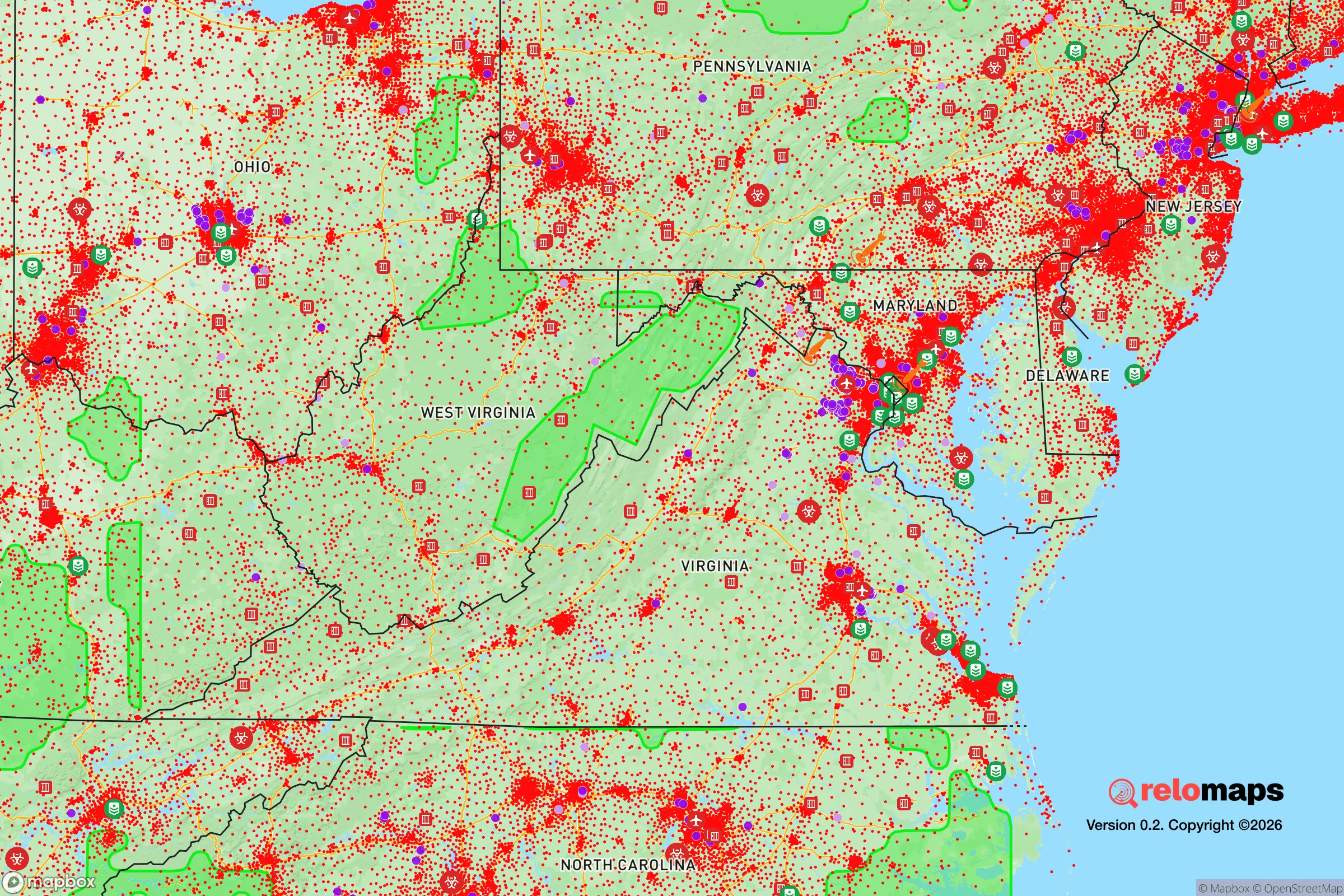
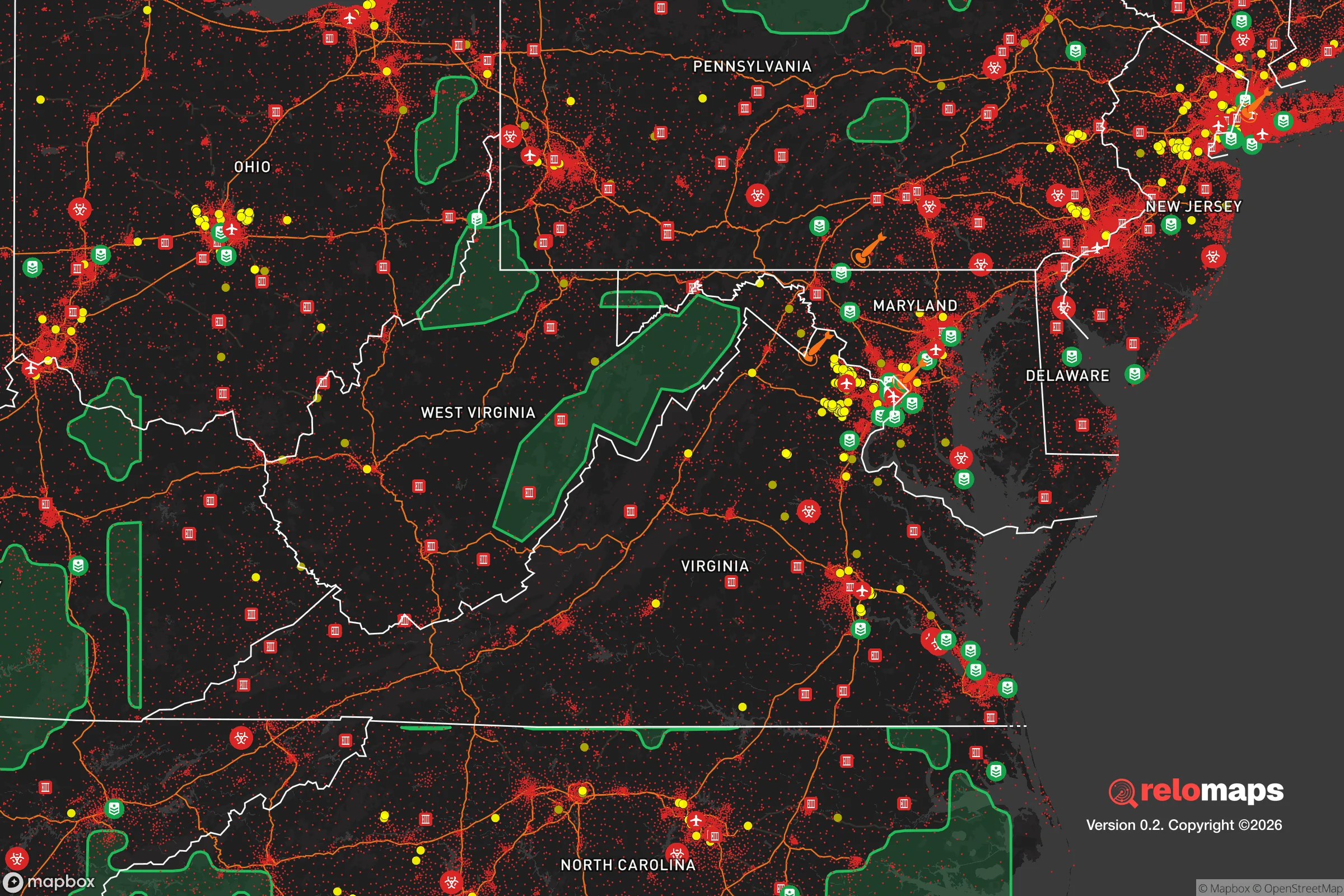


Important Note: For informational purposes only. This does not mean nothing bad ever happens in the green zones. Please use common sense. This is based on public data and modeled with AI. We tried to take a conservative approach but mistakes happen. We update this regularly as new information becomes available.
Solar Generator Recommendations
Backup power matters more here than in safer locations. We've picked three solar generators across budgets and capacity tiers — start with the budget unit if you only need a few essentials, or step up if you want to run a fridge and HVAC for days at a time.

Jackery Portable Power Station Explorer 300
Budget OptionPower on the Go: Weighing only 11 lbs, it's convenient to set up and store with book-sized foldable solar panels

BLUETTI Portable Power Station AC180
Designed for both indoor and outdoor scenarios, AC180 is highly capable as it has a robost capacity and continuous output power.

EF ECOFLOW DELTA Pro Ultra Power Station
Upgraded PickEcoFlow DELTA Pro Ultra is a whole-home energy system designed to grow with your family. Integrated with the Smart Home Panel 2, it scales to meet your evolving energy needs — keeping your home powered, intelligent, and secure through every stage of life.
We earn a commission, at no additional cost to you.
Strategic Assessment Analysis
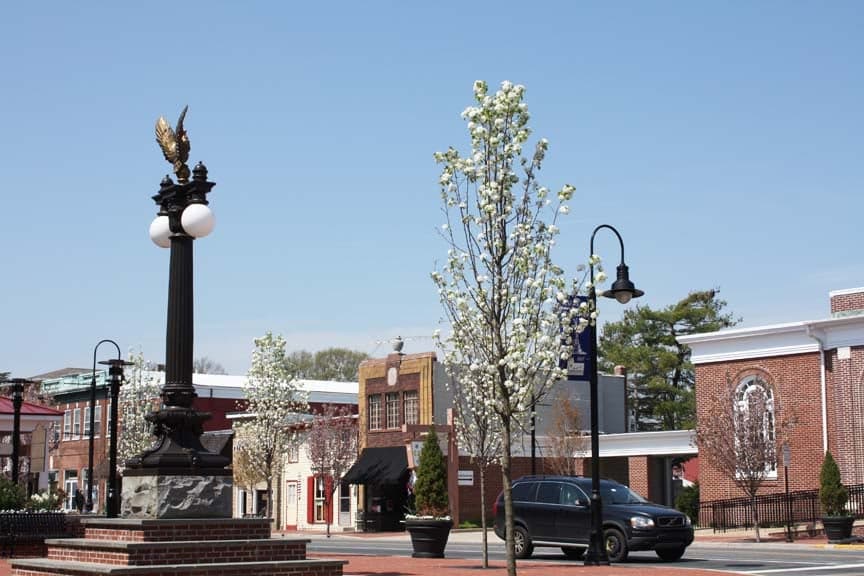
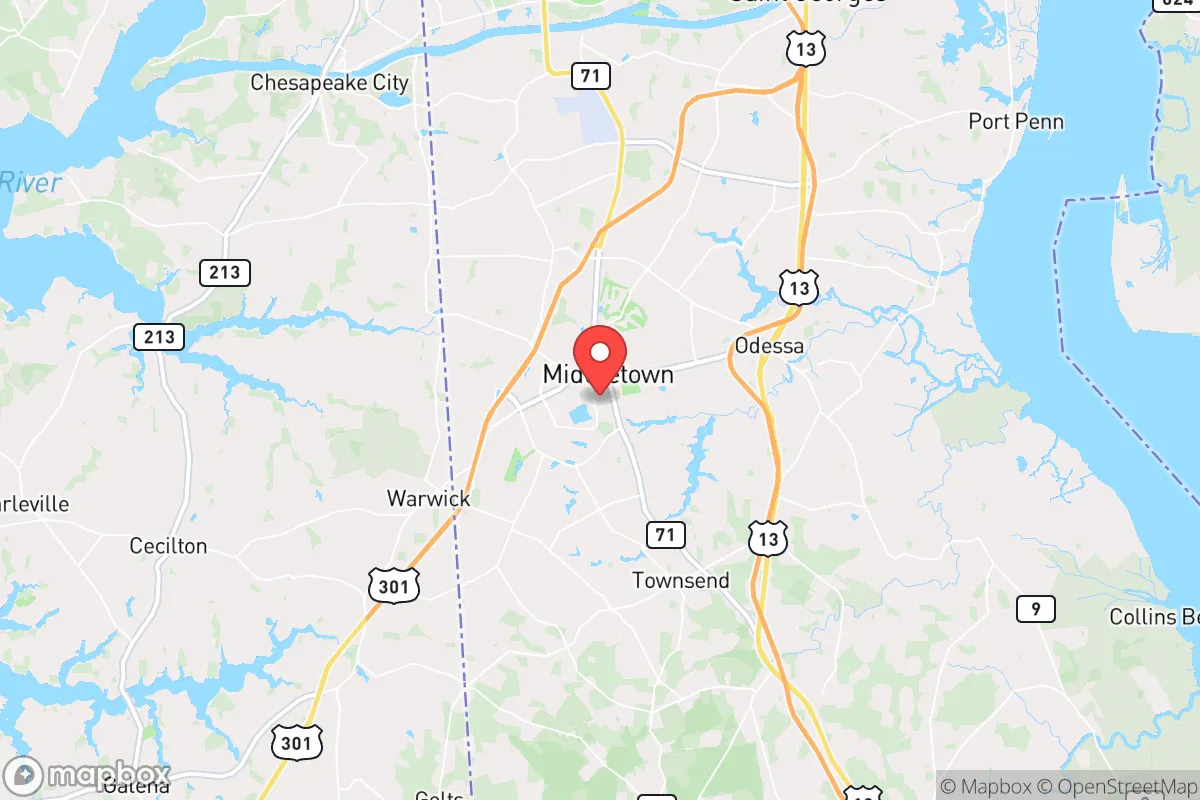
Middletown, Delaware, occupies a strategic niche that balances proximity to critical infrastructure with enough separation from the highest-risk urban cores to make it a viable relocation option for those prioritizing resilience. Positioned roughly halfway between the Wilmington-Philadelphia corridor and the Chesapeake Bay, this town of roughly 25,000 sits in New Castle County’s southern agricultural belt, where development pressure meets open farmland. For a prepper or survivalist mindset, the key advantage here is access to multiple escape vectors—Route 1, Route 301, and the Delaware Memorial Bridge all lie within 20 minutes, offering routes north, south, and west. The town’s location also places it within 30 miles of the C&D Canal, a strategic maritime chokepoint, and within 45 miles of Dover Air Force Base, a major logistics hub. However, that same proximity to critical nodes means Middletown is not a remote retreat; it’s a buffer-zone settlement that requires careful planning for any major disruption.
Geographic position and natural advantages for long-term security
Middletown’s geography offers a mix of defensive and resource-based benefits that are rare in the Mid-Atlantic. The town sits on the Delmarva Peninsula, a landmass bounded by the Delaware River and Bay to the east and the Chesapeake Bay to the west, creating a natural funnel for movement. Only three major road bridges connect the peninsula to the mainland—the Delaware Memorial Bridge (I-295), the Chesapeake Bay Bridge (US 50/301), and the Lewes-Cape May Ferry—meaning any large-scale evacuation or supply movement can be monitored or controlled. The surrounding terrain is flat to gently rolling, with extensive farmland, woodlots, and wetlands that provide both cover and agricultural potential. The area’s water table is high, and the Appoquinimink River runs through the town, offering a surface water source that, with proper filtration, could supplement drilled wells. The climate is temperate, with a growing season of roughly 180 days, allowing for subsistence gardening of staples like corn, beans, and squash. For a relocator, the natural advantages are real but require active development—this is not a wilderness survival zone but a managed agricultural landscape that rewards preparation.
Risks, exposures, and proximity to fallout-relevant landmarks
The same geography that provides strategic depth also creates vulnerabilities. Middletown lies within 25 miles of the Salem-Hope Creek nuclear generating station in New Jersey, a twin-reactor facility that sits on the Delaware River. While the plant has a solid safety record, any major incident—whether from accident, sabotage, or natural disaster—would place Middletown in the potential plume zone, especially under prevailing westerly winds. The town is also within 50 miles of the Philadelphia Naval Shipyard and the Port of Wilmington, both of which are high-value targets in any conflict scenario involving maritime disruption or infrastructure attack. The I-95 corridor, running 20 miles north, is a perennial chokepoint for logistics and a likely flashpoint for civil unrest or mass casualty events tied to supply chain failures. On the natural disaster front, the Delmarva Peninsula is vulnerable to hurricane storm surge; Middletown sits at roughly 50 feet elevation, which mitigates direct flooding but does not eliminate the risk of prolonged power outages, road blockages, and supply interruptions. The town’s growth has also outpaced its emergency services—the local police force has fewer than 40 sworn officers for a population that has doubled since 2010, meaning any large-scale event would require state police and National Guard support that could be delayed.
Practical resilience for a relocator: food, water, energy, and defensibility
For a single individual or family looking to establish a resilient foothold, Middletown offers a mixed bag of practical advantages and gaps. Food security is the strongest asset: the surrounding area is home to dozens of working farms, including grain operations, poultry houses, and vegetable producers. The Middletown Farmers Market operates seasonally, and local CSAs (community-supported agriculture) like the one at Fifer Orchards provide direct-to-consumer produce. For long-term storage, the town has multiple big-box grocery stores (Acme, Walmart, Giant) that could be scavenged in a crisis, but a prepper should plan for a 90-day supply given the risk of supply chain disruption. Water is a moderate concern: the municipal supply comes from the Appoquinimink aquifer, which is generally reliable but vulnerable to contamination from agricultural runoff or industrial spills upstream. A drilled well on private property is the gold standard here, with depths typically ranging from 100 to 300 feet. Energy resilience is weak by default—the grid is above-ground and prone to storm outages—but solar adoption is growing, and several local installers offer battery backup systems. Defensibility is the trickiest factor: Middletown’s suburban layout, with cul-de-sacs and interconnected neighborhoods, makes it hard to secure a single property without drawing attention. The ideal setup is a property on the town’s rural fringe, where acreage, tree lines, and setback distances provide natural buffers. The town’s zoning allows for accessory structures and small-scale agriculture on parcels over two acres, which is a practical minimum for a serious homestead.
The overall strategic picture for Middletown is one of calculated compromise. It is not a remote bug-out location—you will not disappear into the woods here. But it is a place where a prepared individual or family can build a resilient lifestyle while staying connected to the infrastructure and economic opportunities of the Mid-Atlantic. The key is to treat Middletown as a forward operating base, not a final redoubt. Stockpile supplies, develop local networks with like-minded neighbors, and maintain a vehicle capable of moving west or south if the situation deteriorates. The town’s growth is a double-edged sword: it brings amenities and jobs, but also attracts the very population density and dependency that create risk in a crisis. For the conservative-leaning prepper who values community, agricultural potential, and strategic positioning without wanting to live off-grid, Middletown is a viable option—provided you go in with eyes open, a plan in hand, and a willingness to adapt as the world shifts.

* Values derived from national, state, county, city and local statistics and may differ in a specific area. Last updated: 2026-04-29T22:24:52.000Z
Narrative content on this page is AI-generated and may contain mistakes. Verify any details that matter before acting on them.
ReloMaps may earn a commission from affiliate links at no extra cost to you.

