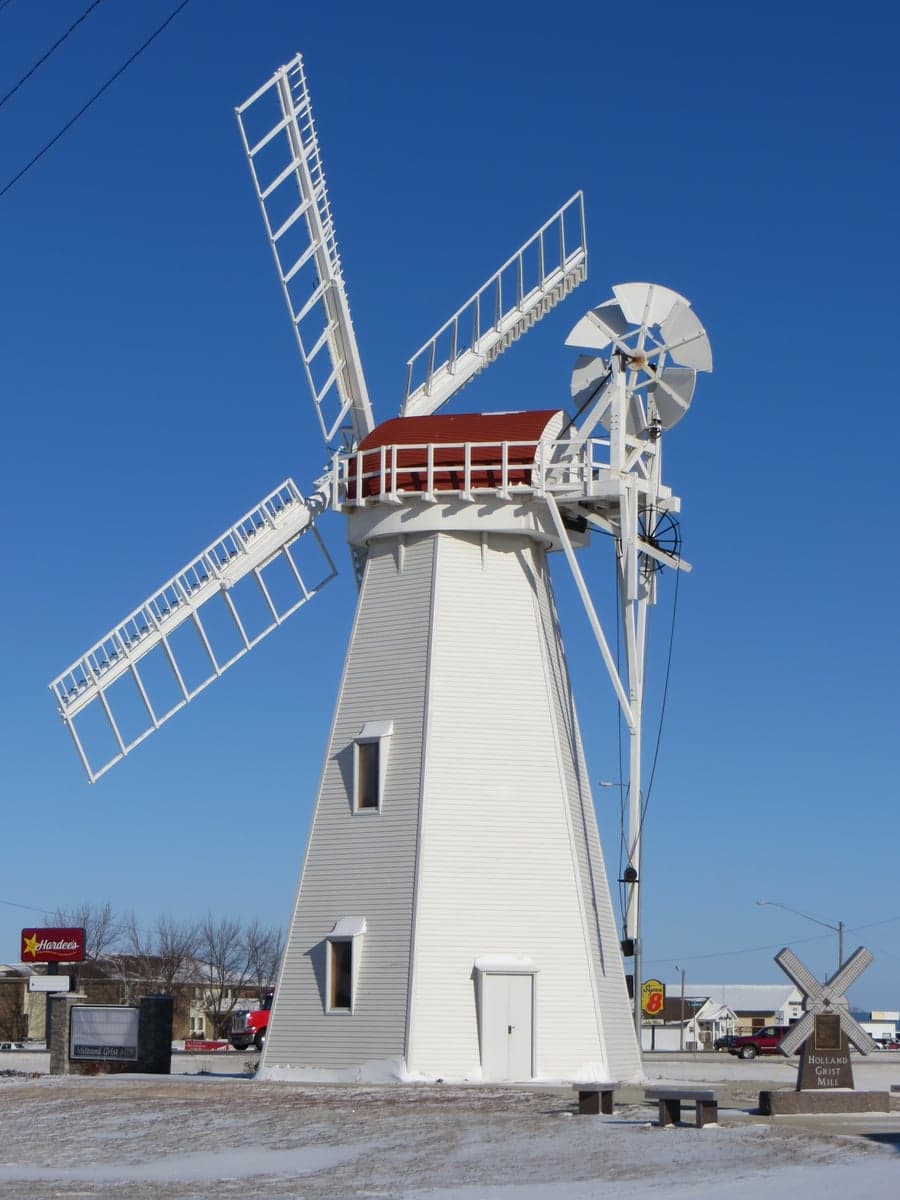
Photo: Wikipedia
Political ClimatePolitical Climate in Milbank, SD
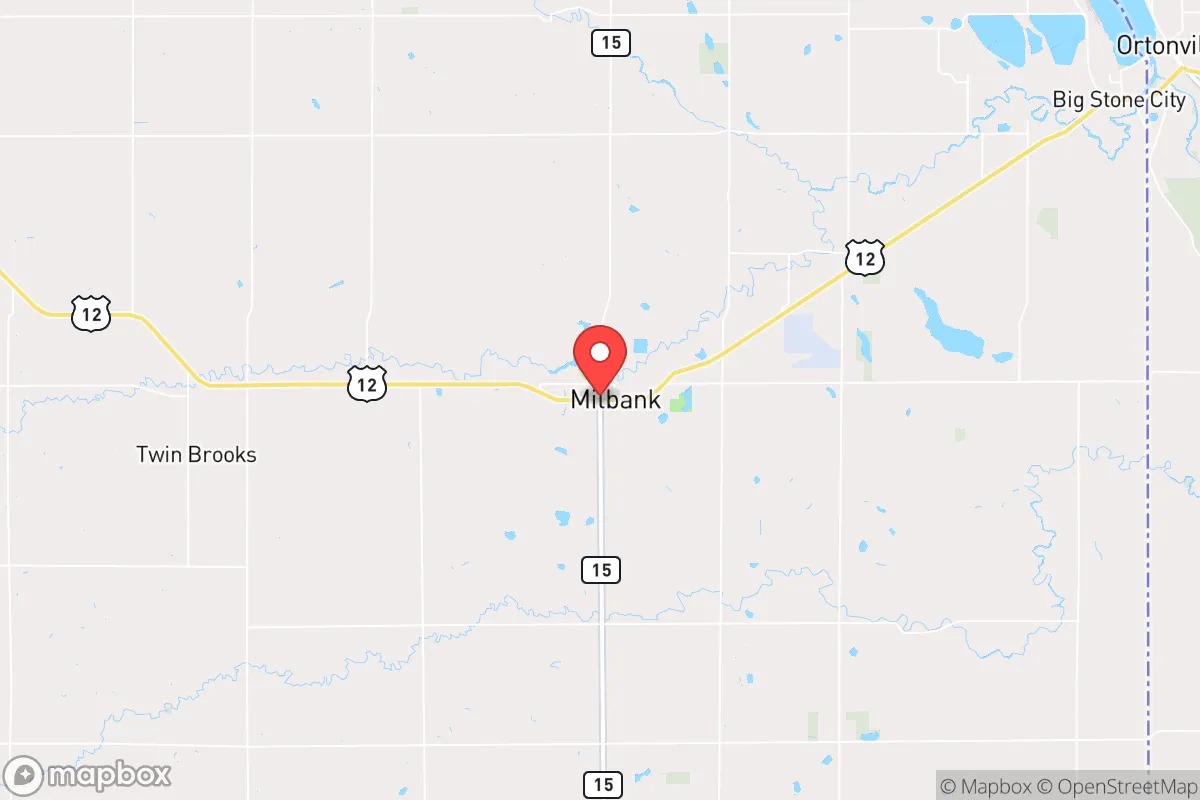
District shown is the primary district for this city’s centroid. Cities may span multiple districts.
Inherited from parent state — no local data available.
Local Political AnalysisPolitical Analysis of Milbank, SD
Milbank, South Dakota, is about as reliably conservative as small-town America gets, and that’s been the case for as long as anyone around here can remember. With a Cook PVI of R+15, the area votes Republican by a margin that’s 15 points more Republican than the national average—and in practice, it feels even redder than that number suggests. The county (Grant County) hasn’t gone for a Democratic presidential candidate since 1964, and in 2024, Trump carried it by a comfortable 30-point spread. The political trajectory here isn’t shifting left; if anything, the community has only grown more skeptical of federal overreach and progressive social experiments as those trends accelerate in places like Sioux Falls or Brookings.
How it compares
Compared to the rest of South Dakota, Milbank sits in a conservative sweet spot. The state as a whole is reliably red, but there are pockets—like Minnehaha County (Sioux Falls) or Brookings County (home to South Dakota State University)—that have drifted toward the center or even left in recent cycles. Milbank, by contrast, has held steady. Drive 30 miles south to Watertown, and you’ll find a similar conservative vibe, but with a bit more of a Chamber of Commerce, “let’s not rock the boat” energy. Head 45 miles west to Sisseton, on the Lake Traverse Reservation, and the political landscape shifts dramatically—tribal sovereignty issues and Democratic leanings are the norm there. Milbank is the kind of place where people still wave the Gadsden flag without irony, and where the local county commission meetings draw a crowd if there’s even a whisper of a zoning ordinance that might infringe on property rights.
What this means for residents
For the people who live here, the political climate translates into a daily life that’s largely free from the kind of government overreach you see in blue states or even in some of South Dakota’s larger towns. There’s no talk of “sanctuary city” policies, no local push for mask mandates or vaccine passports, and the school board isn’t debating critical race theory or gender ideology in the classroom—because parents here would shut that down fast. Property taxes are low, the Second Amendment is respected without asterisks, and the biggest political fights tend to be about gravel road maintenance or whether the county should fund a new ambulance. That said, there’s a growing unease among longtime residents about the direction of the state as a whole. The influx of remote workers from California and the West Coast—drawn by low taxes and wide-open spaces—has started to nudge local politics in a more moderate direction in some corners. So far, Milbank has absorbed that without much change, but folks are watching closely. The concern is that as the state’s economy diversifies and tourism dollars from places like the Glacial Lakes region grow, the pressure to adopt more progressive policies—especially around land use, environmental regulations, and school curriculum—will increase.
Culturally, Milbank remains a place where church potlucks, high school football games, and family farms define the rhythm of life. The biggest policy distinction you’ll notice compared to a place like Sioux Falls is the near-total absence of any local government interference in personal choices—whether that’s homeschooling, carrying a firearm, or running a small business out of your garage. The county commission and city council are stacked with folks who genuinely believe government should stay out of the way, and they mean it. That’s not to say there aren’t debates—there are plenty, especially around ethanol subsidies and agricultural policy—but the underlying assumption is always that individual liberty comes first. If you’re looking for a place where you can live your life without a bureaucrat looking over your shoulder, Milbank is still that place. But keep an eye on the next decade: if the progressive wave that’s washing over the coasts ever breaks through the Plains, this town will be one of the last holdouts.

State Political ClimatePolitical Climate in South Dakota
State Political AnalysisPolitical Environment in the State
South Dakota is one of the most reliably conservative states in the nation, with a Republican trifecta that has held the governorship, both legislative chambers, and both U.S. Senate seats for over a decade. The state voted +30 points for Donald Trump in 2020 and +26 points in 2024, a margin that has actually widened slightly from the 2016 cycle. The dominant coalition is a mix of rural agricultural voters, small-town business owners, and a growing number of conservative transplants from blue states, particularly in the Black Hills region. Over the past 20 years, the state has shifted from a more libertarian-leaning conservatism—where low taxes and minimal government were the main draws—to a more culturally assertive conservatism, driven by fights over COVID mandates, parental rights in education, and Second Amendment protections.
Urban vs. rural divide
The political map is starkly divided between a few small urban centers and the vast rural expanse. Sioux Falls, the largest city (pop. ~210,000), is the state's only blue-leaning metro area, though it still votes Republican by about 10-12 points in most statewide races. The city's growth has been fueled by financial services, healthcare, and a wave of out-of-state newcomers, many from Minnesota and California, which has nudged it slightly leftward. Rapid City, the second-largest city, is a conservative stronghold, voting +25 points Republican in 2024, driven by a strong military presence (Ellsworth Air Force Base) and a tourism-based economy. The real engine of the state's conservatism is the rural vote: counties like Harding, Perkins, and Jones routinely deliver 85-90% Republican margins. The Black Hills region, including towns like Spearfish and Custer, has seen an influx of remote workers and retirees from Colorado and California, but so far these newcomers have mostly reinforced the conservative lean rather than flipping it. The one notable exception is Brookings, home to South Dakota State University, which leans slightly more moderate but still votes Republican by about 8-10 points.
Policy environment
South Dakota's policy environment is a model of small-government conservatism. There is no state income tax, no corporate income tax, and no personal property tax on vehicles or business equipment. The sales tax is 4.5%, with local options pushing it to 6.5% in some cities. Property taxes are moderate, averaging about 1.1% of assessed value, and there is a homestead exemption for seniors. The regulatory posture is aggressively pro-business: the state has a right-to-work law, no occupational licensing for dozens of trades, and a streamlined permitting process for new construction. Education policy is a flashpoint: Governor Kristi Noem signed the "Parents' Bill of Rights" in 2022, which requires schools to notify parents of any curriculum changes related to sexuality or gender identity, and allows parents to opt their children out of any instruction they find objectionable. The state also passed a law banning transgender athletes from female sports in 2021, and in 2023 banned gender-affirming care for minors. Healthcare is a mixed bag: the state did not expand Medicaid until 2023, and then only after a voter-initiated referendum forced the issue. Abortion is banned at all stages of pregnancy, with exceptions only for the life of the mother. Election laws are among the most secure in the nation: voter ID is required, same-day registration is not allowed, and the state uses paper ballots. There is no mail-in voting by default, though absentee voting is available with an excuse.
Trajectory & freedom
South Dakota is becoming more free in several key areas, but there are warning signs. On the positive side, the state passed constitutional carry (permitless concealed carry) in 2019, and in 2023 expanded it to allow firearms in vehicles on school grounds. The state also passed a law in 2022 prohibiting any government entity from enforcing federal gun laws that don't exist in state statute—a direct nullification measure. Property rights were strengthened in 2020 with a law requiring compensation for any regulation that reduces property value by more than 30%. On the concerning side, the state's COVID response was a mixed bag: Governor Noem famously refused to impose a lockdown, but the state did accept federal unemployment benefits, which some conservatives saw as federal overreach. More recently, the state has expanded its sales tax base to include some services, which libertarians view as a step toward a broader tax burden. The biggest freedom concern is the growing influence of federal money: South Dakota now receives about 40% of its state budget from federal grants, which creates a dependency that could be used to impose federal mandates in the future. The state's medical marijuana program, approved by voters in 2020, has been implemented slowly and restrictively, frustrating some libertarians.
Civil unrest & political movements
South Dakota has seen remarkably little civil unrest compared to other states. The most visible flashpoint was the 2020-2021 protests at Mount Rushmore, where Governor Noem hosted a July 3rd fireworks display despite federal COVID guidance, drawing both supporters and a small group of Native American activists protesting treaty violations. The Pine Ridge Indian Reservation in the southwestern part of the state has been a site of periodic protests over police brutality and missing Indigenous women, but these have not spilled into the broader state. The South Dakota Freedom Caucus, formed in 2022, has been the most active political movement on the right, pushing for further tax cuts, school choice, and restrictions on federal overreach. On the left, the South Dakota Democratic Party is nearly moribund, holding no statewide offices and only about 15% of legislative seats. There have been no significant sanctuary city movements, and the state has actively resisted any form of "defund the police" rhetoric. The most notable political movement in recent years has been the Noem vs. Legislature power struggle, where the governor has clashed with her own party over spending priorities and the use of executive orders—a sign that the state's conservative coalition is not monolithic.
Projection
Over the next 5-10 years, South Dakota will likely become more conservative, but in a more culturally combative way. The in-migration of conservatives from blue states—particularly to the Black Hills and Sioux Falls suburbs—will reinforce the Republican majority, but these newcomers tend to be more ideologically rigid than native South Dakotans, who have a live-and-let-live libertarian streak. Expect more fights over school curriculum, library books, and transgender policies. The state's demographic profile is aging and white (about 82%), but the fastest-growing demographic is Hispanic (now about 5% of the population), driven by meatpacking jobs in towns like Sioux Falls and Huron. This could create a new political dynamic, as Hispanic voters in South Dakota tend to be more conservative than their national counterparts, but are also more likely to support expanded social services. The biggest wildcard is the state's reliance on federal funding: if the federal government ever imposes conditions on that money—such as requiring states to adopt certain LGBTQ+ policies or gun control—South Dakota will face a choice between its principles and its budget. For now, the state is on a trajectory of increasing cultural conservatism, with a growing emphasis on parental rights, school choice, and Second Amendment protections.
For a conservative moving to South Dakota, the bottom line is this: you will find a state that largely shares your values on taxes, guns, education, and the role of government. The cost of living is low, the schools are decent (especially in the smaller towns), and the outdoor lifestyle is unmatched. But don't expect a libertarian paradise—the state has its own bureaucracy, its own power struggles, and a growing dependency on federal money that could become a problem down the road. The best places to land are the smaller towns like Spearfish or Madison, where the community is tight-knit and the politics are reliably conservative. Avoid the core of Sioux Falls if you want to escape the creeping progressivism you're leaving behind. South Dakota is still one of the best bets in the country for a conservative lifestyle, but keep an eye on Pierre—the fight for the soul of the state is far from over.
* Values derived from national, state, county, city and local statistics and may differ in a specific area. Last updated: 2026-04-19T09:24:09.000Z
Narrative content on this page is AI-generated and may contain mistakes. Verify any details that matter before acting on them.
ReloMaps may earn a commission from affiliate links at no extra cost to you.

