
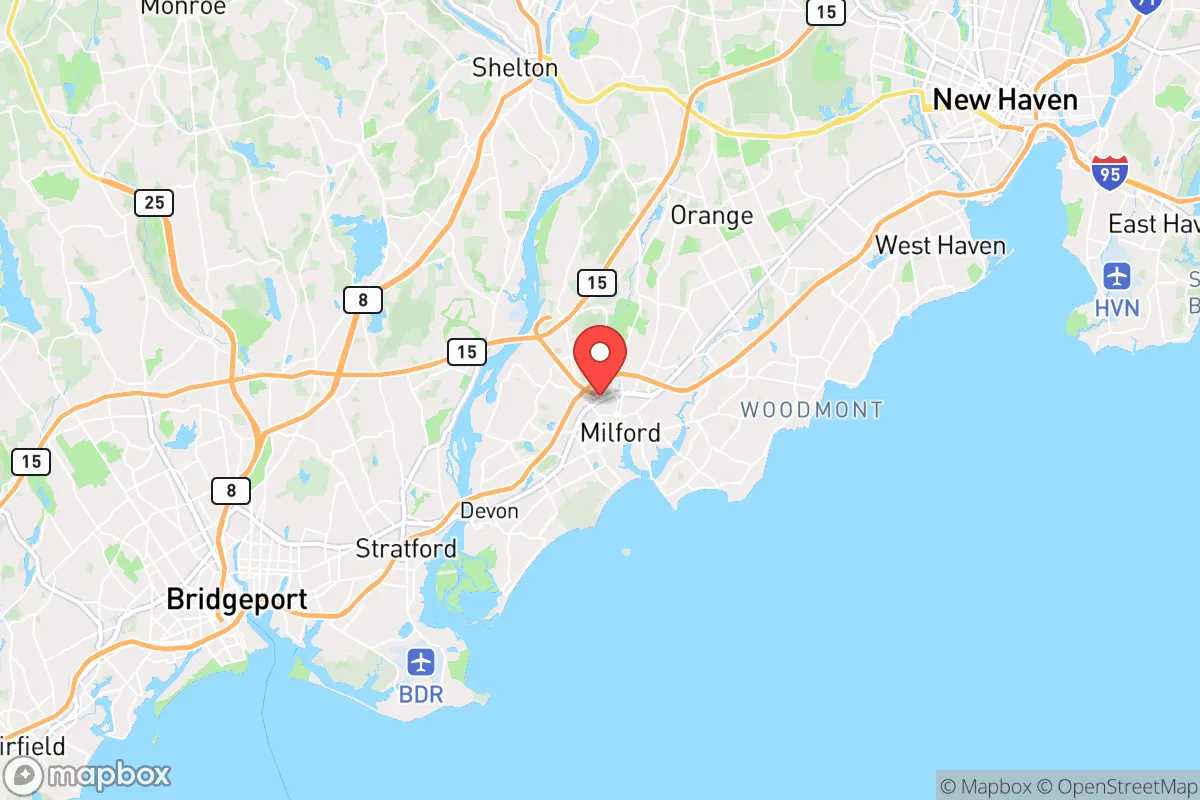
Photo: Wikipedia
Personal Sovereignty in Milford, CT
Viable for self-reliance. Generally workable, though some barriers may limit total independence.
What does Personal Sovereignty tell us?
Personal Sovereignty measures your capacity for self-reliance and independence with minimal government friction. Higher scores mean fewer barriers between you and the way you want to live... but it assumes you have the space you need and good neighbors.
What does this tell us?
Personal Sovereignty measures your capacity for self-reliance and independence with minimal government friction. Higher scores mean fewer barriers between you and the way you want to live... but it assumes you have the space you need and good neighbors.
State Policy
Energy independence: Importer (5% of energy produced in-state)
Personal Liberty
Homesteading

Personal Liberty Analysis
Milford, Connecticut, presents a complex and often contradictory environment for personal sovereignty, one that demands a clear-eyed, strategic assessment from anyone prioritizing autonomy, self-reliance, and minimal government overreach. While the city offers a picturesque coastal setting and a strong sense of local community, it operates entirely under the thumb of Connecticut state law, which consistently ranks among the most restrictive in the nation for individual liberties. For the survivalist or prepper, the key takeaway is that Milford provides a decent foundation for local community resilience, but the state-level regulatory and tax apparatus is a heavy, ever-present anchor on personal freedom. You are not sovereign here; you are a tenant of the state, and the lease terms are unfavorable.
Tax burden and regulatory posture: How Connecticut’s fiscal policies impact your autonomy
Your ability to build wealth and self-sufficiency is directly undermined by Connecticut’s aggressive tax posture, and Milford is no exception. The state has one of the highest combined state and local tax burdens in the country, driven by a progressive income tax that can hit 6.99% on higher earners, a state sales tax of 6.35% that applies to most goods, and some of the highest property taxes in the nation. Milford’s mill rate, while not the worst in the state, still translates to a significant annual bill that funds a sprawling state and local bureaucracy. This is not a low-tax haven; it is a high-cost, high-service state where the government takes a large cut of your labor before you can allocate it to your own preparedness goals—whether that’s land, supplies, or training. The regulatory posture is equally stifling. Connecticut is notorious for its permitting delays, environmental red tape, and business licensing requirements. Starting a home-based side hustle for barter or income, or even making significant modifications to your property, will involve navigating a thicket of municipal and state approvals. This is a state that presumes it knows best, and that presumption is codified into law at every turn.
Self-defense and gun law specifics: Navigating Connecticut’s restrictive firearms environment
For anyone serious about self-defense, Milford is a challenging location. Connecticut operates under a "may-issue" framework for pistol permits, meaning local authorities have significant discretion, though in practice, Milford is more reasonable than some urban jurisdictions. However, the state-level restrictions are severe. You must obtain a permit to purchase any handgun or long gun, a process that includes a background check, a safety course, and a waiting period. The state has an "assault weapon" ban that restricts many common semi-automatic rifles and features, a high-capacity magazine ban (10 rounds for long guns, 10 for handguns), and a "safe storage" law that can hold you criminally liable if an unauthorized person accesses your firearm. Open carry is effectively prohibited, and concealed carry, while possible with a permit, is heavily regulated. The legal landscape is hostile to the concept of armed self-defense as a fundamental right. For the prepper, this means your defensive capabilities are legally limited to what the state deems acceptable, which is far less than what many would consider prudent. You must be prepared for a complex, expensive, and time-consuming permitting process, and you must store your tools in a way that may compromise rapid access in a crisis. This is not a jurisdiction that trusts its citizens with firearms.
Self-reliance and homesteading viability: Lot sizes, zoning, and off-grid feasibility in Milford
Milford’s zoning and land use patterns are a mixed bag for the homesteader. The city is largely suburban, with most residential lots ranging from a quarter-acre to half an acre in older neighborhoods, though some larger parcels exist in the more rural northern sections near the Housatonic River. True off-grid living is effectively impossible within city limits. Building codes require connection to municipal water and sewer, and zoning restricts livestock to very limited allowances (typically chickens only, with strict coop regulations). Raising goats, pigs, or larger food animals is generally prohibited. Gardening is permitted, but the small lot sizes limit serious food production. The city’s environmental regulations, particularly concerning coastal areas and wetlands, further restrict land use. For the prepper seeking a self-sufficient homestead, Milford is a poor fit. You would be better served looking at more rural towns in Litchfield County or even neighboring New York State. However, for someone who wants a suburban base with good access to coastal resources (fishing, clamming) and a strong local farmers' market, it can work if you are willing to accept the limitations. The key is to view Milford as a base for community networking and resource acquisition, not as a place to build a fully independent compound.
Personal liberties: Parental rights, medical autonomy, speech, and property in Connecticut
On the broader front of personal liberties, Connecticut’s record is one of steady, incremental government expansion into areas traditionally reserved for family and individual choice. Parental rights are under consistent pressure, with the state’s education system and child welfare agencies holding significant authority that can override parental decisions on medical care, education, and even social transitioning. The state has broad "mandated reporter" laws that can draw government scrutiny into family life for minor issues. Medical autonomy is similarly constrained; Connecticut has some of the strictest vaccine mandates in the country for school attendance, and emergency health orders during the pandemic demonstrated a willingness to impose broad restrictions on personal movement and business operation. Free speech is legally protected, but the state’s political culture is overwhelmingly progressive, and social or professional consequences for expressing dissenting views—particularly on topics like public health, education, or firearms—can be real. Property rights are also limited; the state’s strong environmental regulations, historic preservation rules, and eminent domain powers mean you do not have unfettered control over your own land. In sum, the state’s default posture is that the collective good, as defined by the government, trumps individual liberty. This is a fundamental philosophical clash for anyone who values personal sovereignty.
In the final analysis, Milford offers a decent local community and a beautiful natural setting, but it is a poor choice for anyone prioritizing personal sovereignty. The state-level tax burden, regulatory hostility, restrictive gun laws, and erosion of parental and medical autonomy create an environment where the individual is constantly subordinate to the state. Compared to a state like New Hampshire or even parts of the Midwest, Connecticut is a net negative for the prepper or survivalist mindset. If you must be in this region for family or work, Milford is a better option than the urban core of New Haven or Bridgeport, but it is not a place where you can build true independence. Your best strategy here is to keep a low profile, comply with the onerous regulations, and focus on building a resilient local network while planning your eventual exit to a more liberty-friendly jurisdiction. The state’s grip is tight, and it is not loosening.

* Values derived from national, state, county, city and local statistics and may differ in a specific area. Last updated: 2026-09-21T19:36:33.000Z
Narrative content on this page is AI-generated and may contain mistakes. Verify any details that matter before acting on them.
ReloMaps may earn a commission from affiliate links at no extra cost to you.

