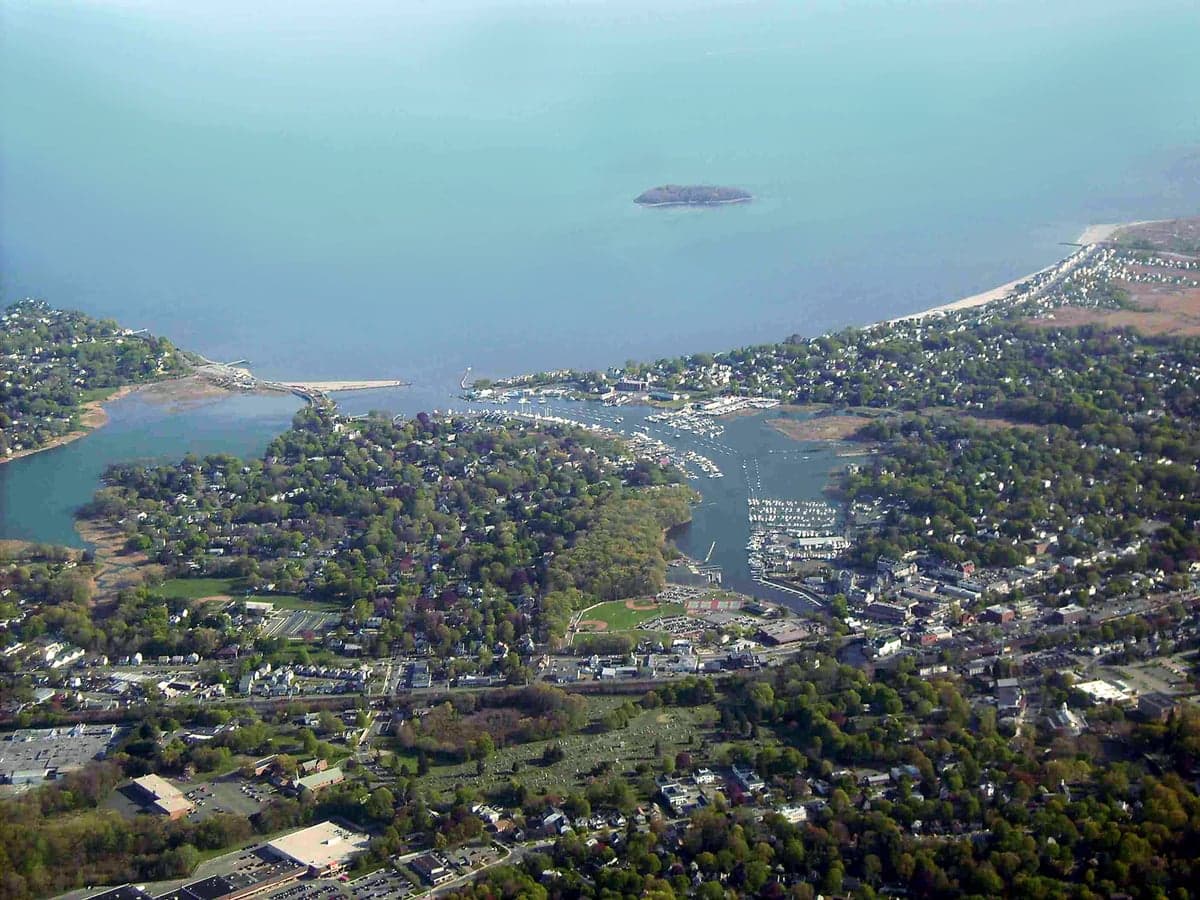
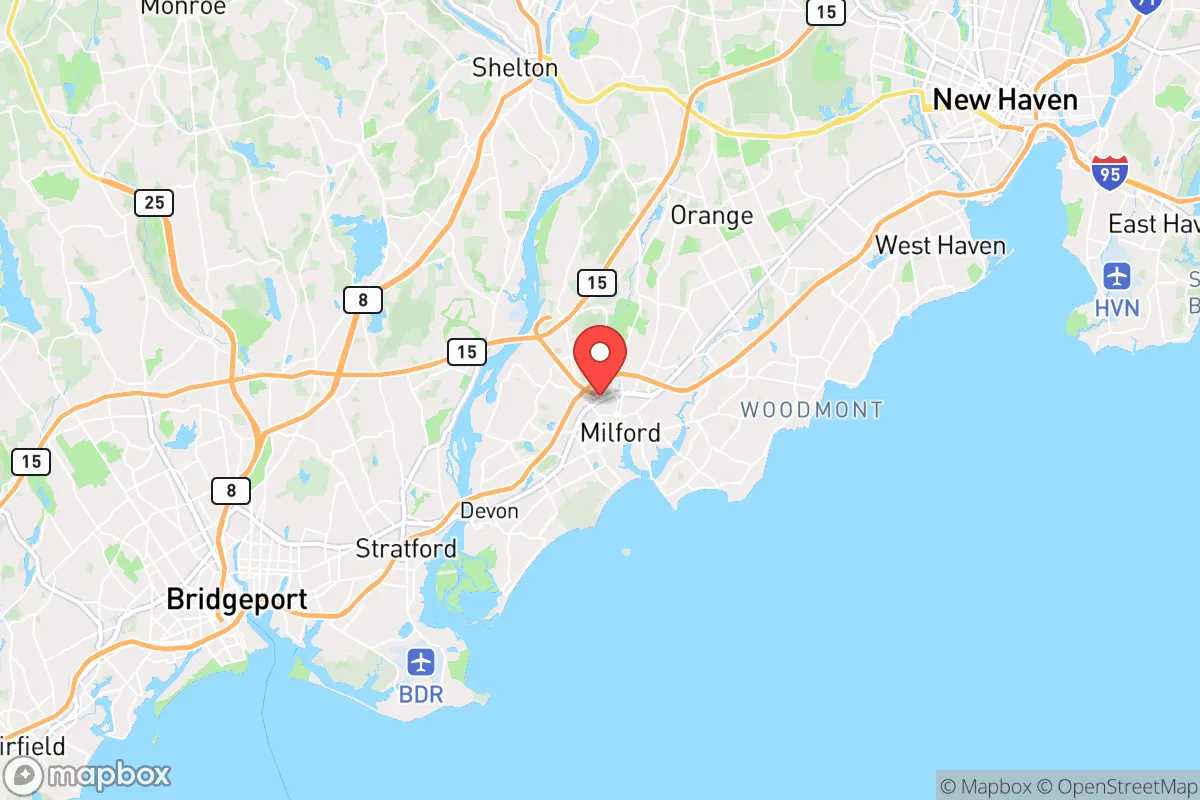
Photo: Wikipedia
Quality of Life in Milford, CT
Above-average quality of iife. The area offers a reasonable cost of living, decent mobility, and a mix of neighborhood amenities.
What does Quality of Life tell us?
Quality of Life blends cost of living, nearby amenities, socioeconomic signals, and neighborhood character. City-level scores represent the whole municipality; individual neighborhoods can differ.
What does this tell us?
Quality of Life blends cost of living, nearby amenities, socioeconomic signals, and neighborhood character. City-level scores represent the whole municipality; individual neighborhoods can differ.
Cost of Living
The Real Cost of Living in Milford, CT for 2026
| Tier | Individual | Family (4) |
|---|---|---|
| Survival | $23k | $43k |
| Comfortable | $67k | $98k |
| Luxury | $169k+ | $263k+ |
| Elite (Top 5%) | $232k+ | $359k+ |
112%
The Area Signal
A metric tracking the socioeconomic signals of the area.


Hobbies
Explore the areaGroceries
2 within 10 miles
Gas
0 within 10 miles
Hospital
3 within 20 miles
Airport
JFK — John F. Kennedy International
Post Office
USPS — Norwalk, CT
Critical Amenities
Quality-of-Life Analysis
Milford, Connecticut, is a well-established coastal suburb where a mix of longtime New England families, young professionals, and New York City commuters coexist. The city’s median household income of roughly $95,000 and its high homeownership rate (around 70%) reflect a stable, middle-to-upper-middle-class community that values proximity to the shoreline without the premium price tag of neighboring Fairfield County towns like Westport or Darien. The population of roughly 53,000 is notably diverse for the region, with a growing Hispanic and Asian demographic, and the city’s political leanings are moderately Democratic, with Milford voting +15 for Biden in 2020.
Cost of living and housing affordability compared to New Haven and Fairfield County
Milford’s housing market offers a rare affordability sweet spot in coastal Connecticut. The median home value of $377,400 is roughly 30% lower than the Fairfield County median of $540,000, yet the city provides similar access to Metro-North rail service and Long Island Sound beaches. Renters face a median rent of $1,820, which is about $200 less than the New Haven metro average and significantly cheaper than Stamford’s $2,400 median. Property taxes in Milford run approximately 2.1% of assessed value, a rate that is moderate for Connecticut but higher than in neighboring Orange or Woodbridge. The average commute of 25.9 minutes is notably short for the region—driving to New Haven takes under 20 minutes, while the train to Grand Central takes about 90 minutes. This combination of lower home prices and manageable commutes makes Milford a practical choice for households earning between $80,000 and $150,000 who want coastal living without the six-figure tax bills of Greenwich.
Schools, parks, and the daily rhythm of life in Milford
Daily life in Milford centers on its walkable downtown, three public beaches (Silver Sands, Gulf Beach, and Walnut Beach), and a robust public school system. The Milford Public Schools district enrolls about 5,500 students and consistently earns B+ ratings from Niche, with Jonathan Law High School and Joseph A. Foran High School both offering strong Advanced Placement programs. The city maintains over 20 parks, including the 40-acre Eisenhower Park with its sports complex and the 1.5-mile boardwalk along Silver Sands State Park. For errands and dining, the downtown area along River Street and Broad Street features independent restaurants like Stonebridge Restaurant and the Milford Oyster Festival each August, which draws over 50,000 visitors. The city’s retail corridor along Boston Post Road (U.S. 1) provides big-box shopping at the Connecticut Post Mall, while the Milford Green hosts a weekly farmers market from June through October. The overall pace is slower than New Haven but more active than inland suburbs, with many residents biking to the beach on summer evenings and families filling the playgrounds at Lisman Park on weekends.
Milford is best suited for households that want a genuine coastal New England lifestyle—beach access, a walkable downtown, and strong public schools—without the extreme costs of Fairfield County’s Gold Coast. It works well for dual-income couples commuting to New Haven or Bridgeport, families with school-age children who value outdoor recreation, and retirees seeking a quieter shoreline base with train access to New York. Those seeking a vibrant nightlife scene or a hyper-urban environment will find Milford too subdued, but for buyers and renters prioritizing affordable waterfront living and a 25-minute commute to major employment centers, it remains one of the most balanced options on Connecticut’s coast.

Crime in Milford, CT
Generally safer than 71% of comparable U.S. locations.
Violent CrimeViolent Crime Analysis
Property CrimeProperty Crime Analysis
Crime Analysis
Milford, Connecticut, presents a mixed safety profile for prospective residents. The city's violent crime rate of 107.9 incidents per 100,000 residents is notably lower than both the Connecticut state average and the national median, placing it among the safer communities in the region for serious personal offenses. However, the property crime rate of 1,139.8 per 100,000 is a more significant concern, running above the national average and reflecting challenges common to densely populated suburbs within commuting distance of major metropolitan areas like New Haven and New York City.
Crime in context
When compared to statewide data, Milford's violent crime rate is roughly half the Connecticut average, a positive indicator for families and individuals prioritizing personal safety. The property crime rate, however, tells a different story. It exceeds the national average by a meaningful margin, driven largely by larceny-theft and motor vehicle theft. This pattern is typical of smaller cities situated near large metro areas, where transient populations and easy highway access (I-95 runs directly through Milford) can increase opportunities for property-related offenses. The city's proximity to New Haven, a city with significantly higher crime rates, also contributes to spillover effects.
What residents experience
Day-to-day life in Milford for most residents involves a low risk of violent victimization, but property crime is a tangible reality. Residents commonly report package thefts from porches, unlocked vehicle break-ins, and occasional garage burglaries, particularly in neighborhoods near the downtown area or the Post Road corridor. The city's police department maintains a visible presence and has implemented community policing initiatives, but the underlying property crime rate persists. A key factor for readers to consider is the broader legal environment in Connecticut, which includes progressive criminal justice reforms and sentencing guidelines. In many parts of the state, including the judicial district covering Milford, liberal-leaning judges and district attorneys have prioritized alternatives to incarceration and reduced penalties for non-violent property offenses. While intended to reduce recidivism, this approach can result in repeat offenders cycling through the system quickly, directly increasing the number of active criminals on the street and undermining public confidence in the justice system's ability to protect victims and property.
Neighborhood-level variation is notable. The eastern side of Milford, closer to the New Haven border and the more industrial sections of the city, tends to report higher property crime incidents. Conversely, the western neighborhoods near the Stratford line and the more affluent coastal areas like Woodmont and Walnut Beach generally experience lower crime rates. Prospective renters and buyers should examine block-level crime maps and consider that even in "safe" suburbs, the combination of metro-area proximity and progressive justice policies can create a persistent property crime problem that requires proactive personal security measures.
* Values derived from national, state, county, city and local statistics and may differ in a specific area. Last updated: 2026-09-21T19:36:33.000Z
Narrative content on this page is AI-generated and may contain mistakes. Verify any details that matter before acting on them.
ReloMaps may earn a commission from affiliate links at no extra cost to you.

