 Popular
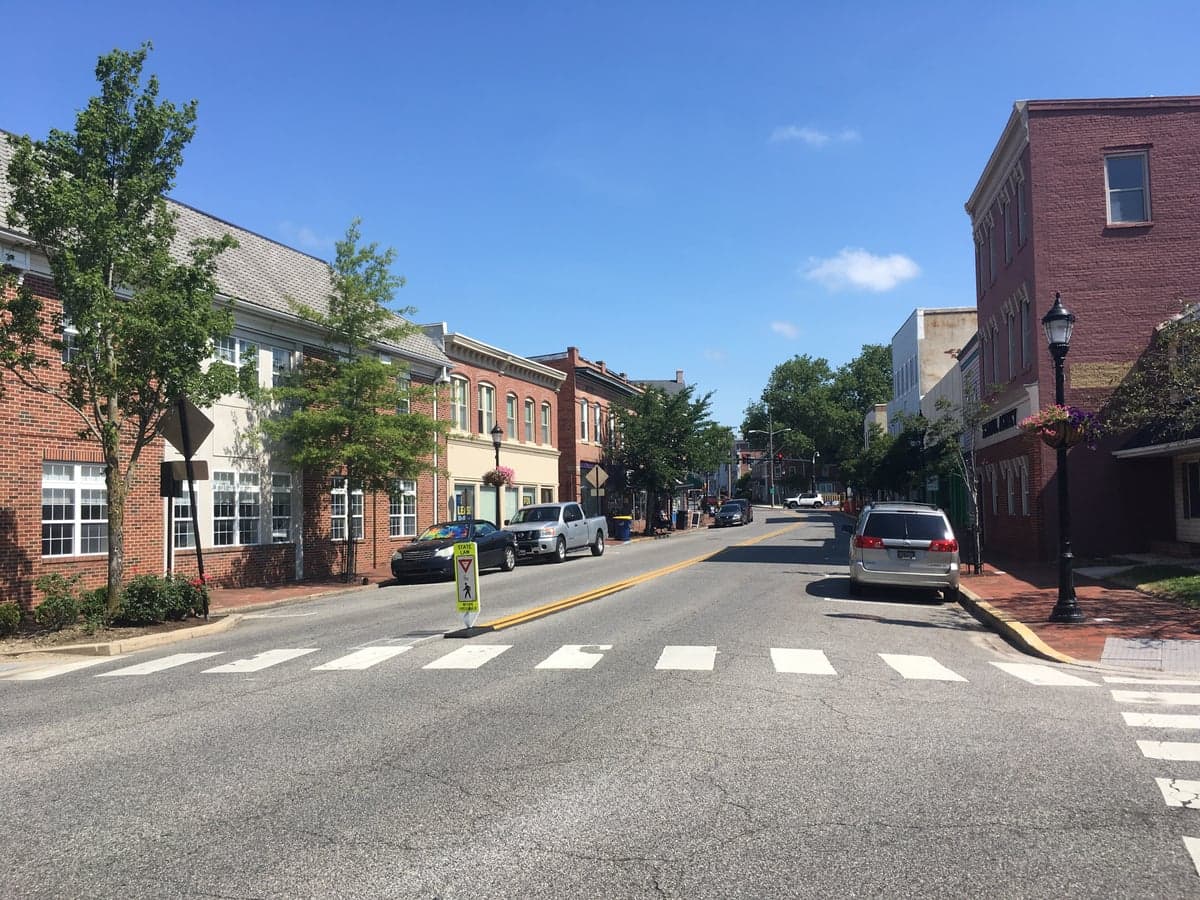
Photo: Wikipedia
Personal Sovereignty in Milford, DE
Viable for self-reliance. Generally workable, though some barriers may limit total independence.
What does Personal Sovereignty tell us?
Personal Sovereignty measures your capacity for self-reliance and independence with minimal government friction. Higher scores mean fewer barriers between you and the way you want to live... but it assumes you have the space you need and good neighbors.
What does this tell us?
Personal Sovereignty measures your capacity for self-reliance and independence with minimal government friction. Higher scores mean fewer barriers between you and the way you want to live... but it assumes you have the space you need and good neighbors.
State Policy
Energy independence: Importer (2% of energy produced in-state)
Personal Liberty
Homesteading

Personal Liberty Analysis
For the individual or family prioritizing personal sovereignty, Milford, Delaware offers a mixed but increasingly compelling picture within a state that is itself a battleground between rural autonomy and coastal progressive governance. While Delaware’s overall political trajectory—particularly in New Castle County—raises red flags for those wary of government overreach, Milford’s location in Kent and Sussex counties provides a buffer of more traditional, self-reliant values. The key is understanding where the state’s regulatory thumb presses hardest and where local conditions still allow for meaningful independence. For a survivalist or prepper mindset, Milford is not a libertarian paradise, but it is a place where strategic choices about property, lifestyle, and legal compliance can preserve a high degree of personal freedom.
Tax burden and regulatory posture in Delaware’s second state
Delaware’s tax structure is a double-edged sword for the sovereignty-minded. On the plus side, there is no state or local sales tax, which means every dollar you earn or barter stays in your pocket—a significant advantage for those building self-sufficient systems. Property taxes in Milford are also relatively low, typically 0.5% to 0.7% of assessed value, which is well below the national average and a fraction of what you’d pay in neighboring Maryland or Pennsylvania. However, the state’s income tax is progressive, topping out at 6.6% for high earners, and the corporate and business license fees are notoriously complex—Delaware is a corporate haven for LLCs, but the annual franchise tax and registered agent requirements can be a nuisance for small, home-based operations. The regulatory posture is mixed: building codes are generally standard, but the state’s Department of Natural Resources and Environmental Control (DNREC) has broad authority over land use, wetlands, and well permits, which can frustrate off-grid projects. For a prepper, the lack of sales tax is a clear win, but the income tax and DNREC oversight require careful planning—especially if you intend to run a side business or develop raw land.
Self-defense and gun law specifics in a state with a recent permitless carry shift
Delaware’s gun laws have been a flashpoint, but the trend is not entirely negative for the sovereignty-minded. In 2024, the state implemented permitless concealed carry for law-abiding adults 21 and over, a major victory for self-defense advocates. This means no government permission slip is required to carry a concealed firearm in Milford, though you must still comply with federal prohibitions for felons and domestic violence offenders. However, the state also passed a “red flag” law (Extreme Risk Protection Order) allowing courts to temporarily seize firearms based on hearsay or family reports, which is a clear overreach for those who distrust government discretion. Additionally, Delaware bans “assault weapons” and high-capacity magazines (over 15 rounds) for new purchases, though existing ones are grandfathered. For a prepper, the practical reality in Milford is that local law enforcement in Kent and Sussex counties is generally pro-Second Amendment, and the sheriff’s offices are not actively enforcing the magazine ban against law-abiding citizens. The key is to buy what you need now, before further restrictions, and to understand that the state’s coastal counties are the primary drivers of gun control—Milford’s rural character provides a more permissive enforcement environment.
Self-reliance and homesteading viability: lot sizes, zoning, and off-grid feasibility
Milford’s zoning and land-use policies are where the sovereignty picture gets most interesting for the homesteader. The city itself has standard suburban lot sizes (0.25 to 0.5 acres), but the unincorporated areas of Kent and Sussex counties offer agricultural-residential zoning with minimum lot sizes of 1 to 5 acres. This is critical for those wanting to raise livestock, install solar panels, or drill a well. The county zoning codes generally allow for backyard chickens, small-scale farming, and even beekeeping without special permits, provided you meet setback requirements. Off-grid feasibility is moderate: Delaware has no statewide ban on rainwater collection, but DNREC regulates well permits and septic systems strictly. Solar panels are allowed, but net metering rules are favorable only if you stay grid-tied—going fully off-grid with battery storage is legal but not incentivized. The biggest hurdle is the wetlands and buffer zone regulations along the Mispillion River and its tributaries, which can restrict clearing and building near water. For a prepper, the sweet spot is buying 3+ acres in the rural county areas outside Milford’s city limits, where you can garden, keep goats, and install a backup generator without triggering a zoning complaint. The local Amish and Mennonite communities in the area also provide a network of traditional skills and barter opportunities.
Personal liberties: parental rights, medical autonomy, speech, and property
Delaware’s record on parental rights is a concern for conservative families. The state has comprehensive sex education mandates in public schools, and there is no explicit statutory protection for parental opt-out of controversial curriculum content—though local school boards in Milford’s district (Milford School District) have been more responsive to conservative parents than those in New Castle County. Medical autonomy is similarly mixed: Delaware expanded Medicaid and has vaccine mandates for school attendance, but there is no state-level religious or philosophical exemption for required immunizations. For the sovereignty-minded, this means homeschooling or private religious schooling is the safest path to preserve parental control. Homeschooling is legal and requires only a simple annual notification to the state, with no curriculum approval or testing mandates—a clear win. Property rights are generally strong, with no statewide rent control or forced inclusionary zoning, but the state’s eminent domain authority has been used for infrastructure projects (e.g., the Route 1 expansion). Free speech is protected under the First Amendment, and Milford’s local government is not known for suppressing political expression. The bottom line: for a parent who wants to raise children without state interference, Milford requires proactive choices—homeschooling, private school, and careful monitoring of local board meetings—but the legal framework is not yet hostile enough to make it untenable.
Overall, Milford’s personal sovereignty environment is a pragmatic compromise for the survivalist or prepper. It lacks the raw autonomy of a place like rural Idaho or Montana, but it offers low property taxes, permitless carry, and viable homesteading land within a few hours of major East Coast markets. The trade-offs are real: a progressive state government that can shift policies quickly, a red flag law that could be abused, and school mandates that require vigilance. For those willing to navigate the regulatory landscape—buying rural acreage, homeschooling, and stocking up on firearms and magazines before further restrictions—Milford provides a defensible foothold in a state that still respects some forms of independence. It is not a fortress, but it is a base camp from which a self-reliant life can be built, provided you keep one eye on Dover and the other on your own property line.

* Values derived from national, state, county, city and local statistics and may differ in a specific area. Last updated: 2026-10-10T16:28:21.000Z
Narrative content on this page is AI-generated and may contain mistakes. Verify any details that matter before acting on them.
ReloMaps may earn a commission from affiliate links at no extra cost to you.

