 Popular
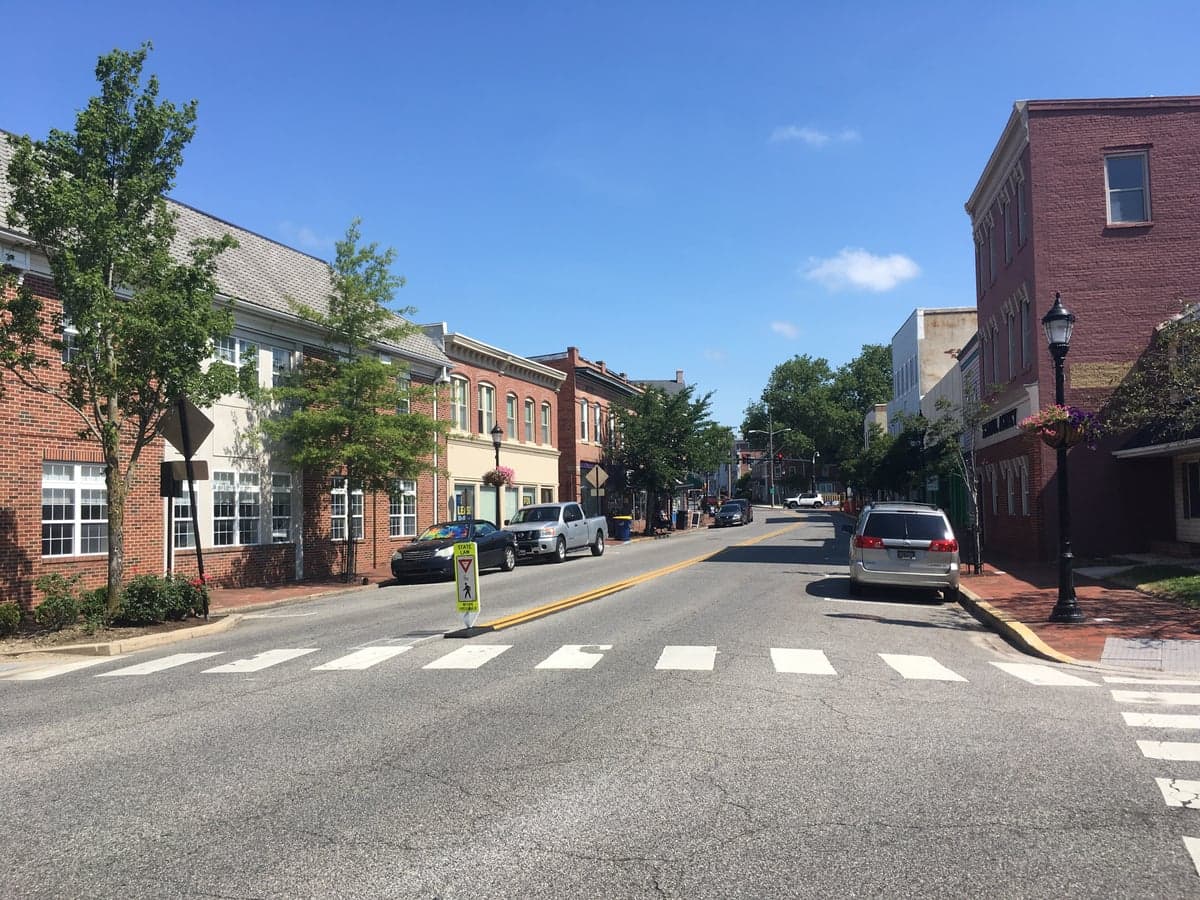
Photo: Wikipedia
Political ClimatePolitical Climate in Milford, DE
District shown is the primary district for this city’s centroid. Cities may span multiple districts.
Inherited from parent state — no local data available.
Local Political AnalysisPolitical Analysis of Milford, DE
Milford, Delaware, leans solidly Democratic with a Cook PVI of D+8, but that number doesn’t tell the whole story if you’ve lived here a while. This town used to be a quiet, blue-collar fishing and farming community where folks kept to themselves and the government mostly stayed out of the way. Over the last decade or so, you’ve seen a steady shift toward progressive policies, especially as new development and folks from up north—places like Dover and even Sussex County—have moved in. The political trajectory here is unmistakably leftward, and for those of us who remember when Milford was more about common sense than social experiments, it’s a little unsettling.
How it compares
Drive ten minutes south to Harrington or fifteen minutes west to the more rural parts of Kent County, and you’ll feel a different political vibe entirely—those areas still lean conservative, with a lot of the same small-town values Milford used to have. Even nearby Dover, the state capital, is more moderate in its outskirts, though its core is reliably blue. Milford’s D+8 rating puts it in a different league from places like Lincoln or Ellendale, where you’ll see more Trump signs than Biden ones. The contrast is stark: Milford’s city council and school board have increasingly embraced progressive priorities, from diversity initiatives to zoning changes that favor dense development over preserving the rural character. It’s like the town’s political center of gravity has shifted, and not in a way that sits well with longtime residents who value personal freedom over government mandates.
What this means for residents
For folks living here, the practical effect is a growing sense that local government is more interested in social engineering than protecting your rights. You’ve seen it in things like mask mandates that lingered longer than in surrounding towns, or the push for “equity” policies in schools that can feel like they’re prioritizing ideology over education. Property taxes have crept up to fund new programs, and there’s a feeling that your voice matters less if you don’t align with the progressive agenda. If you value being left alone to run your business, raise your family, or speak your mind without fear of being labeled, Milford’s political climate can feel like a slow squeeze. The long-term trend is concerning: as more development brings in younger, more liberal voters, the conservative minority here is getting quieter, not because they’ve changed their minds, but because it’s easier to just keep your head down.
Culturally, Milford still has its charms—the annual Riverwalk Freedom Festival and the old downtown diners are holdouts of a simpler time. But policy-wise, you’ll notice a growing divide: the city has embraced things like “sanctuary” resolutions and climate action plans that feel out of step with the working-class roots of the area. For a conservative-minded person, it’s not a hostile place to live, but it’s definitely a place where you have to pick your battles. If the trend continues, Milford could become another Dover—a town where the government’s reach extends further into daily life than most folks here ever wanted.

State Political ClimatePolitical Climate in Delaware
State Political AnalysisPolitical Environment in the State
Delaware, despite its small size, has a surprisingly complex political climate that leans Democratic at the state level, but with a strong conservative undercurrent in its rural and coastal areas. Over the past 20 years, the state has shifted from a purple swing state to a solidly blue one in presidential elections, driven by the explosive growth of New Castle County’s suburbs and the influx of out-of-state transplants from the Northeast. However, the state’s two other counties — Kent and Sussex — remain reliably Republican, creating a sharp urban-rural divide that makes Delaware a fascinating case study in political geography.
Urban vs. rural divide
The political map of Delaware is essentially a tale of three counties. New Castle County, home to Wilmington and the northern suburbs, is the Democratic stronghold, delivering roughly 65-70% of its vote to Democratic candidates. This is where the state’s population and economic engine are concentrated, with major employers like Bank of America, JPMorgan Chase, and the University of Delaware in Newark driving a professional-class electorate that leans left. In contrast, Sussex County — the beach and agricultural region — is deeply red, with towns like Lewes, Rehoboth Beach, and Georgetown voting Republican by wide margins. Kent County, the central region anchored by Dover, is more competitive but still leans Republican, with the state capital’s military and agricultural base offsetting some of the Democratic influence from the college town of Dover itself. The divide is stark: drive 30 minutes south from Wilmington to Middletown, and you’ll go from a reliably blue suburb to a fast-growing, purple-to-red exurb that has become a battleground for housing and school policy.
Policy environment
Delaware’s policy environment is a mixed bag for conservatives. On the plus side, the state has no sales tax, which is a major draw for families and retirees. Property taxes are also among the lowest in the nation, averaging around 0.5% of assessed value. However, the state income tax is progressive, topping out at 6.6% for high earners, and the corporate tax structure — while famously business-friendly for incorporation purposes — is less favorable for small businesses and individuals. The regulatory posture is decidedly left-leaning: Delaware has strict gun laws, including a ban on assault weapons and magazine capacity limits, and it was one of the first states to enact universal background checks. Education policy is dominated by the teachers’ union, with school choice limited compared to neighboring Pennsylvania and Maryland. Election laws are among the most liberal in the country, with no-excuse absentee voting and same-day registration, which has fueled concerns about election integrity among conservatives. The state also has a strong environmental regulatory framework, which has slowed development in rural areas.
Trajectory & freedom
Delaware is becoming less free by any objective measure, especially for conservatives. The most concerning trend is the erosion of Second Amendment rights: in 2022, the state passed a sweeping gun control package that included a ban on "assault weapons" and high-capacity magazines, as well as a permit-to-purchase requirement. This was followed in 2023 by a law raising the minimum age to purchase a rifle to 21. On the parental rights front, the state has moved aggressively to codify LGBTQ+ protections in schools, including policies that allow students to use preferred names and pronouns without parental consent — a flashpoint for many conservative families. Medical autonomy took a hit with the legalization of assisted suicide in 2024, which many conservatives view as a slippery slope. Property rights have been constrained by new environmental regulations that limit development in coastal zones and agricultural areas. The only bright spot for freedom advocates was the 2023 law legalizing recreational marijuana, which at least reduced government overreach in that area. Overall, the trajectory is clearly toward more government control over personal choices.
Civil unrest & political movements
Delaware has seen its share of political flashpoints. The most visible was the 2020 Black Lives Matter protests in Wilmington, which led to property damage and a heavy police response. Since then, the state has seen a rise in organized conservative activism, particularly in Sussex County, where groups like the Delaware Conservative Coalition have mobilized around school board elections and zoning disputes. Immigration politics are less heated than in border states, but the state’s sanctuary policies — including a 2019 law limiting cooperation with ICE — have drawn criticism from conservatives. Election integrity remains a hot-button issue: the 2020 election saw widespread use of mail-in ballots, and the state’s lack of voter ID laws has led to ongoing calls for reform from the right. A notable flashpoint was the 2023 controversy over the "Delaware Way" — the state’s tradition of political civility — which was shattered by a heated debate over critical race theory in public schools. New residents should expect to see these tensions play out in local news and community meetings.
Projection
Over the next 5-10 years, Delaware is likely to become more Democratic and more progressive. The primary driver is demographic change: New Castle County continues to grow, fueled by remote workers from Philadelphia and Washington, D.C., who bring their left-leaning politics with them. Sussex County is also growing, but its new residents are increasingly retirees from the Northeast who, while fiscally conservative, tend to be socially moderate. The state’s Republican Party is struggling to adapt, caught between its rural base and the need to appeal to suburban moderates. The most likely scenario is that Delaware will follow the path of neighboring Maryland — a blue state with a few red pockets, where conservatives can find refuge in places like Sussex County but will have little influence over state policy. For a conservative family moving in now, the expectation should be that the state’s political environment will continue to shift left, with more gun control, higher taxes, and less parental control over education.
For a new resident, the bottom line is this: Delaware offers low property taxes and no sales tax, which are real financial benefits, but those come at the cost of living in a state where your political views are increasingly out of step with the government. If you’re a conservative, you’ll find like-minded communities in Sussex County and parts of Kent County, but you’ll need to be prepared to fight for your rights at the local level — especially on school boards and in town councils. The state is not hostile to conservatives in the way that, say, California or New York is, but the trend lines are clear. If you value personal freedom, especially on guns and education, you may want to look at neighboring Pennsylvania or Maryland’s more rural counties instead. Delaware is a nice place to live, but it’s no longer a place where conservatives can expect the government to be on their side.
* Values derived from national, state, county, city and local statistics and may differ in a specific area. Last updated: 2026-10-10T16:28:21.000Z
Narrative content on this page is AI-generated and may contain mistakes. Verify any details that matter before acting on them.
ReloMaps may earn a commission from affiliate links at no extra cost to you.

