Photo: Wikipedia
Demographics of Mililani Town, HI
Affluence Level in Mililani Town, HI
An upper-middle-class area. Household wealth, education levels, and homeownership run ahead of national benchmarks.
People of Mililani Town, HI
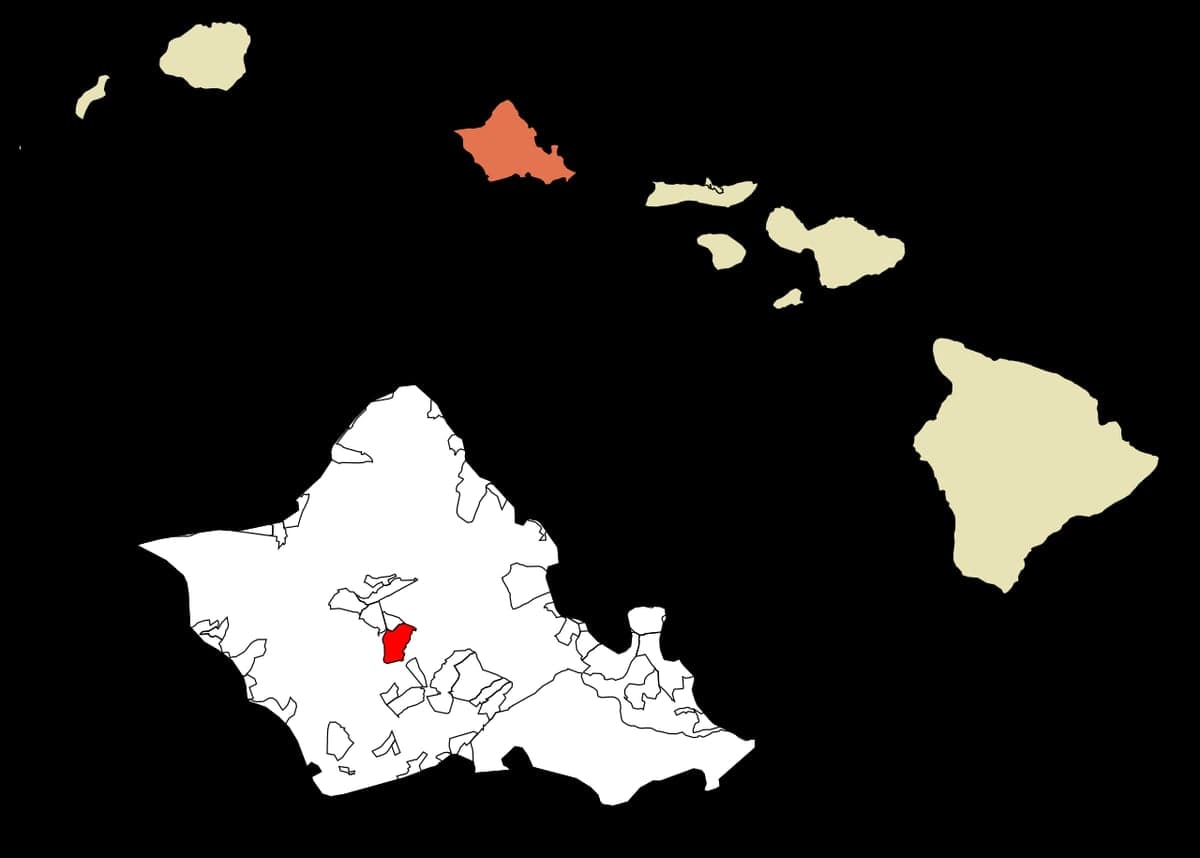
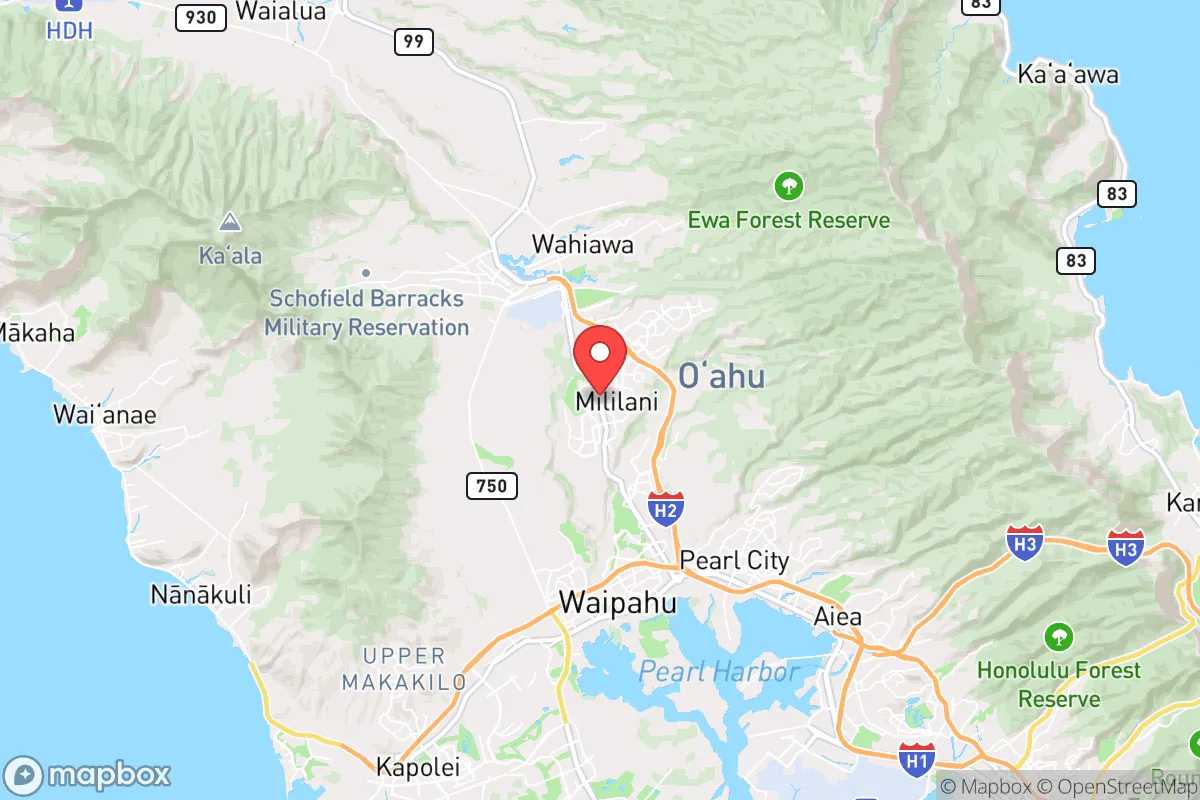
Mililani Town today is a planned, predominantly Asian-American suburb of Honolulu with a population of 27,495, where East and Southeast Asian communities make up 47.2% of residents and the foreign-born share is a low 1.7%. The city is notably well-educated, with 41.5% of adults holding a college degree, and it leans politically moderate to conservative relative to the rest of Oahu. Its identity is shaped by master-planned neighborhoods, strong public schools, and a family-oriented, middle-to-upper-middle-class character that attracts military families, professionals, and multi-generational Asian households.
How the city was settled and grew
Mililani Town is a genuinely post-1960s planned community, not a historic plantation or pre-colonial settlement. The land was originally part of the vast Bishop Estate (Kamehameha Schools) holdings, used for sugarcane and pineapple cultivation through the early 20th century. In the 1960s, the estate partnered with developer Oceanic Properties to transform the agricultural land into a master-planned residential community, with construction beginning in 1968. The first wave of residents were largely Japanese-American and Chinese-American families moving from older Honolulu neighborhoods like Moiliili and Kalihi, seeking newer, larger homes and better schools. The earliest neighborhoods to open were Mililani Mauka (the upper section) and Mililani Waena (central), which filled quickly with these upwardly mobile Asian families. A smaller but significant early wave included Filipino-American families, many of whom had parents who worked in the plantations or in service industries, settling primarily in Mililani Mauka and the Launani Valley section.
Modern era (post-1965)
The post-1965 Hart-Celler Act had a delayed but significant effect on Mililani Town. While the initial settlement was dominated by established Japanese and Chinese families, the 1980s and 1990s saw a second wave of Filipino, Korean, and Vietnamese immigrants arriving directly from Asia or relocating from other parts of Oahu. These groups concentrated in the newer, lower-priced neighborhoods of Mililani Mauka (the upper, later-built sections) and Mililani Highlands, where townhouses and smaller single-family homes were more affordable. The white population, which was never large, has steadily declined from roughly 20% in 1990 to 9.6% today, with many white families moving to the Windward side or mainland. The Hispanic population, at 10.7%, is a mix of mainland transplants and Puerto Rican military families, concentrated near Mililani Highlands and the Kipapa area. The Black population remains very small at 1.6%, mostly active-duty military stationed at Schofield Barracks or Wheeler Army Airfield, living in rental units in Mililani Mauka. The Indian-subcontinent population is negligible at 0.2%, reflecting the broader pattern of South Asian communities clustering in Honolulu proper rather than the suburbs.
The future
Mililani Town is likely to become more Asian and more homogenized over the next 10–20 years. The foreign-born share is already very low (1.7%), meaning new growth will come almost entirely from domestic migration and natural increase, not fresh immigration. The East/Southeast Asian share (47.2%) is expected to rise further as younger Japanese, Chinese, and Filipino families move in to access the highly-rated Mililani public schools, while white and Hispanic shares slowly decline. The city is not tribalizing into distinct ethnic enclaves; rather, the older neighborhoods like Mililani Waena and Launani Valley are becoming more mixed as original Japanese families age out and are replaced by younger Filipino and multi-ethnic households. The biggest demographic wildcard is the military population: if the Army reduces its presence at Schofield Barracks, the small Black and Hispanic shares could shrink further. Housing prices, already high by mainland standards, will continue to filter out lower-income families, reinforcing the city's upper-middle-class, college-educated character.
For a conservative-leaning individual or family moving in now, Mililani Town is a stable, safe, and increasingly Asian-dominated suburb where property values and school quality are the primary drivers of population change. The city is not diversifying in the traditional sense; it is consolidating around a core of well-educated, East and Southeast Asian families, with smaller white, Hispanic, and military minorities. The practical takeaway is that new arrivals will find a community that values education, order, and family stability, but one where the cultural and social norms are increasingly shaped by Japanese, Chinese, and Filipino traditions rather than a broad American mainstream.

* Values derived from national, state, county, city and local statistics and may differ in a specific area. Last updated: 2026-04-24T07:29:05.000Z
Narrative content on this page is AI-generated and may contain mistakes. Verify any details that matter before acting on them.
ReloMaps may earn a commission from affiliate links at no extra cost to you.

