Photo: Wikipedia
Demographics of Millersville, PA
Affluence Level in Millersville, PA
A below-average socioeconomic profile. Incomes, home values, and educational attainment trail the U.S., with higher poverty and unemployment.
People of Millersville, PA
The people of Millersville, Pennsylvania today form a small, stable community of 8,711 residents, characterized by a predominantly white population (75.9%) with a growing Hispanic minority (10.8%) and a notable Indian-subcontinent presence (3.7%). The city is more educated than the national average, with 33.6% holding a college degree, reflecting its identity as a university town anchored by Millersville University. Despite its small size, the population is moderately diverse for Lancaster County, though the foreign-born share remains low at just 2.8%, indicating a community shaped more by domestic migration than international arrivals.
How the city was settled and grew
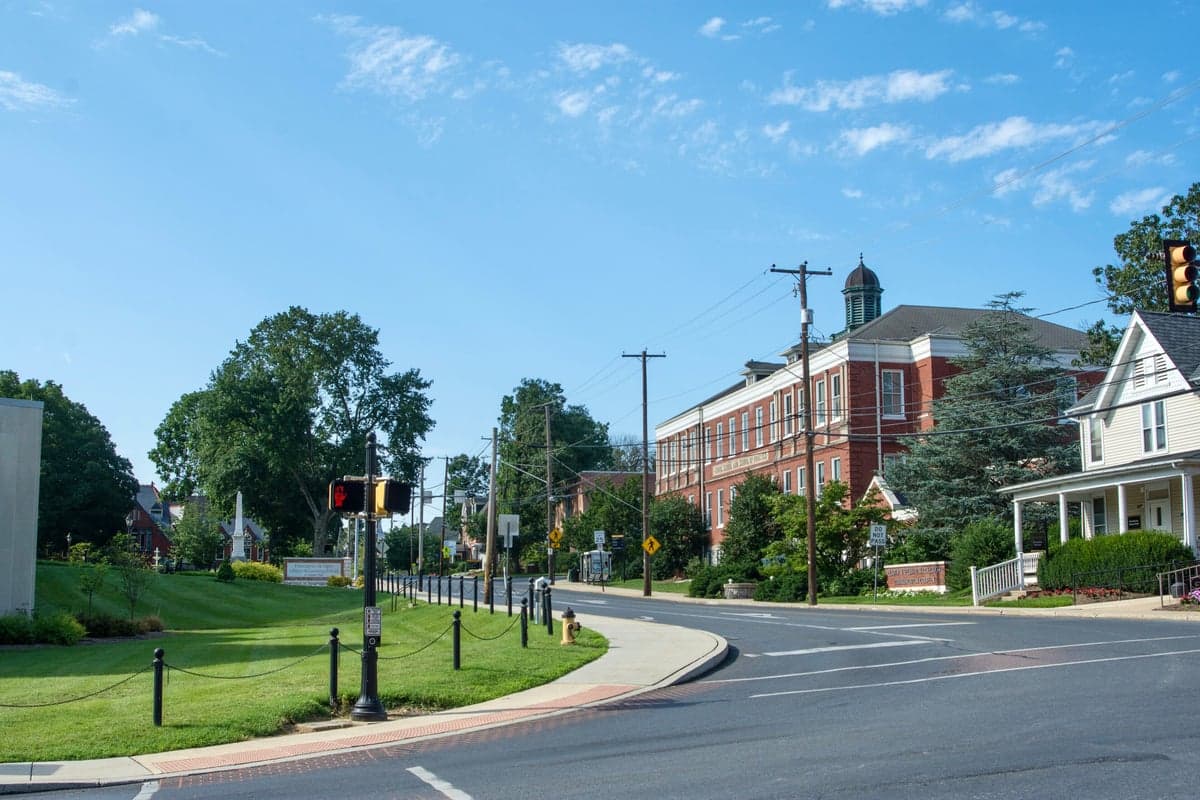
Millersville was originally settled in the 18th century by German and Swiss Mennonite farmers, drawn by the fertile limestone soils of the Conestoga Valley. The village grew slowly around a mill built by John Miller in 1761, giving the settlement its name. By the mid-19th century, the population remained overwhelmingly Pennsylvania Dutch, with a small number of English and Scots-Irish families arriving as merchants and tradesmen. The founding of the Millersville State Normal School (now Millersville University) in 1855 transformed the hamlet into a college town, attracting faculty and students from across the region. The historic West End neighborhood, with its Victorian homes and tree-lined streets, was built during this era by professors and local professionals. The railroad spur that arrived in the 1870s brought a modest wave of Irish and German laborers, who settled in the South Millersville area near the tracks. Through the early 20th century, the population remained overwhelmingly white and Protestant, with a small Catholic minority centered around St. Philip the Apostle Church in the North Manor district.
Modern era (post-1965)
The post-1965 period brought gradual demographic change to Millersville, though far less dramatic than in larger Pennsylvania cities. The most significant shift was the expansion of Millersville University, which grew from a teachers' college to a comprehensive university in the 1960s and 1970s. This drew faculty and staff from outside the region, including a small number of East/Southeast Asian academics (now 1.3% of the population) who settled in the University Heights area near campus. The Hispanic population began growing in the 1990s, driven by agricultural and light industrial jobs in Lancaster County's mushroom and poultry industries. These families concentrated in the East Millersville corridor along Manor Avenue, where affordable rental housing and proximity to Lancaster city's Hispanic service infrastructure made settlement practical. The Indian-subcontinent community (3.7%) is a more recent arrival, largely composed of professionals working at the university, Lancaster General Health, and regional tech firms. They have dispersed across the Millersville Station and Fairway Estates subdivisions, newer developments built since 2000. The Black population (3.8%) is small and stable, with roots in the Great Migration-era families who moved to Lancaster County for factory work, now concentrated in the South Manor area. Overall, the city's racial composition has shifted from 92% white in 1990 to 75.9% white today, with the Hispanic share growing most rapidly.
The future
Millersville's population is likely to become slightly more diverse over the next 10-20 years, but the pace of change will remain moderate. The Hispanic share is projected to continue growing, potentially reaching 15-18% by 2040, driven by family reunification and continued demand for labor in Lancaster County's food processing and logistics sectors. These families will likely continue concentrating in East Millersville and the Manor Avenue corridor, where housing is most affordable. The Indian-subcontinent community may grow modestly as Millersville University and regional healthcare employers recruit internationally, but the city's small size and limited high-skill job base will constrain rapid growth. The white population will continue its gradual decline in share, though it will remain the majority for the foreseeable future. The East/Southeast Asian and Black populations are expected to remain stable or grow slightly, but will not become major demographic forces. The city's cultural identity will evolve from a historically Pennsylvania Dutch college town into a more diverse, suburban community with a stronger Hispanic cultural presence, particularly visible in local restaurants, churches, and annual events. The university will remain the anchor institution, ensuring a steady influx of educated newcomers who tend to be more politically and culturally moderate than the surrounding county.
For someone moving to Millersville today, the city offers a stable, safe, and increasingly diverse small-town environment with a strong educational anchor. The population is becoming more Hispanic and slightly more Asian and Indian, but remains predominantly white and family-oriented. New residents will find a community that is welcoming but not rapidly changing, where the university provides a liberalizing influence in an otherwise conservative county. The best bet for newcomers seeking diversity is the University Heights and East Millersville areas, while those seeking a more traditional, quiet suburban feel will prefer West End or Fairway Estates.

* Values derived from national, state, county, city and local statistics and may differ in a specific area. Last updated: 2026-10-10T16:28:23.000Z
Narrative content on this page is AI-generated and may contain mistakes. Verify any details that matter before acting on them.
ReloMaps may earn a commission from affiliate links at no extra cost to you.

