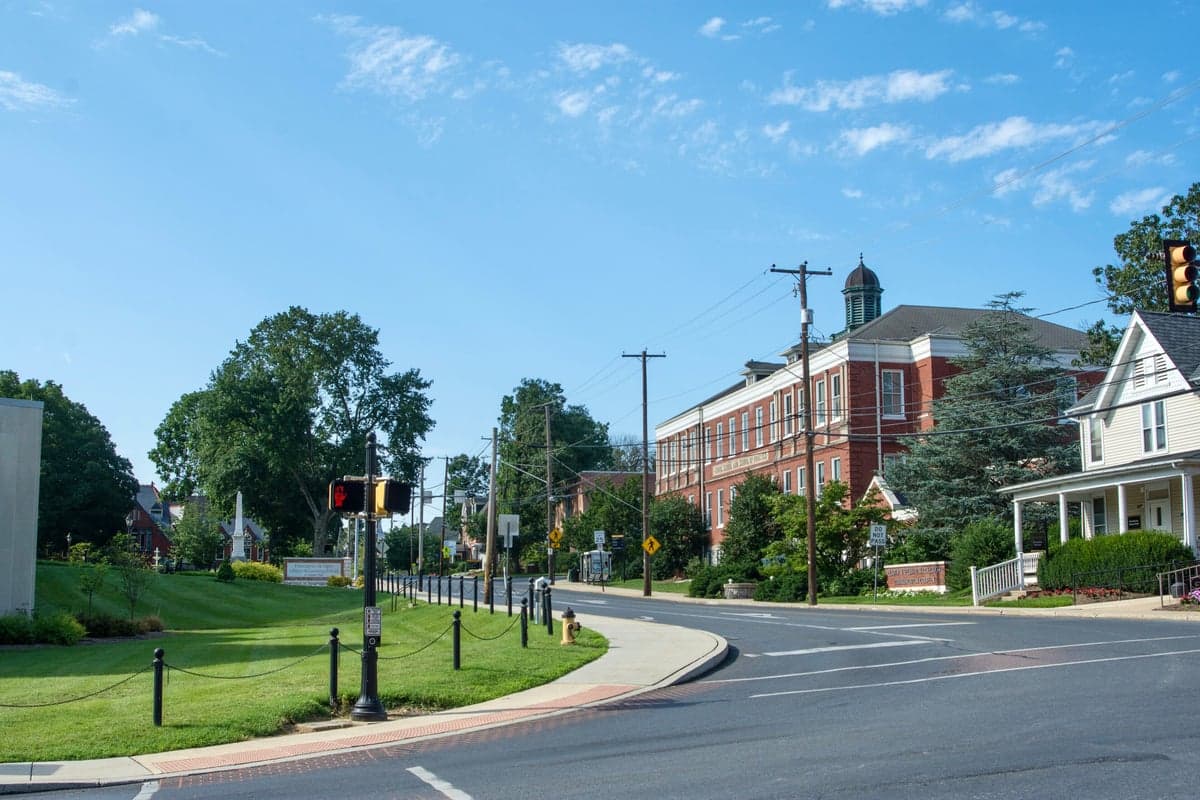
Photo: Wikipedia
Political ClimatePolitical Climate in Millersville, PA
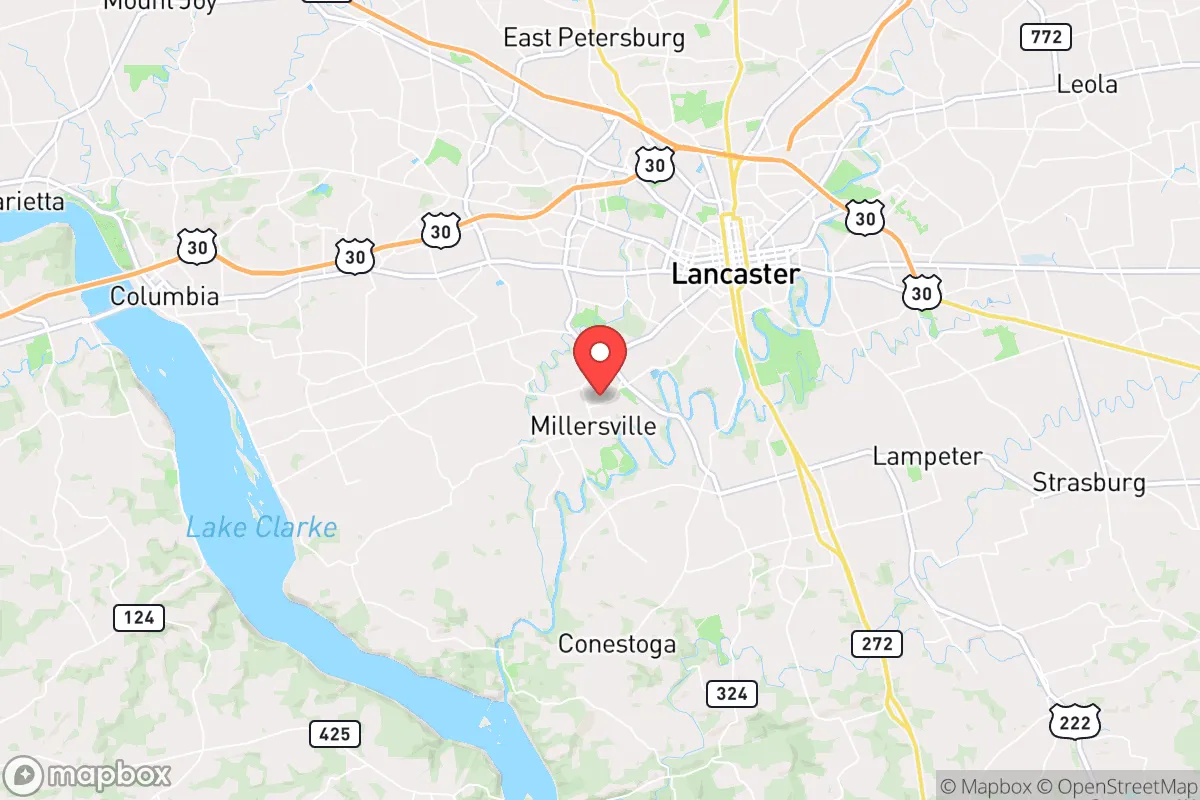
District shown is the primary district for this city’s centroid. Cities may span multiple districts.
Local Political AnalysisPolitical Analysis of Millersville, PA
Millersville, Pennsylvania, sits in a reliably conservative pocket of Lancaster County, with a Cook Partisan Voting Index of R+11, meaning the area votes about 11 points more Republican than the national average. This stands in stark contrast to the state of Pennsylvania as a whole, which has a Cook PVI of EVEN—a perfect swing state that flipped from Trump to Biden by just over 80,000 votes in 2020. For decades, Millersville and its surrounding townships have been a Republican stronghold, but the political winds are shifting, and not in the way you might expect from a place with that R+11 label.
How it compares
To understand Millersville’s politics, you have to look at the whole county. Lancaster County as a whole is R+16, so Millersville is actually a bit more moderate than its rural neighbors. Drive 15 minutes east to the city of Lancaster itself, and you’ll find a Democratic stronghold that votes blue by about 20 points—a stark contrast. Head north toward Manheim or Lititz, and you’re back in deep red territory. The real story is the trajectory: Millersville’s R+11 is softening. The 2020 presidential election saw Trump win Lancaster County by 15 points, down from 22 points in 2016. The borough’s own precincts, especially those near Millersville University, are trending bluer as younger, more diverse residents move in. Meanwhile, the state as a whole remains a dead heat—Pennsylvania’s EVEN rating means it’s the ultimate toss-up, with Philadelphia and its suburbs pulling left while the rest of the state pulls right. Millersville sits right on that fault line, but leaning red.
What this means for residents
For conservative residents, Millersville remains a comfortable place to live. Local elections are still dominated by Republicans, and the county commissioners, school board, and township supervisors are almost entirely GOP. You’ll see Trump signs in yards and hear conservative talk radio in pickup trucks. But for liberal residents, it’s not hostile—just a minority position. The university acts as a blue island, and many faculty and students lean left. You can find like-minded people at local coffee shops or through community groups, but you won’t see many Democratic candidates winning borough-wide. The practical effect is that policy leans conservative: taxes are relatively low, gun laws are permissive, and the school board has been cautious on progressive curriculum changes. But because Millersville is a small borough, not a rural township, there’s more tolerance for difference than you’d find in, say, nearby Ephrata or New Holland. People mostly keep their politics to themselves at the grocery store.
One cultural distinction worth noting: Millersville is part of Pennsylvania’s “Amish Country” tourism corridor, which brings a steady stream of visitors and a certain traditionalist ethos. But the university injects a youthful, academic energy that softens the edges. You won’t find the same kind of culture-war intensity here as in some other R+11 areas—it’s more of a quiet, lived-in conservatism. Looking ahead, I’d expect Millersville to stay red but drift toward purple over the next decade, especially as Lancaster City’s growth spills outward. The state will remain a battleground, but Millersville’s vote will matter less in statewide races than the Philly suburbs or Pittsburgh. For now, it’s a place where you can live your politics without much friction, whether you’re a Republican who feels at home or a Democrat who knows the score.

State Political ClimatePolitical Climate in Pennsylvania
State Political AnalysisPolitical Environment in the State
Pennsylvania is the ultimate swing state, with a Cook PVI of EVEN that perfectly captures its 50-50 split. Over the past 20 years, it has shifted from a reliably blue-leaning state in presidential races to a true battleground, flipping from Obama (2008, 2012) to Trump (2016) to Biden (2020) by razor-thin margins. The dominant coalitions are the urban crescent (Philadelphia, Pittsburgh, and their inner suburbs) pulling left, and the vast rural and exurban interior pulling right, with the crucial swing vote concentrated in the southeastern collar counties and the old industrial towns of the northeast and southwest.
Urban vs. rural divide
The political map of Pennsylvania is a study in contrasts. Philadelphia and Pittsburgh are Democratic strongholds, delivering margins of 80-20 or higher in presidential elections. The Philadelphia suburbs—Bucks, Montgomery, Chester, and Delaware counties—have trended sharply blue over the last decade, driven by college-educated professionals moving from the city. Meanwhile, the vast rural interior, including counties like Tioga, Bradford, and Bedford, votes Republican by 70-30 or more. The real battlegrounds are the old industrial and coal regions: Luzerne County (Wilkes-Barre), Erie County, and Northampton County (Bethlehem). These areas flipped from Obama to Trump and are now the most contested turf in the state. A new resident moving to State College will find a blue island in a red sea, while someone settling in Lancaster will experience a rapidly diversifying exurb that is slowly trending left but still leans conservative.
Policy environment
Pennsylvania’s policy environment is a mixed bag that reflects its divided government. The state has a flat income tax of 3.07%, one of the lowest in the nation, and a sales tax of 6% (with no tax on clothing or groceries). Property taxes are high, averaging about 1.5% of home value, and vary wildly by school district. There is no statewide rent control. The regulatory posture is moderate—not as business-friendly as Texas or Florida, but far less restrictive than New York or California. Education policy is locally controlled, with no statewide school choice program beyond a limited tax credit scholarship for low-income students. Election laws are relatively accessible: no-excuse mail-in voting was enacted in 2019 (Act 77), though it remains a partisan flashpoint. Voter ID is required for first-time voters only, not for regular voting. The state has a Republican-controlled legislature and a Democratic governor (Josh Shapiro as of 2026), creating a perpetual tug-of-war on major legislation.
Recent policy direction
The last five years have seen Pennsylvania lurch in contradictory directions, depending on the issue. On gun and self-defense law, the state is a "shall-issue" for concealed carry, with no permit required for open carry (except in Philadelphia). In 2022, the legislature passed a preemption law (Act 79) that allows the state to sue municipalities that enact their own gun restrictions, a win for gun rights advocates. On parental and education rights, the state has no universal school choice, but in 2024, the legislature passed a $100 million expansion of the Educational Improvement Tax Credit (EITC) program, which funds scholarships for private school. On speech and privacy, Pennsylvania has no broad shield law for journalists, but it does have a strong wiretap consent law (two-party consent). On medical and bodily autonomy, abortion remains legal up to 24 weeks (codified in state law in 2022 after Dobbs), and there is no parental notification requirement for minors. On property rights, the state has no statewide rent control, but Philadelphia and Pittsburgh have their own tenant protections. On taxation, the flat income tax has not been raised since 2004, and there is no talk of a progressive income tax. On voting and ballot access, Act 77 (no-excuse mail-in voting) remains law, but the legislature has repeatedly tried to add voter ID requirements, which Governor Shapiro has vetoed. The net effect is a state that is moderately free on economic issues but increasingly polarized on social and cultural ones.
Civil unrest & political movements
Pennsylvania has seen its share of political flashpoints. The 2020 election aftermath was particularly intense in Philadelphia, where poll watchers and activists from both sides clashed over ballot counting procedures. The "Stop the Steal" movement had a strong presence in rural counties like York and Franklin, while counter-protests were concentrated in Philadelphia and Pittsburgh. Immigration politics are relatively quiet compared to border states, but there is a simmering tension in Hazleton and Reading, where immigrant populations have grown rapidly. There is no sanctuary state law, but Philadelphia is a designated sanctuary city, which has led to legislative battles over state funding. The election integrity debate remains active: in 2024, the legislature passed a bill requiring all ballots to be hand-counted in a pilot program, which Governor Shapiro allowed to become law without his signature. On the left, the "Moms for Liberty" movement has been active in school board races in Bucks County and Lancaster County, while progressive groups like "Indivisible" have a strong presence in Philadelphia and Pittsburgh. A new resident will notice that political yard signs and bumper stickers are ubiquitous, and conversations about politics are common in diners and barbershops.
Projection
Over the next 5-10 years, Pennsylvania is likely to remain a toss-up state, but with a slight rightward drift in the interior and a continued leftward drift in the suburbs. The key demographic trend is the influx of remote workers from New York and New Jersey into the Lehigh Valley (Allentown, Bethlehem) and the Poconos, which is slowly turning those areas more purple. Meanwhile, the rural population is aging and shrinking, but the remaining voters are becoming more conservative. The state's electoral college votes (19) will remain critical, meaning national attention and campaign spending will continue to flood in. For a new resident, this means that your vote will genuinely matter in every election, but it also means you will be subjected to relentless political advertising every two years. The policy environment will remain gridlocked on major issues like school choice, abortion, and election laws, with the governor's veto pen blocking most conservative legislation and the legislature blocking most progressive initiatives. The one area where compromise is possible is economic development: the state is aggressively courting hydrogen hubs and semiconductor manufacturing (like the new Micron plant near Harrisburg), which could bring jobs and moderate the political temperature.
Bottom line for a new resident: If you are a conservative, you will find a state where your values are represented in the legislature but often blocked by the governor—you will need to be patient and engaged. If you are a liberal, you will find a state where your values are protected in the cities and suburbs but under constant attack in the legislature—you will need to stay vigilant. For everyone, Pennsylvania offers a genuine political battleground where your voice and vote carry real weight, but also where the cultural wars are fought in every school board meeting and county commission. It is not a state for those who want to escape politics—it is a state for those who want to live in the middle of it.
* Values derived from national, state, county, city and local statistics and may differ in a specific area. Last updated: 2026-10-10T16:28:23.000Z
Narrative content on this page is AI-generated and may contain mistakes. Verify any details that matter before acting on them.
ReloMaps may earn a commission from affiliate links at no extra cost to you.

