
Photo: Wikipedia
Personal Sovereignty in Anoka County
Viable for self-reliance. Generally workable, though some barriers may limit total independence.
What does Personal Sovereignty tell us?
Personal Sovereignty measures your capacity for self-reliance and independence with minimal government friction. Higher scores mean fewer barriers between you and the way you want to live... but it assumes you have the space you need and good neighbors.
What does this tell us?
Personal Sovereignty measures your capacity for self-reliance and independence with minimal government friction. Higher scores mean fewer barriers between you and the way you want to live... but it assumes you have the space you need and good neighbors.
State Policy
Energy independence: Importer (20% of energy produced in-state)
Personal Liberty
Homesteading

Personal Liberty Analysis
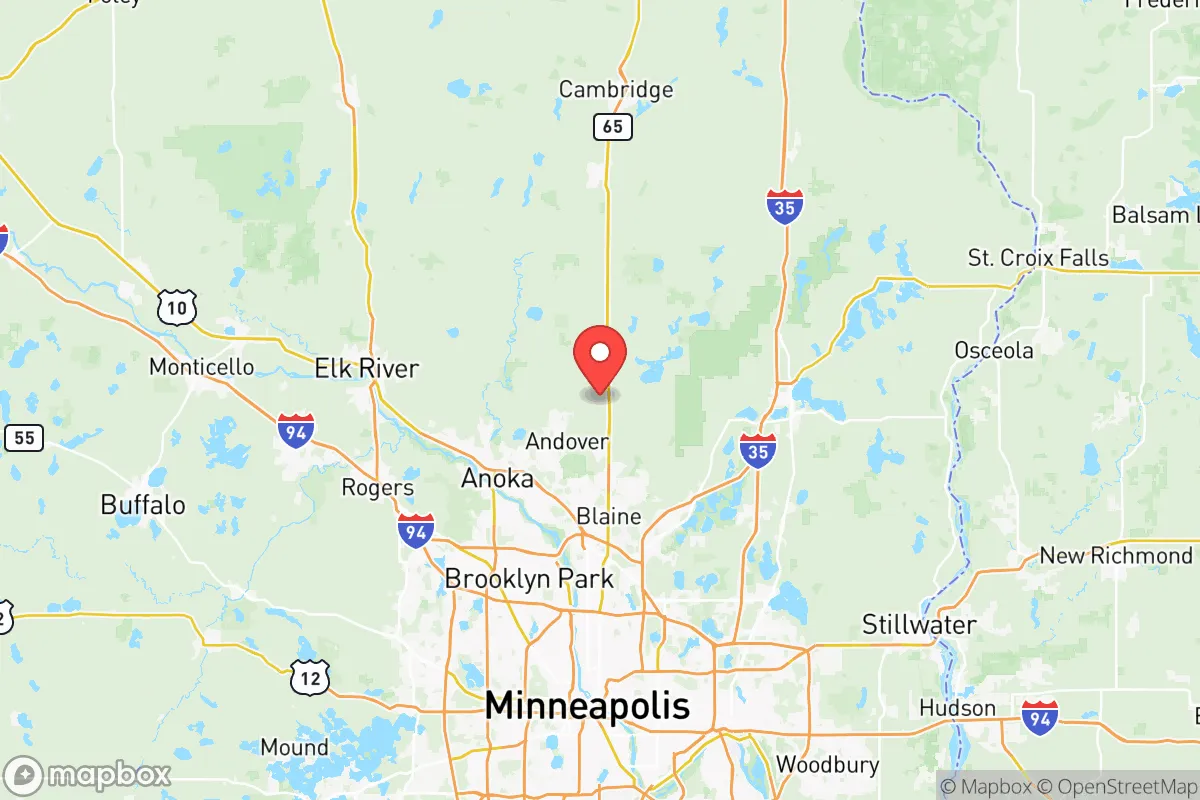
Anoka County, Minnesota, presents a complex landscape for personal sovereignty that demands careful navigation by those prioritizing autonomy. While the state as a whole leans progressive, Anoka County’s northern and eastern townships offer a noticeably different environment than the more densely populated southern suburbs, with practical implications for self-reliance, self-defense, and resistance to government overreach. The county’s proximity to the Twin Cities means state-level mandates on taxes, health, and education are inescapable, but local zoning, law enforcement culture, and community norms create pockets where individual liberty is far more attainable than in Hennepin or Ramsey Counties.
Tax burden and regulatory posture in Anoka County
Minnesota’s overall tax burden ranks among the highest in the nation, and Anoka County is not exempt. Property taxes here are levied at a county rate that, combined with state income tax (which tops out at 9.85%), can feel punitive for those accustomed to lower-tax states. However, the regulatory posture varies significantly within the county. In cities like Andover and East Bethel, the local governments are generally more permissive regarding home-based businesses, accessory dwelling units, and land use than in Blaine or Coon Rapids, where zoning is tighter and code enforcement more active. The county’s planning department is known for a moderate approach, but the real friction comes from state-level environmental regulations—wetland protections, shoreland rules, and the Minnesota Pollution Control Agency’s oversight—which can complicate any significant land alteration or construction project. For those seeking to minimize regulatory entanglement, the unincorporated areas of northern Anoka County, particularly around Linwood Township and Columbus, offer the most breathing room, with fewer inspections and a more live-and-let-live ethos.
Self-defense and gun law specifics in Anoka County
Minnesota is a shall-issue state for permits to carry, and Anoka County’s sheriff’s office processes applications efficiently, typically within the statutory 30-day window. There is no county-level restriction on magazine capacity or firearm types, but state law imposes a universal background check for private sales and a 30-day waiting period for handgun purchases from dealers—a clear infringement on the right to keep and bear arms. In practice, the gun culture in Anoka County is strong, especially in the northern towns. St. Francis and Bethel have a visible hunting and sport-shooting tradition, and several private ranges operate with minimal local interference. However, carry permit holders should be aware that certain cities, like Anoka itself, have posted “gun-free” zones in city parks and public buildings, though these carry no force of law beyond trespassing statutes. The county’s law enforcement is generally pro-Second Amendment, with deputies rarely making a point of enforcing state-level magazine restrictions that are widely ignored. For those prioritizing self-defense, the northern half of the county is far more accommodating than the southern corridor near the metro.
Self-reliance and homesteading viability in Anoka County
Homesteading and off-grid living are viable in Anoka County, but only in specific areas. Minimum lot sizes in the northern townships—Linwood, East Bethel, and Columbus—are typically 2.5 to 5 acres, with some parcels up to 10 acres available, allowing for substantial gardening, small livestock, and even limited timber harvest. Zoning in these areas permits chickens, goats, and beekeeping as a matter of right, though pigs and cattle require conditional use permits. Off-grid feasibility is limited by state building codes that mandate connection to the electrical grid for new construction, though solar panels with net metering are allowed. Rainwater collection is legal for non-potable uses, but well and septic regulations are strict, with county health inspectors requiring modern systems that can cost $15,000–$25,000. The real barrier is the state’s energy code, which effectively prohibits fully off-grid dwellings without a variance. For those willing to work within the system, St. Francis and Bethel offer the best balance of affordable land, permissive zoning, and a community that values self-sufficiency. In contrast, Blaine and Coon Rapids are essentially suburban, with HOAs and city ordinances that ban most homesteading activities.
Personal liberties in Anoka County: parental rights, medical autonomy, speech, and property
Parental rights in Minnesota are under increasing pressure from state mandates. Anoka County schools, like all public schools in the state, are subject to the Minnesota Department of Education’s curriculum standards, which include comprehensive sex education and social-emotional learning frameworks that many conservative parents find intrusive. However, the county has a robust homeschooling community, particularly in the northern towns, with support groups and co-ops operating freely. Medical autonomy is constrained by state-level vaccine mandates for school attendance and the recent expansion of “gender-affirming care” protections, which override parental consent in certain situations. Property rights are generally respected, but the state’s “public nuisance” laws and environmental regulations can be used to target landowners who deviate from suburban norms—for example, storing vehicles or maintaining unmanicured lots. Free speech is protected under the First Amendment, but local ordinances in Anoka and Blaine restrict signage and political displays in public rights-of-way. The county’s board meetings are open, and citizen testimony is allowed, but the progressive majority on the board often votes along party lines. For those seeking maximum personal liberty, the unincorporated townships are the clear choice, where neighbors are less likely to complain and local officials are more responsive to individual rights.
Overall, Anoka County offers a mixed bag for personal sovereignty. The northern townships—Linwood, East Bethel, Columbus, and St. Francis—provide a viable environment for those willing to navigate state-level overreach, with affordable land, a gun-friendly culture, and a community that values self-reliance. The southern cities, however, mirror the regulatory and cultural constraints of the metro area. Compared to rural counties further north, Anoka County is more expensive and more regulated, but it offers proximity to jobs and services that many preppers and homesteaders need. For the strategic relocator, the key is to choose the right township and accept that full sovereignty is impossible within Minnesota’s state framework—but that a meaningful degree of autonomy is still achievable with careful planning.

* Values derived from national, state, county, city and local statistics and may differ in a specific area. Last updated: 2026-05-12T04:07:41.000Z
Narrative content on this page is AI-generated and may contain mistakes. Verify any details that matter before acting on them.
ReloMaps may earn a commission from affiliate links at no extra cost to you.

