
Photo: Wikipedia
Strategic Assessment of Anoka County
Meaningful friction. Expect exposure to either population pressure, blast zones, or natural disaster risk. Consider buying a retreat property.
What does the Strategic Assessment tell us?
Our Strategic Assessment grades tactical survivability of an area. Major population centers, military targets, fallout zones, natural disasters, and border exposure all drive risk — lower exposure means a more defensible position in a crisis.
This is heavily inspired by Joel Skousen's Strategic Relocation book. Highly recommended you checkout the book ($)What does this tell us?
Our Strategic Assessment grades tactical survivability of an area. Major population centers, military targets, fallout zones, natural disasters, and border exposure all drive risk — lower exposure means a more defensible position in a crisis.
This is heavily inspired by Joel Skousen's Strategic Relocation book. Highly recommended you checkout the book ($)Strategic Pillars

Key Distances
Strategic Assessment Analysis
Anoka County, Minnesota, sits in a precarious strategic position that demands careful consideration for anyone prioritizing long-term resilience and self-sufficiency. While its proximity to the Twin Cities metro area offers immediate economic advantages, that same closeness introduces significant vulnerabilities in a scenario of civic unrest, infrastructure collapse, or mass casualty events. For the conservative-leaning relocator who values preparedness, Anoka County presents a mixed picture: it has genuine natural resources and defensible pockets, but its location near major population centers and critical infrastructure makes it a high-risk zone for fallout-related concerns.
Geographic position and natural advantages for long-term survival
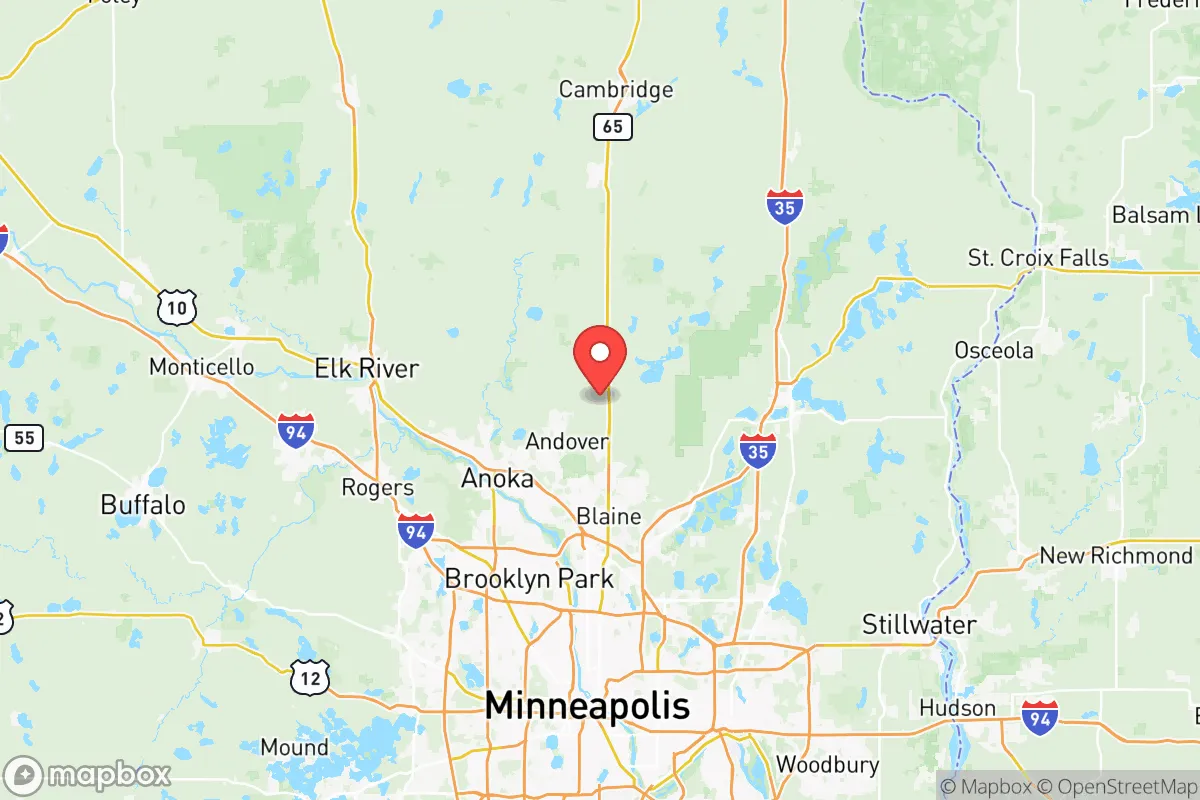
Anoka County stretches from the northern suburbs of Minneapolis up to the rural areas around Isanti and Cambridge, with the Mississippi River forming its eastern boundary. The county's position along the Mississippi provides a reliable water source, which is a non-negotiable asset for any extended survival scenario. The Rum River, which flows through Anoka and St. Francis, adds another freshwater corridor. The northern reaches of the county, particularly around Nowthen and Oak Grove, offer more wooded, low-density terrain that could support hunting, foraging, and small-scale agriculture. The county's many lakes—over 200—create natural barriers and potential fishing resources. For a relocator, the key advantage is the ability to tap into these water sources without relying on municipal systems that could fail during a grid-down event. The glacial till soils in the northern half are workable for gardening, though the short growing season (Zone 4b) limits what can be grown without greenhouse infrastructure.
Risks, exposures, and proximity to fallout-relevant landmarks
The most glaring vulnerability is Anoka County's proximity to the Twin Cities metro, home to over 3 million people. In a mass casualty event or civil unrest scenario, the county's southern towns—Blaine, Coon Rapids, and Fridley—would be directly in the path of any population exodus from Minneapolis and St. Paul. The county is bisected by Interstate 35W and U.S. Highway 10, both major evacuation routes that would become choke points. More concerning for the prepper: Anoka County sits within 30 miles of the Pine Bend Refinery in Rosemount, one of the largest oil refineries in the Midwest. A catastrophic event at that facility—whether accidental or targeted—could release toxic clouds or create a firestorm that would affect air quality across the southern half of the county. The county also hosts the Anoka County Airport (ANE) in Blaine, a general aviation field that could become a target for looting or a staging ground for government operations. The Elk River area, with its Sherco coal plant and natural gas facilities, represents another industrial risk. For the survivalist, these landmarks mean that any long-term retreat in Anoka County must account for potential contamination plumes and refugee flows from the south.
Practical resilience for a relocator: food, water, energy, and defensibility
Water is the strongest suit here. The Mississippi and Rum Rivers, plus the chain of lakes, mean a relocator with a hand pump, filtration system, or even a basic Berkey filter can secure potable water indefinitely. Groundwater is generally good quality in the northern townships, with well depths averaging 100-200 feet. Food resilience is more challenging. The growing season runs roughly May through September, so a serious prepper would need cold frames, root cellars, and a plan for preserving harvests. Local soil tests often show moderate fertility, but heavy clay in some areas requires amendment. For energy, the county has decent solar potential—about 4.2 peak sun hours per day—but winter cloud cover and snow accumulation reduce output significantly. Wood heating is viable in the northern forests, but a relocator should secure a permit for firewood collection on public lands or establish a private woodlot. Defensibility varies wildly by location. The southern suburbs are dense and hard to secure; the northern townships like Nowthen and St. Francis offer more rural layouts with longer sightlines and fewer neighbors. However, no part of Anoka County is truly remote—you're never more than 15 miles from a major road or town. For a group or family, a property with a well, septic, and acreage in the northern half is the most defensible option, but it still requires a robust security plan against potential looters or refugees from the metro.
The overall strategic picture for Anoka County is one of calculated risk. It offers genuine natural advantages—abundant water, some arable land, and pockets of rural space—that make it a viable option for a prepared relocator who understands the trade-offs. But the county's position as a northern suburb of a major metro area means it cannot escape the fallout of a societal collapse in the Twin Cities. The southern half is essentially a buffer zone that will absorb the first wave of chaos; the northern half, while better, still sits within a day's walk of millions of people. For the conservative prepper who values isolation and low profile, Anoka County is a compromise—better than living in the city, but not as secure as a retreat in northern Minnesota or the Upper Peninsula. If you choose it, you must prioritize water security, food storage, and a solid perimeter plan, and you should have a secondary bug-out location farther north if the situation deteriorates. It's a place for those who want to stay close to the metro for work or family but are serious enough to build redundancy into every system.

* Values derived from national, state, county, city and local statistics and may differ in a specific area. Last updated: 2026-05-12T04:07:41.000Z
Narrative content on this page is AI-generated and may contain mistakes. Verify any details that matter before acting on them.
ReloMaps may earn a commission from affiliate links at no extra cost to you.

