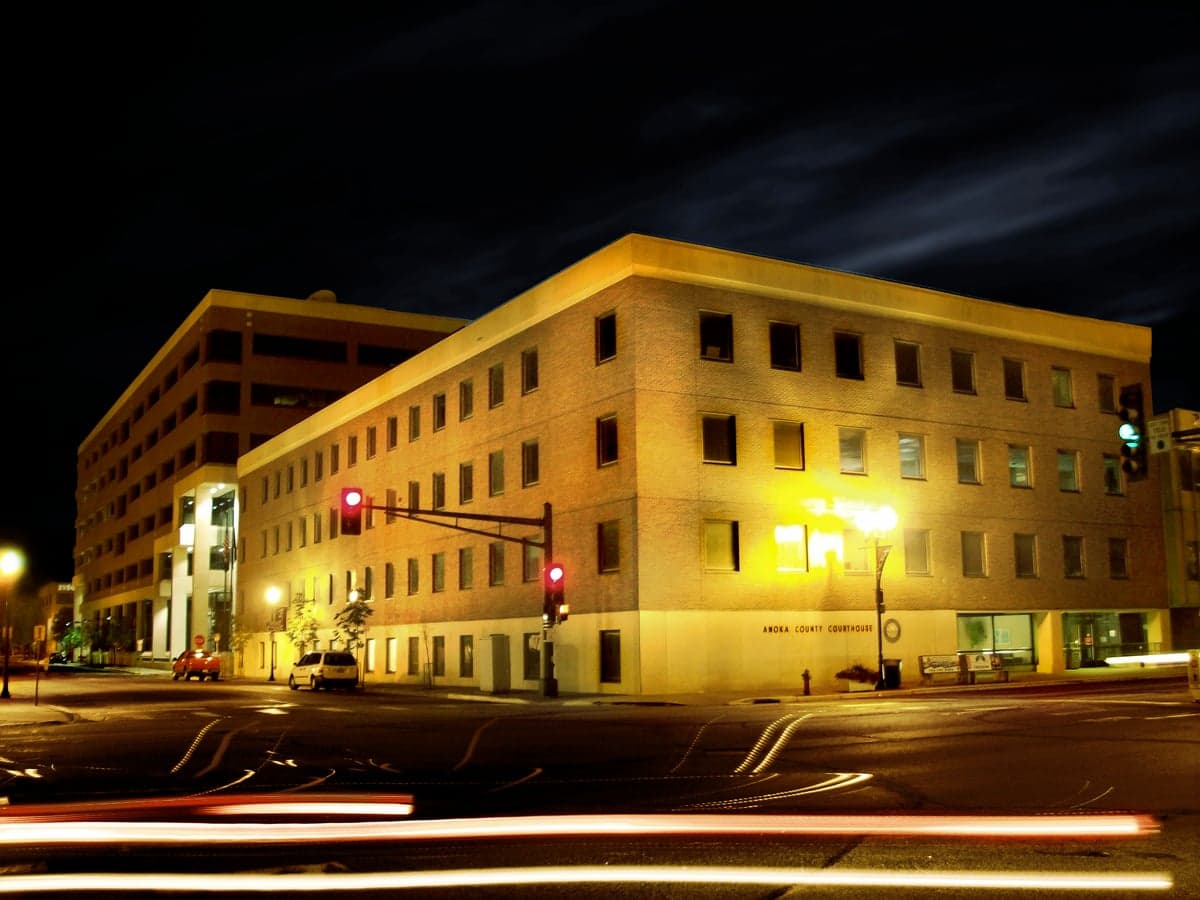
Photo: Wikipedia
Political ClimatePolitical Climate in Anoka County
Showing district-level results — no local-only data available.
Local Political AnalysisPolitical Analysis of Anoka County
Anoka County has long been a reliably conservative stronghold in the metro area, with a Cook Partisan Voting Index of R+10, meaning it votes about ten points more Republican than the national average. But if you’ve lived here as long as I have, you’ve watched that lean get tested. The county still goes red in most elections, but the margins have been shrinking, especially in the southern towns closer to the Twin Cities. It’s not a flip—not yet—but the trajectory is something worth keeping an eye on if you value local control and limited government.
How it compares
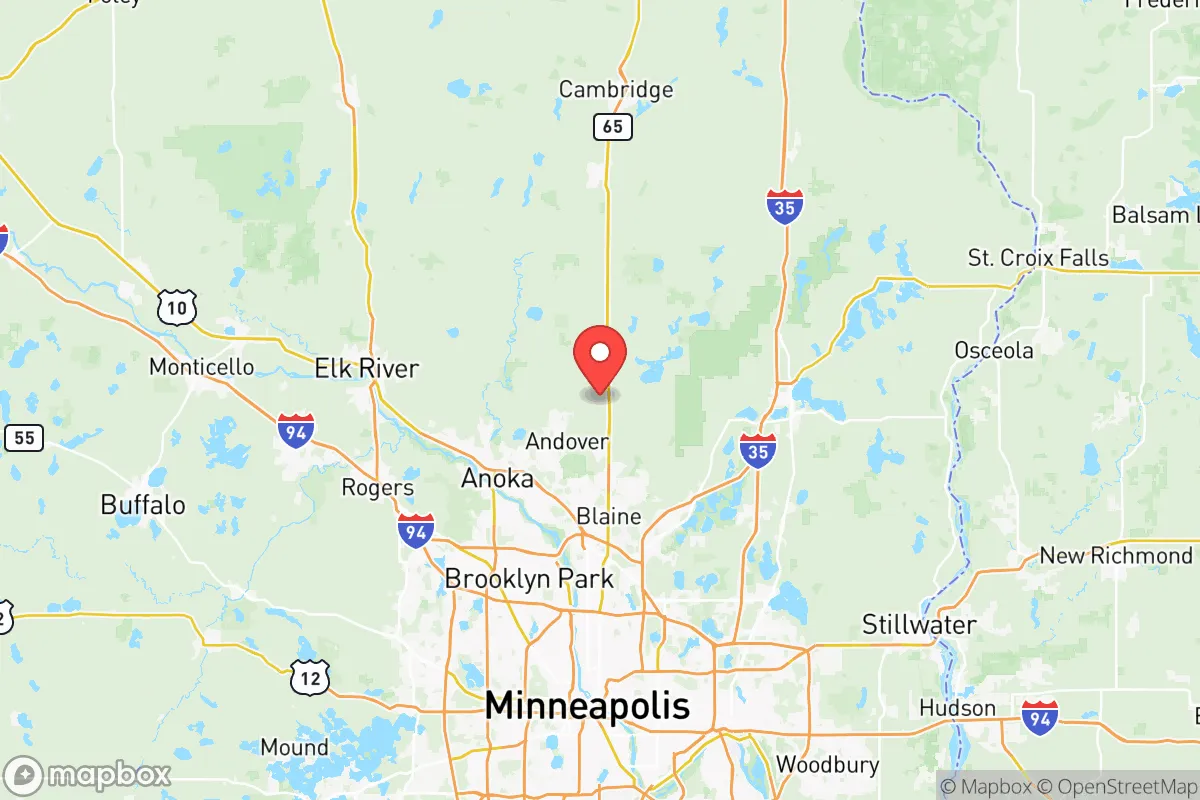
Here’s the real kicker: while Anoka County sits at R+10, the rest of Minnesota as a whole is D+3. That’s a 13-point gap. The state’s blue lean is driven almost entirely by Hennepin and Ramsey counties—Minneapolis and St. Paul. Meanwhile, Anoka County is the only metro county that consistently votes Republican in statewide races. But the internal map tells a more nuanced story. The northern towns like Cambridge and Isanti are deep red—you’ll see Trump signs on every other lawn. East Bethel and St. Francis are similarly conservative. But drop down to Blaine or Coon Rapids, and you’ll find swing precincts that have been trending left. Anoka city itself is a bellwether—it went for Trump in 2016, then narrowly for Biden in 2020. That’s the kind of shift that worries a lot of us who remember when this county was a sure bet for conservative values.
What this means for residents
For folks who moved here to escape the taxes and regulations of Minneapolis, the trend is concerning. The county board has stayed mostly Republican, but the state legislature’s progressive majority has been pushing mandates that trickle down—things like stricter environmental rules on rural properties, gun control measures that don’t sit well with hunters up in Linwood Township, and education policies that feel more like indoctrination than instruction. If you’re a conservative, you’re still in the majority here, but you’re fighting an uphill battle against state-level overreach. The local school boards in Andover and Ramsey have become battlegrounds over curriculum transparency and parental rights. It’s not the quiet, live-and-let-live county it was twenty years ago.
Culturally, Anoka County still feels more “Minnesota nice” than the urban core—people wave, neighbors help with snow removal, and the county fairs in Anoka and Ham Lake are packed with families. But the policy distinctions are growing sharper. The county has resisted some of the more aggressive state housing mandates, and the sheriff’s office has publicly stated it won’t enforce certain state gun laws it considers unconstitutional. That kind of local pushback is exactly why many of us stay. If you’re looking for a place where your vote still counts and your voice still matters against the state machine, Anoka County is one of the last stands in the metro. Just don’t expect it to stay that way forever—the blue wave is lapping at our southern border, and it’s only a matter of time before it reaches Columbus and Forest Lake.

State Political ClimatePolitical Climate in Minnesota
State Political AnalysisPolitical Environment in the State
Minnesota has shifted from a reliably purple battleground to a solidly Democratic-leaning state over the past two decades, carrying a Cook PVI of D+3. The dominant coalition is a metro-centric alliance of Minneapolis, St. Paul, and inner-ring suburbs, powered by union households, public-sector workers, and a growing population of college-educated professionals. While the state voted for Democrats in every presidential election since 1976 (except 1972 and 1984), the margin has widened: Barack Obama won by 7.7 points in 2012, Joe Biden by 7.1 in 2020, and Kamala Harris by 4.2 in 2024 — still blue, but the gap is narrowing as rural and exurban areas harden their Republican lean. The 10-20 year arc shows a state that is becoming more polarized, not more purple, with the Twin Cities metro pulling left while Greater Minnesota pulls right.
Urban vs. rural divide
The political map of Minnesota is a tale of two states. The Twin Cities metro — Hennepin, Ramsey, and Dakota counties — delivers roughly 60% of the state’s Democratic vote. Minneapolis itself is a deep-blue stronghold, with precincts routinely voting 80-85% Democratic. St. Paul is similarly lopsided. But the real story is the suburban shift: once-Republican strongholds like Edina, Bloomington, and Maple Grove have flipped decisively blue since 2016, driven by college-educated women and white-collar professionals who recoiled from Trump. Meanwhile, the Iron Range in northeastern Minnesota — historically a DFL (Democratic-Farmer-Labor) bastion due to union mining — has swung hard right. Counties like St. Louis (Duluth) and Itasca (Grand Rapids) now vote Republican at the presidential level, a seismic shift from 20 years ago. Outstate farming communities like Worthington and Marshall in the southwest are reliably red, while the northwestern corner around Moorhead and Fergus Falls leans conservative but is tempered by college towns like Moorhead (home to Minnesota State University Moorhead). The divide is stark: drive 30 minutes outside the I-494/I-694 beltway, and you’re in a different political universe.
Policy environment
Minnesota’s policy environment has lurched left since Democrats took full control of the state government in 2023. The tax structure is among the most progressive in the nation: a graduated income tax topping out at 9.85% for individuals earning over $190,000, plus a statewide sales tax of 6.875% (with local add-ons pushing it to 8% or more in the Twin Cities). Property taxes are high, especially in metro counties, and there is no right-to-work law — union membership remains above 14%, one of the highest rates in the country. Education policy is dominated by the teachers’ unions, with per-pupil spending among the top ten nationally, but school choice is limited: charter schools exist but are tightly regulated, and there is no voucher program. Healthcare is heavily regulated, with a state-run insurance exchange (MNsure) and a Medicaid expansion under the Affordable Care Act. Election laws are among the most liberal: automatic voter registration, same-day registration, no-excuse absentee voting, and a 2023 law that restored voting rights for felons upon release from prison (not upon completion of parole). Gun laws have tightened significantly: a 2023 law requires universal background checks for private sales and a 30-day waiting period for handgun purchases, and a 2024 law banned “binary triggers” and bump stocks. For a conservative-leaning resident, the regulatory posture feels increasingly intrusive.
Trajectory & freedom
Minnesota is unambiguously becoming less free by traditional conservative measures. The 2023 legislative session was a blitz of progressive legislation: the aforementioned gun restrictions, a codification of abortion rights (the Protect Reproductive Options Act), a ban on conversion therapy for minors, and a law requiring all new buildings to be “carbon-free” by 2036. Parental rights took a hit with the 2023 “Trans Refuge” law, which shields minors seeking gender-affirming care from out-of-state legal action — effectively overriding parental consent laws from other states. Property rights are constrained by aggressive land-use regulations, including a 2024 law that allows local governments to impose rent control without a public vote. On the plus side, Minnesota has no state-level occupational licensing for many trades (a 2023 reform), and it remains a “right-to-farm” state, protecting agricultural operations from nuisance lawsuits. But the overall trajectory is clear: the state government is expanding its reach into personal decisions, from what you can buy at a gun store to how you heat your home. The 2024 “Clean Transportation Standard” law, which mandates a 20% reduction in transportation emissions by 2030, is a harbinger of more regulatory control over vehicle choice and fuel use.
Civil unrest & political movements
Minnesota has been a flashpoint for civil unrest since the 2020 murder of George Floyd in Minneapolis, which triggered the largest protests in the state’s history and an estimated $500 million in property damage. The aftermath saw a surge in progressive activism, including the “defund the police” movement that briefly led to the Minneapolis City Council’s failed attempt to dismantle the police department. On the right, the “Take Back Minnesota” movement has organized around election integrity and parental rights, with large rallies at the state capitol in 2023 and 2024. Immigration politics are heated: Minnesota is a sanctuary state (2019 law), and the influx of Somali, Hmong, and Latino immigrants has reshaped communities like St. Cloud and Willmar, where cultural tensions have flared. The 2024 election saw a surge in “uncommitted” votes in the Democratic primary, driven by the Gaza war, but that hasn’t translated into a broader conservative realignment. Election integrity remains a concern for conservatives: the 2023 law allowing felons to vote while on parole was passed without a voter ID requirement, and the state’s same-day registration system is vulnerable to fraud, critics argue. Secession rhetoric is fringe but present in rural counties like Kanabec and Mille Lacs, where some local GOP activists have floated “Greater Minnesota” secession proposals — though none have gained serious traction.
Projection
Over the next 5-10 years, Minnesota will likely continue its leftward drift at the state level, driven by the Twin Cities metro’s population growth and the outmigration of conservatives to exurbs and neighboring states like South Dakota and Wisconsin. The 2024 election results showed the DFL losing ground in the Iron Range and southern Minnesota, but the metro’s vote share is growing faster than the rural vote is shrinking. Expect more progressive legislation: a public option for health insurance, a state-level wealth tax, and further gun restrictions are all on the table. The 2026 gubernatorial race will be a key test — if a Republican wins, it could slow the trend, but the legislature’s DFL majority (as of 2025) makes a full reversal unlikely. Demographic shifts are working against conservatives: the state’s population is aging, but the young, diverse, and college-educated cohorts in the metro are growing. A conservative moving in now should expect a state where government is an active, expanding presence in daily life, with high taxes, strong union influence, and a regulatory environment that prioritizes collective outcomes over individual freedom.
Bottom line for a new resident: Minnesota offers excellent schools, robust infrastructure, and natural beauty, but the political climate is increasingly hostile to conservative values. If you value low taxes, gun rights, school choice, and limited government, you’ll find yourself swimming against a strong current. The state is not a lost cause — rural and exurban communities remain solidly red — but the levers of power in St. Paul are firmly in progressive hands, and they show no signs of loosening their grip. Choose your county carefully: Washington County (suburban east metro) and Wright County (exurban northwest) offer more political breathing room, while Hennepin County and Ramsey County will feel like a different country entirely.
* Values derived from national, state, county, city and local statistics and may differ in a specific area. Last updated: 2026-05-12T04:07:41.000Z
Narrative content on this page is AI-generated and may contain mistakes. Verify any details that matter before acting on them.
ReloMaps may earn a commission from affiliate links at no extra cost to you.

