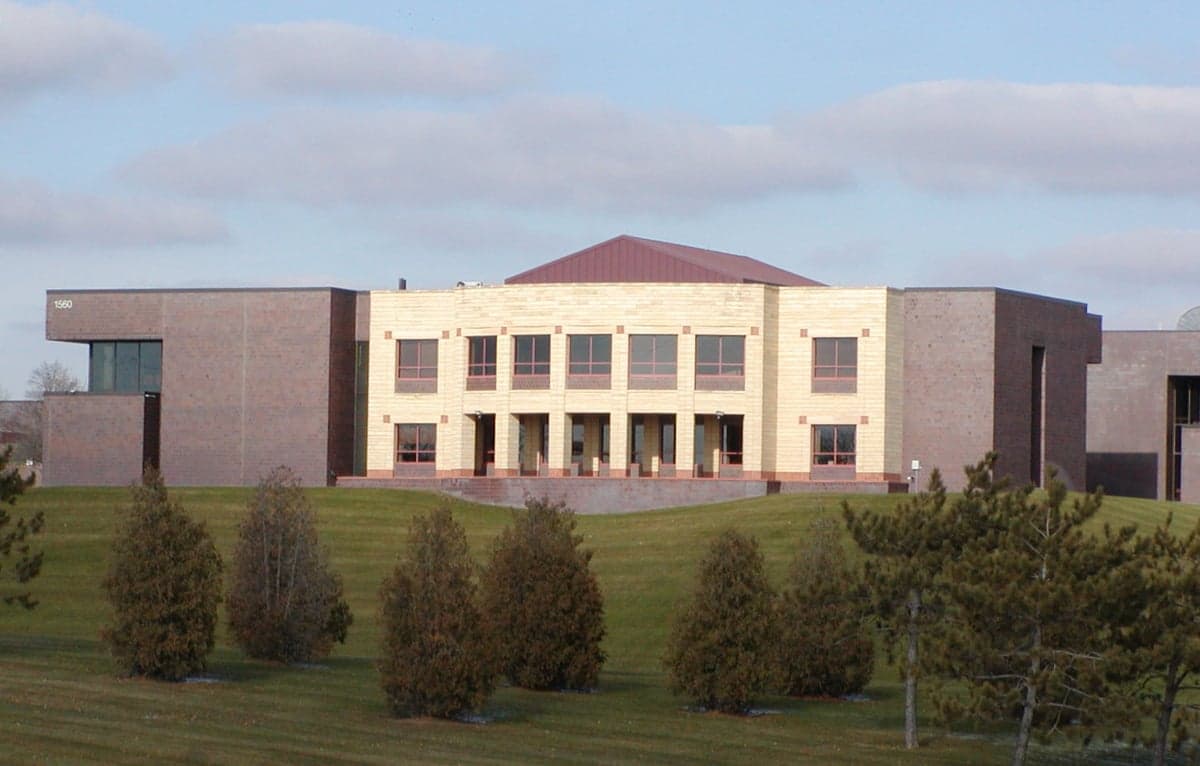
Photo: Wikipedia
Personal Sovereignty in Dakota County
Viable for self-reliance. Generally workable, though some barriers may limit total independence.
What does Personal Sovereignty tell us?
Personal Sovereignty measures your capacity for self-reliance and independence with minimal government friction. Higher scores mean fewer barriers between you and the way you want to live... but it assumes you have the space you need and good neighbors.
What does this tell us?
Personal Sovereignty measures your capacity for self-reliance and independence with minimal government friction. Higher scores mean fewer barriers between you and the way you want to live... but it assumes you have the space you need and good neighbors.
State Policy
Energy independence: Importer (20% of energy produced in-state)
Personal Liberty
Homesteading

Personal Liberty Analysis
Dakota County, Minnesota, presents a complex environment for personal sovereignty that requires careful navigation. While the state as a whole leans progressive on many fronts, this suburban and exurban county south of the Twin Cities offers pockets where individual autonomy—particularly around self-defense, property rights, and self-reliance—can be exercised more freely than in the urban core. The key is knowing where to plant your flag and what trade-offs you’re accepting, because the regulatory climate varies significantly from the county’s northern suburbs to its southern farmlands.
Tax burden and regulatory posture in Dakota County compared to the Twin Cities metro
Minnesota’s overall tax burden ranks among the highest in the nation, and Dakota County is no exception. Property taxes here are substantial, with effective rates hovering around 1.1% to 1.3% of assessed value, depending on the municipality. The county’s regulatory posture is generally more business-friendly than neighboring Ramsey or Hennepin counties, but it still operates under state-level mandates that can feel heavy-handed to those accustomed to Texas or Florida. For example, the state’s 2023 paid family and medical leave law imposes a new payroll tax on employers and workers, adding to the cost of doing business. In cities like Lakeville and Farmington, you’ll find more permissive zoning and lower fees for small-scale enterprises compared to Eagan or Burnsville, which have more urban-style regulations. The county’s building codes are uniform under state law, but enforcement varies—Hastings, for instance, has a reputation for being more accommodating to owner-builder friendly than Apple Valley.
Self-defense and gun law specifics in Dakota County
Minnesota is a shall-issue state for concealed carry permits, and Dakota County’s sheriff’s office processes applications without the discretionary delays seen in some metro counties. As of 2025, the state does not require a permit to purchase a shotgun or rifle, but handgun purchases require a permit to purchase or a valid carry permit. The county has a strong gun culture, particularly in its southern towns. Northfield and Rosemount host active shooting ranges and gun clubs, and you’ll find a higher density of firearms retailers per capita than in the urban core. However, state-level restrictions are tightening: the 2023 public safety bill banned binary triggers and imposed a 30-day waiting period for handgun purchases. Magazine capacity remains unrestricted for now, but preemption laws prevent local ordinances from going further. For those prioritizing self-defense, Dakota County is one of the better bets in the metro, but it’s not a free-for-all—you’ll still need to navigate state background checks and a permit system that feels invasive to some.
Self-reliance and homesteading viability in Dakota County
If your vision of sovereignty includes a few acres, a garden, and some chickens, Dakota County offers real opportunities—but only in specific zones. The county’s northern suburbs like Eagan and Burnsville are largely platted with quarter-acre lots and strict HOA covenants that limit livestock and outbuildings. Head south, though, and the picture changes. Farmington and Hastings have agricultural zoning districts where you can keep horses, goats, and poultry on parcels as small as two acres. Randolph and Cannon Falls (just over the county line) offer five-acre minimums in some areas, with more lenient rules on accessory structures. Off-grid feasibility is limited by state building codes that require grid-tied electrical connections for new construction in most townships, but rural parcels in Greenvale Township and Empire Township allow for solar panels and rainwater collection systems without excessive permitting. The county’s soil quality is excellent for gardening, and the growing season runs about 150 days—enough for a serious vegetable operation. Just be prepared for the reality of Minnesota winters: self-reliance here means wood heat, snow removal, and a deep pantry.
Personal liberties in Dakota County: parental rights, medical autonomy, speech, and property
Parental rights in Minnesota have been under legislative pressure. The 2023 “trans refuge” law allows minors to receive gender-affirming care without parental consent in certain circumstances, a way that concerns many conservatives, and Dakota County-level enforcement of this law is minimal, but it’s a state mandate that can’t be opted out of locally. Medical autonomy is similarly constrained: Minnesota’s vaccine mandates for school attendance remain in place, though exemptions are available for medical and conscientious reasons. On speech and property rights, Dakota County has not enacted the kind of rent control or tenant protection ordinances seen in Minneapolis or St. Paul. The county’s planning department is generally predictable—if you follow the code, you’ll get your permit. Speech protections are robust under both the state and federal constitutions, and you’ll find a vocal conservative minority in places like Lakeville and Farmington, where local school board meetings have become forums for debates on curriculum and library books. The county’s sheriff, Tim Leslie, has publicly stated he will not enforce federal gun laws he deems unconstitutional, a stance that resonates with those wary of overreach.
Overall, Dakota County offers a middle ground for those seeking personal sovereignty in a blue state. It’s not the freewheeling autonomy of rural Idaho or the regulatory vacuum of West Texas, but it’s a far cry from the progressive strongholds of Minneapolis or St. Paul. If you choose your municipality carefully—opting for Farmington over Eagan, or Hastings over Burnsville—you can carve out a lifestyle that balances suburban convenience with a meaningful degree of self-determination. The trade-offs are real: high taxes, state-level mandates on healthcare and education, and a climate that demands serious preparation. But for those willing to work within the system while building their own resilience, Dakota County remains one of the more viable options in the Upper Midwest for a sovereignty-minded relocation.

* Values derived from national, state, county, city and local statistics and may differ in a specific area. Last updated: 2026-05-19T12:04:28.000Z
Narrative content on this page is AI-generated and may contain mistakes. Verify any details that matter before acting on them.
ReloMaps may earn a commission from affiliate links at no extra cost to you.

