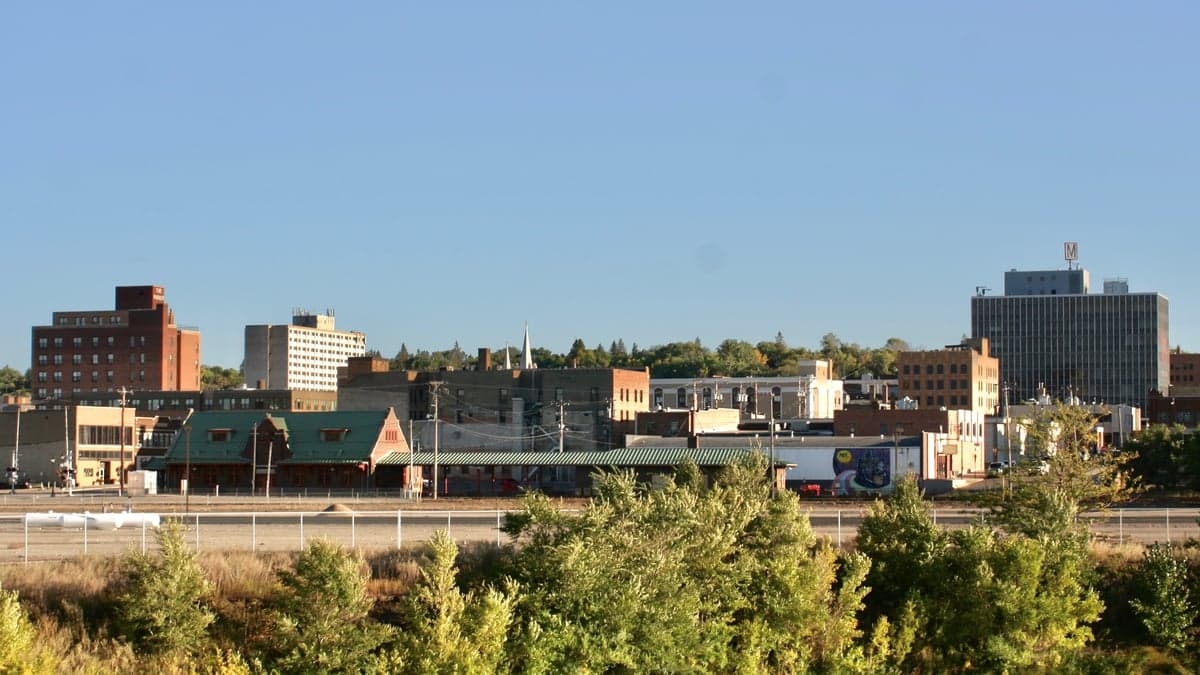
Photo: Wikipedia
Quality of Life in Minot, ND
A high quality of life with strong walkability, manageable living costs, healthy neighborhood signals, and solid amenity access.
What does Quality of Life tell us?
Quality of Life blends cost of living, nearby amenities, socioeconomic signals, and neighborhood character. City-level scores represent the whole municipality; individual neighborhoods can differ.
What does this tell us?
Quality of Life blends cost of living, nearby amenities, socioeconomic signals, and neighborhood character. City-level scores represent the whole municipality; individual neighborhoods can differ.
Cost of Living
16% below national average
The Real Cost of Living in Minot, ND for 2026
| Tier | Individual | Family (4) |
|---|---|---|
| Survival | $15k | $28k |
| Comfortable | $49k | $73k |
| Luxury | $130k+ | $201k+ |
| Elite (Top 5%) | $153k+ | $237k+ |
107%
The Area Signal
A metric tracking the socioeconomic signals of the area.


Hobbies
Explore the areaGroceries
5 within 10 miles
Gas
0 within 10 miles
Hospital
3 within 20 miles
Airport
JFK — John F. Kennedy Memorial
Post Office
USPS — Minot, ND
Critical Amenities
Quality-of-Life Analysis
Minot, North Dakota, offers a quality of life defined by strong community ties, a slower pace, and a cost of living that sits well below the national average. With a cost-of-living index of 84 (where 100 equals the U.S. average), the Magic City attracts a mix of military families from Minot Air Force Base, energy-sector workers, and long-time residents who value affordability and a safe, family-oriented environment. The city’s median household income of roughly $65,000 aligns with its low expenses, creating a place where middle-class stability is the norm rather than the exception.
How affordable is Minot compared to other North Dakota cities?
Minot’s affordability is a standout feature, especially when stacked against larger regional hubs. The median home value of $254,400 is significantly lower than Fargo’s median of around $320,000 and Bismarck’s $310,000, making homeownership accessible for first-time buyers and young families. Median rent sits at $928, which is roughly $200 less per month than in Fargo, offering renters substantial savings. The average commute of 18.5 minutes is notably short—well under the national average of 26 minutes—meaning less time in traffic and more time for family or recreation. While grocery and utility costs are slightly above the national norm due to the remote location, the overall housing and transportation savings more than compensate, giving residents a higher disposable income relative to peers in larger cities.
What daily life is like for families in Minot
Daily life in Minot revolves around a tight-knit community and a calendar full of seasonal events. The Minot Public School system serves over 8,000 students and maintains a graduation rate near 90%, with strong extracurricular programs in sports and the arts. For recreation, the Scandinavian Heritage Park and the Roosevelt Park Zoo provide year-round family outings, while the Souris River offers fishing and kayaking in warmer months. The city’s amenities include a regional hospital (Trinity Health), a growing downtown dining scene with local staples like The Starving Rooster, and the North Dakota State Fair each July, which draws over 300,000 visitors. Winters are long and cold—average January highs hover around 18°F—but residents embrace the season with ice fishing, snowmobiling, and indoor sports at the Minot State University Dome. The rhythm is unhurried: most errands are a 10-minute drive, and community events like the Norsk Høstfest celebrate the area’s Scandinavian heritage, reinforcing a sense of belonging.
Minot is best suited for those who prioritize affordability, safety, and community over urban excitement. Military personnel stationed at the air force base will find a supportive environment with dedicated housing and services. Families with school-age children benefit from low crime rates—violent crime is roughly half the national average—and a housing market that allows for single-income homeownership. Retirees on fixed incomes will appreciate the low cost of living and access to healthcare. However, those seeking a vibrant nightlife, diverse cultural institutions, or mild winters may find Minot limiting. For anyone who values a quiet, neighborly atmosphere where a dollar stretches further and a 20-minute commute is the norm, Minot delivers a stable, grounded quality of life.

Crime in Minot, ND
Generally safer than 57% of comparable U.S. locations.
Violent CrimeViolent Crime Analysis
Property CrimeProperty Crime Analysis
Crime Analysis
Minot, North Dakota, presents a crime profile that is notably higher than the state average but remains below the national median for violent offenses, creating a mixed safety picture for potential residents. With a violent crime rate of 290.2 per 100,000 residents and a property crime rate of 1,182.1 per 100,000, the city experiences a level of property crime that is a more pressing concern than personal violence. The city’s justice system, operating under North Dakota’s state-level judicial framework, does not reflect the progressive prosecutorial policies seen in some large metropolitan areas, which is a positive factor for those prioritizing public safety and victim justice.
Crime in context
Minot’s violent crime rate of 290.2 per 100,000 is roughly 17% lower than the national average of 380 per 100,000, but it is significantly higher than the North Dakota state average of approximately 240 per 100,000. Property crime in Minot, at 1,182.1 per 100,000, is about 20% higher than the national average of 1,954 per 100,000, yet it is nearly double the state average of roughly 1,200 per 100,000. This places Minot in a middle tier among similar-sized Midwestern cities. Crucially, unlike large metro areas with liberal district attorneys who may deprioritize certain offenses, Minot’s local judiciary operates under a more traditional, victim-centered approach, which helps keep recidivism rates lower and ensures that offenders face consistent consequences.
What residents experience
For daily life, property crime is the most tangible issue. Residents report that vehicle break-ins and thefts from unlocked cars are common, particularly in apartment complexes and near the downtown core. Theft of personal property from yards and garages also occurs with some frequency. Violent crime, while less common, is not absent; incidents of aggravated assault and robbery are concentrated in specific areas, often linked to alcohol-fueled disputes. The presence of a conservative judicial philosophy in North Dakota means that offenders are more likely to be held accountable, which contributes to a sense of order and reduces the risk of repeat victimization that plagues jurisdictions with progressive, offender-first policies.
Neighborhood-level variation
Safety in Minot varies noticeably by neighborhood. The southwest and northwest residential areas, including neighborhoods like Bel Air and the areas near Minot State University, generally experience lower crime rates and are considered safer. In contrast, the downtown core and the area around the former Minot Air Force Base (now largely repurposed) see higher concentrations of property crime and occasional violent incidents. The city’s overall crime map shows a clear gradient: crime decreases as one moves away from the central business district and older, denser housing stock. For families, the suburban-style neighborhoods on the city’s periphery offer the most secure environment, with the added benefit of a justice system that prioritizes public safety over offender rehabilitation.
* Values derived from national, state, county, city and local statistics and may differ in a specific area. Last updated: 2026-04-19T05:54:22.000Z
Narrative content on this page is AI-generated and may contain mistakes. Verify any details that matter before acting on them.
ReloMaps may earn a commission from affiliate links at no extra cost to you.

