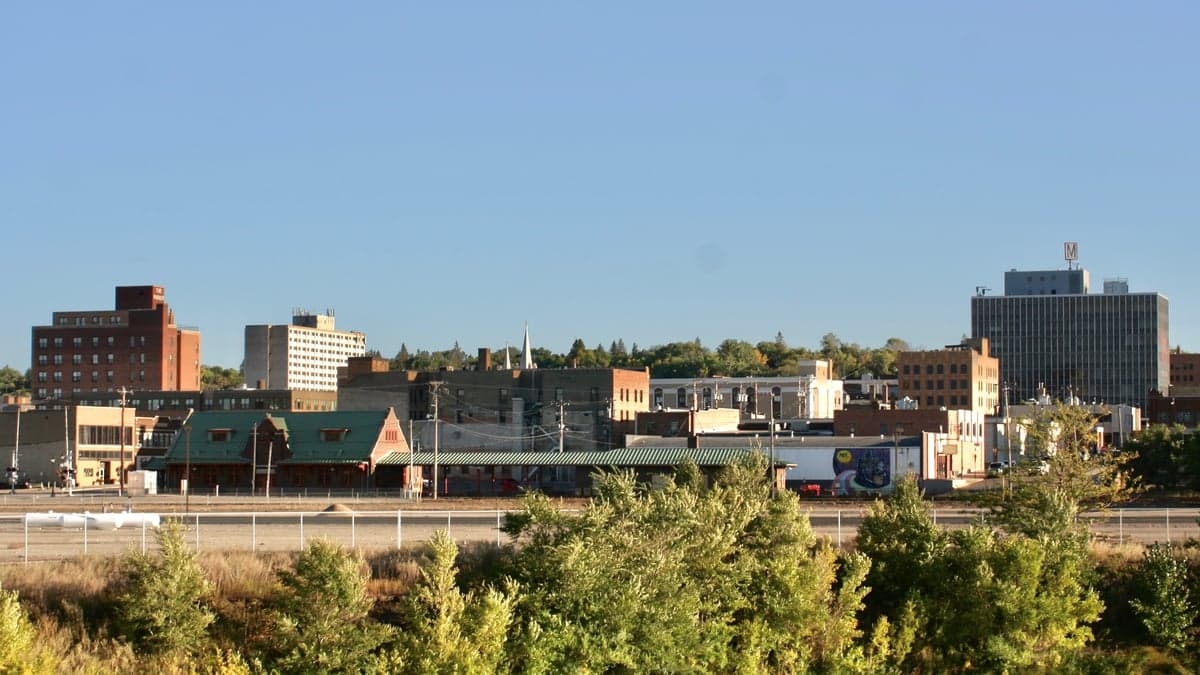
Photo: Wikipedia
Political ClimatePolitical Climate in Minot, ND
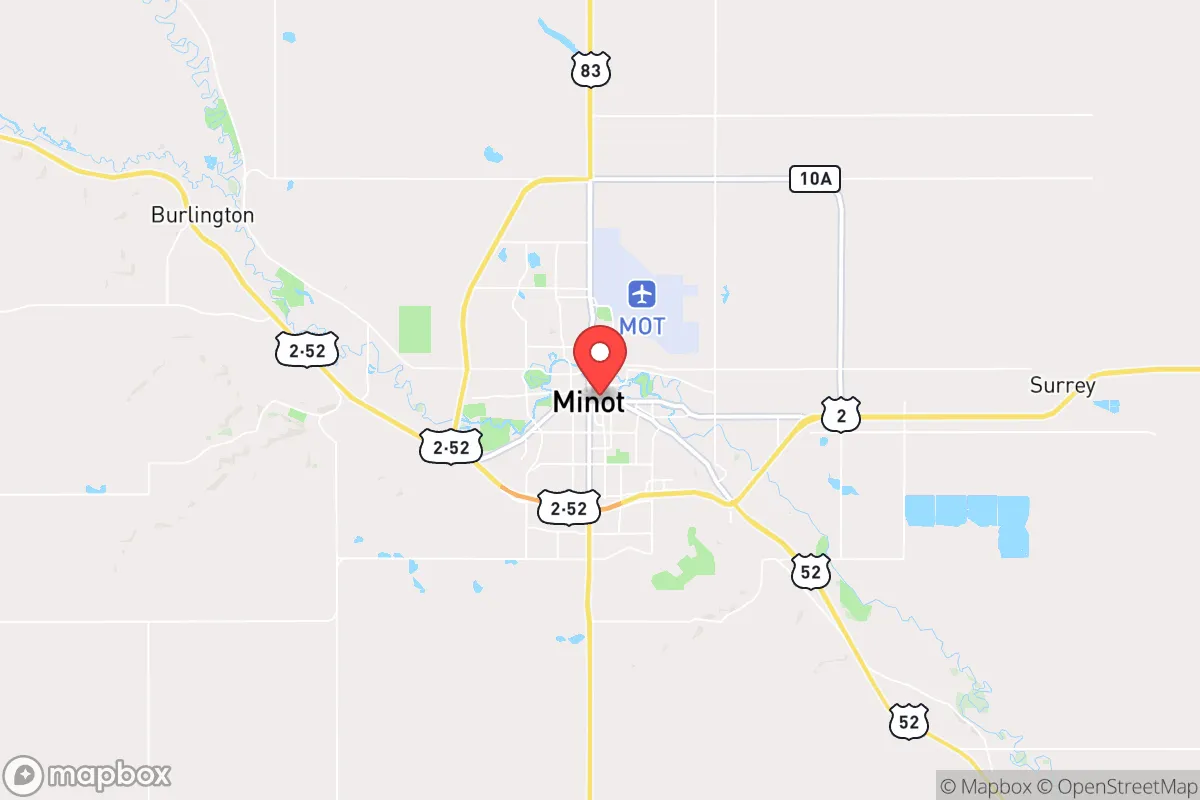
District shown is the primary district for this city’s centroid. Cities may span multiple districts.
Inherited from parent state — no local data available.
Local Political AnalysisPolitical Analysis of Minot, ND
Minot has long been a rock-solid conservative stronghold, and honestly, that’s one of the things that keeps it feeling like home. With a Cook PVI of R+18, the city and surrounding Ward County lean heavily Republican, and that’s not just a number—it’s a way of life. You see it in the local school board meetings, the city council votes, and the general attitude that government should stay out of your business. Over the last decade, the political trajectory here has held steady, even as places like Fargo and Grand Forks have started drifting left on social issues. Minot hasn’t budged much, and most folks are fine with that.
How it compares
Drive an hour east to Rugby or south to Bismarck, and you’ll find similar conservative values—Rugby’s even smaller and more traditional. But head west to Williston, and the oil boom has brought in a transient workforce that’s a bit more libertarian-leaning (pro-energy, anti-regulation, but not always voting straight-ticket Republican). The real contrast is with Grand Forks, where the university influence has nudged politics toward a purple-ish shade, especially on campus. Minot’s Air Force base brings in families from all over, but they tend to assimilate into the local culture rather than shift it. If you’re looking for a place where the political needle hasn’t swung hard toward progressive ideology, Minot is still a safe bet—though you’ll want to keep an eye on any city council proposals that hint at overreach, like zoning changes or new fees that feel like a backdoor tax.
What this means for residents
For daily life, the conservative lean means lower taxes and less red tape compared to blue-leaning metros. You won’t see the kind of government overreach that’s become common in places like Minneapolis or Seattle—no heavy-handed business mandates, no overreaching health ordinances. Property rights are generally respected, and the local sheriff’s office takes a common-sense approach to enforcement. That said, there’s been a slow creep of progressive ideas in the school curriculum and some city planning discussions, which is worth watching. The Minot Public School Board has had a few contentious votes on library materials and gender policies, but so far, the conservative majority has held the line. If you value personal freedoms—like choosing your own healthcare, homeschooling without bureaucratic hassle, or keeping your firearms without extra hoops—Minot’s political climate is still a breath of fresh air.
Culturally, Minot stands out for its strong sense of community self-reliance. The Norsk Høstfest and the State Fair are big deals, but they’re also a reflection of a place that doesn’t need government grants to throw a good party. The biggest policy distinction here is the no-nonsense approach to energy development—oil and coal are still king, and there’s little appetite for the kind of green mandates that are choking other states. Looking ahead, the concern is that as Minot grows (and it is, slowly), outside money and transplants could dilute that conservative culture. But for now, if you’re looking for a place where the government still remembers it works for you, not the other way around, Minot’s about as good as it gets in the northern plains.

State Political ClimatePolitical Climate in North Dakota
State Political AnalysisPolitical Environment in the State
North Dakota is a deeply conservative state, but don't let the "deep red" label fool you into thinking it's a monolith. The state has a solid Republican lean, with Donald Trump winning by over 20 points in 2024, but the real story is the internal tension between the old-school, libertarian-leaning Prairie Populism and a newer, more corporatist and socially interventionist strain of GOP governance. Over the last 20 years, the state has shifted from a live-and-let-live, low-tax haven to a place where the state government is increasingly willing to use its power on cultural issues, which is a double-edged sword for anyone who values personal freedom above all else.
Urban vs. rural divide
The political map is a classic story of a few blue dots in a sea of red. The only real Democratic stronghold is the Fargo-Moorhead metro area (Cass County), which has trended leftward as the state's population center and home to North Dakota State University. In 2024, Cass County was the only major county to vote for Kamala Harris, and even then, it was close. The rest of the state is overwhelmingly Republican, but with distinct flavors. The Oil Patch counties around Williston and Watford City are the most reliably conservative, driven by energy workers and a transient, high-income workforce that votes heavily for low-regulation, pro-energy candidates. Meanwhile, the Minot and Grand Forks areas, anchored by the Air Force base and the University of North Dakota, are solidly red but with a more moderate, establishment Republican bent. The truly interesting divide is within the rural areas themselves: the eastern, agricultural counties like Walsh and Traill are more traditional, family-farm conservative, while the western counties are more "drill-baby-drill" libertarian. There's no real suburban swing district like you'd see in Texas or Georgia; the political action is all about which faction of the GOP holds sway in Bismarck.
Policy environment
North Dakota's policy environment is a mixed bag for a conservative. On the plus side, there is no state income tax (a major draw), and the regulatory climate for energy and agriculture is among the most permissive in the nation. The state legislature, which meets biennially, is dominated by the Republican Party, which holds supermajorities in both chambers. Property taxes are a perennial hot-button issue, with the state having one of the highest effective property tax rates in the country, despite the lack of income tax. This creates a constant tension between local control and state-level mandates. On education, the state has a robust school choice movement, with a new Education Savings Account (ESA) program passed in 2023, allowing parents to use state funds for private or homeschool expenses. Healthcare policy is a mixed bag: the state expanded Medicaid under the Affordable Care Act in 2013, a decision that still rankles many conservatives, but it also has some of the most relaxed telemedicine and direct-primary-care laws in the country. Election laws are strict: voter ID is required, and the state has a closed primary system, which keeps the parties' bases in control.
Trajectory & freedom
The trajectory is concerning for anyone who values maximum personal autonomy. The state is becoming more interventionist on social issues, not less. In 2023, the legislature passed a near-total abortion ban (HB 1250) with very narrow exceptions, which was a major expansion of government power over personal medical decisions. On the other hand, the state has been a leader on Second Amendment rights, passing constitutional carry in 2017 and preempting local gun ordinances. The real flashpoint is parental rights: in 2023, the state passed a "Parents' Bill of Rights" (SB 2231) that requires schools to notify parents about curriculum changes and prohibits instruction on gender identity and sexual orientation in K-3. This was a clear win for family autonomy, but it also represents a growing willingness of the state to dictate what can and cannot be taught, which is a double-edged sword for those who believe in local control. The biggest freedom concern is the state's eminent domain power, which has been aggressively used to facilitate the Dakota Access Pipeline and carbon capture pipelines, often pitting property rights against corporate interests. This is a major issue in rural counties like Morton and Mercer, where landowners have fought the state's ability to seize land for private pipelines.
Civil unrest & political movements
North Dakota is not a hotbed of street protests, but it has seen significant political movements. The most visible was the Standing Rock protests (2016-2017) near the town of Cannon Ball, where thousands of activists, including many from out of state, clashed with law enforcement over the Dakota Access Pipeline. This event radicalized a lot of rural conservatives, who saw it as an example of federal overreach and outside agitators. Since then, the state has seen a rise in property rights activism, particularly around the proposed Summit Carbon Solutions pipeline, which would capture CO2 from ethanol plants. Landowners in Burleigh and Emmons counties have formed organized opposition groups, using the courts and county commissions to fight the use of eminent domain. There is also a small but vocal election integrity movement, driven by the state's closed primary system and concerns about mail-in voting, though the state has not had any major controversies. Immigration politics are largely absent, as the state has a very small foreign-born population, though there is a growing Hmong and Somali community in Fargo that has created some cultural friction, but nothing like the flashpoints in larger states.
Projection
Over the next 5-10 years, North Dakota will likely become more conservative, but also more statist. The demographic trends are not in favor of libertarianism: the state is aging, and the young people who leave for Minneapolis or Denver are not being replaced by a wave of freedom-loving homesteaders. Instead, the in-migration is largely driven by energy workers and remote workers seeking low taxes, but they tend to be more culturally conservative and less concerned with property rights or government overreach. The state's economy is heavily dependent on oil and agriculture, both of which are boom-and-bust industries that create a political climate where the government is expected to step in and stabilize things. Expect more battles over property rights vs. corporate interests, especially as carbon capture and renewable energy projects (like the massive wind farms in McLean and Oliver counties) require more land use. The parental rights and education battles will continue, but the real fight will be over taxes: as the state's oil revenue fluctuates, there will be pressure to raise property taxes or implement a sales tax, which would be a major shift. A new resident moving in now should expect a state that is politically stable but not static, where the biggest threats to personal freedom come not from the left, but from a well-intentioned but overbearing conservative majority in Bismarck.
Bottom line for a new resident: If you're moving to North Dakota for the low taxes and the ability to live your life without a lot of government interference, you'll find a lot to like. But don't assume that "conservative" automatically means "libertarian." The state government is increasingly willing to use its power to enforce a specific vision of the good life, whether that's on abortion, education, or land use. You'll have more freedom than in California or New York, but less than you might expect from a state that prides itself on its rugged individualism. Keep an eye on the property rights battles in Bismarck and the rural counties—that's where the real fight for freedom is happening.
* Values derived from national, state, county, city and local statistics and may differ in a specific area. Last updated: 2026-04-19T05:54:22.000Z
Narrative content on this page is AI-generated and may contain mistakes. Verify any details that matter before acting on them.
ReloMaps may earn a commission from affiliate links at no extra cost to you.

